

Zoo Stock Species and the Red List
Zoo Stock Species and the Red List
Zoo Stock

This indicates that the species is included in the Second Zoo Stock Plan, which was formulated by the Tokyo Metropolitan Government in 2018. The plan sets goals for the next 10 years in three areas: "species conservation," "contribution to wildlife conservation," and "environmental education and conservation awareness." 124 animal species are included.
What is the Red List?
Based on scientific research, this is a list of wildlife classified by rank (category) indicating the degree of risk of extinction.
Livng Things Encyclopedia shows the categories (mainland and islands) assessed by the IUCN (International Union for Conservation of Nature) at the global level, the Ministry of the Environment for Japan, and the Tokyo Metropolitan Government for Tokyo.
The higher the category in each table, the higher the risk of extinction, and CR, EN, and VU are the three categories known as "endangered species." In Tokyo, species that are not at the NT (near threatened) level but are relatively rare are considered "species of concern."
|
IUCN categories |
|
|---|---|
|
EX |
extinction |
|
EW |
Extinction in the wild |
|
CR+EN |
— |
|
CR |
Serious crisis |
|
EN |
crisis |
|
VU |
emergency |
|
NT |
Near Threatened |
|
LC・○ |
Low Concern |
|
DD |
Data shortage |
|
LP |
— |
|
Japan (Ministry of the Environment) Category |
|
|---|---|
|
EX |
extinction |
|
EW |
Extinction in the wild |
|
CR+EN |
Endangered species |
|
CR |
Critically Endangered |
|
EN |
Endangered species |
|
VU |
Endangered species |
|
NT |
Near Threatened |
|
LC・○ |
— |
|
DD |
Lack of information |
|
LP |
Endangered |
|
Tokyo Category |
|
|---|---|
|
EX |
extinction |
|
EW |
Extinction in the wild |
|
CR+EN |
Endangered species |
|
CR |
Critically Endangered |
|
EN |
Endangered species |
|
VU |
Endangered species |
|
NT |
Near Threatened |
|
LC・○ |
Unranked |
|
DD |
Lack of information |
|
LP |
Endangered |
Creatures at Tokyo Sea Life Park
Creatures at Tokyo Sea Life Park
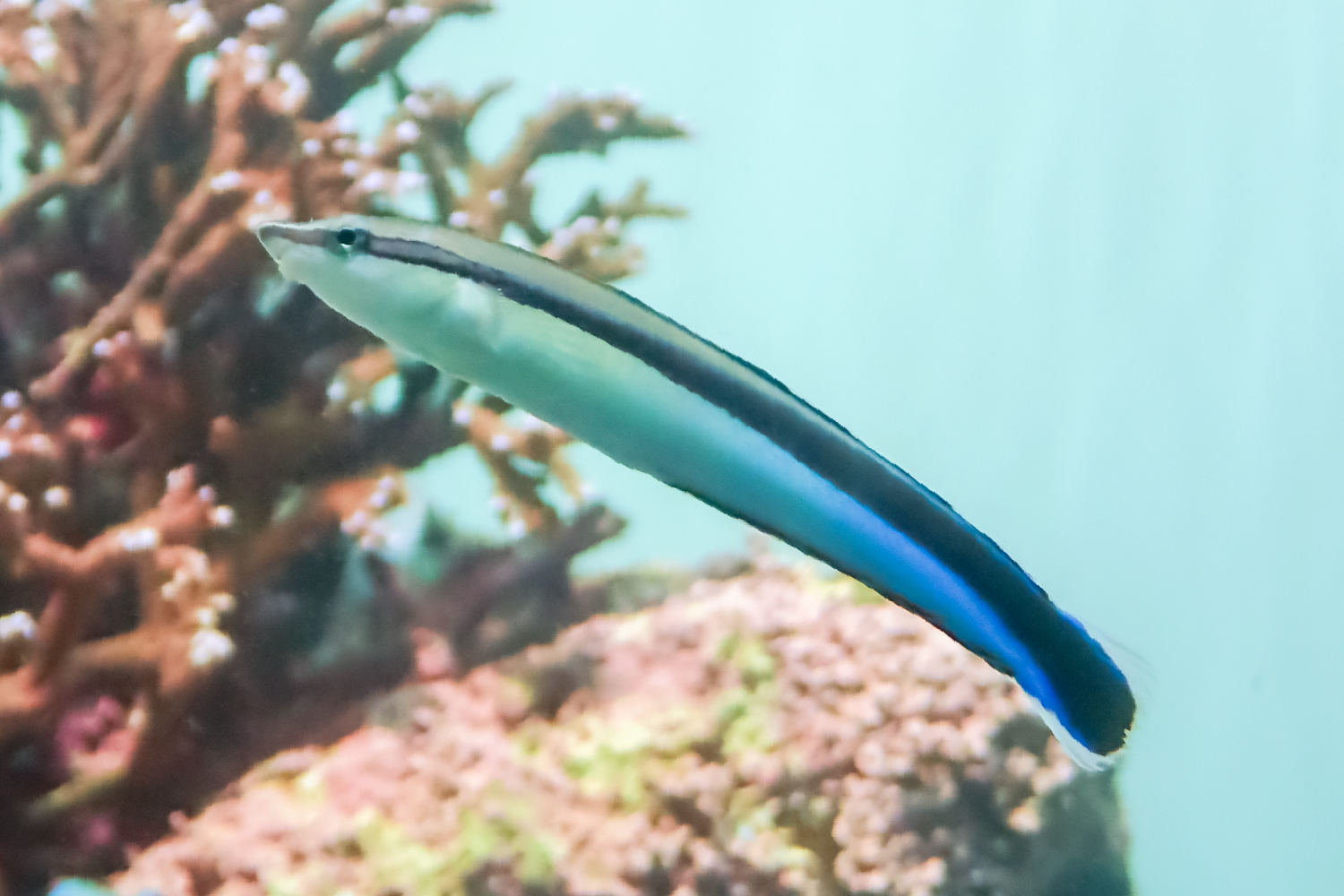
Bluestreak Cleaner Wrasse
Bluestreak Cleaner Wrasse
Labroides dimidiatus
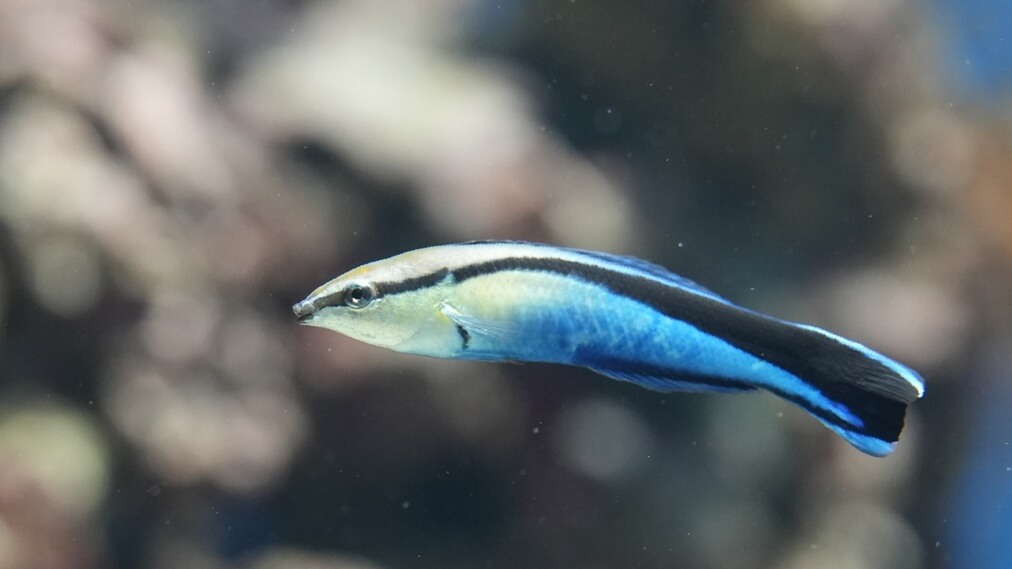
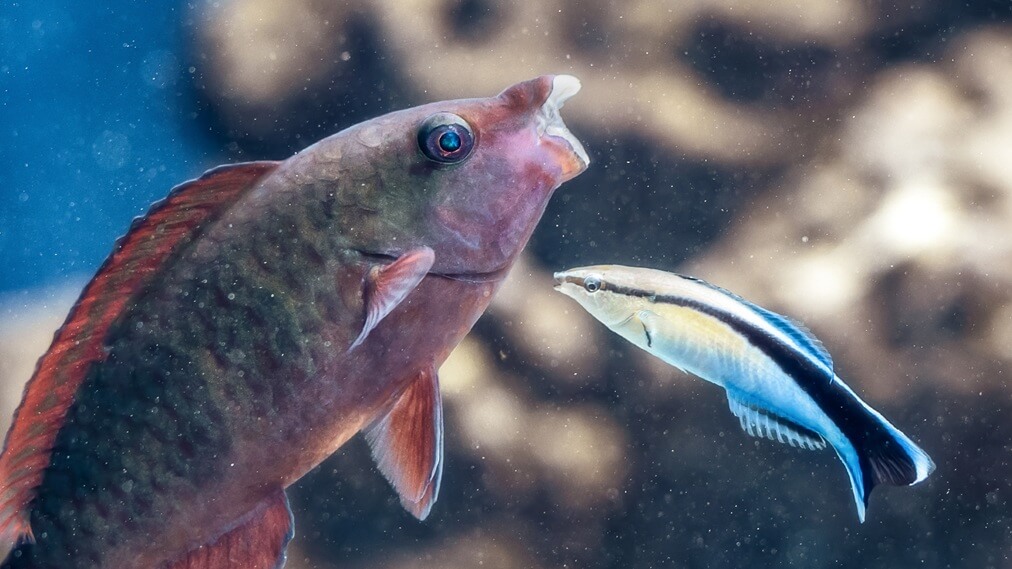
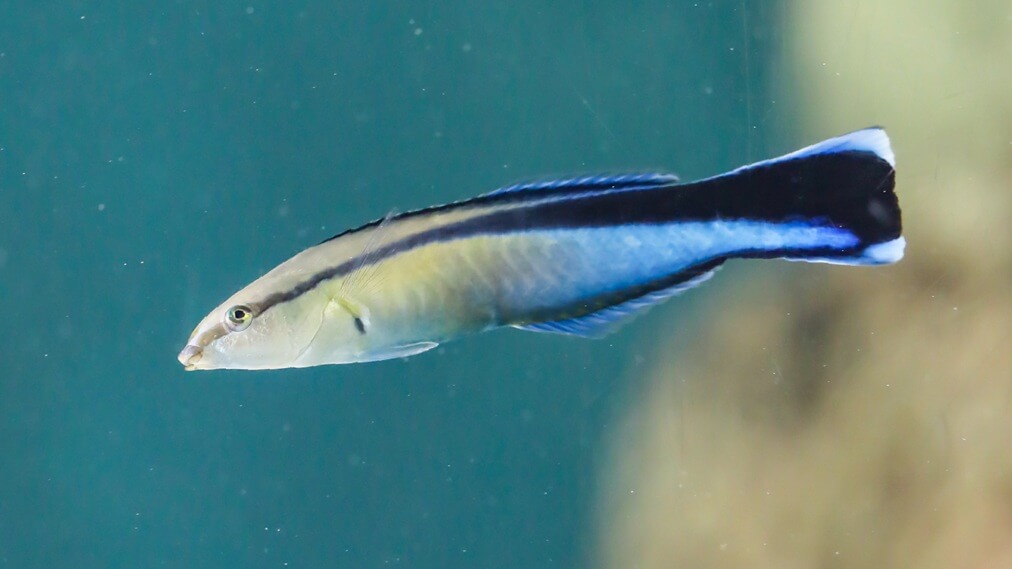
This wrasse species lives in shallow rocky areas and coral reefs. It is well-known as a "cleaner fish" because it eats parasites and old skin from other fish. You can observe it swimming around near other fish in an aquarium, cleaning them up. Males have large territories and form harems with several females.
| classification | Actinopterygii, Perciformes, Labridae |
|---|---|
| English name | Bluestreak Cleaner Wrasse |
| distribution | South of Chiba Prefecture, Indian Ocean, Central Pacific |
| Residence | Shallow rocks and coral reefs |
| Size |
Total length: 12cm
|
| food | Parasites on the body surface or gills of other fish, old skin |
| Red List |
IUCN: LC (Least Concern)
|
Cleaning service
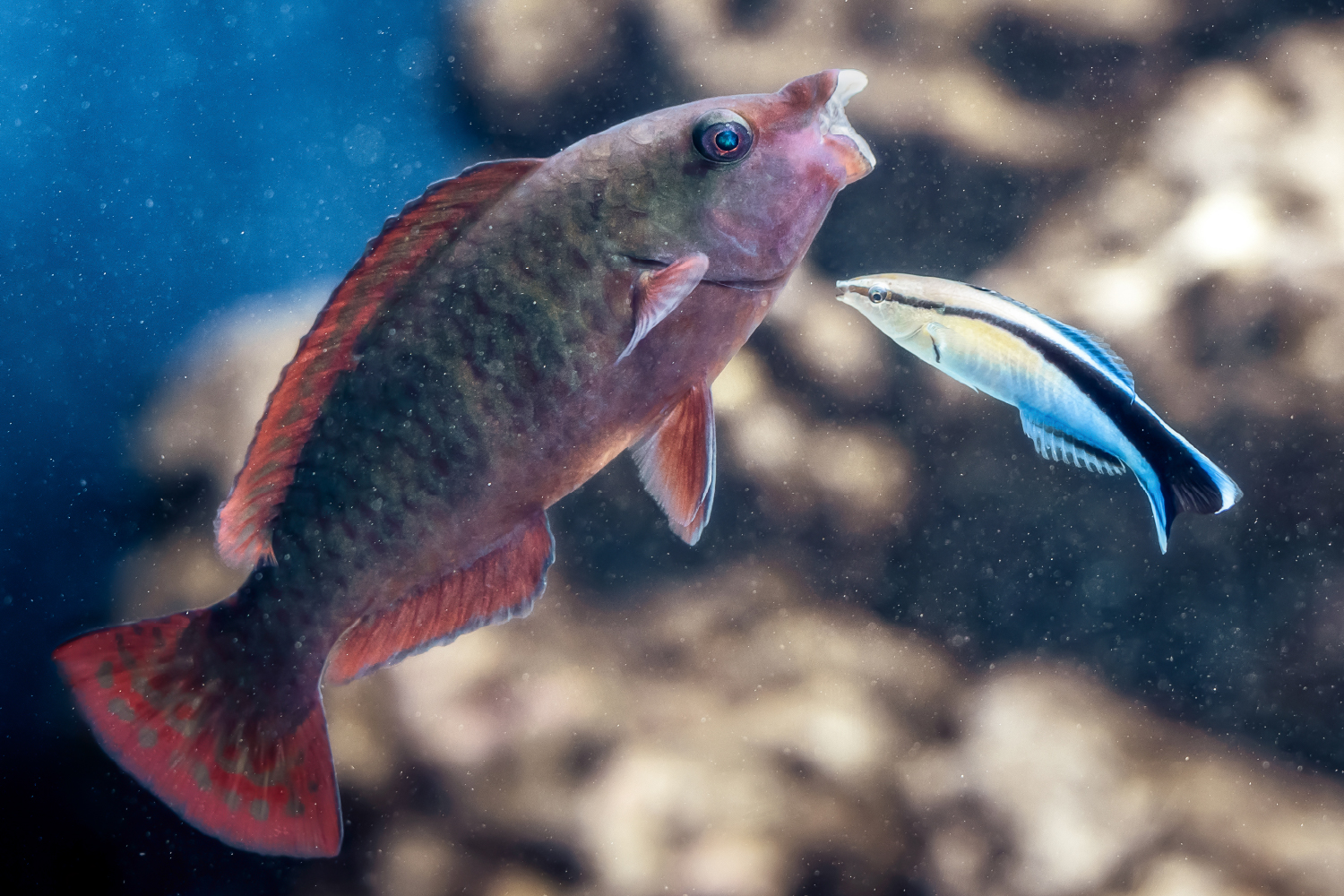
Have you ever noticed Bluestreak Cleaner Wrasse pecking at the bodies of other fish? Let's observe. They attract other fish with their unique rhythmic dance, and then clean the fish that come near. The other fish also cooperate in the cleaning, spreading their fins, opening their mouths, and opening their gill covers. Bluestreak Cleaner Wrasse eat parasites on their body surface and gills, as well as damaged skin. Bluestreak Cleaner Wrasse are not usually eaten by other fish, but...there have been cases of them being eaten in aquariums in the past.
Sex-changing fish
Bluestreak Cleaner Wrasse change sex from female to male during their lifetime. They live in harems consisting of one male and several females, but if the male disappears, the largest and strongest female will change into a male. Recent research has also shown that individuals that have changed from female to male can change back from male to female.
A fish that pretends to be Bluestreak Cleaner Wrasse
The false blenny is said to closely resemble Bluestreak Cleaner Wrasse, thus avoiding being eaten by other creatures. The false blenny also mimics Bluestreak Cleaner Wrasse 's distinctive swimming style, which it uses to identify itself as a cleaner fish. To distinguish between the false blenny and Bluestreak Cleaner Wrasse, observe the position of the beginning of their dorsal fin and the location of their mouths.