

Zoo Stock Species and the Red List
Zoo Stock Species and the Red List
Zoo Stock
This indicates that the species is included in the Second Zoo Stock Plan, which was formulated by the Tokyo Metropolitan Government in 2018. The plan sets goals for the next 10 years in three areas: "species conservation," "contribution to wildlife conservation," and "environmental education and conservation awareness." 124 animal species are included.
What is the Red List?
Based on scientific research, this is a list of wildlife classified by rank (category) indicating the degree of risk of extinction.
Livng Things Encyclopedia shows the categories (mainland and islands) assessed by the IUCN (International Union for Conservation of Nature) at the global level, the Ministry of the Environment for Japan, and the Tokyo Metropolitan Government for Tokyo.
The higher the category in each table, the higher the risk of extinction, and CR, EN, and VU are the three categories known as "endangered species." In Tokyo, species that are not at the NT (near threatened) level but are relatively rare are considered "species of concern."
|
IUCN categories |
|
|---|---|
|
EX |
extinction |
|
EW |
Extinction in the wild |
|
CR+EN |
— |
|
CR |
Serious crisis |
|
EN |
crisis |
|
VU |
emergency |
|
NT |
Near Threatened |
|
LC・○ |
Low Concern |
|
DD |
Data shortage |
|
LP |
— |
|
Japan (Ministry of the Environment) Category |
|
|---|---|
|
EX |
extinction |
|
EW |
Extinction in the wild |
|
CR+EN |
Endangered species |
|
CR |
Critically Endangered |
|
EN |
Endangered species |
|
VU |
Endangered species |
|
NT |
Near Threatened |
|
LC・○ |
— |
|
DD |
Lack of information |
|
LP |
Endangered |
|
Tokyo Category |
|
|---|---|
|
EX |
extinction |
|
EW |
Extinction in the wild |
|
CR+EN |
Endangered species |
|
CR |
Critically Endangered |
|
EN |
Endangered species |
|
VU |
Endangered species |
|
NT |
Near Threatened |
|
LC・○ |
Unranked |
|
DD |
Lack of information |
|
LP |
Endangered |
Creatures at Tokyo Sea Life Park
Creatures at Tokyo Sea Life Park
Bigfin Reef Squid
Bigfin Reef Squid
Sepioteuthis lessoniana
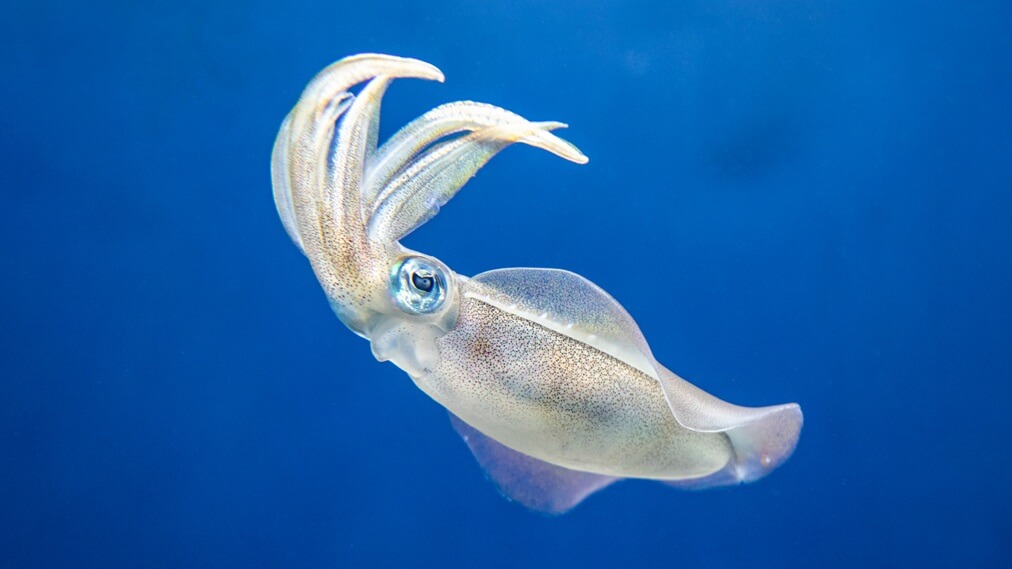
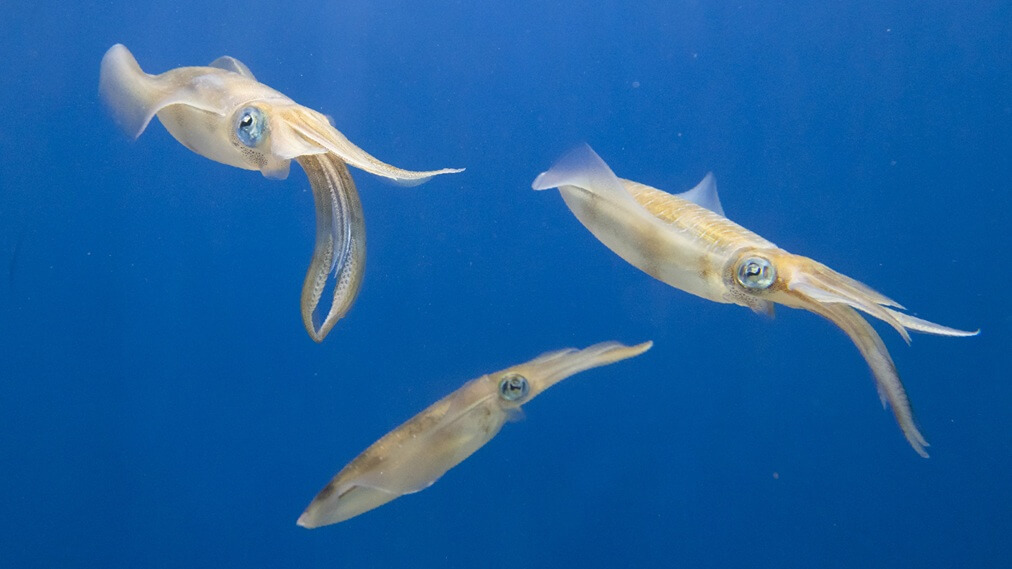
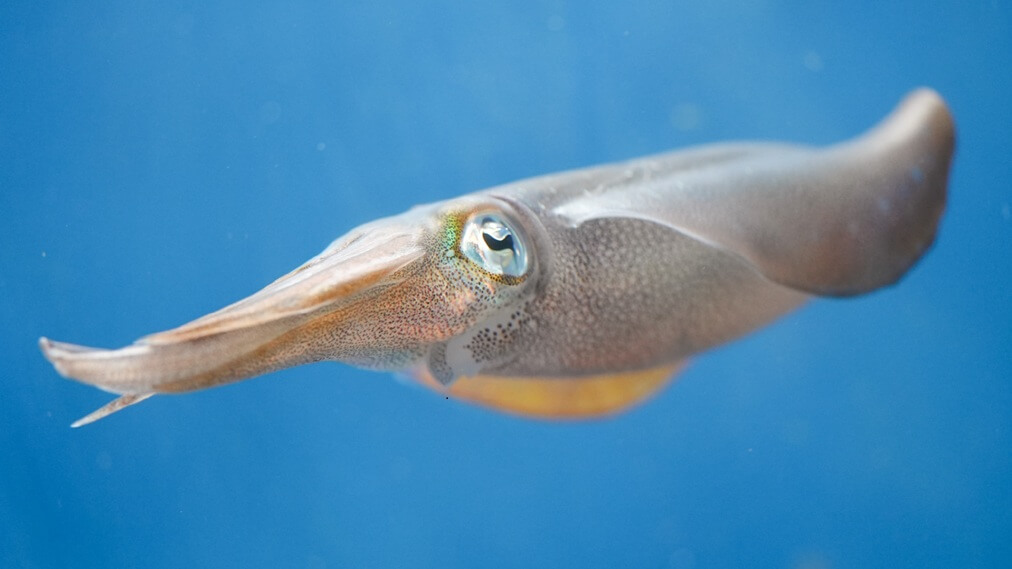
This is a large squid that can grow to over 50 cm in body length. It is a very tasty squid and is popular for eating and fishing. It swims skillfully back and forth by sucking in water through gaps in its mantle and expelling it through its funnel. It uses two particularly long tentacles to catch its prey, fish.
| classification | Cephalopoda, Ophthalmos, Squididae |
|---|---|
| English name | Bigfin Reef Squid |
| distribution | Tropical and temperate zones from the Western Pacific to the Indian Ocean |
| Residence | Shallow reef area |
| Size |
Body length: 40-45cm
|
| food | fish |
| Red List |
IUCN: DD (Data Deficient)
|
Instantly changing body color
If you watch squid in an aquarium for a while, you might see them change the color of their body in an instant. Body color changes are useful for scaring off predators and communicating with other squid. The three layers of chromatophores contain red, yellow, and brown pigments, and their body color changes as they contract. In addition, the iridophores, which reflect light and shine, create the incredibly beautiful body color.
Special arms and tentacles
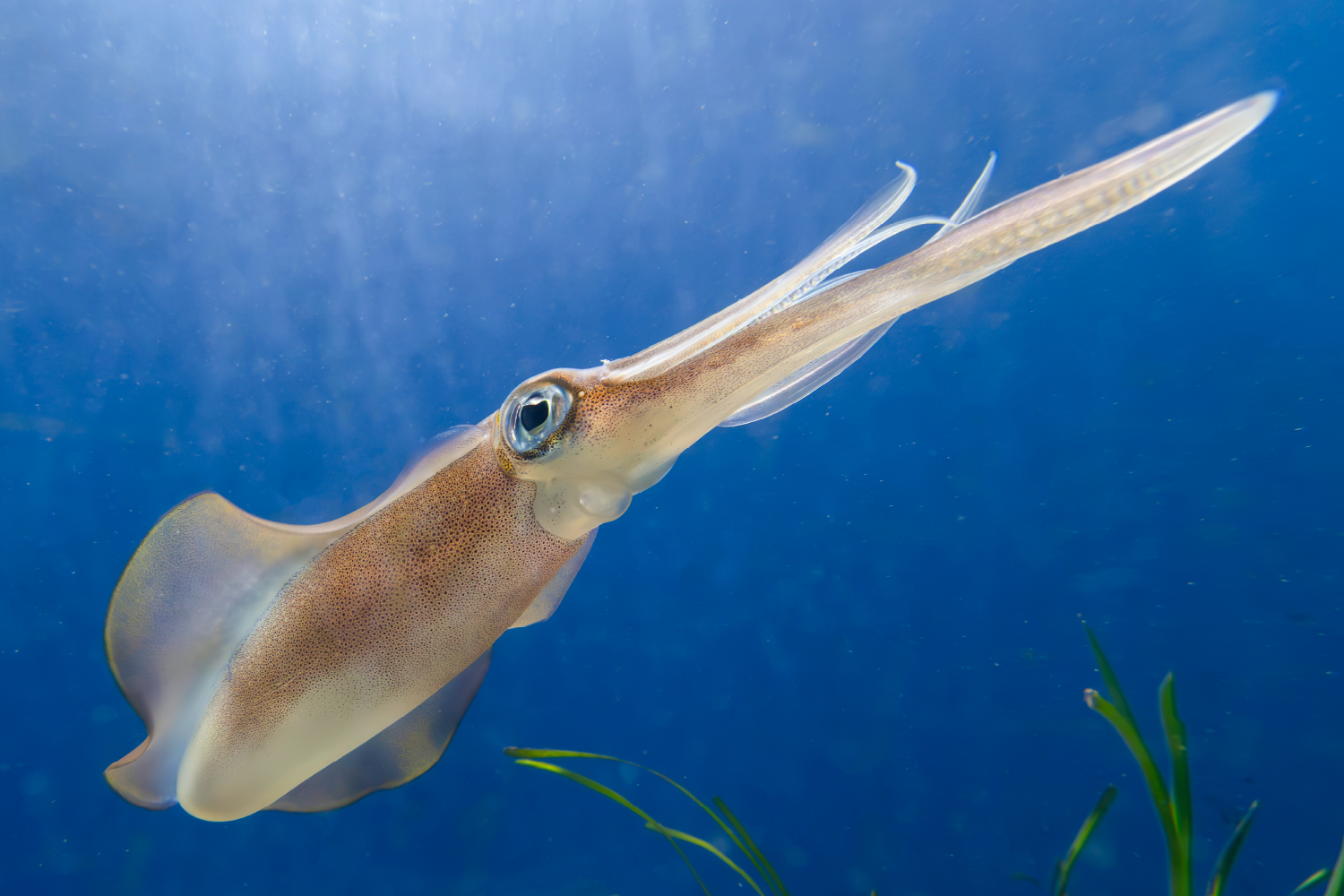
It's often said that squid have 10 tentacles and octopuses have 8, but more accurately, they're called "arms." If you look closely at the 10 arms of Bigfin Reef Squid, you'll notice that two of them look different from the others. These special arms are called "tentacles," and when catching prey, they can extend to two to three times the length of the squid's body. It's an incredibly fast feat, and the captured prey is then carried to the mouth located in the middle of the arm.