

Zoo Stock Species and the Red List
Zoo Stock Species and the Red List
Zoo Stock
This indicates that the species is included in the Second Zoo Stock Plan, which was formulated by the Tokyo Metropolitan Government in 2018. The plan sets goals for the next 10 years in three areas: "species conservation," "contribution to wildlife conservation," and "environmental education and conservation awareness." 124 animal species are included.
What is the Red List?
Based on scientific research, this is a list of wildlife classified by rank (category) indicating the degree of risk of extinction.
Livng Things Encyclopedia shows the categories (mainland and islands) assessed by the IUCN (International Union for Conservation of Nature) at the global level, the Ministry of the Environment for Japan, and the Tokyo Metropolitan Government for Tokyo.
The higher the category in each table, the higher the risk of extinction, and CR, EN, and VU are the three categories known as "endangered species." In Tokyo, species that are not at the NT (near threatened) level but are relatively rare are considered "species of concern."
|
IUCN categories |
|
|---|---|
|
EX |
extinction |
|
EW |
Extinction in the wild |
|
CR+EN |
— |
|
CR |
Serious crisis |
|
EN |
crisis |
|
VU |
emergency |
|
NT |
Near Threatened |
|
LC・○ |
Low Concern |
|
DD |
Data shortage |
|
LP |
— |
|
Japan (Ministry of the Environment) Category |
|
|---|---|
|
EX |
extinction |
|
EW |
Extinction in the wild |
|
CR+EN |
Endangered species |
|
CR |
Critically Endangered |
|
EN |
Endangered species |
|
VU |
Endangered species |
|
NT |
Near Threatened |
|
LC・○ |
— |
|
DD |
Lack of information |
|
LP |
Endangered |
|
Tokyo Category |
|
|---|---|
|
EX |
extinction |
|
EW |
Extinction in the wild |
|
CR+EN |
Endangered species |
|
CR |
Critically Endangered |
|
EN |
Endangered species |
|
VU |
Endangered species |
|
NT |
Near Threatened |
|
LC・○ |
Unranked |
|
DD |
Lack of information |
|
LP |
Endangered |
Creatures at Tokyo Sea Life Park
Creatures at Tokyo Sea Life Park
Bell-ware
Bell-ware
Zostera marina
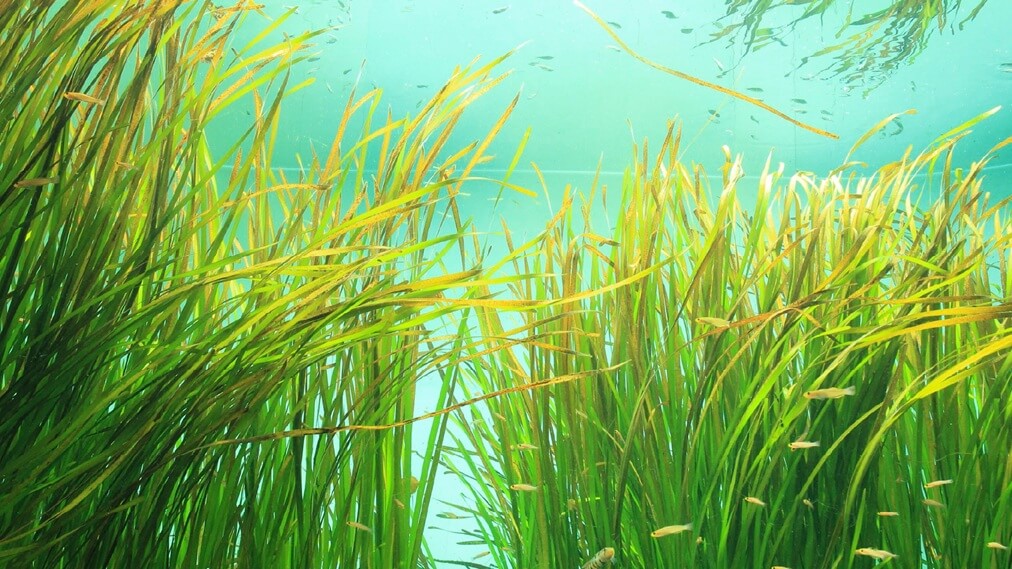
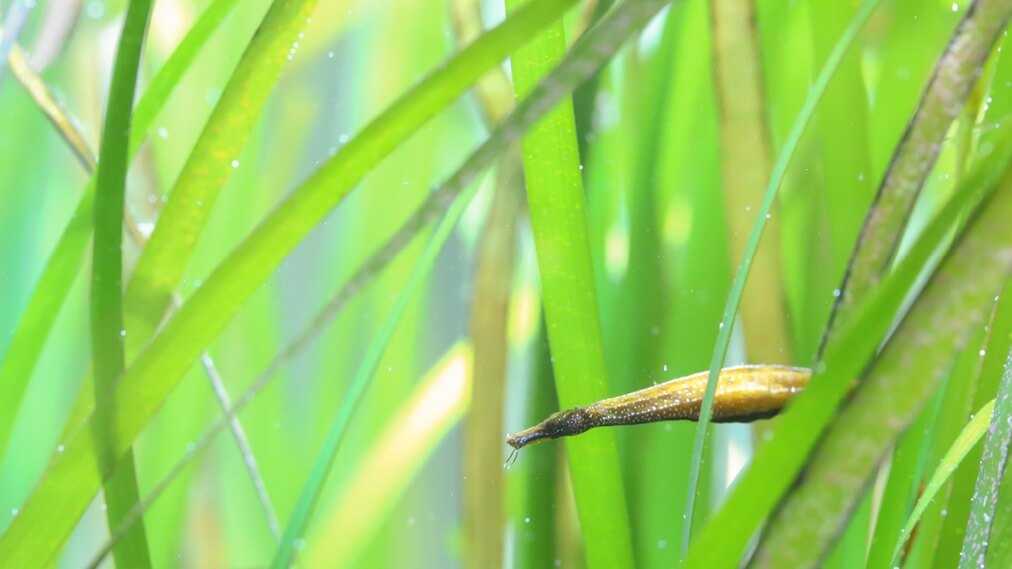
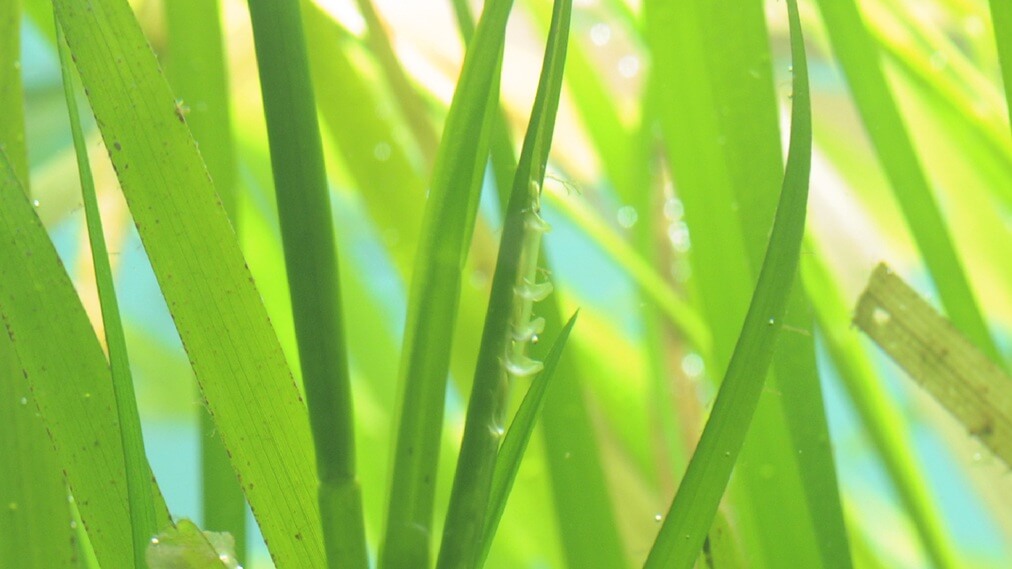
It takes root in the shallow sandy mud bottom of the calm bay, forming large colonies (Bell-ware beds). The long, thin green leaves fluttering all over the place make it look like an underwater grassland. It is not seaweed, but a flowering plant called seagrass, which produces small white flowers and seeds. Bell-ware beds are the habitat and growth place for many living creatures, and are also known as the "cradle of the sea."
| classification | Plant kingdom: Alsales, Bell-ware family |
|---|---|
| English name | Bell-ware |
| distribution | Temperate to subarctic zones of the Northern Hemisphere |
| Residence | Shallow sandy mud bottom of an inner bay |
| Size |
Leaf length: 50-100cm
|
| food | Photosynthetic flowering plants |
| Red List |
IUCN: LC (Least Concern)
|
Hiding in Bell-ware beds
If you look on or between the leaves of Bell-ware, you will find creatures cleverly hiding. Horned shrimp and squat lobsters are green, just like the leaves, and hide on the undersides of the leaves with their long, slender bodies. The octopus, a member of the syngnathus family, wraps its flexible tail around Bell-ware leaves to support its long, slender body. It swims just like a torn leaf. Try looking for them in the "Small Creatures of Bell-ware Bed" aquarium.
What are the little bubbles?
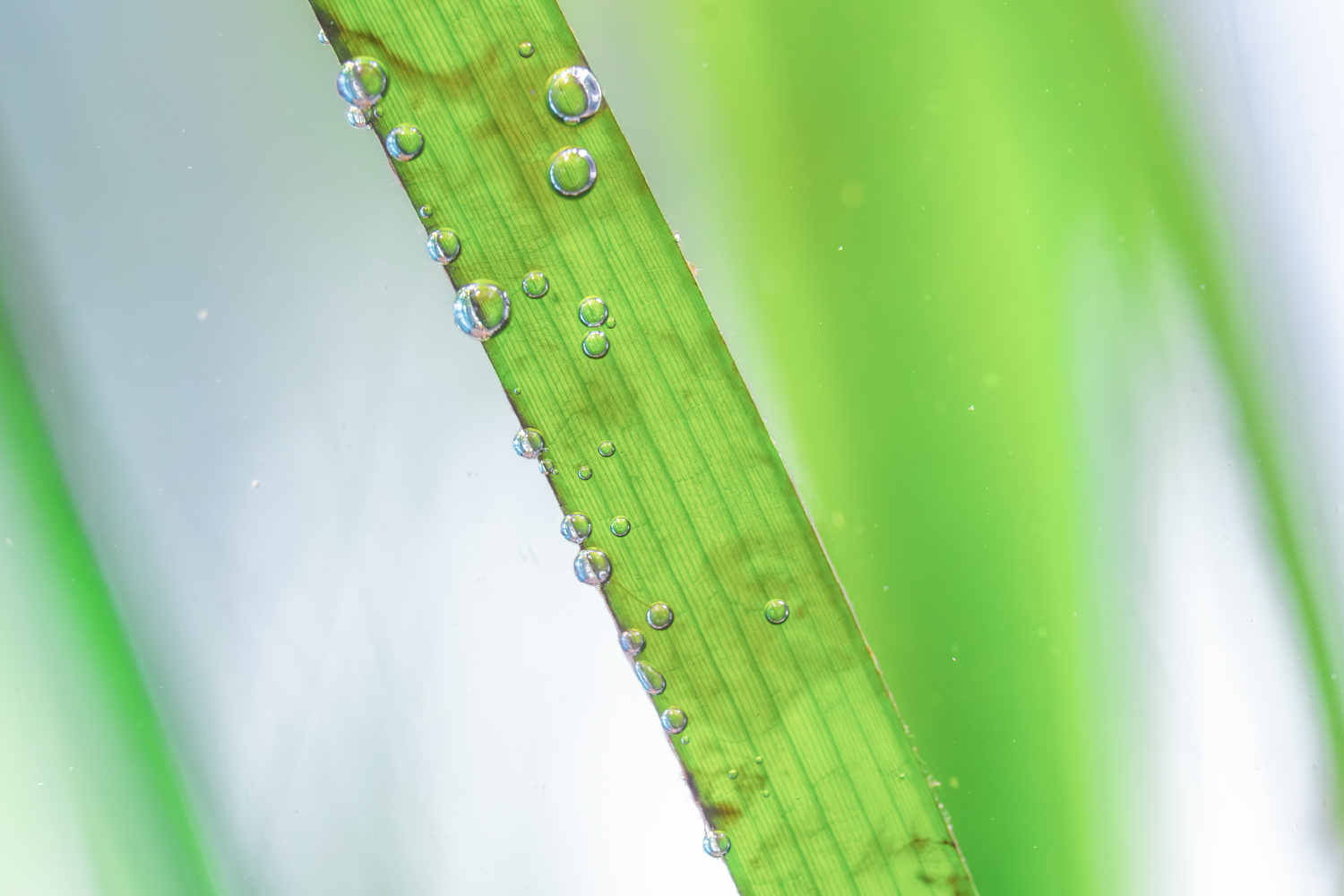
Many small bubbles come out of Bell-ware leaves. What are they? They are oxygen bubbles emitted by Bell-ware. Bell-ware absorbs carbon dioxide through photosynthesis, creates nutrients, and releases oxygen. This function helps to prevent the rise in carbon dioxide concentrations and curb global warming, so the importance of Bell-ware beds is attracting attention.
The Lost "Cradle of the Sea"
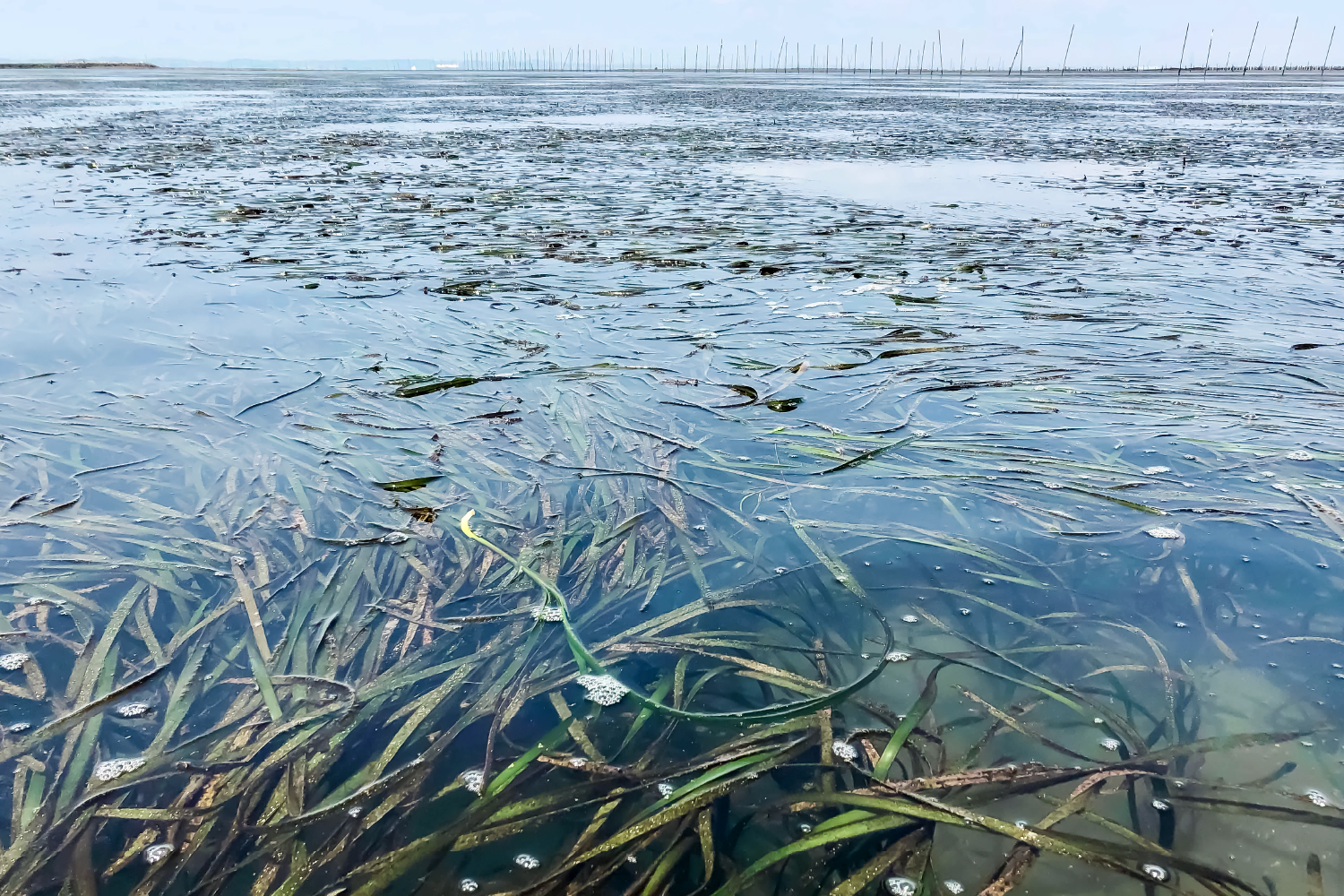
Tokyo Bay once had vast tidal flats and many Bell-ware beds, but most of these have been lost due to landfilling and deterioration of water quality. Bell-ware beds are an important ecosystem that not only nurtures a diverse range of living organisms, but also purifies the water and functions as blue carbon, absorbing carbon dioxide through photosynthesis. Efforts are underway in various places to restore lost Bell-ware beds.