

First exhibition of the blenny
October 23, 2026
In August 2026, we conducted biological collection in the Arctic Ocean for the first time in 13 years. The collection site was Cambridge Bay, a town in northern Canada. The organisms collected are on display in the "Arctic 2" tank in the Arctic and Antarctic Oceans section of the "World's Oceans" area. Because the water temperature at the collection site is very low, the water temperature in the tank is approximately 1°C.
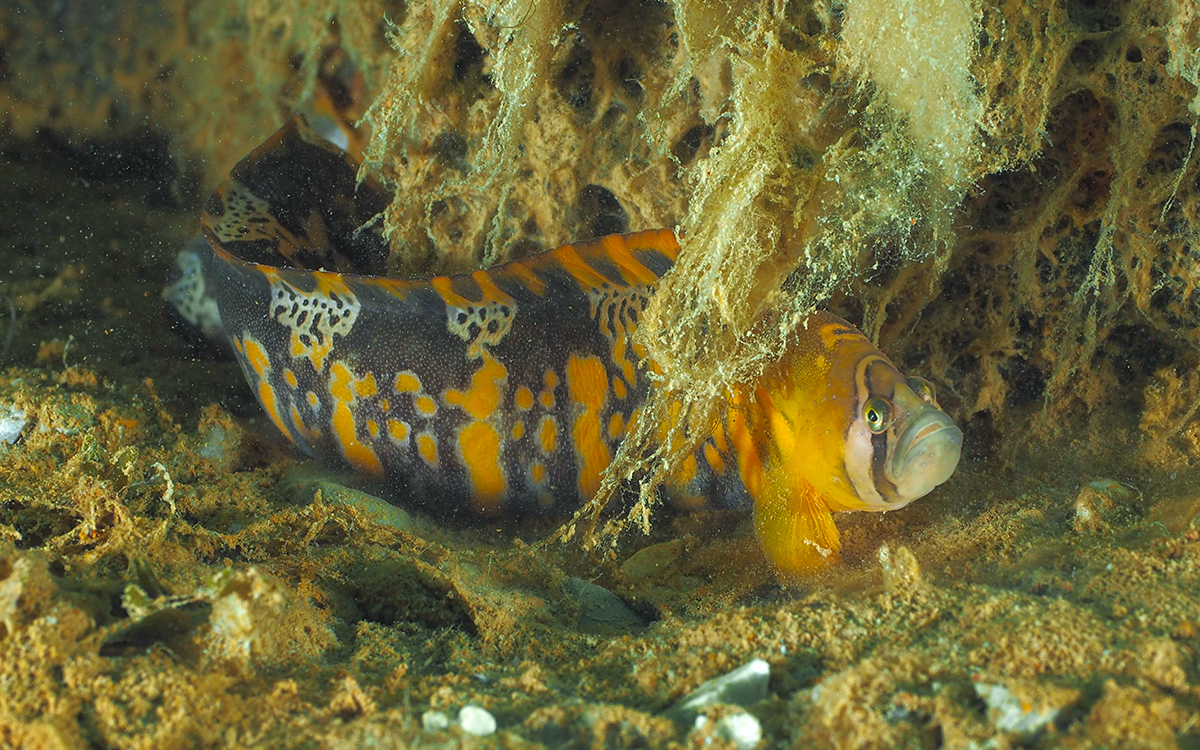
The creature we're introducing today is the ribbon blenny, which will be on display for the first time at Tokyo Sea Life Park. It belongs to the family Blenniidae in the order Perciformes, and its scientific name is Pholis fasciata, which literally translates to "fish with scales that have band-like patterns." This fish is characterized by the band-like vertical patterns on its body. It grows to a maximum length of about 30 cm and has a long, slender body shape that is flattened from side to side, similar to an eel.
Japanese names are often given to fish in Japan to make them easier to remember, but this fish has a Japanese name even though it lives in the Arctic Ocean, far from Japan. In fact, the distribution range of the blenny is very wide, and it lives not only in the Arctic and the North Atlantic, but also in the waters of Japan, such as Hokkaido and Aomori Prefecture, which are located in the North Pacific.
The blenny on display is about 30cm long, but it's difficult to see. This is because it prefers small crevices and hides, peeking out with only its head to observe its surroundings. In its natural habitat, it has been observed hiding in crevices in rocks and among seaweed, or in depressions in the sandy bottom where its body fits. Therefore, if you carefully observe the tank, you might spot it staring intently at you from a gap.
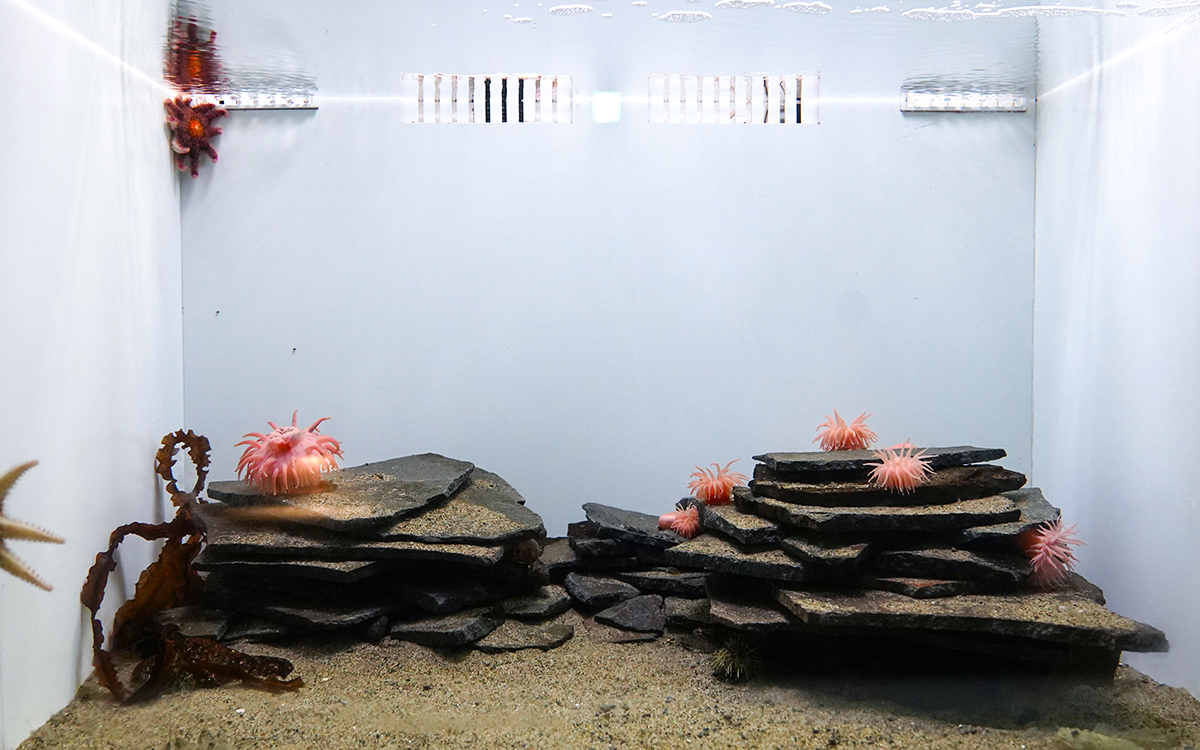
The local seas are home to many rock formations and stones sharply carved by thick ice, so the aquarium recreates this environment by combining such rocks. In addition to the blenny introduced here, we also have other species that live in the Arctic Ocean, such as the four-horned sculpin and the false trevally on display, so please be sure to observe them.
[Tokyo Sea Life Park]