

First public display and breeding of the Salsia jellyfish
May 8, 2026
Pay attention to the center of the body!
Starting May 8, 2026 Tokyo Sea Life Park began exhibiting the Salsia jellyfish in the "Planktonic Life" section of the "Tokyo Sea" area. This is actually the first time the Salsia jellyfish has been exhibited at Tokyo Sea Life Park.
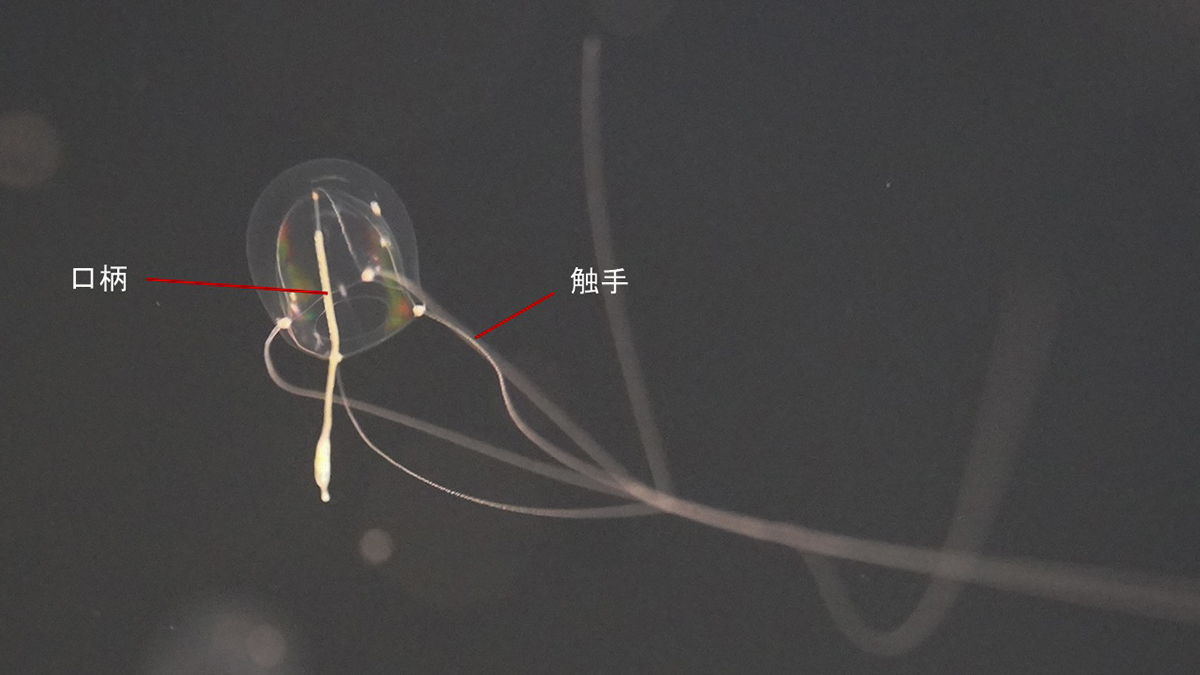
The salsia jellyfish can be seen from winter to spring. Its habitat is mainly in Hokkaido and Tohoku, and it is commonly found on the Sea of Japan side. Its bell is about 10 mm tall, making it relatively small compared to other jellyfish.
The most distinctive feature of this jellyfish is the "mandible," a part that extends downwards from the center of the bell. The mandible is the protruding mouth of the jellyfish. It is retractable, and you can observe it extending and contracting at any time. Some individuals even have mandibles that are six times the height of their bell.
Then, when tiny plankton called Artemia, which are its food source, attach to the four tentacles extending from its umbrella, it brings the tentacles and mouthparts closer together and eats them from the tip of the mouthpart.
Are Salsia jellyfish breeding?!
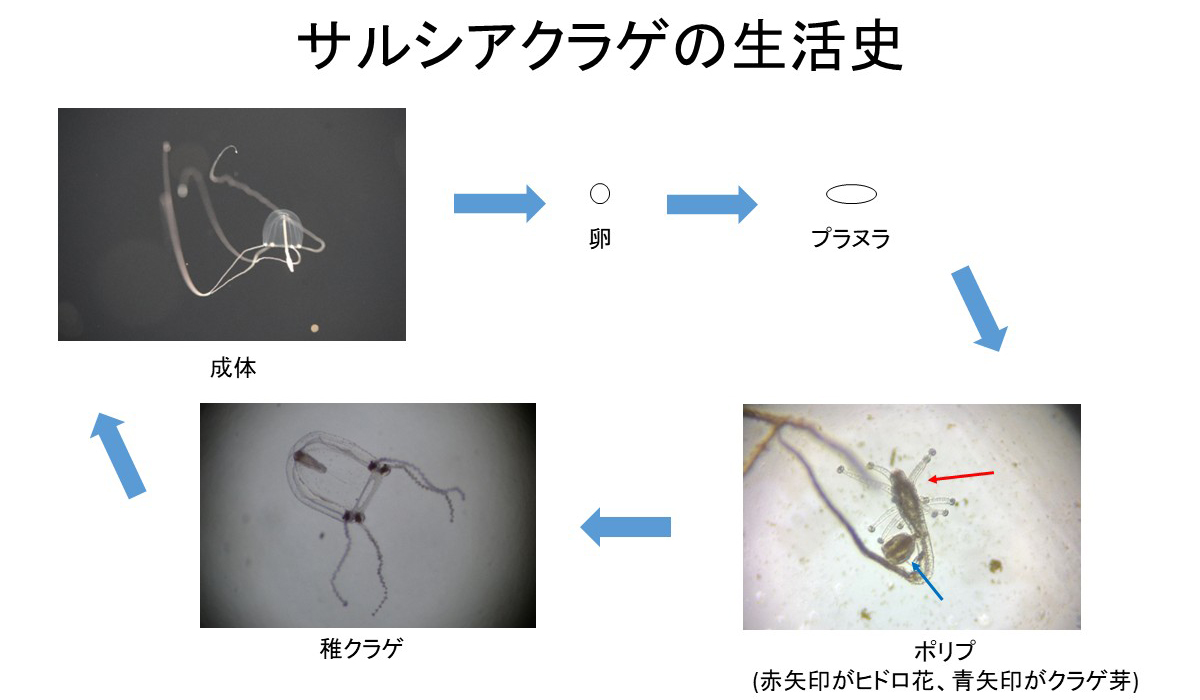
Salsia jellyfish belong to a group called "Hydrozoa." The life cycle of this group of hydrozoans begins with the eggs laid by the parent being fertilized, becoming "planulae," and then attaching to rocks or other surfaces to become "polyps."
Polyps have a plant-like shape. When magnified, polyps have roots, stems, and flower-like structures. The flower-like parts are called "hydroflowers." From the base of these hydroflowers, a part called a "jellyfish bud" is formed. When this jellyfish bud detaches, it becomes a "juvenile jellyfish." As these juvenile jellyfish grow, they become adults.
In preparation for the exhibition, we kept them in a tank in the back room for a while, and discovered polyps!
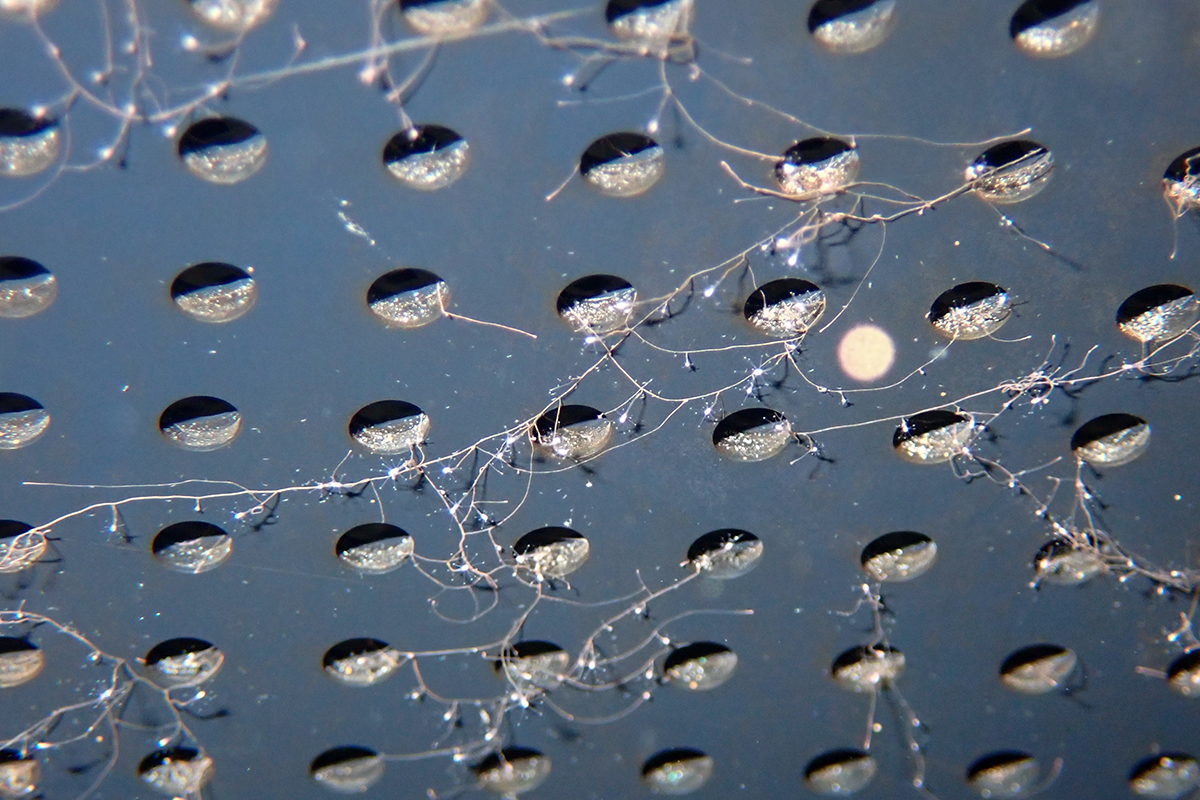
Since I had no experience raising this species and didn't know the appropriate amount to feed, I may have been right to give them a little extra food just to be safe.
If you look at this polyp under magnification...
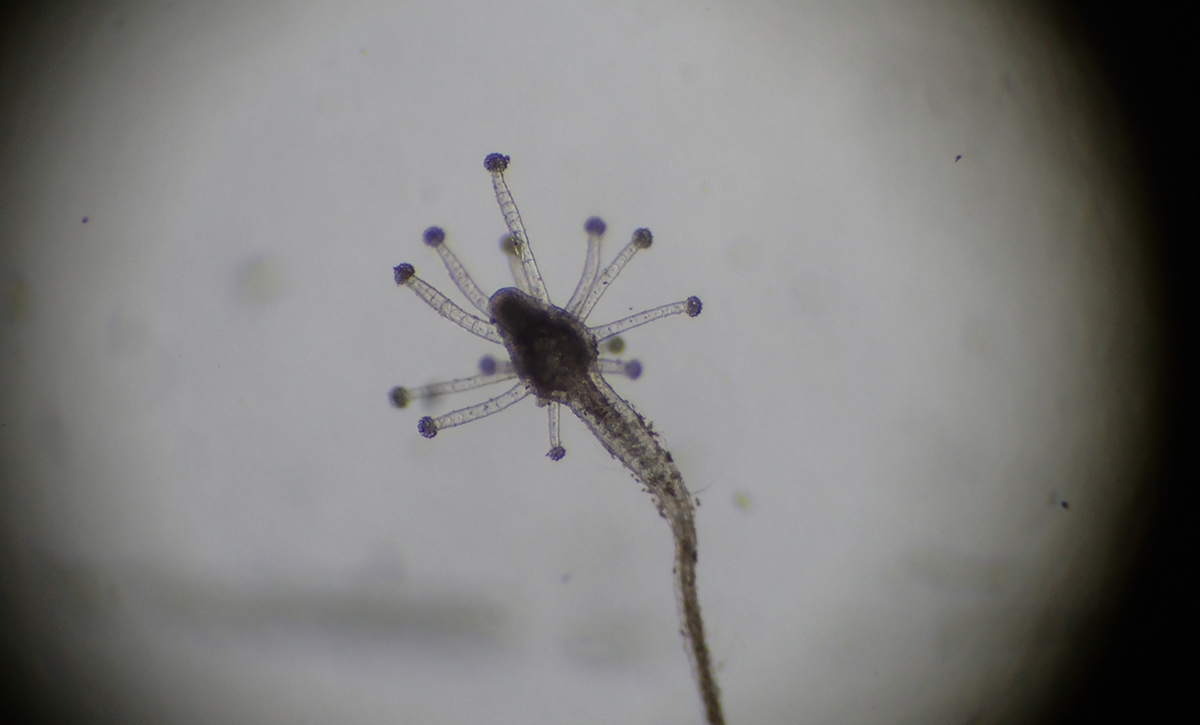
We were also able to spot hydroid flowers. And when we looked closely at the tank, we saw baby jellyfish swimming around!
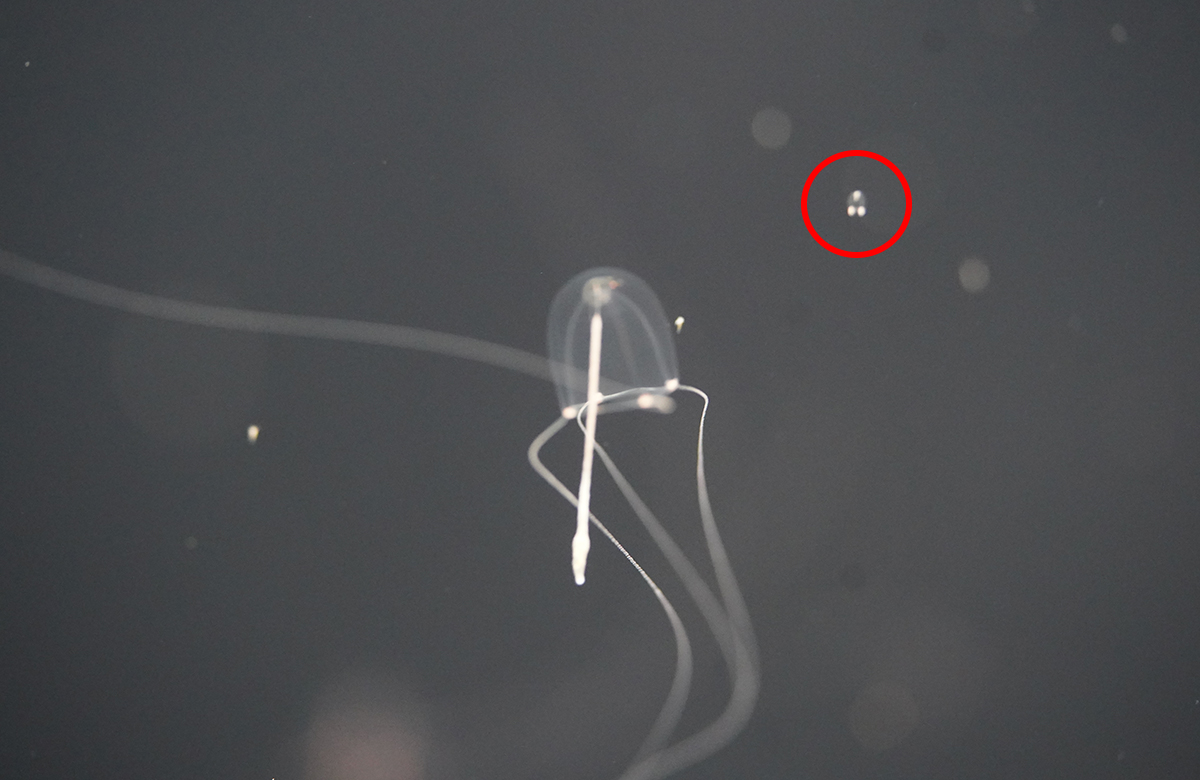
It's a little hard to see, but the things circled are juvenile jellyfish.
The juvenile jellyfish are only about 1 mm in size, but they grow large by feeding on Artemia. When examined under a microscope, they do not yet have the long oral stalks of adults, but they do have long tentacles.
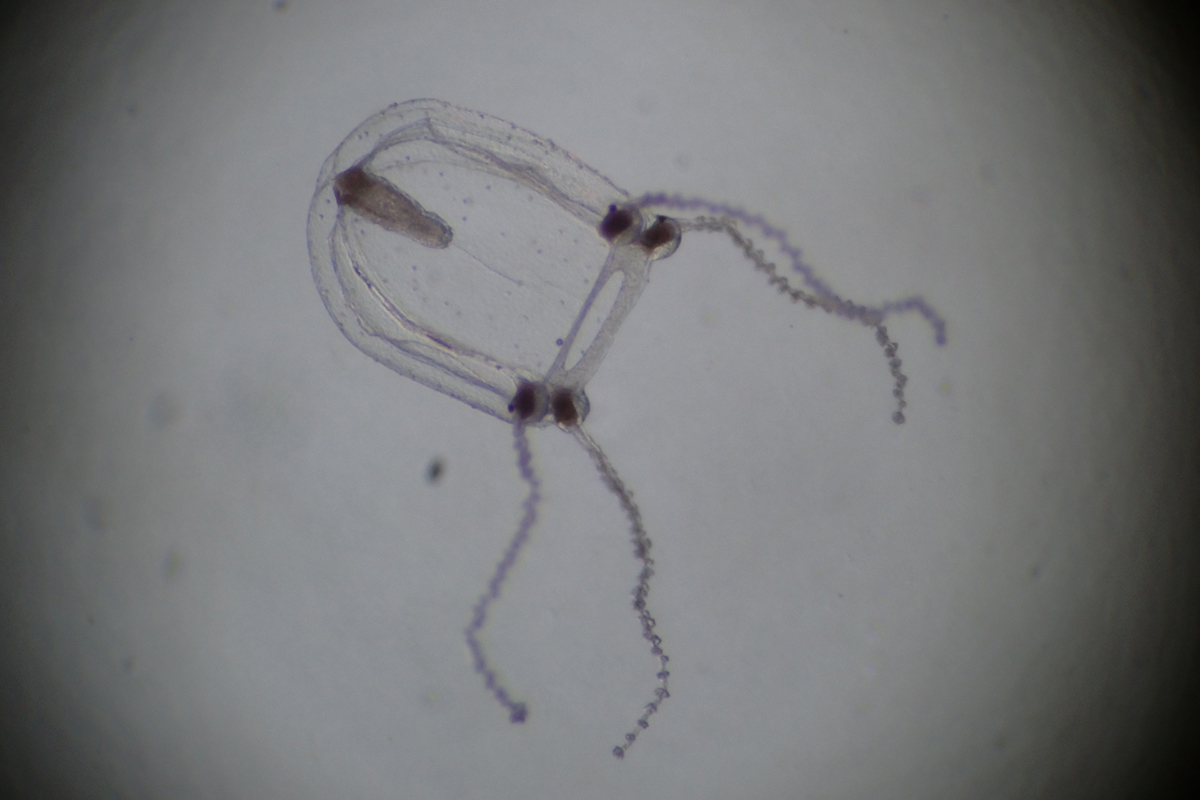
Going forward, we will take care to ensure stable year-round display by paying attention to their diet and water flow during their care.
*Depending on the condition of the animals, some may not be on display.
[Tokyo Sea Life Park]