

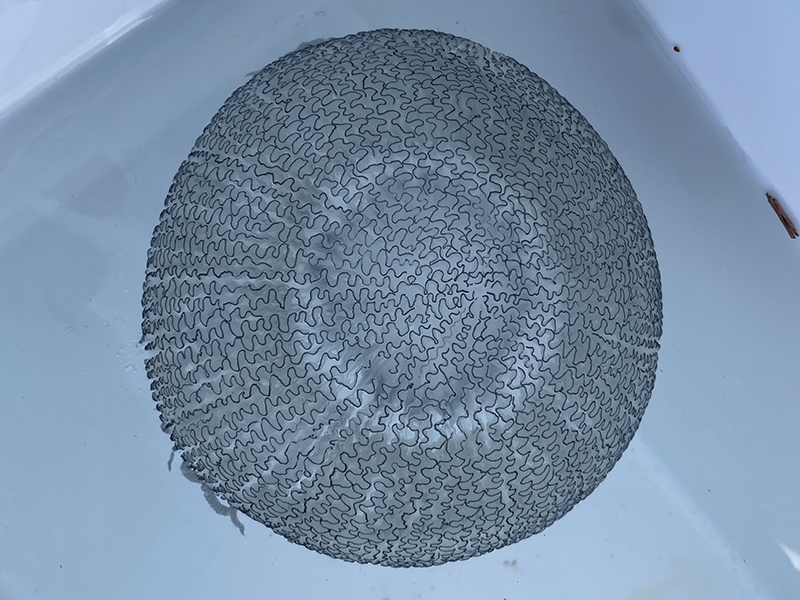
The pattern on the umbrella is also fascinating - the Casario one-jellyfish
February 13, 2026
In January of this year (2026), a rare jellyfish was exhibited in the "Plankton" section of the "Tokyo Sea" area. The name of the jellyfish is...
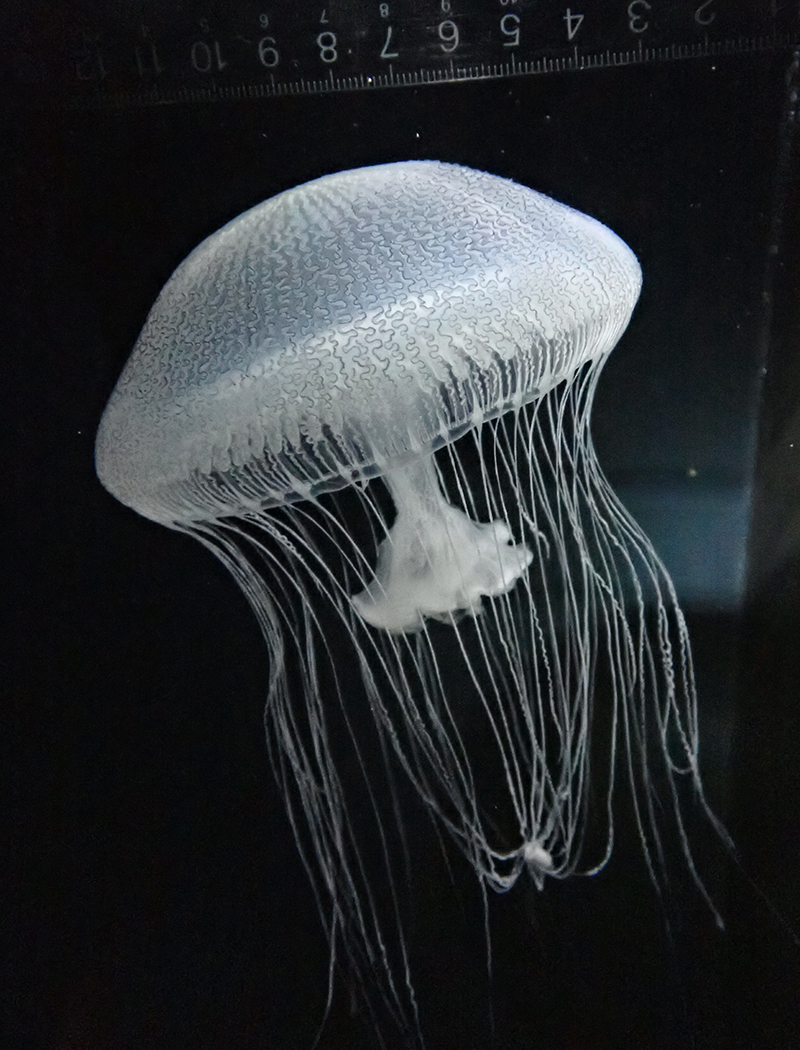
It's a "Cazariono jellyfish."
This jellyfish has rarely been collected, and this is its first time being exhibited at Tokyo Sea Life Park. As its name suggests, the entire outside of its umbrella is covered in wavy, decorative stripes that radiate outward. The number of stripes increases towards the edge of the umbrella, reaching 70 to 150.
It is rarely seen in coastal areas and is often observed after typhoons, so it is thought to be a jellyfish that is distributed in the open ocean. This specimen was also collected on a windy day at a fishing port in Numazu City, Shizuoka Prefecture.
As I had never kept this type of jellyfish before, I was excited to observe it in the tank, wondering what kind of jellyfish it was. I discovered that it had many other interesting features besides its pattern, such as tentacles that stretch out to over 70cm and its food preferences.
The Casario One jellyfish is a jellyfish that eats other jellyfish. As a test, we gave it a misshapen Moon Jellyfish, which it caught but let go halfway through. Next, we gave it a shrunken cucumber jellyfish, which completely changed course, entangling it with its tentacles and pulling it in with great force to eat. This time, we were able to observe it not only bending the edge of its umbrella, but also tilting its drooping mouth to skillfully eat.
Additionally, members of the Aequorea victoria family are known to emit light. When exposed to black light, the edges of their caps appear to glow green due to the green fluorescent protein (GFP).
Since there was almost no information available on how to best care for it, we first adjusted the strength and direction of the water flow to prevent it from touching the walls or getting its tentacles tangled. Unfortunately, however, it gradually weakened, and on January 23rd, after 23 days of care, we had to end the exhibit.
This experience has also highlighted issues such as food and the shape of the aquarium, so if we are able to collect them again, we will try to raise them in a healthy condition for as long as possible.
[Tokyo Sea Life Park]
Related articles
(February 13, 2026)