

Joint research efforts on highly pathogenic avian influenza
January 2, 2026
Tokyo Sea Life Park is engaged in collaborative research with various research institutions. This time, we would like to introduce our research on countermeasures against highly pathogenic avian influenza (hereinafter referred to as avian influenza), which we are conducting with the Department of Microbiology, Graduate School of Veterinary Medicine, Hokkaido University.
Avian influenza is a highly contagious and fatal disease in birds. While it does not pose a high risk of infecting humans, outbreaks in zoos and other facilities have been confirmed in Japan in recent years, posing a significant problem. The basic approach to combating this is prevention, including disinfecting transport vehicles and shoe soles to prevent the disease from being brought in from outside. However, if an outbreak of avian influenza does occur, there has been no effective means of actively treating infected birds until now.
In this context, previous studies in chickens have shown that human anti-influenza virus drugs are effective against avian influenza and have a high safety profile. While the effectiveness of these drugs is expected in other bird species, it is uncertain whether they will be effective using the same dosage and administration method as in chickens, as drug absorption rates and metabolic rates differ among species.
Last year, we investigated the usage and dosage of this drug using Humboldt Penguin kept at Tokyo Sea Life Park. We fed Humboldt Penguin fish containing the drug, then collected blood samples at intervals and measured the concentration of the drug in their blood. This allowed us to analyze how the drug concentration changes within the body.
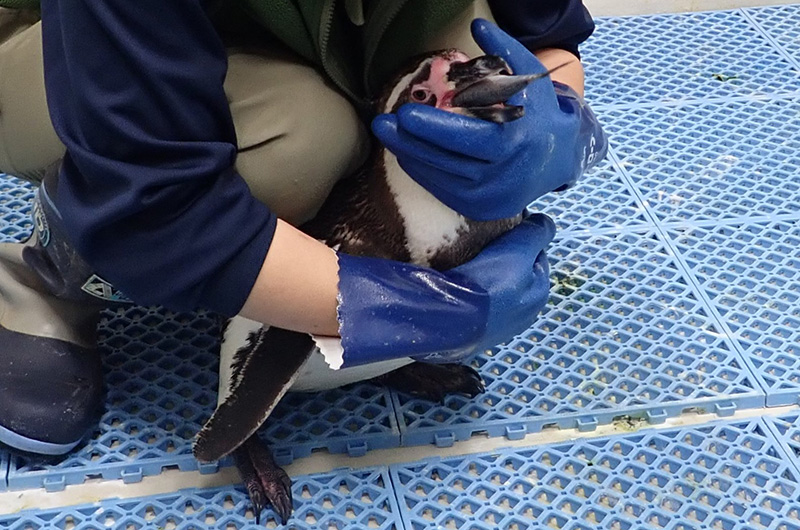
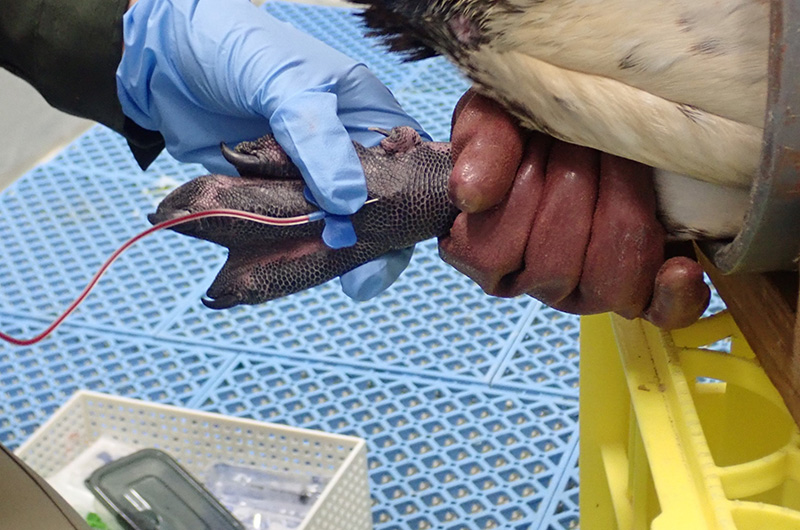
As a result, it was concluded that Humboldt Penguin were also susceptible to avian influenza using the same dosage and method as chickens. Furthermore, since no side effects were observed, it was determined that the drug could be safely used in Humboldt Penguin as well.
This study suggests the potential to treat influenza not only in Humboldt Penguin but also in various other bird species. Providing appropriate treatment could contribute to improving the animal welfare of captive animals.
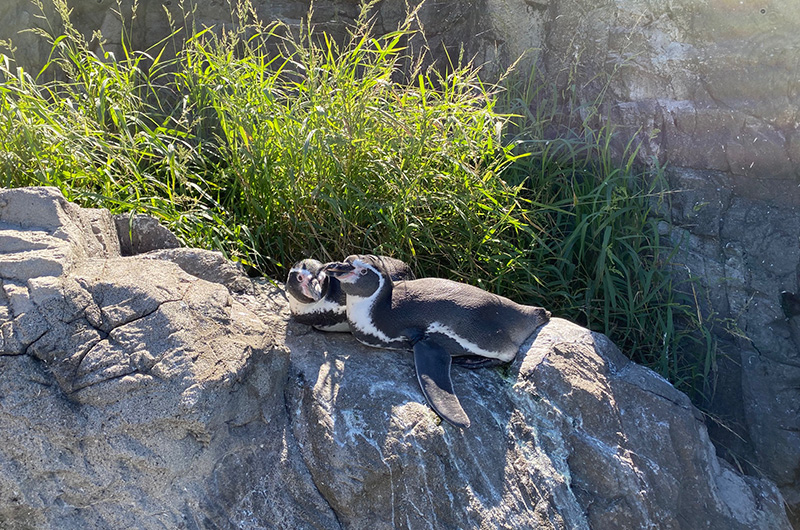
This year, we plan to conduct trials with Common Murre and Southern Rockhopper Penguin. We will continue to take all necessary precautions against infectious diseases and explore the possibility of treatment.
[Tokyo Sea Life Park]