

Green sea turtle makes debut in large aquarium
December 19, 2025
Two green sea turtles born this year that had been exhibited in the small tank of "Ogasawara Sea 4" in the "Tokyo Sea Area" of Tokyo Sea Life Park will make their debut in the larger tank in November 2025. For more information about these two, please see "Green Sea Turtles Back on Display!" (posted September 26, 2025).
When it arrived at the aquarium, its shell was about 6cm long and it weighed about 45g, but now it is about 16cm long and weighs about 850g, and is growing well.
Once a week, we measure their weight and shell length to monitor their health, but to do so, we need to be able to tell the two apart. As we continue to observe them every day, we notice some individual differences between the two. We will introduce these individual differences and some key points to observe in the aquarium.
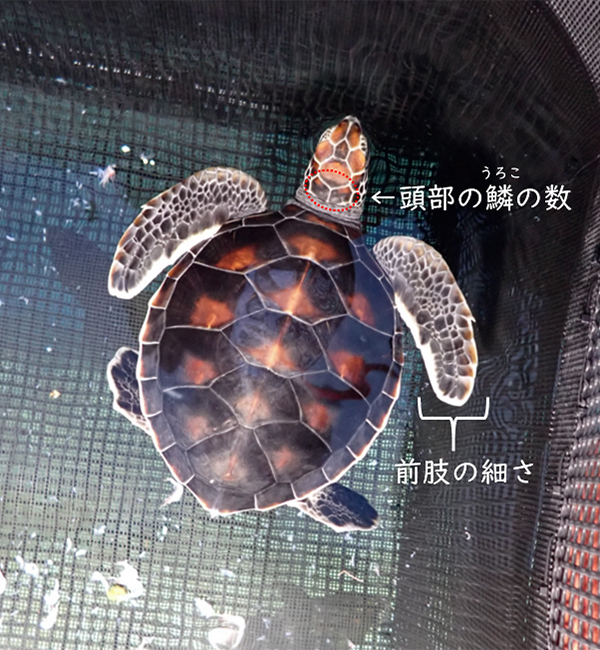
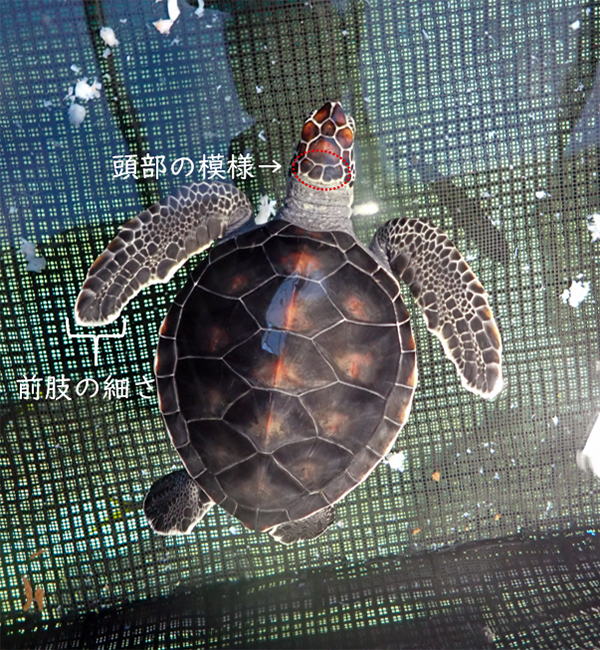
The first difference was in appearance: although slight, there were differences in the color of the shell and the width of the forelimbs.
Individual ① on the left of the photo has a reddish overall back, while individual ② on the right is black overall and has slightly thinner front legs than individual ①. There is also a difference in the scales on their heads; individual ① has two scales on the back, while individual ② has more than two.
The second difference is their food preferences. In the wild, green sea turtles eat mainly animals such as jellyfish and small fish for about a year after hatching, but as they grow, they become herbivorous and eat seaweed.
As they are only about five months old, they are mainly fed animal-based food such as shrimp, silver-striped herring, and Japanese Carpet Shell. In addition, they are given small amounts of plant-based compound feed. While individual 1 ate this food greedily from the start, individual 2 hardly ate any. Over time, individual 2 began to eat the compound feed little by little, but still tended to finish only the things it liked, such as fillets of fish.
To ensure that they eat a variety of foods evenly, we changed the order in which we fed them, giving their favorite foods last. By using this clever feeding method, they now eat the compound feed that they tend to leave behind.
They also spend their time in the tank in a variety of ways, with individual 1 resting on a rock and individual 2 hiding in a depression at the edge of the tank, and each one seems to have their own favorite place to relax.
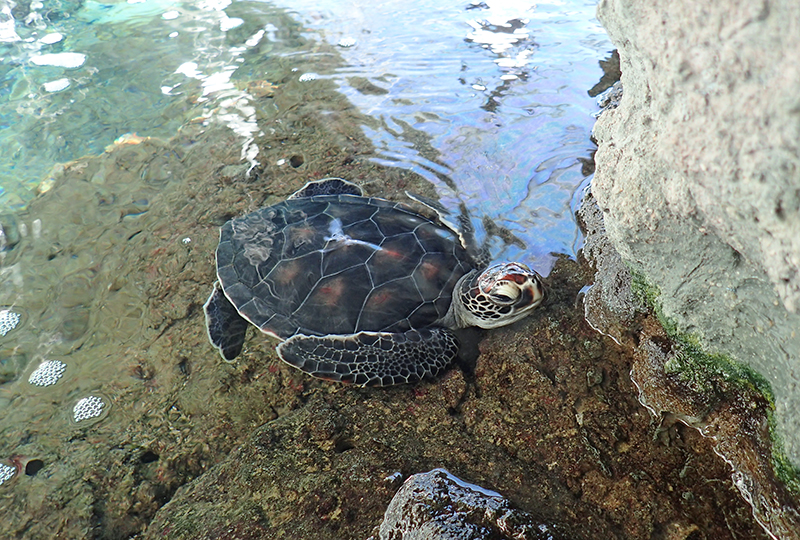
When observing, you can occasionally see them popping their heads out of the water to breathe.
While the fish swimming in the same tank breathe through their gills, sea turtles breathe through their lungs. Air is mainly taken in and out of their lungs through their nostrils. When you see them coming up to the surface, they take a breath with a "puff" sound that makes you want to add it. You can observe this from the catwalk on the second floor.
When you see a green sea turtle swimming in the tank, it might be interesting to observe when it comes to the surface to breathe. When you visit, be sure to take a look at the green sea turtle as it grows day by day.
[Tokyo Sea Life Park]