

Why not try looking for the hidden favorite of Ikimono Magica - the Sasaushinoshita?
December 5, 2025
The "Taberunomajika" area of the special "Ikimono Magica" exhibit at Tokyo Sea Life Park introduces the structure of the mouths of living creatures, the foods they eat, and the differences in how they eat through programs that use videos, specimens, and aquarium displays.
Did you know that there is a literally "hidden" popular fish in the aquarium at Taberno Magica?
Its name is Sasaushinoshita. It hides by burrowing into the sand, even among the flatfish that live in the sandy areas of shallow waters. It is very hard to find because it is so good at hiding.
Some of you may have actually tried looking for them at an aquarium but failed to find them. So, this time we will introduce some tips on how to find the Japanese scorpionfish in an aquarium!!
First, look at the area of the tank where there is no sand at the bottom.
Is there any area where the sand has run out and the bottom of the tank is visible? The Japanese stag beetle does not stay motionless in the sand all day. If there is a spot where the bottom of the tank is visible, it is likely that the Japanese stag beetle has left the sand and moved. If there are a series of dots, it may be hiding nearby.
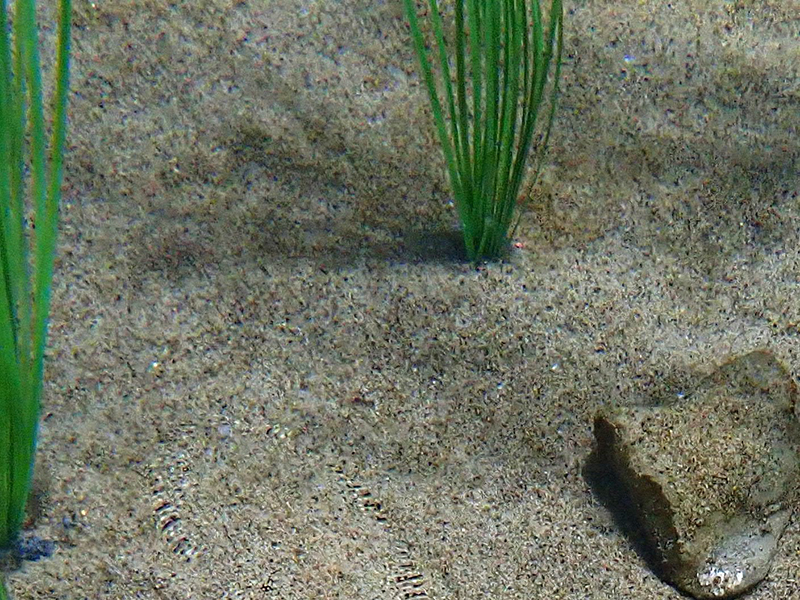
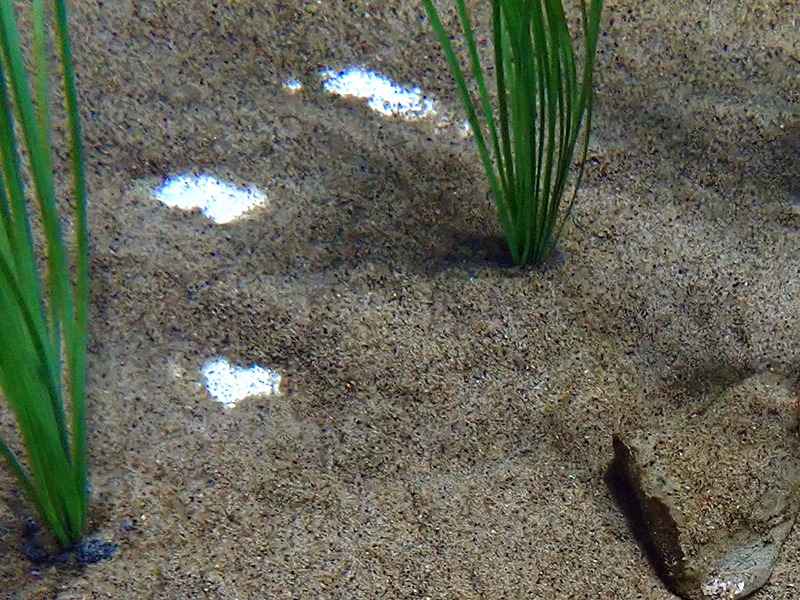
One of the key points is to find areas that feel out of place.
The sand dung beetle hides in the sand, but keeps its eyes above the sand so that it can see what is going on around it. Also, even while hiding, it moves its gills to breathe, so you can see the sand moving up and down. However, finding this is quite an advanced task.
Sometimes, you'll see fins or parts of their body sticking out of the sand. Their body color is similar to the sand, but keep your eyes peeled for these small, out-of-place details.
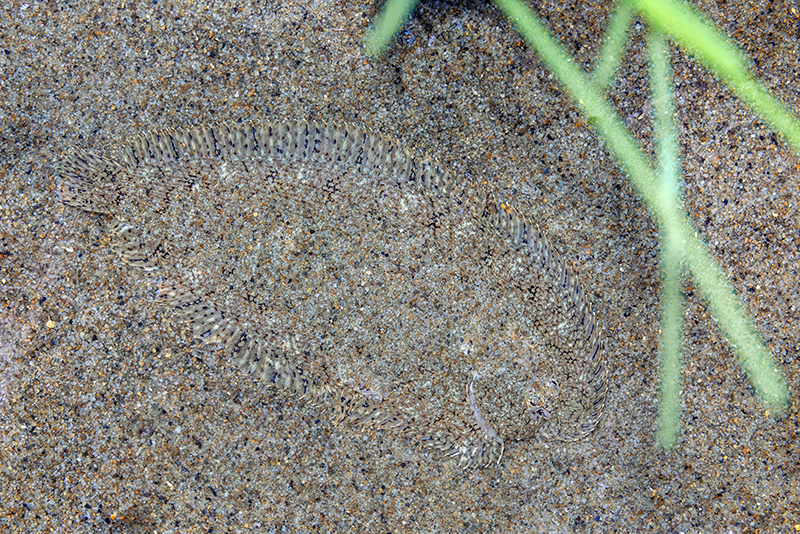
It will take some time, but you will surely find it. Depending on the timing, such as after feeding, you may be able to see the stag beetle moving around.
The way they move around on the sand using their dorsal and anal fins makes them look more like they're "crawling" than "swimming."
It would be a shame to stop after finding the Japanese bush warbler! Take a closer look at what its body looks like, how it hides, and try to deduce why it hides and what it can do to hide effectively. You'll be amazed at its clever hiding techniques.
[Manami Sato, Education and Outreach Officer at Tokyo Sea Life Park]