

Anesthesia for animals: managing breathing
news
Updated on January 16, 2026
Zoos often use anesthesia on animals when examining them, treating them, or transporting them safely. Anesthesia puts the animals to sleep, and while it is an essential procedure for reducing stress and anxiety caused by treatment, it also carries risks, such as reducing the function of the heart and lungs, slowing blood flow throughout the body, and weakening breathing.
For this reason, zoo veterinarians carefully manage the breathing of animals under anesthesia according to the species and weight of the animal. In this article, we will introduce three important tools used in this process: an endotracheal tube, a laryngoscope, and a ventilator.
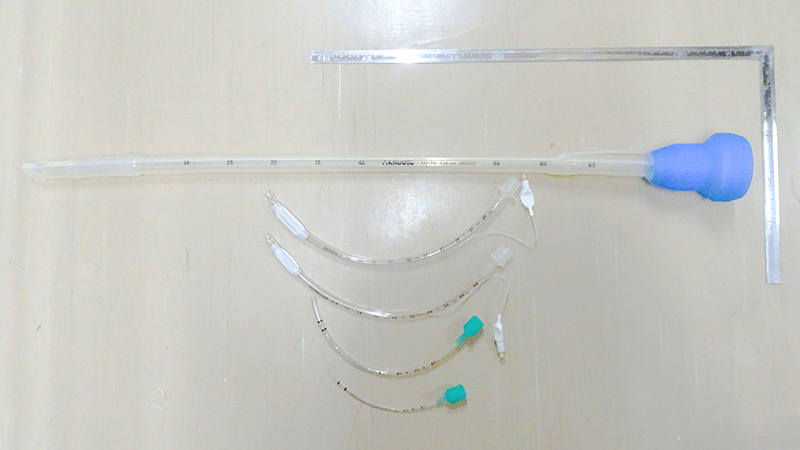
An endotracheal tube is a tube inserted into the trachea from the larynx, located in the middle of the throat at the back of the mouth. It secures an airway, allowing for the stable delivery of anesthetic gases and oxygen into the body during anesthesia, and also serves to prevent saliva and vomit from entering the trachea.
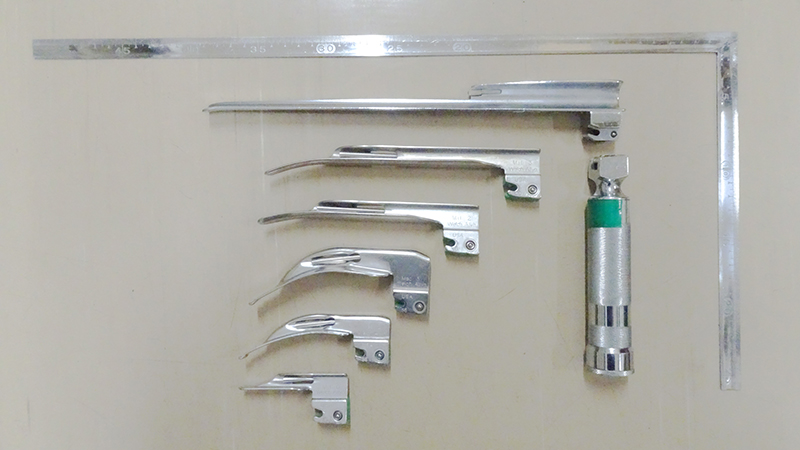
A laryngoscope is a tool that pushes down the tongue and shines a light into the entrance to the trachea at the end of the larynx to make it easier to see when a tube is passed into the trachea.
Veterinary clinics use various sizes of endotracheal tubes and laryngoscopes depending on the animal's species, mouth size, weight, and tracheal diameter.
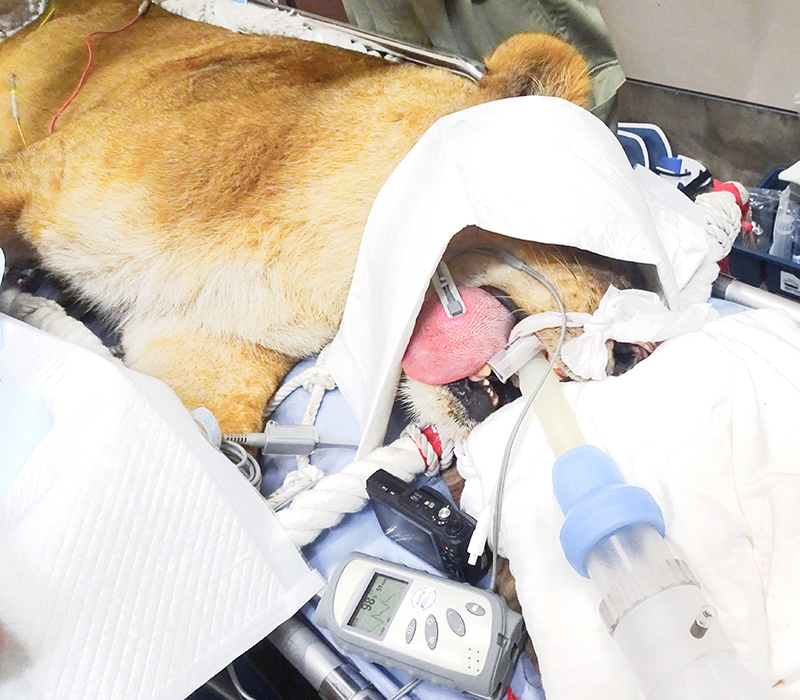
In the unlikely event that the animal's breathing becomes shallow and weak, a ventilator will be connected to the tube to support breathing. This is a machine that delivers oxygen at a constant rhythm to keep the animal alive. The amount and frequency of air delivered is carefully adjusted depending on the level of anesthesia.
During anesthesia, veterinarians and animal keeper monitor the number of breaths, chest movement, and color of the tongue and mucous membranes. Veterinarians can also directly check the condition of the heart and breathing in a variety of ways, such as checking the pulse values and waveforms on an electrocardiogram and listening to the heart sounds and respiratory sounds of the lungs with a stethoscope, allowing them to respond immediately in the event of an emergency.
A distinctive feature of anesthesia management at zoos is that the body structure and respiratory mechanisms of each animal vary greatly. Zoos house a wide variety of animals, including mammals, birds, and reptiles, as well as animals of various body sizes, and therefore require the selection of endotracheal tubes and laryngoscopes and respiratory management that are appropriate for each animal.
Anesthesia for any animal is always stressful, so advance preparation and simulation are important. Together with animal keeper we carefully discuss the process from anesthesia to waking up, taking into consideration the age and personality of the individual. We will continue to work to improve zoo medical care so that we can safely administer anesthesia to animals.
[Kato, Animal Hospital Section, Animal Care and Exhibition Division Tama Zoo]
Related articles
(January 16, 2026)