

The winning entry for the "Zoo and Aquarium Report Challenge 2025," aimed at junior and senior high school students, has been decided!
news
Updated March 19, 2026
Tokyo Metropolitan Zoos and Aquariums annually solicit research reports on the animals they exhibit. This initiative was started with the aim of letting junior and senior high school students experience the joy of observing animals and the fun of exploring their mysteries. This year, the fifth year of the program, we received a record-breaking 900+ submissions.
From the reports submitted, we have selected one entry from the high school division and three entries from the junior high school division as the "Annual Best Work," one entry from the high school division and five entries from the junior high school division as "Encouragement Awards," and one entry from the high school division and two entries from the junior high school division as "Unique Awards." Please see below for details.
Best work of the year
Best work of the year
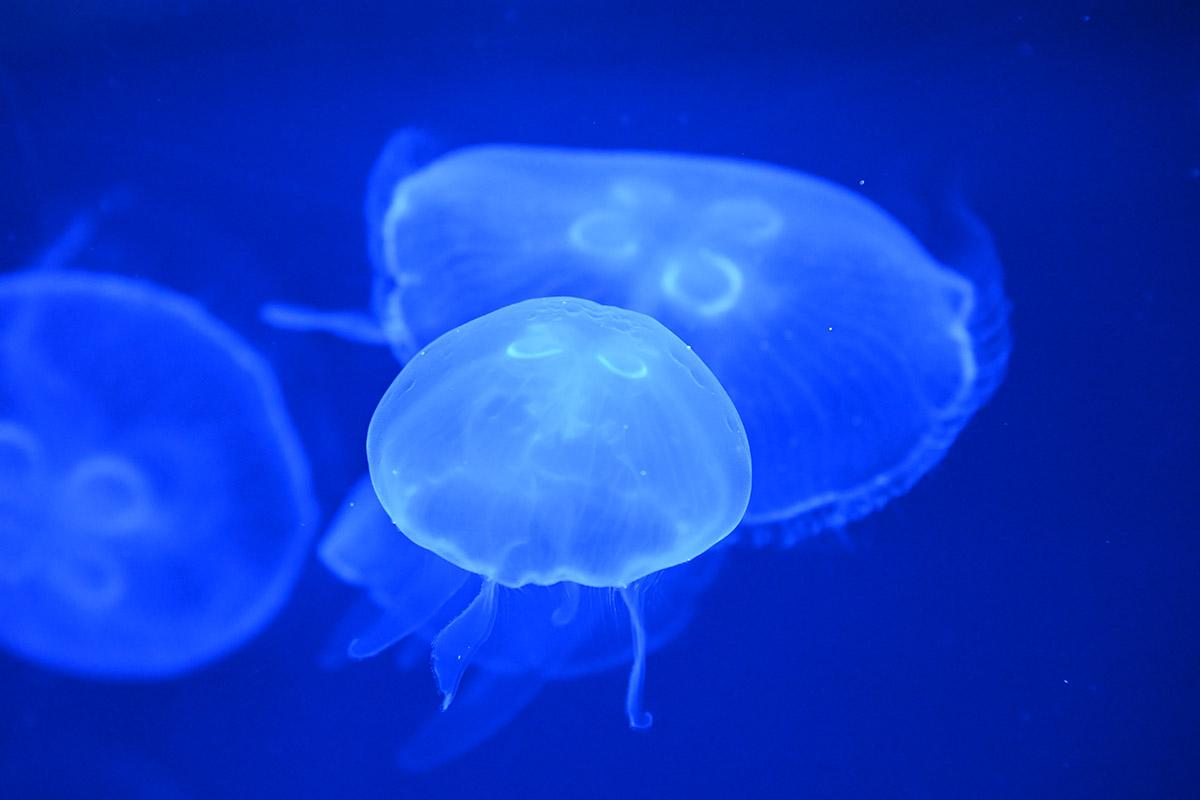
Why do Moon Jellyfish have four stomachs? – Considering the correlation between the number of stomachs and various organs, digestion, and absorption.
Shudai Inoue (1st year high school student, Hoyu Gakuin High School)
[Selector's Comments]
Moon Jellyfish exhibit variability in the number of stomachs (gastric cavities), typically four. Research clarifying the morphological, physiological, and metabolic differences between individuals with different gastric cavities requires specially set up breeding environments and the preparation of test specimens. However, Ms. Inoue conducted detailed observations and analyses of the exhibit tanks at Tokyo Sea Life Park as a regular visitor. In measuring feeding and digestion efficiency, she observed the digestion process of food taken into the gastric cavities for more than two hours, concluding that the normal number of four gastric cavities is the most appropriate. If Ms. Inoue's dream of working at an aquarium comes true, we hope she will become animal keeper who conveys the fascination of living creatures through exhibits.
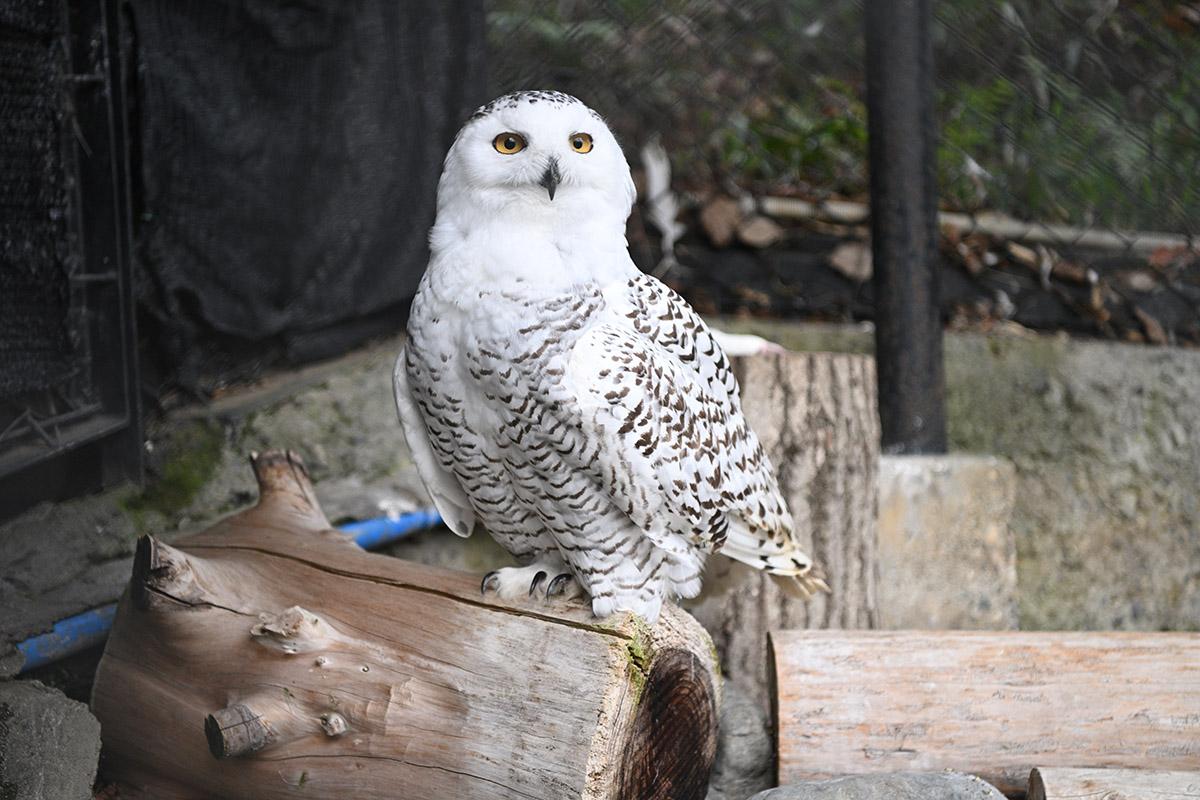
Challenging the nocturnal image? The daytime world of Ural Owl: A comparison of captive behavior of Snowy Owl and Ural Owl, and the influence of environmental factors.
Taichi Iisaka (2nd year junior high school student, Tokyo Metropolitan Mitaka Secondary School)
[Selector's Comments]
Ms. Iisaka, interested in the daytime behavior of Ural Owl, which are generally perceived as nocturnal, conducted observations of two different Ural Owl species during zoo opening hours on two days in July and August. Normally, observations are only possible during daylight hours at this time of year, but the August observations were conducted on a special day with extended opening hours, allowing for analysis of behavior during dark hours as well. The observation results supported two hypotheses Ms. Iisaka had formulated regarding the differences between Snowy Owl and Ural Owl. In her report, she also mentioned the significance of observation at the zoo, which she felt through this research. We hope that Ms. Iisaka will continue her observations in the future.
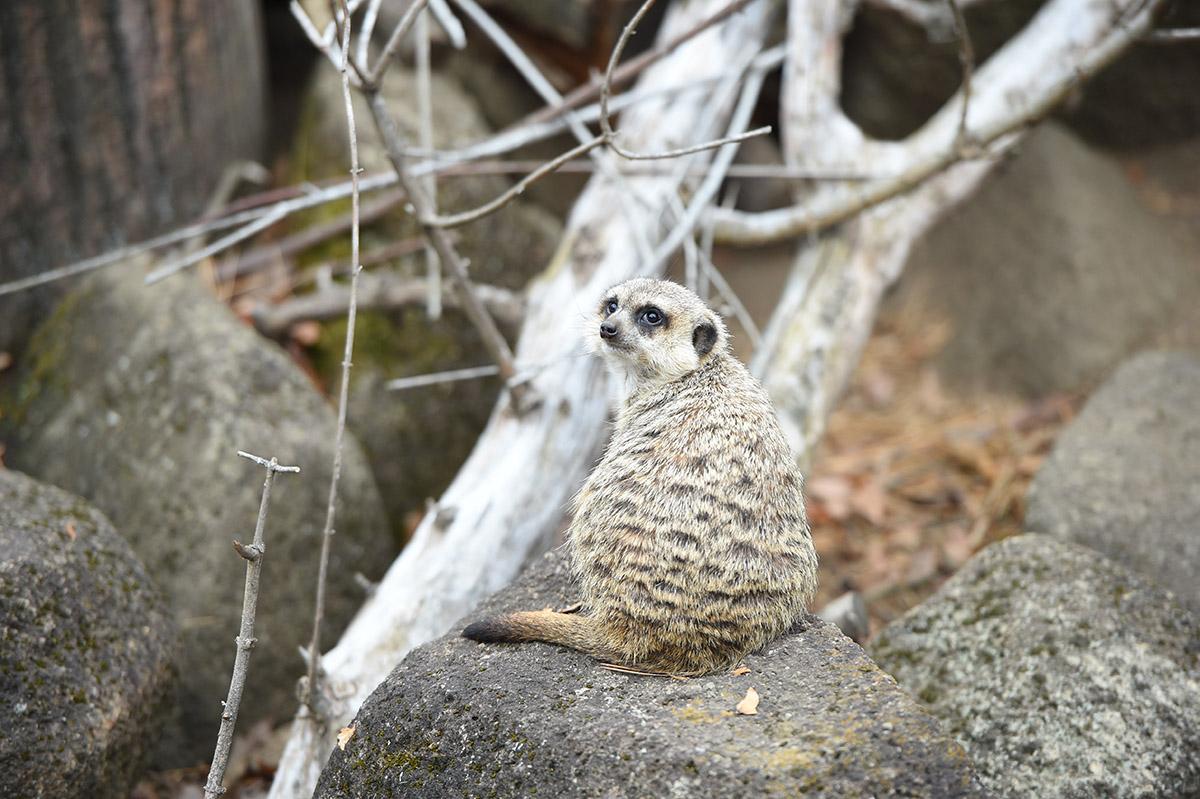
Why is it that Meerkat can stand stably on two legs?
Kazuma Ikeda (2nd year junior high school student, Tokyo Metropolitan Mitaka Secondary School)
[Selector's Comments]
Ikeda probably doesn't know that about 20 years ago, a video of Red Panda at a certain zoo standing up went viral. The fact that an animal that normally lives on four legs stood on two legs attracted attention as something special, and Ikeda, who chose this behavior as the theme for her report, was able to analyze it scientifically. To address the skeletal structure, which is lacking in observations of live animals, she cited data and clarified the differences in bipedal standing between Meerkat and a meerkat. I hope she will also tackle remaining issues such as muscle usage and the expanded field of vision gained by standing up.
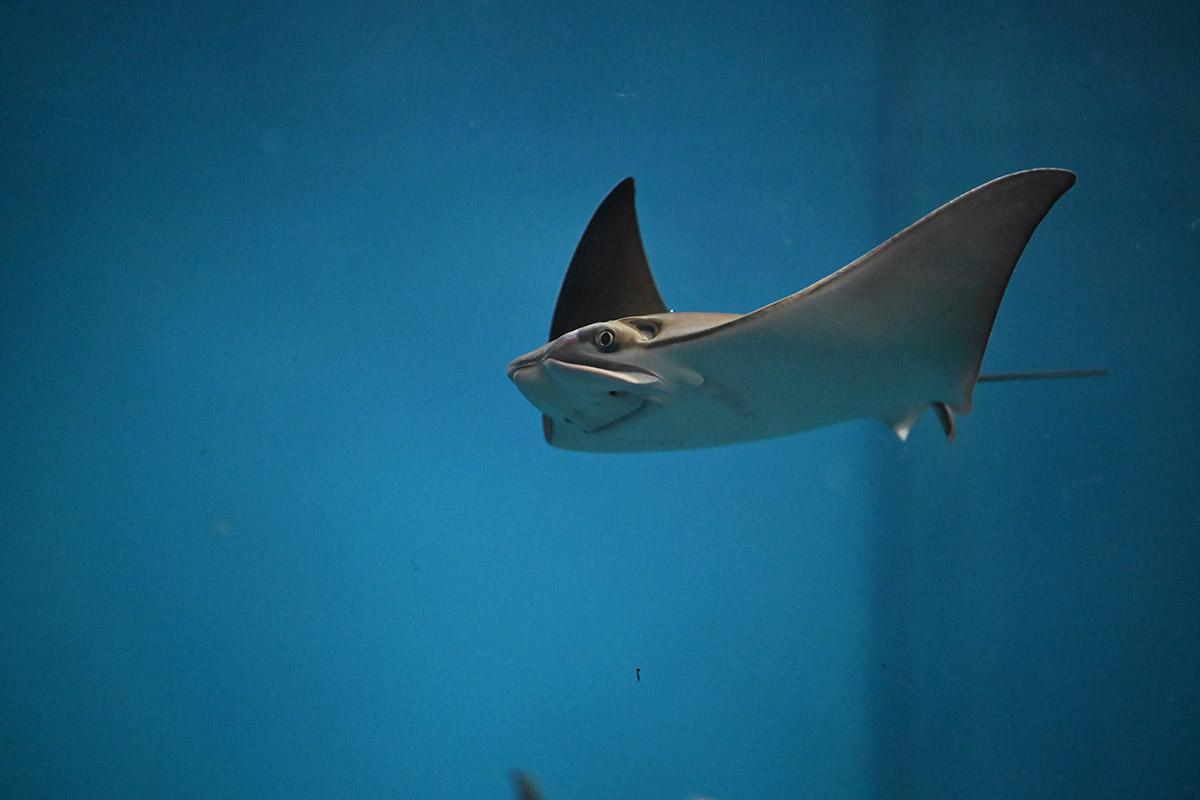
The swimming techniques of Flapnose Ray
Reino Suezawa (2nd year junior high school student, Tokyo Metropolitan Mitaka Secondary School)
[Selector's Comments]
In the report challenge, there seem to be certain species and themes that are more likely to be chosen. Perhaps many students set their themes based on topics that came up when they did an internet search for the name of a creature they vaguely knew. On the other hand, Ms. Suezawa deepened her research on the unique vertical swimming style she discovered when she first observed Flapnose Ray. Themes set from actual observations tend to yield better results in observations at the exhibit and lead to highly original reports. From Ms. Suezawa's report, it was clear that she enjoyed the process of considering observation methods to solve the problem and researching materials for her analysis. We hope to see more reports like this.
Encouragement Award
Encouragement Award
The effects and potential of environmental enrichment at Ueno Zoo
Haruka Hoshikawa (2nd year high school student, Ouyu Gakuen Girls' Junior and Senior High School)
How the red jellyfish swims and the benefits of doing so.
Yuna Ouchi (1st year junior high school student, Tokyo Metropolitan Oizumi High School Attached Junior High School)
Is Patagonian Mara popular?
Ikuna Nakamura (1st year junior high school student, Fujimigaoka Junior High School)
Regarding the grooming behavior of Giraffe at Tama Zoo
Haruto Watari (2nd year junior high school student, Chuo University Affiliated Junior High School)
The mystery of pigeons moving their heads when they walk
Tatsuma Otomo (1st year junior high school student, Oku Hachiman Junior High School, Arakawa Ward)
Similarities between apes and humans as seen through their walking patterns
Chisa Okazaki (2nd year junior high school student, Joshi Gakuin Junior High School)
Unique Award
Unique Award
Oriental White Stork
Rina Komaki (2nd year high school student, Otsuma Tama Junior and Senior High School)
Investigate the mystery of the white belly!
Akari Omiya (1st year junior high school student, Tokyo Metropolitan Oizumi High School Attached Junior High School)
Why did humans lose in the Emu Wars?
Shie Yamamoto (3rd year junior high school student, Fujimigaoka Junior High School)
We're accepting submissions again in 2026!
We are currently accepting submissions for the "Zoo and Aquarium Report Challenge" research report this year as well. If you have any questions regarding tips for observing animals or how to compile your report, please feel free to contact us by email. We also provide support for submissions made as school assignments.
Contact email: edu-center@tzps.or.jp