Zoo Stock Species and the Red List
Zoo Stock Species and the Red List
Zoo Stock
This indicates that the species is included in the Second Zoo Stock Plan, which was formulated by the Tokyo Metropolitan Government in 2018. The plan sets goals for the next 10 years in three areas: "species conservation," "contribution to wildlife conservation," and "environmental education and conservation awareness." 124 animal species are included.
What is the Red List?
Based on scientific research, this is a list of wildlife classified by rank (category) indicating the degree of risk of extinction.
Livng Things Encyclopedia shows the categories (mainland and islands) assessed by the IUCN (International Union for Conservation of Nature) at the global level, the Ministry of the Environment for Japan, and the Tokyo Metropolitan Government for Tokyo.
The higher the category in each table, the higher the risk of extinction, and CR, EN, and VU are the three categories known as "endangered species." In Tokyo, species that are not at the NT (near threatened) level but are relatively rare are considered "species of concern."
|
IUCN categories |
|
|---|---|
|
EX |
extinction |
|
EW |
Extinction in the wild |
|
CR+EN |
— |
|
CR |
Serious crisis |
|
EN |
crisis |
|
VU |
emergency |
|
NT |
Near Threatened |
|
LC・○ |
Low Concern |
|
DD |
Data shortage |
|
LP |
— |
|
Japan (Ministry of the Environment) Category |
|
|---|---|
|
EX |
extinction |
|
EW |
Extinction in the wild |
|
CR+EN |
Endangered species |
|
CR |
Critically Endangered |
|
EN |
Endangered species |
|
VU |
Endangered species |
|
NT |
Near Threatened |
|
LC・○ |
— |
|
DD |
Lack of information |
|
LP |
Endangered |
|
Tokyo Category |
|
|---|---|
|
EX |
extinction |
|
EW |
Extinction in the wild |
|
CR+EN |
Endangered species |
|
CR |
Critically Endangered |
|
EN |
Endangered species |
|
VU |
Endangered species |
|
NT |
Near Threatened |
|
LC・○ |
Unranked |
|
DD |
Lack of information |
|
LP |
Endangered |
Creatures at Tama Zoo
Creatures at Tama Zoo
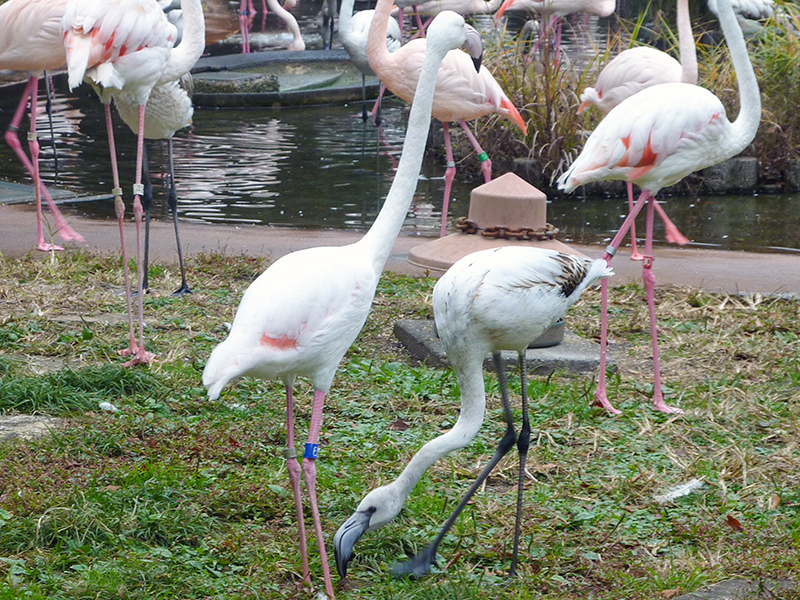
Greater Flamingo
Greater Flamingo
Phoenicopterus roseus
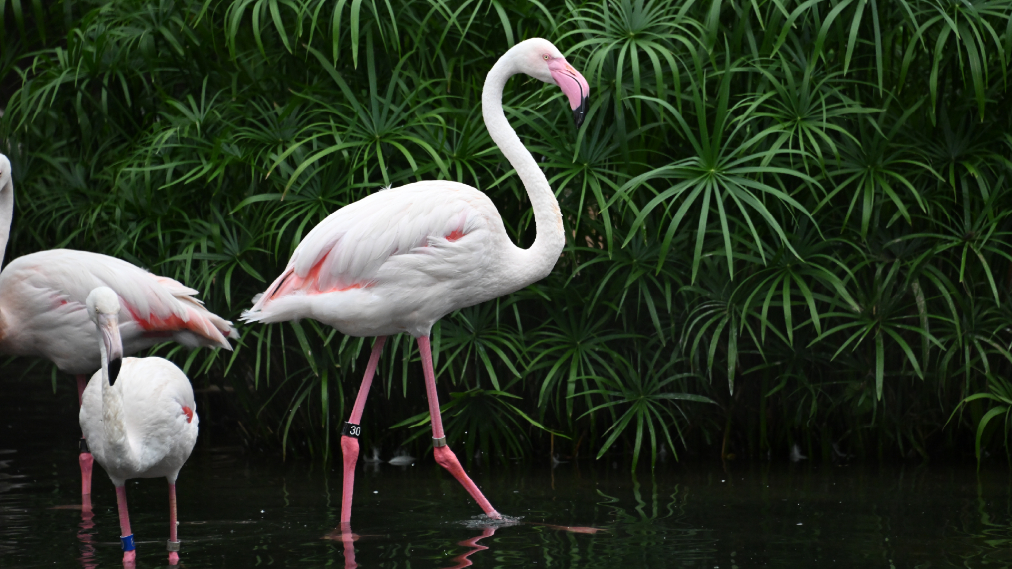
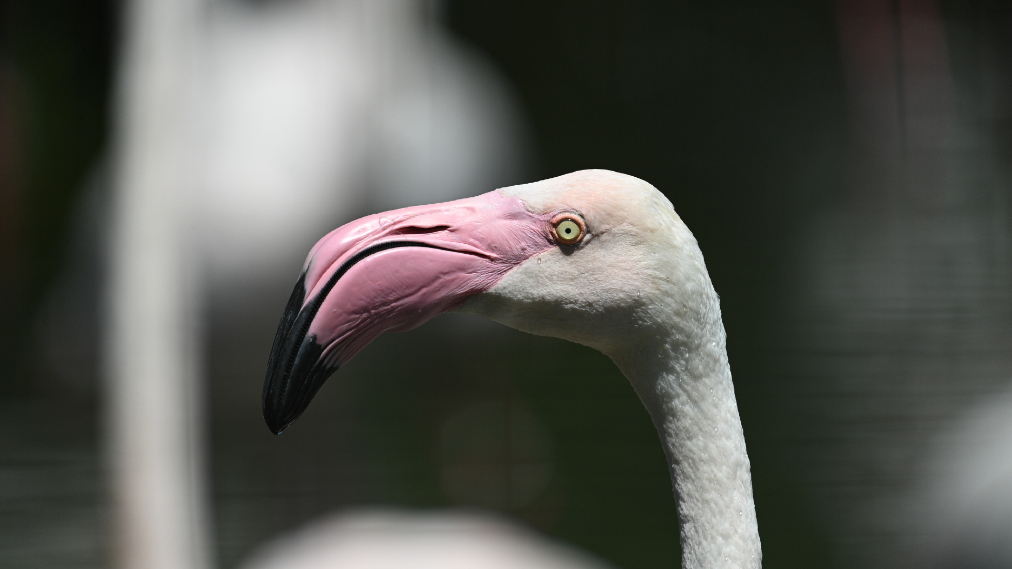
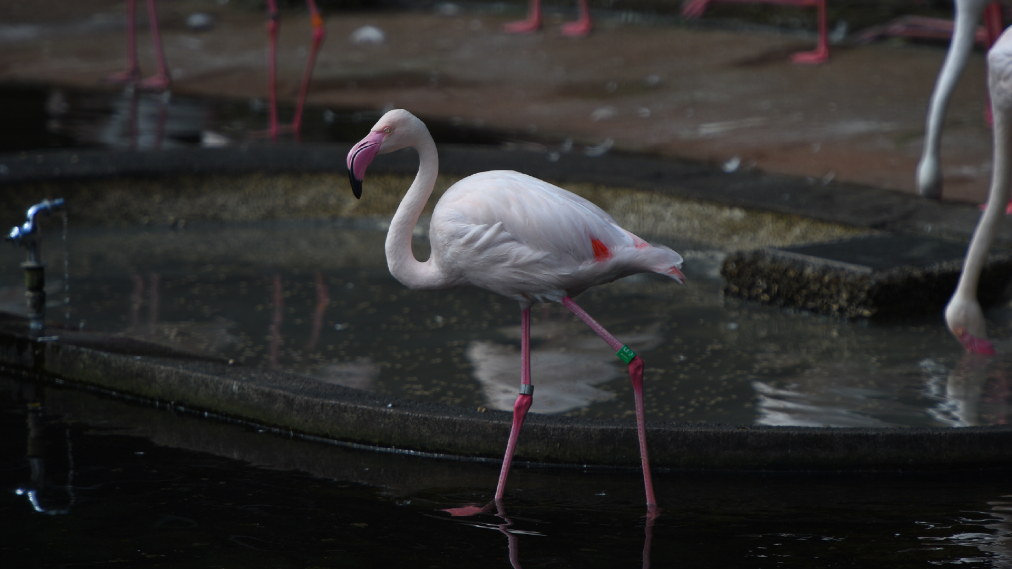
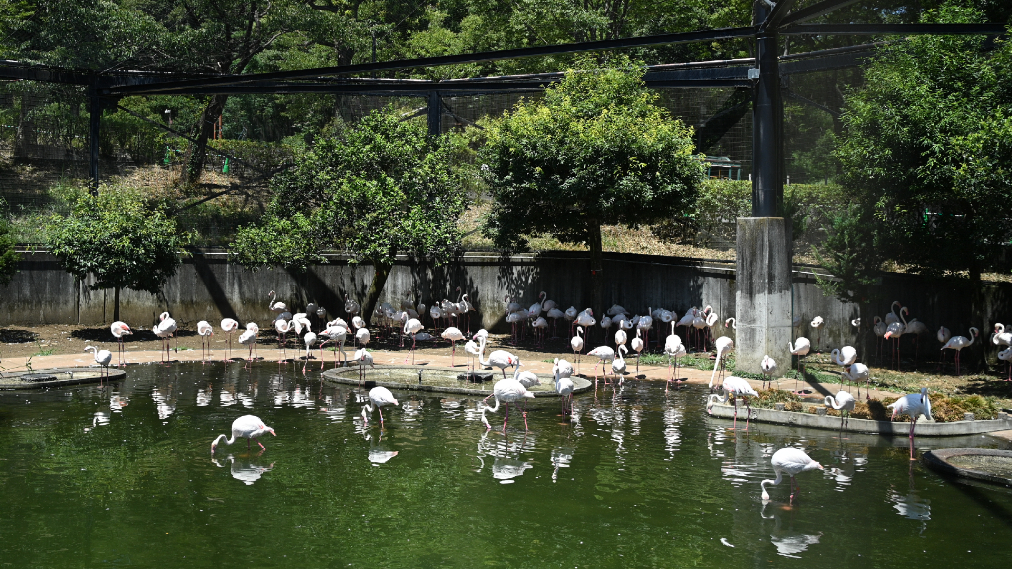
They are the largest of the flamingo family and have a vast distribution range. During the non-breeding season, they usually live in flocks of around 100 birds, but in areas with abundant food, such as lakes and ponds, they can form large flocks of over several thousand birds. Although they have large wings, they need a run-up to take off.
| classification | Aves, Order Phalaenopsis, Family Phalaenopsis |
|---|---|
| English name | Greater Flamingo |
| distribution | Mediterranean coast, Southwest Asia, Africa |
| Residence | Marine coastal areas and inland wetlands |
| Size |
Total length: 120-145cm
Weight: 2.1–4.1 kg Wingspan: 140-165cm |
| food | Algae, zooplankton, small crustaceans, etc. |
| Red List |
IUCN: LC (Least Concern)
|
beak
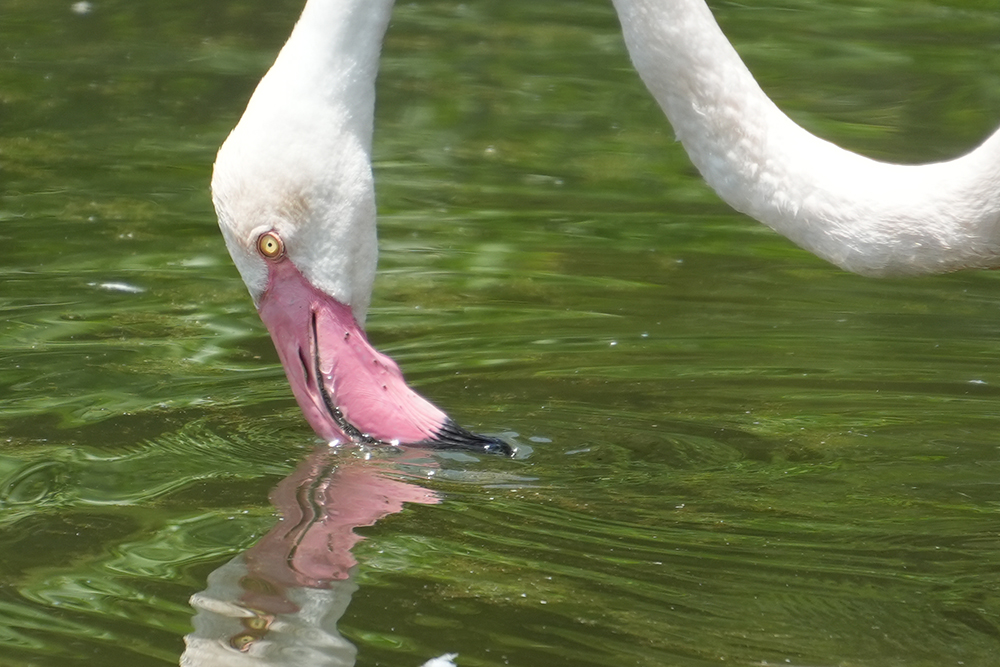
They have a curved beak with jagged edges like the teeth of a comb. They lower their heads and place their beak in the water, then open and close it in small movements to let water in and out and filter out food.
body shape
They are characterized by their long legs and long necks, which are suited to life near water and in shallow waters. They have webbed toes between their feet, allowing them to walk in shallow waters but swim in deeper areas. Their necks are made up of 19 cervical vertebrae and can bend freely in an S-shape. Thanks to their long legs and necks, they can feed near water without having to immerse their entire body in water.
Feather color
Of the six species of flamingo in the world, this is the palest in color, more whitish than pink.
breeding behavior
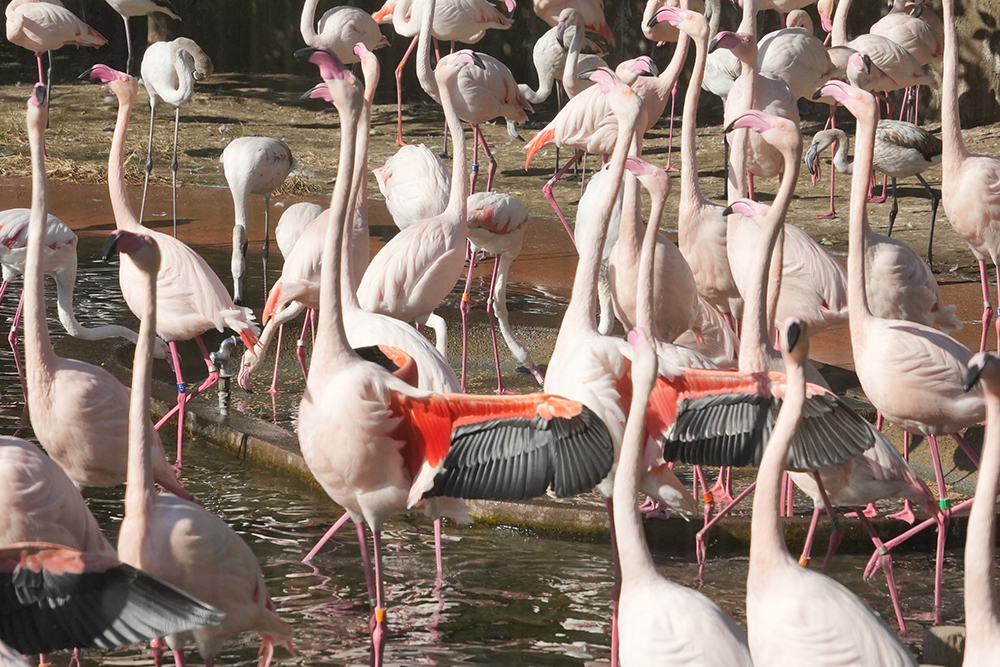
Tama Zoo enters its breeding season every winter. At this time, they put on displays, including "flag waving," where they shake their heads from side to side, "salute," where they quickly spread their wings and bow, and "march," where they all start walking in unison. While most birds perform these displays to attract females, flamingos perform them to synchronize their breeding so that the entire flock can raise their young at the same time.