

Balancing naturalness and maintainability: Renovating a frog tank
October 9, 2026
At the "Frogs of village forest" section of Insectarium at Tama Zoo, which is currently temporarily closed, work is underway to update the layout of the display tanks.
The aquariums in this section are characterized by their use of real plants to recreate natural landscapes. Six years have passed since the exhibit opened in 2019, and while it's pleasing to see the plants have grown and become magnificent, their growth has also brought with it some drawbacks that cannot be ignored. These include the deterioration of the substrate (sand and soil) in the tanks and the spread of roots throughout the tanks, making cleaning and drainage difficult.
Since even the maintenance required to address the drawbacks was becoming a struggle, we decided it was time for a renovation, and we started the upgrade work with the leftmost tank.
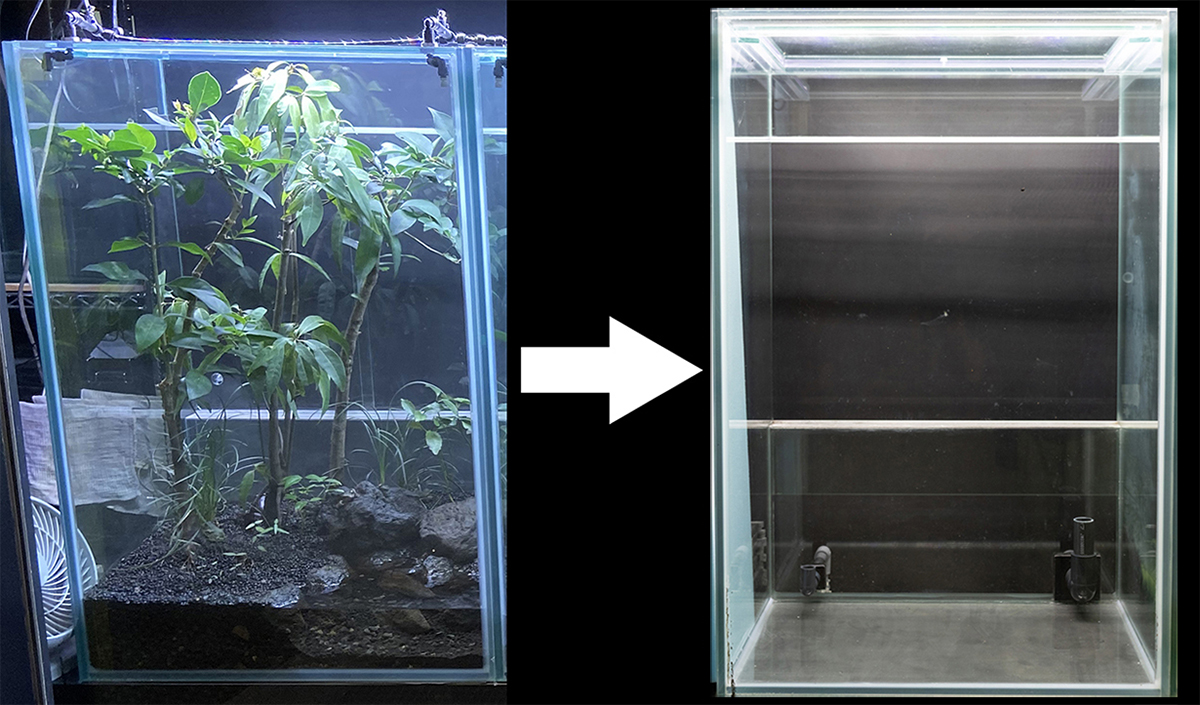
Up until now, aquarium layouts have followed the style commonly used in insectariums for a long time, where soil is piled up to create elevation differences and plants are planted. However, this time, we aimed to create a structure that maintains ease of maintenance (quick dismantling) and water permeability over the long term, by not filling the bottom of the aquarium with soil, using natural materials only on the surface and artificial materials in the underground section. The materials used this time are not specialized aquarium equipment, but rather functional substitutes that are combined together.
The basic base is made of "joinable mesh slats." By connecting and stacking multiple slats, it serves as a "stable base that allows water and air to pass through." Since it will be submerged in water, it is made of a material heavier than water.
Since the slatted flooring would look out of place if it were visible from the viewing walkway in front of the aquarium, we will leave a gap of a few centimeters there and fill it with natural soil.
After stacking the wooden slats to a height of about 10 cm, I processed a net sold as a "pot bottom net" into a basket shape and placed it in the basket. I then spread a thin layer of pumice stone or granular soil a few centimeters thick inside this basket to prevent it from spilling out, while also allowing me to lift and remove the entire basket when I need to do maintenance.
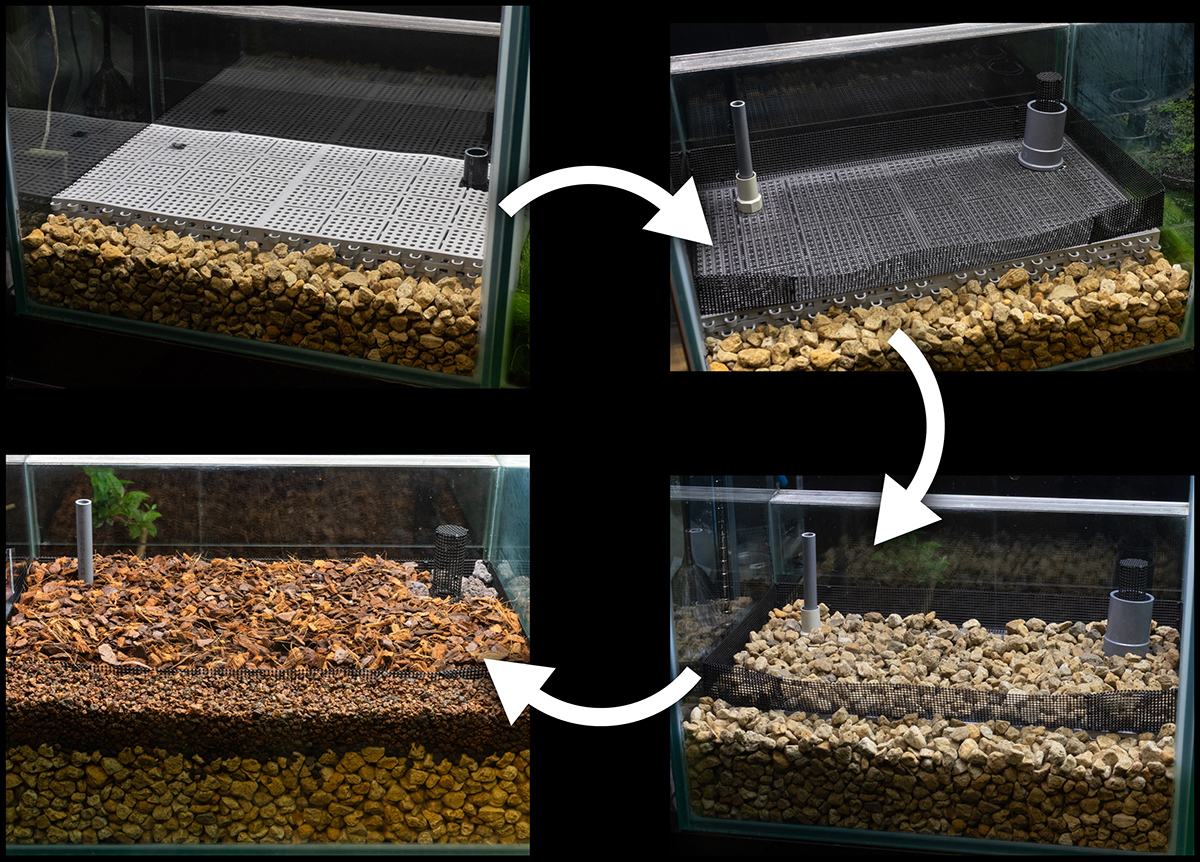
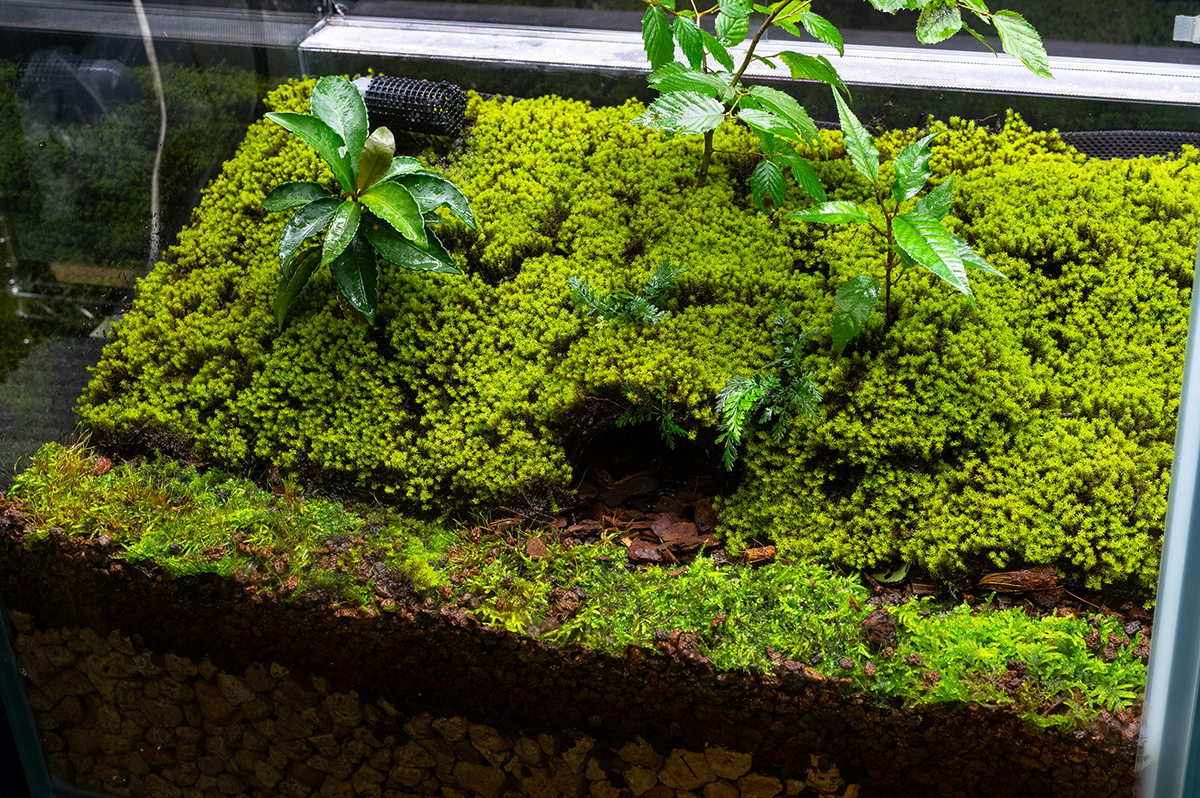
The plants are placed in pots with holes or slits. Finally, a piece of water-retentive cloth is partially placed, and moss is planted on top of it to complete the initial setup. This way, the surface looks like a natural aquarium.
For a while, the plants will be small, and it will take time for the area to take on a more impressive appearance. Therefore, once the moss and plants have settled in, we will proceed with installing perches for arboreal frogs. However, depending on how the frogs use the area, we may need to adjust or revise the entire layout, so it will still be a long time before we reach our ideal form. When the ecological garden reopens, please come and observe the newly redesigned layout and its daily changes.
[Watanabe, Animal Care and Exhibition Staff, Insectarium Tama Zoo]