At Insectarium Center, we have renovated the display tanks in the aquatic insect section. Originally, we had planned to close the exhibits for more than two weeks to do this, but due to the unexpected situation of having to temporarily close the park early in the new year, we were fortunate to be able to use this time to complete the work in time for the reopening on March 22nd.
This renovation involves changing to a larger, frameless aquarium, primarily
(1) Improving the breeding environment: By increasing the volume of water, fluctuations in water temperature and water quality are reduced, improving the living environment for insects in the tank.
(2) Improved ease of observation: Ensure a wider space both underwater and above the water so that observations can be made from various angles.
We aimed to achieve these two points.
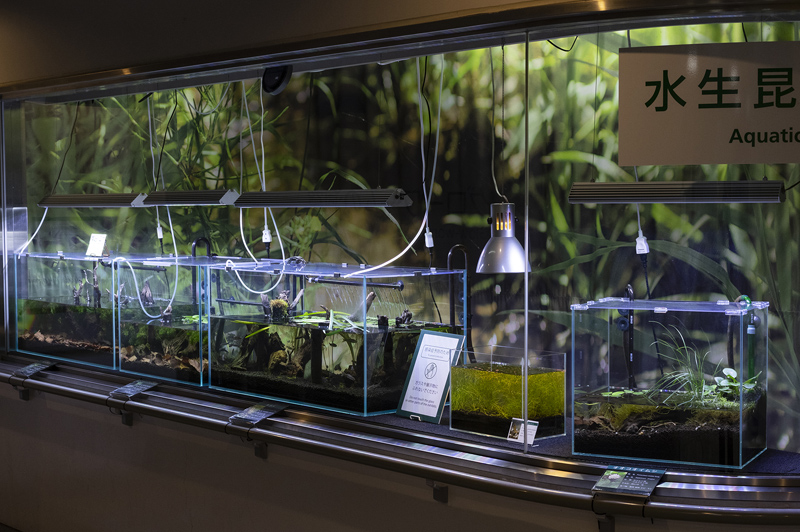
A panoramic view of the newly renovated exhibition.
(1) Improvement of the breeding environment
Many of the aquatic insects I'm currently raising tend to pollute the water. For example, with Diving Beetle, they rarely eat all of the food I give them; they very often leave behind parts they don't like and tear the food apart.
Giant Water Bug and giant water bugs dissolve their prey with digestive fluids and eat only the insides, which may look clean at first glance, but they often discard partially dissolved prey into the water.
These leftovers spoil easily, and the water becomes significantly dirtier compared to when only fish are kept. However, insects don't like living in dirty water, so by increasing the water volume in the tank, the deterioration of water quality has slowed down, allowing them to live more comfortably.
(2) Improvement of ease of observation
The fact that space above the water is also included is perhaps similar to the exhibits for amphibians. Although they are specialized to live in water, many species of aquatic insects cannot remain submerged in water for extended periods.
Diving Beetle, giant water Giant Water Bug, and giant water bugs all need regular (sometimes daily) maintenance to dry their bodies to prevent moss and mold from growing on their surface and causing disease. This is similar to how turtles "bask" in the sun, so a terrestrial space is very important for them. However, they are very clumsy on land, so in addition to a large space for drying, it is important to provide them with easy-to-grip footholds suited to their species.
Diving Beetle and giant water bugs, when in water, avoid floating away due to the buoyancy of the air they store. They spend their time by wedging themselves into gaps in the water or clinging to sediment at the bottom, so we intentionally place many things in the water that they can wedge into or cling to.
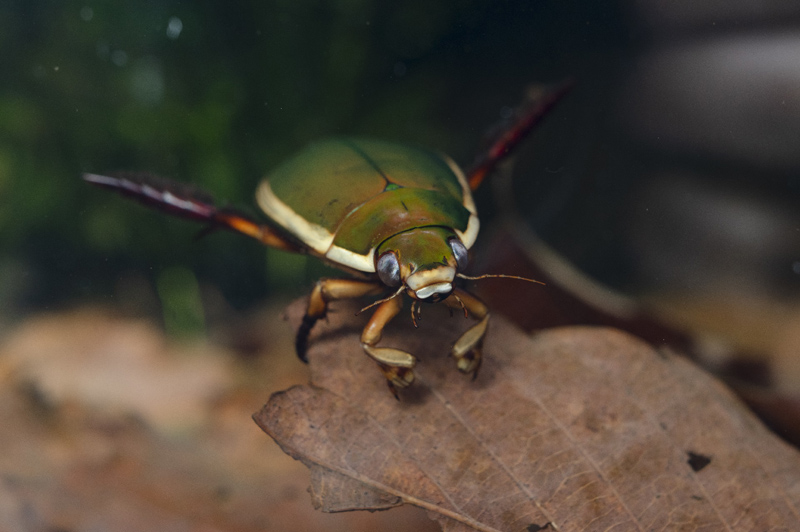
A Diving Beetle beetle clinging to fallen leaves at the bottom of the water.The aquatic insect corner now features larger tanks compared to before, increasing the water volume and providing a more comfortable environment for aquatic insects. The removal of the tank frame also makes it easier to view the above-water portion of the insects.
Some of the aquatic plants are still growing, so it will take some time before the layout is complete. However, it is now easier to observe the insects basking above the water, breathing underwater, and swimming, which were previously difficult to see. However, they may not move immediately, so when you visit, please take your time to carefully search for the aquatic insects in the tank.
[Watanabe, Animal Care and Exhibition Staff, Insectarium Tama Zoo]
(April 22, 2022)