

Ural Owl enclosure breeding status in 2026
June 5, 2026
At Tama Zoo 's Ural Owl enclosure, the breeding season for Snowy Owl, Ural Owl, and Japanese Scops-owl, which began in early spring, ended at the end of May when the park was covered in fresh green leaves. This article will introduce the breeding status of each species in 2026.
Snowy Owl
A new pair began living together at the end of last year, but no significant breeding behavior was observed.
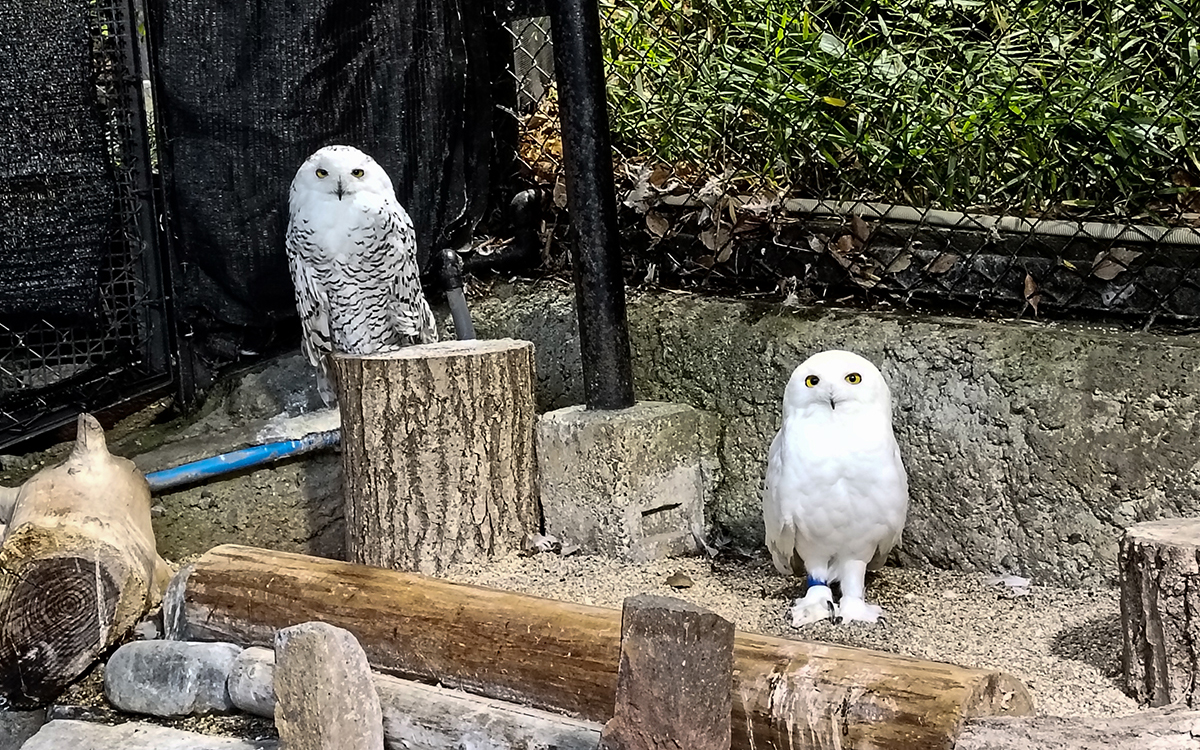
The female has lived at our zoo for about 13 years and has successfully bred multiple times. The male, on the other hand, is a newcomer who arrived at our zoo from Obihiro Zoo in May 2025. In November 2025, we introduced the male to the room where the female originally lived, but their relationship did not develop very well.
As a result, we confirmed a total of three eggs between February and March 2026, but none were incubated. We plan to continue observing the distance between the two individuals and create a more stable incubation site for them.
Japanese Scops-owl
We found a total of 21 eggs this year, but none of them hatched.
Last year, several individuals laid eggs, but all of them abandoned incubation midway. Therefore, at the beginning of this season, we prepared different nesting materials in each nest box so that they could choose a place where they could lay and incubate their eggs stably.
Then, for better or for worse, all the females began laying eggs in the same nest box. And just like last year, some of them abandoned incubation midway through.
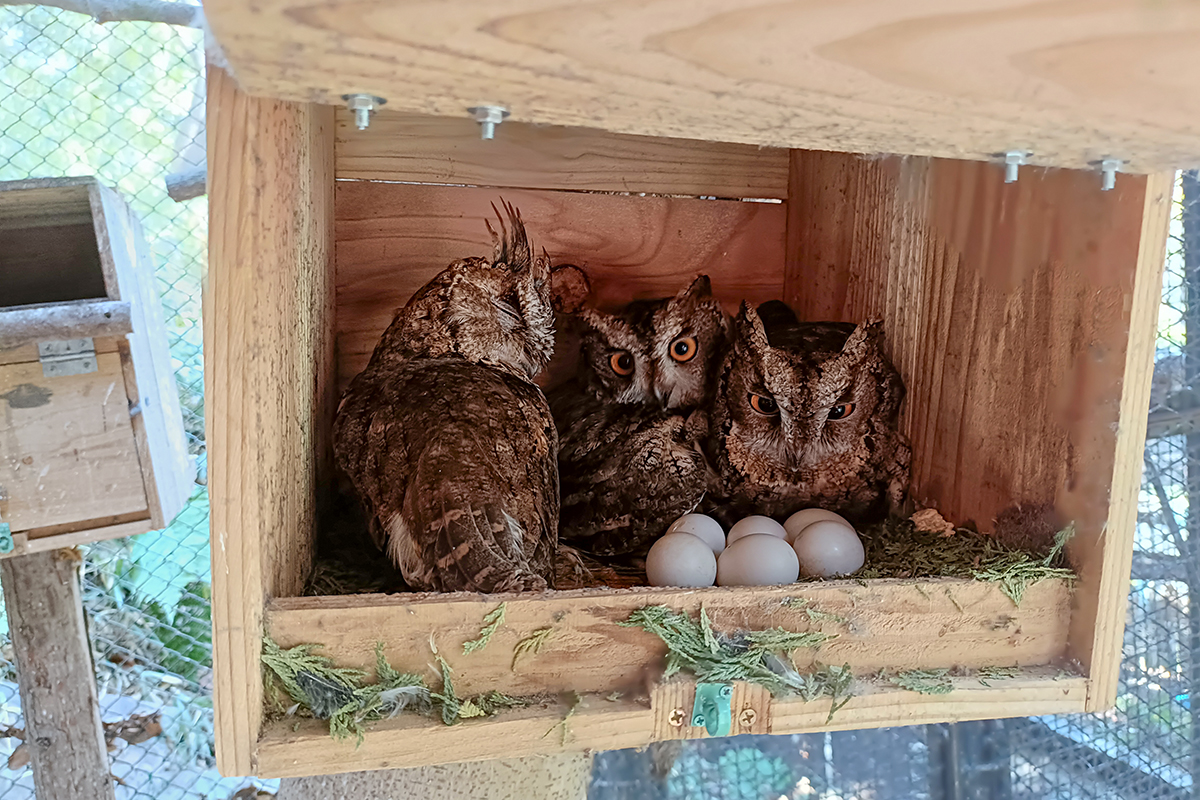
Considering the possibility that the nest box was too spacious and the chicks couldn't find a suitable incubation spot, we added a nesting platform in addition to the nesting material, reducing the incubation space before proceeding with the second clutch (*).
(*Note) In birds, multiple egg-laying periods can be observed during a single breeding season. Each egg-laying period is called a "clutch," and they are numbered as the first clutch, the second clutch, and so on.
As a result, in the previously very popular nest box, only one female bird consistently laid and incubated eggs, but all of them were infertile and did not hatch.
The male, who didn't participate much in breeding last year, was actively mating this year, but one possible reason is that he was older and his reproductive capacity had decreased.
Ural Owl
Last year, only one female was incubating eggs, but this year we've confirmed that two females are incubating them!
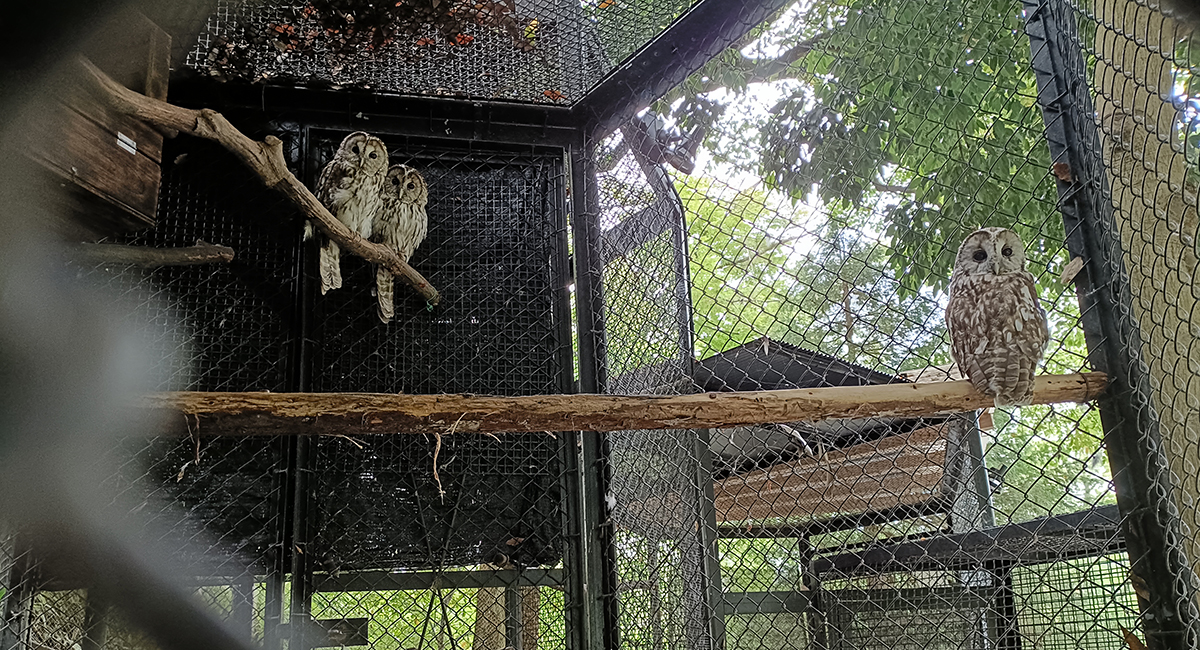
Of the three birds (one male and two females), two (one male and one female) are rescued individuals and are not very accustomed to people. They panic and fly around whenever a caretaker enters their enclosure. Perhaps because of this, egg-laying and incubation remained unstable throughout the breeding season.
So this year, starting before the breeding season, we tried avoiding bringing them into the enclosure before sunset when their activity level is highest. As a result, even the females who didn't lay eggs last year participated in breeding, and laid a total of three eggs!
However, just like with Japanese Scops-owl, two females were incubating eggs in the same nest box. Although they did not abandon incubation, all the eggs that had passed their expected hatching date were infertile.
They are still very wary, but getting them to lay eggs is one achievement. I hope to continue improving the environment further in the future.
[Tama Zoo]