

Breeding of injured and sick Red-headed Wood Pigeon
May 8, 2026
Tama Zoo has been cooperating in the conservation and breeding program for Red-headed Wood Pigeon, accepting injured and sick individuals, providing treatment, and utilizing recovered individuals for breeding since 2015. This time, we would like to report on the progress of breeding among the individuals accepted in 2023.
Visiting the park ~ Dedicated treatment
In January 2023, a female Red-headed Wood Pigeon (#209), an endangered species inhabiting the Ogasawara Islands, was rescued on Chichijima Island in a state where it was unable to fly and was brought to the animal hospital at Tama Zoo. Because individuals of wild origin possess genes not found in captive populations, the breeding of this individual is of great importance for the conservation of the species.
However, shortly after arriving at the zoo, it suffered from an unexplained loss of appetite and became unable to forage for food on its own. Its weight, which was 400g when it was rescued, plummeted to 270g, and the condition of its feathers had deteriorated significantly.
Thanks to the veterinarian's intensive treatment over approximately two months, and the force-feeding of parakeet chick feed and other foods into its stomach via a catheter (medical tube), it recovered and was able to be kept in the "Chick Rearing House" on the zoo grounds in April 2023.
Pairing that takes individual characteristics into account and failures
Our zoo has taken in nine injured or sick rescue birds so far, but this particular bird was extremely wary compared to the others and took a long time to adapt to its new environment. Initially, we kept it in solitary confinement to allow it to get used to an environment with other birds of the same species in an adjacent cage, but even after more than a year, it showed no interest in other birds.
Therefore, in May 2025, we tried to have her live with a male as an experiment. We selected a male that was also a rescued individual, had lost part of its wing due to a fracture and was unable to fly, and had a gentle temperament, taking into consideration safety during fights. They lived together for about four months, but unfortunately, no progress toward breeding behavior was observed.
Change of strategy: Choose an aggressive male.
Therefore, the breeding team devised a plan to change the mate and environment. For the new mate, they selected "#218," a proactive male with extensive breeding experience. Furthermore, to allow the male to take the lead in nest building, they first moved the female, #209, to the room where the male had previously successfully bred, allowing her to acclimate to the environment.
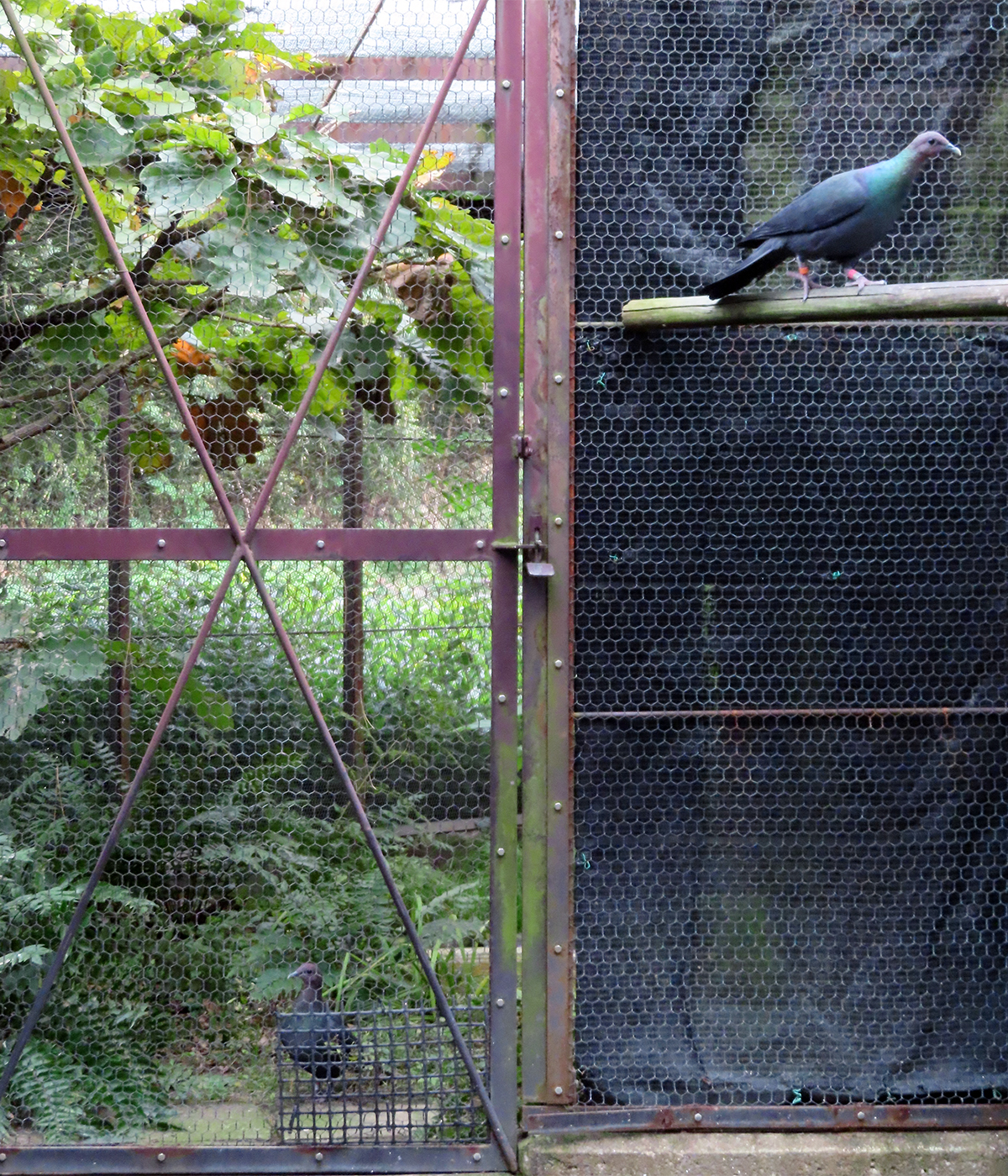
This method seemed to work for #209, and after moving #218 to the next room and letting them meet through the wire mesh, we observed signs of mating behavior such as them shaking their heads a few days later.
Furthermore, even before they were living together, #209 laid an egg. The egg broke, but the two birds seemed to get along well, so we started them living together the following day, December 1st, 2025.
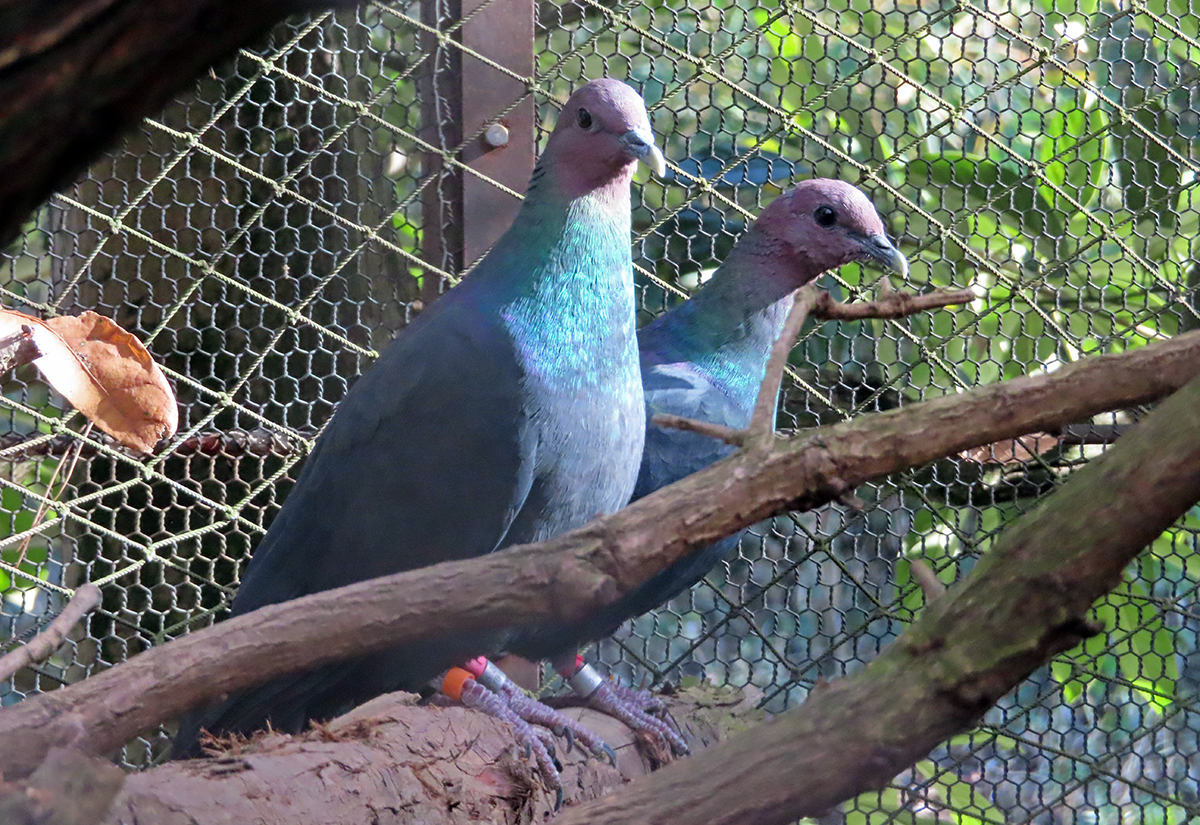
Mating and nest building were observed just two hours after they began living together. The first two egg-laying attempts were unsuccessful due to poor nest building and did not result in hatching, so for the third attempt, we used the technique of "artificial incubation." This involves collecting the eggs a few days after laying, warming them in an incubator, and returning them to the parents' nest just before hatching.
On February 24, 2026, we returned the nearly hatching egg to the parent, and the next day we confirmed the presence of the eggshell after the hatched chick had emerged in the cage, which is a sign of hatching. Initially, we did not check the nest to prevent the cautious #209 from abandoning its chick, but we confirmed the chick's survival on the 22nd day and its successful fledging on the 37th day.
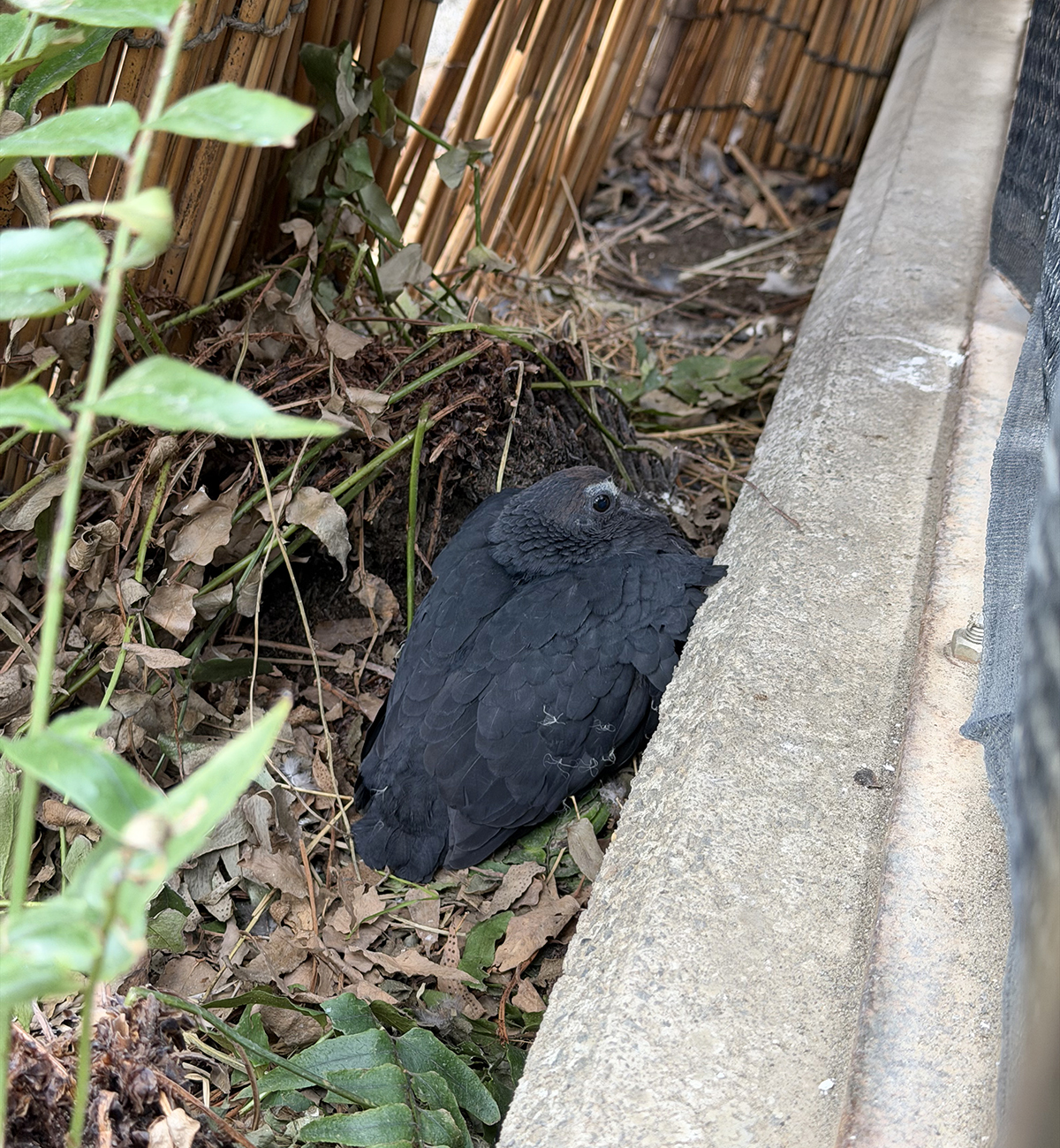
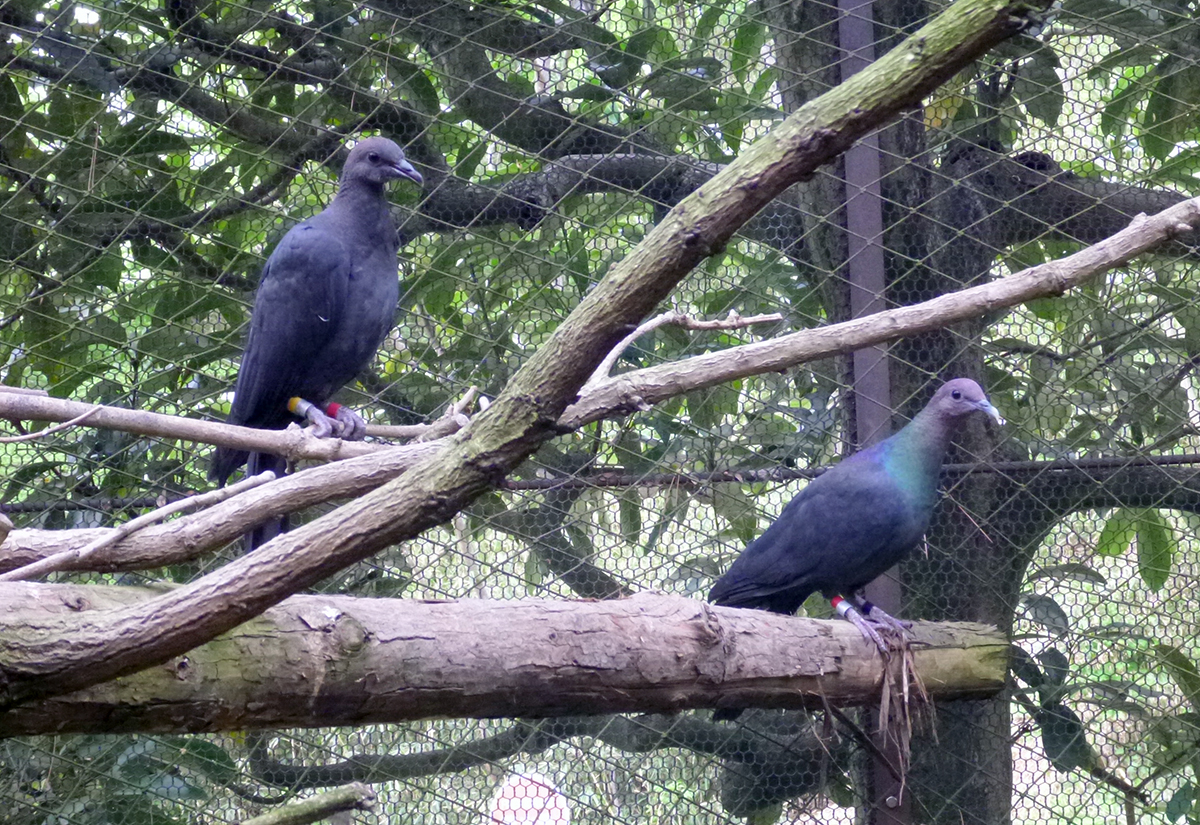
It took three years from the time of rescue until successful breeding, but the fact that an individual that had experienced harsh conditions, such as being injured and rescued in the wild, was able to leave behind the next generation in a zoo is a major achievement in the conservation of endangered species.
[Wildlife Conservatio Center Conservation Section, Ishii]