

Replacing the nose string of Water Buffalo "Sachi"
April 24, 2026
Tama Zoo currently houses three Water Buffalo: a male named Kokichi (7 years old), and two females, Maru (12 years old) and Sachi (1 year old, Kokichi and Maru's offspring). This time, we would like to inform you about the nose strap replacement that took place on March 18, 2026.
A "nose string" is a string that is threaded through the nose of Water Buffalo. At our farm, we use it for "cow leading," where we attach a rope to the nose string and lead the cow, allowing us to observe and touch its body up close for daily health management.
On Yubu Island in Okinawa Prefecture, where Kokichi and Maru lived, water Water Buffalo are used to pull tourist carts. A nose strap is used for this purpose, so at around 6 months of age, the calves are held down and the nose strap is attached. As the calves grow, the nose strap is replaced with a thicker and stronger one to prevent it from breaking.
Although we haven't started the ox-pulling tradition yet, following the example of Yubu Island, we attached the first nose strap to Sachi in August 2025, when she was about one year old.
About six months later, Sachi had grown rapidly and now weighed 380 kg, so it was time to replace her nose strap. We decided it would be too dangerous to hold down a calf of this size and replace the nose strap, so we decided to replace it under anesthesia.
When administering anesthesia, fasting is necessary to prevent aspiration due to reflux of stomach contents, so we separated the parents, Maru and Sachi, into different rooms the day before. On the day of the anesthesia, Sachi seemed to sense something was up and was restless, crying incessantly. After the veterinarian administered the anesthetic and we confirmed that Sachi was completely asleep, we, animal keeper, entered the room and began changing her nose string.
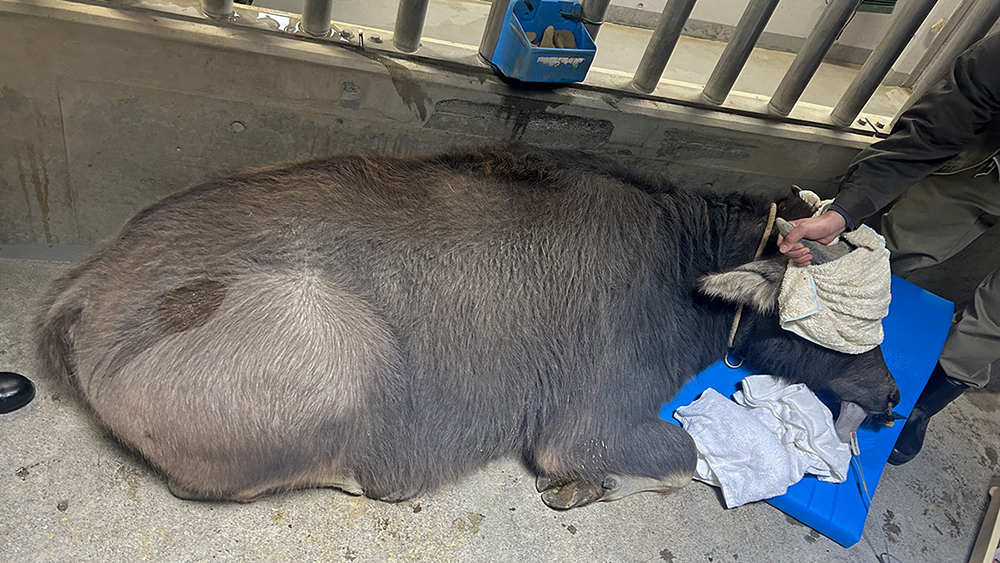
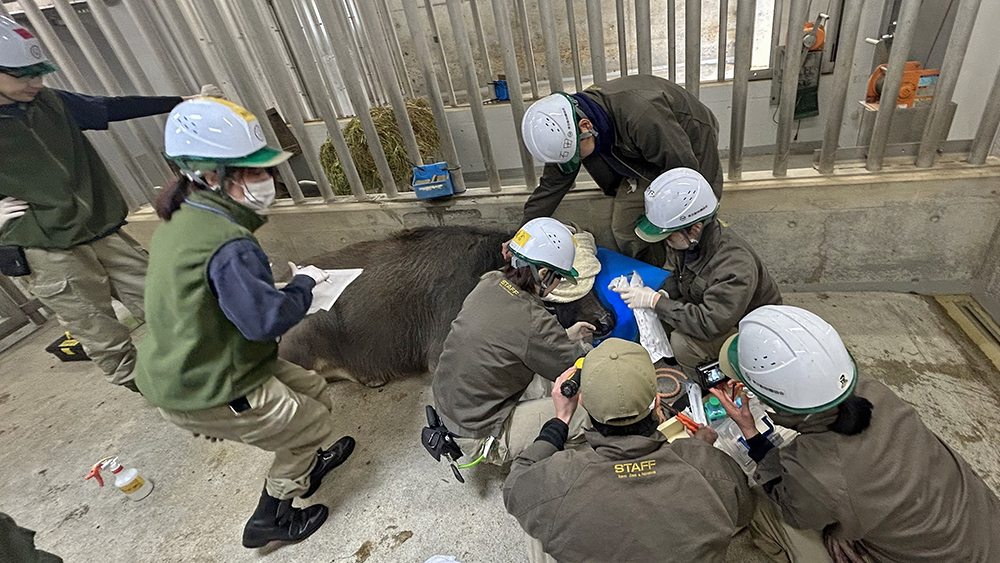
The nose strap replacement was done quickly to minimize any discomfort for Sachi.
The nose string change was finished in about 20 minutes, and we watched from outside the room for Sachi to wake up. After about 5 minutes, Sachi woke up and sat up. For a while after waking up, she seemed wary of us, probably due to the effects of the anesthesia.
Also, that day its eyes were vacant and it looked sleepy, and it didn't eat much. After we anesthetize an animal, we observe it more closely than usual, carefully checking its gait and how it eats.
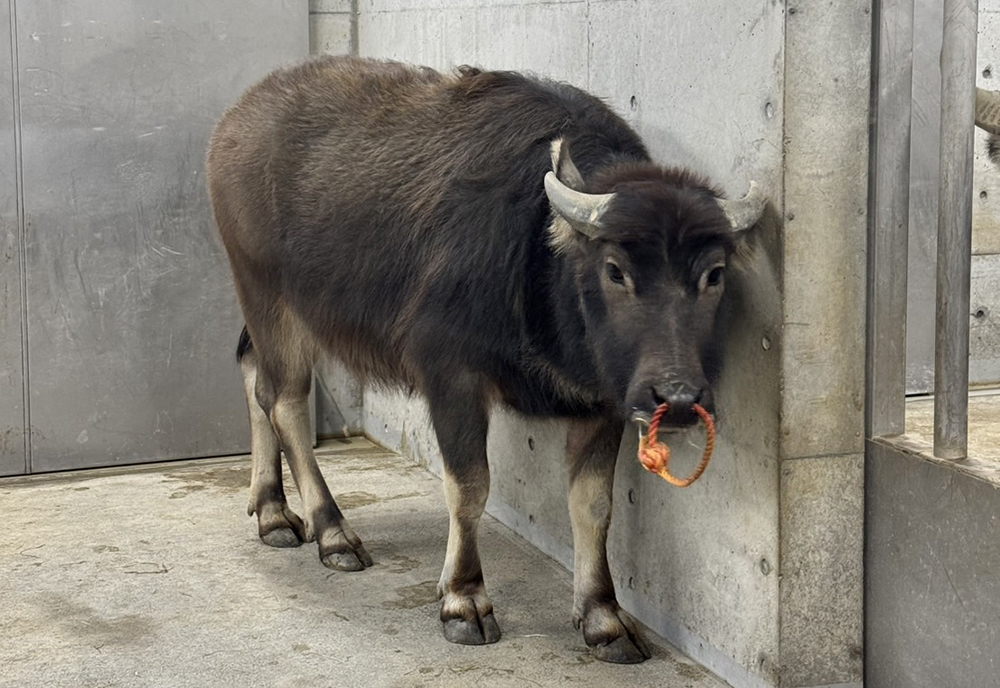
After that, as the days went by, Sachi started eating well again. Now we can see her playing with Maru in the enclosure as usual. We are relieved that she is healthy and well.
Going forward, we will use the attached nose strap to help Sachi with her ox-pulling and to monitor her health.
[Tama Zoo Tama Zoological Park]