

Zoo Stock Species and the Red List
Zoo Stock Species and the Red List
Zoo Stock

This indicates that the species is included in the Second Zoo Stock Plan, which was formulated by the Tokyo Metropolitan Government in 2018. The plan sets goals for the next 10 years in three areas: "species conservation," "contribution to wildlife conservation," and "environmental education and conservation awareness." 124 animal species are included.
What is the Red List?
Based on scientific research, this is a list of wildlife classified by rank (category) indicating the degree of risk of extinction.
Livng Things Encyclopedia shows the categories (mainland and islands) assessed by the IUCN (International Union for Conservation of Nature) at the global level, the Ministry of the Environment for Japan, and the Tokyo Metropolitan Government for Tokyo.
The higher the category in each table, the higher the risk of extinction, and CR, EN, and VU are the three categories known as "endangered species." In Tokyo, species that are not at the NT (near threatened) level but are relatively rare are considered "species of concern."
|
IUCN categories |
|
|---|---|
|
EX |
extinction |
|
EW |
Extinction in the wild |
|
CR+EN |
— |
|
CR |
Serious crisis |
|
EN |
crisis |
|
VU |
emergency |
|
NT |
Near Threatened |
|
LC・○ |
Low Concern |
|
DD |
Data shortage |
|
LP |
— |
|
Japan (Ministry of the Environment) Category |
|
|---|---|
|
EX |
extinction |
|
EW |
Extinction in the wild |
|
CR+EN |
Endangered species |
|
CR |
Critically Endangered |
|
EN |
Endangered species |
|
VU |
Endangered species |
|
NT |
Near Threatened |
|
LC・○ |
— |
|
DD |
Lack of information |
|
LP |
Endangered |
|
Tokyo Category |
|
|---|---|
|
EX |
extinction |
|
EW |
Extinction in the wild |
|
CR+EN |
Endangered species |
|
CR |
Critically Endangered |
|
EN |
Endangered species |
|
VU |
Endangered species |
|
NT |
Near Threatened |
|
LC・○ |
Unranked |
|
DD |
Lack of information |
|
LP |
Endangered |
Creatures at Tama Zoo
Creatures at Tama Zoo
Yellow-footed Rock Wallaby
Yellow-footed Rock Wallaby
Petrogale xanthopus
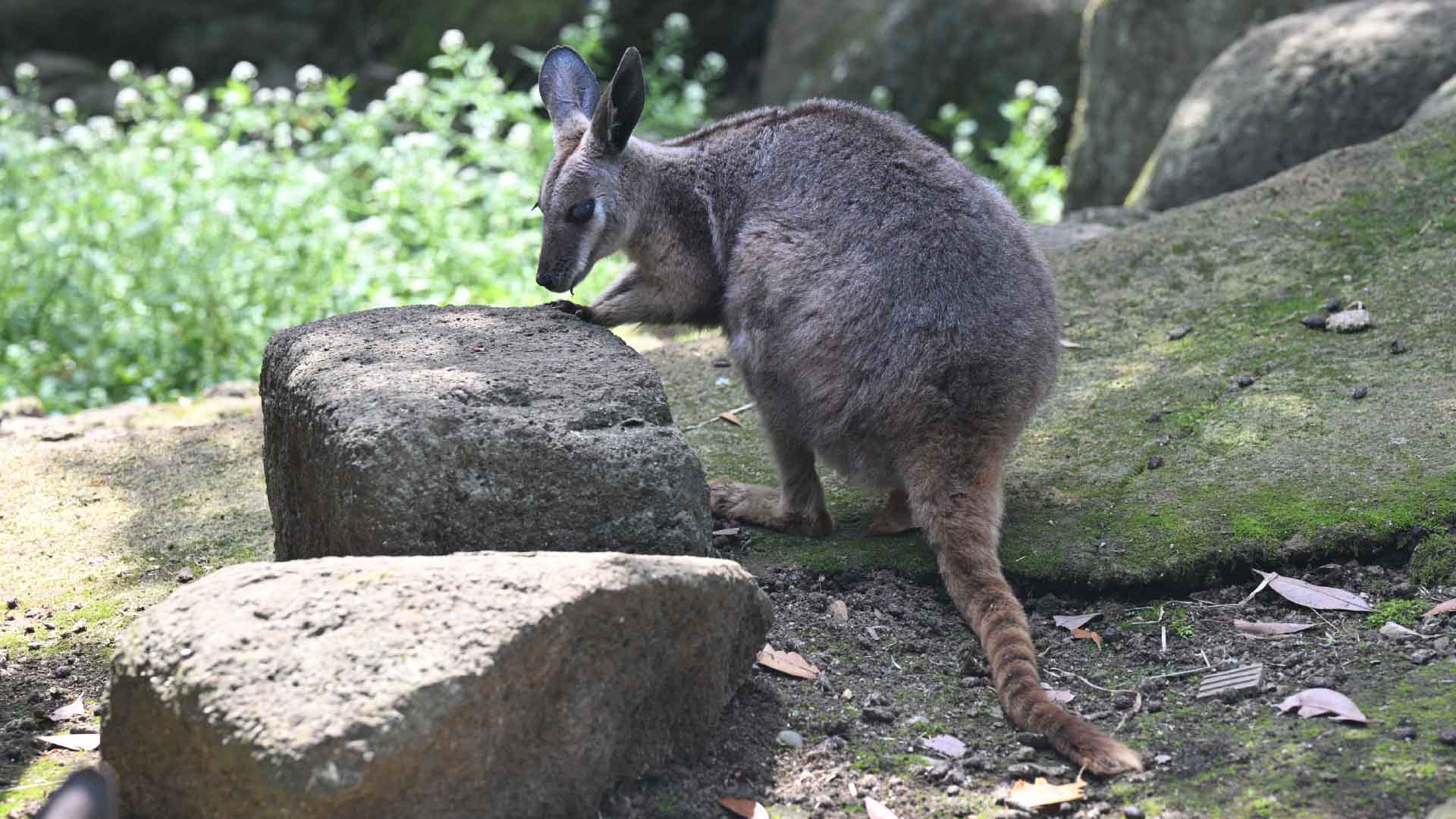
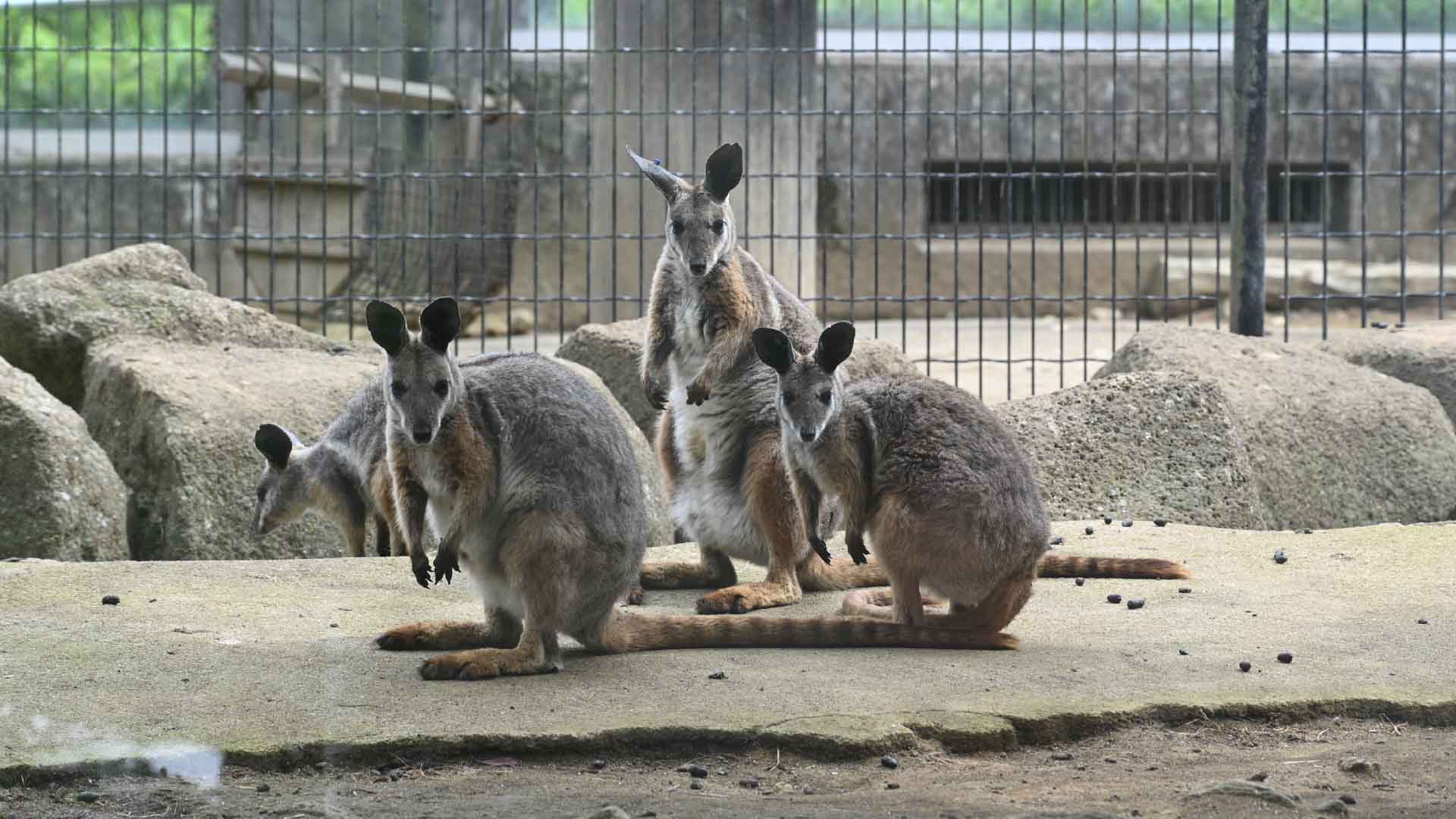
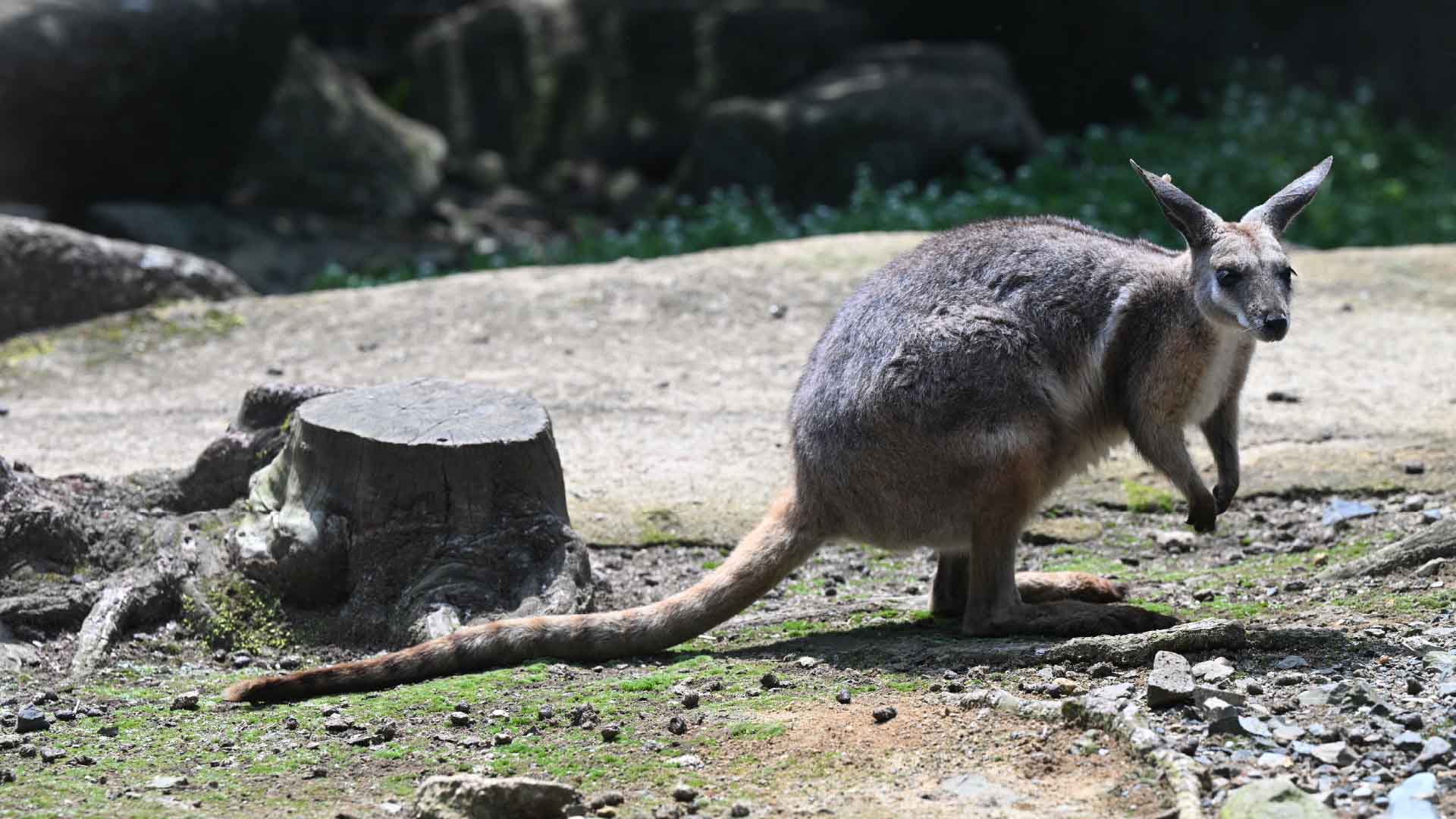
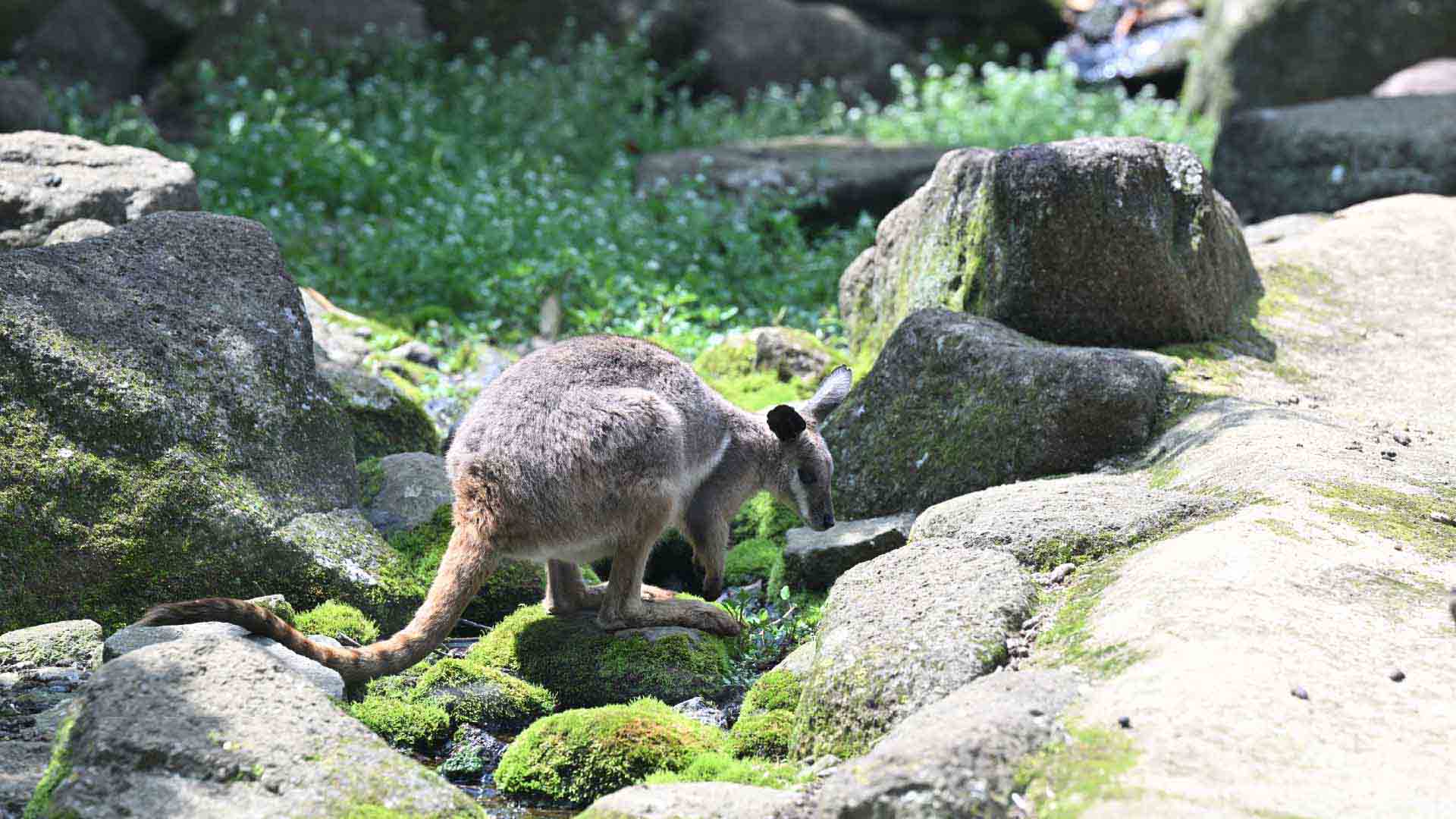
Among the kangaroos that live in mountainous areas with exposed rocks, this species excels at moving along cliffs. It is said that they can jump up to 4 meters from rock to rock. They are primarily nocturnal, hiding in crevices between rocks during the day. In cold seasons, they sometimes sunbathe on rocky areas. They usually live in groups of less than 20 individuals.
| classification | Mammalia, Diprodontidae, Macropodidae |
|---|---|
| English name | Yellow-footed Rock Wallaby |
| distribution | Eastern and Southern Australia |
| Residence | rocky area |
| Size |
Head torso length: 50-65cm
Tail length: 25-70 cm Weight: 6-12 kg |
| food | grass |
| Red List |
IUCN: NT (Near Threatened)
|
Body color
As its Japanese name "shimao" suggests, its tail is yellow with brown stripes. Its back is gray-brown, its belly is white, its legs are yellowish-brown, it has white lines on its cheeks and flanks, and a dark brown vertical line running from the top of its head to its back. This colorful body color is a camouflage that helps it blend in with the rocky habitat it lives in.