

Zoo Stock Species and the Red List
Zoo Stock Species and the Red List
Zoo Stock

This indicates that the species is included in the Second Zoo Stock Plan, which was formulated by the Tokyo Metropolitan Government in 2018. The plan sets goals for the next 10 years in three areas: "species conservation," "contribution to wildlife conservation," and "environmental education and conservation awareness." 124 animal species are included.
What is the Red List?
Based on scientific research, this is a list of wildlife classified by rank (category) indicating the degree of risk of extinction.
Livng Things Encyclopedia shows the categories (mainland and islands) assessed by the IUCN (International Union for Conservation of Nature) at the global level, the Ministry of the Environment for Japan, and the Tokyo Metropolitan Government for Tokyo.
The higher the category in each table, the higher the risk of extinction, and CR, EN, and VU are the three categories known as "endangered species." In Tokyo, species that are not at the NT (near threatened) level but are relatively rare are considered "species of concern."
|
IUCN categories |
|
|---|---|
|
EX |
extinction |
|
EW |
Extinction in the wild |
|
CR+EN |
— |
|
CR |
Serious crisis |
|
EN |
crisis |
|
VU |
emergency |
|
NT |
Near Threatened |
|
LC・○ |
Low Concern |
|
DD |
Data shortage |
|
LP |
— |
|
Japan (Ministry of the Environment) Category |
|
|---|---|
|
EX |
extinction |
|
EW |
Extinction in the wild |
|
CR+EN |
Endangered species |
|
CR |
Critically Endangered |
|
EN |
Endangered species |
|
VU |
Endangered species |
|
NT |
Near Threatened |
|
LC・○ |
— |
|
DD |
Lack of information |
|
LP |
Endangered |
|
Tokyo Category |
|
|---|---|
|
EX |
extinction |
|
EW |
Extinction in the wild |
|
CR+EN |
Endangered species |
|
CR |
Critically Endangered |
|
EN |
Endangered species |
|
VU |
Endangered species |
|
NT |
Near Threatened |
|
LC・○ |
Unranked |
|
DD |
Lack of information |
|
LP |
Endangered |
Creatures at Tama Zoo
Creatures at Tama Zoo

White-tailed Eagle
White-tailed Eagle
Haliaeeet albicilla
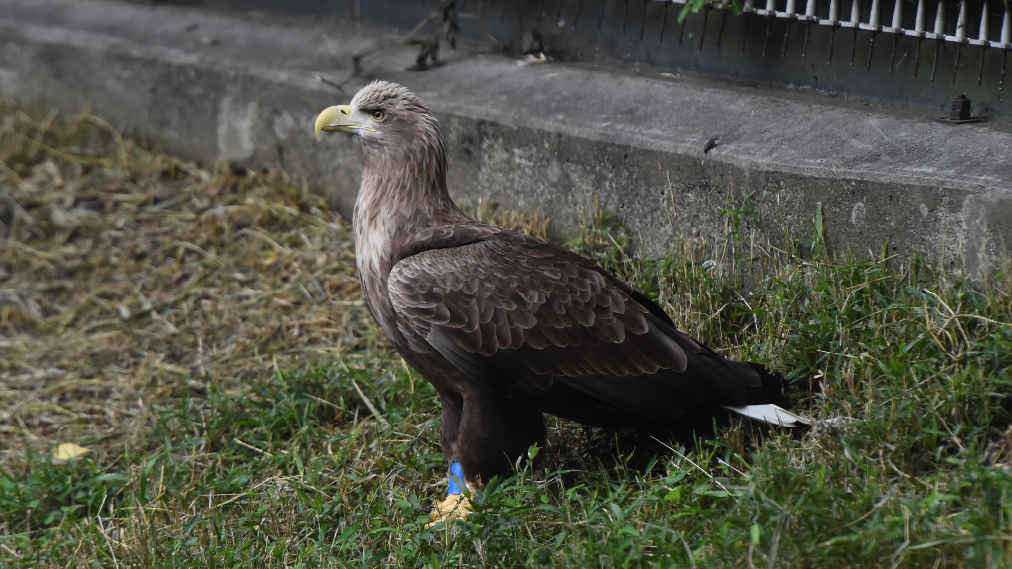
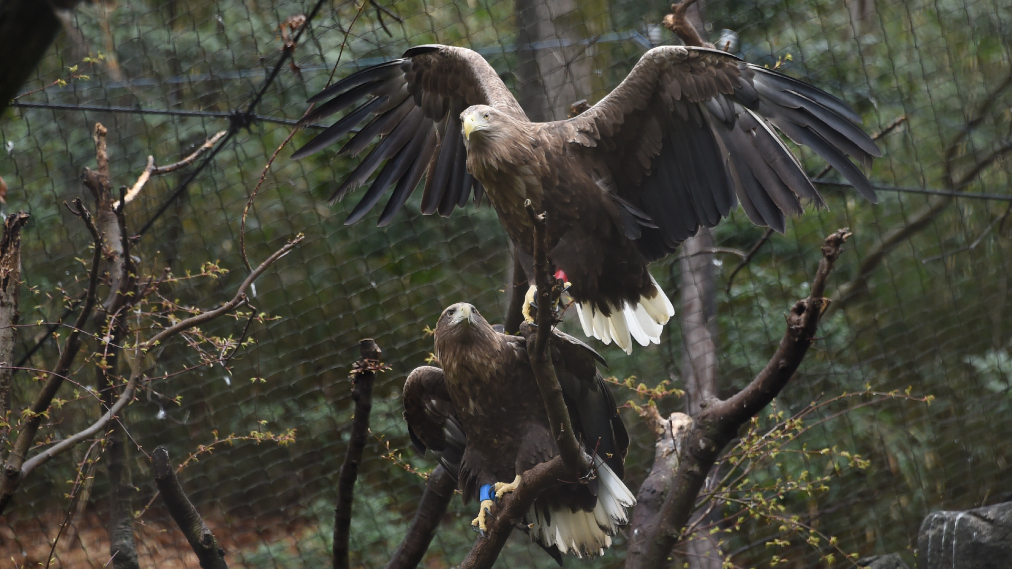
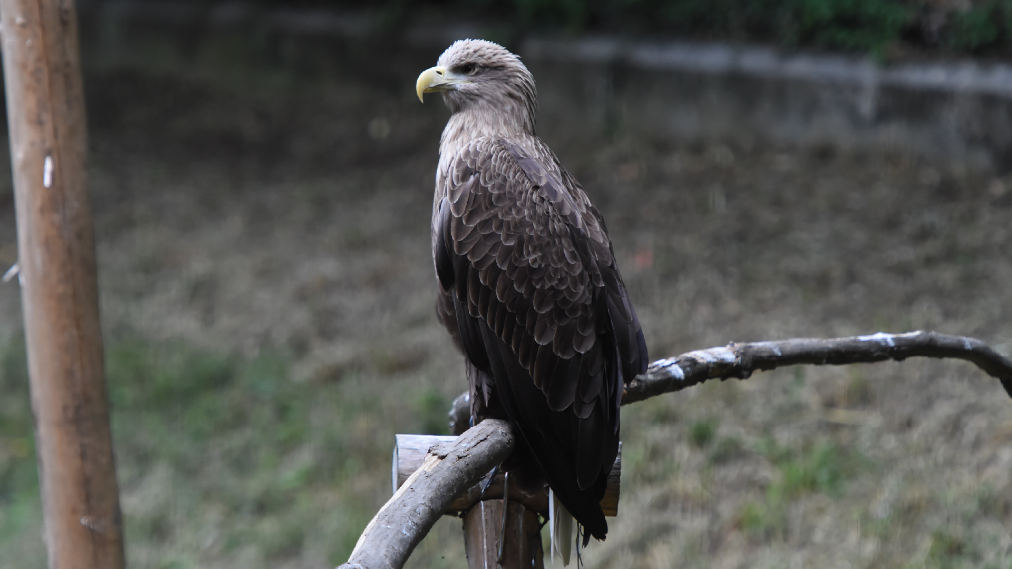
Their bodies are brown overall, with a pale yellowish-brown head and white tail feathers. Their beaks are pale yellow. However, it takes several years for their beaks and tail feathers to reach the same color as adult birds. In Japan, breeding begins around January. They build nests made of branches, moss, and grass on coastal cliffs or high places, and lay two to three eggs.
| classification | Aves, Accipitridae, Accipitridae |
|---|---|
| English name | White-tailed Eagle |
| distribution | Breeding area: Russia Wintering area: Middle East, southwestern Russia, northern India, Nepal, southeastern Russia, Korea, central and southeastern China, and Japan north of the Kanto region Resident habitat: Southwestern Russia, central and northern Europe, southeastern Russia, and northeastern Hokkaido |
| Residence | Coasts, rocky areas, lakes, large rivers, large wetlands |
| Size |
全長:62~92cm
翼開長:200~245cm 体重:4.1~5.5kg |
| food | Fish, birds, and mammals (less frequently) |
| Red List |
IUCN: LC (Least Concern)
Japan: VU (Vulnerable) |
Danger in the wild
Currently, the global population is on the rise, and the number of individuals breeding and overwintering in Japan is also increasing. However, the breeding success rate of the Hokkaido population remains low. Although the exact cause is unknown, human influence is thought to play a significant role. Factors threatening their survival in Japan include bird strikes (wind power plants, etc.), lead poisoning (eating Ezo Sika Deer deer shot with lead bullets), and the reduction of nesting trees and food resources due to development.
Breeding at Tama Zoo
They were first successfully bred in Japan in 1976, and have since been successfully bred for six generations.