

Zoo Stock Species and the Red List
Zoo Stock Species and the Red List
Zoo Stock
This indicates that the species is included in the Second Zoo Stock Plan, which was formulated by the Tokyo Metropolitan Government in 2018. The plan sets goals for the next 10 years in three areas: "species conservation," "contribution to wildlife conservation," and "environmental education and conservation awareness." 124 animal species are included.
What is the Red List?
Based on scientific research, this is a list of wildlife classified by rank (category) indicating the degree of risk of extinction.
Livng Things Encyclopedia shows the categories (mainland and islands) assessed by the IUCN (International Union for Conservation of Nature) at the global level, the Ministry of the Environment for Japan, and the Tokyo Metropolitan Government for Tokyo.
The higher the category in each table, the higher the risk of extinction, and CR, EN, and VU are the three categories known as "endangered species." In Tokyo, species that are not at the NT (near threatened) level but are relatively rare are considered "species of concern."
|
IUCN categories |
|
|---|---|
|
EX |
extinction |
|
EW |
Extinction in the wild |
|
CR+EN |
— |
|
CR |
Serious crisis |
|
EN |
crisis |
|
VU |
emergency |
|
NT |
Near Threatened |
|
LC・○ |
Low Concern |
|
DD |
Data shortage |
|
LP |
— |
|
Japan (Ministry of the Environment) Category |
|
|---|---|
|
EX |
extinction |
|
EW |
Extinction in the wild |
|
CR+EN |
Endangered species |
|
CR |
Critically Endangered |
|
EN |
Endangered species |
|
VU |
Endangered species |
|
NT |
Near Threatened |
|
LC・○ |
— |
|
DD |
Lack of information |
|
LP |
Endangered |
|
Tokyo Category |
|
|---|---|
|
EX |
extinction |
|
EW |
Extinction in the wild |
|
CR+EN |
Endangered species |
|
CR |
Critically Endangered |
|
EN |
Endangered species |
|
VU |
Endangered species |
|
NT |
Near Threatened |
|
LC・○ |
Unranked |
|
DD |
Lack of information |
|
LP |
Endangered |
Creatures at Tama Zoo
Creatures at Tama Zoo

White-naped Crane
White-naped Crane
Antigone vipio
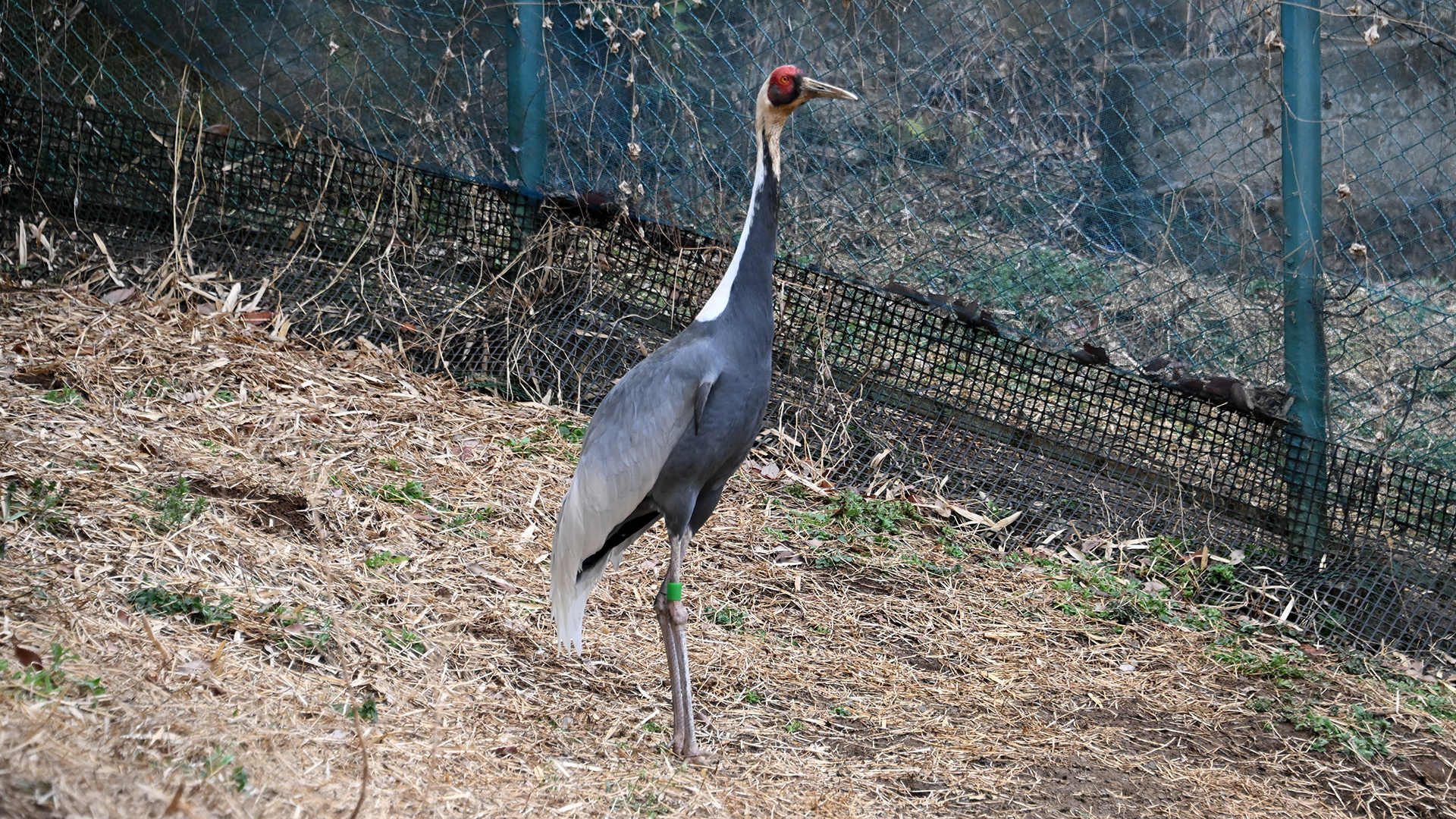
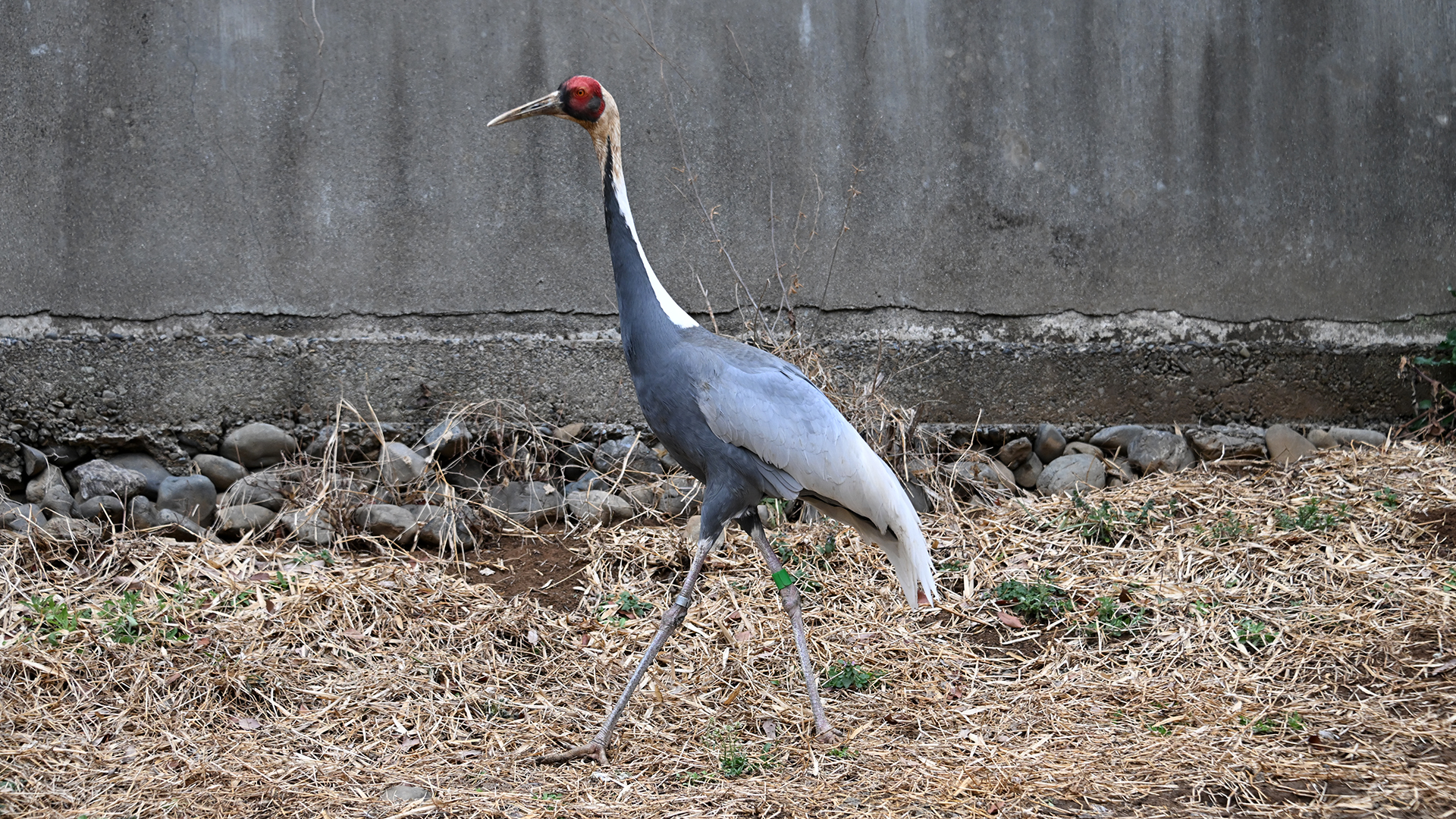
The body, beak and legs are grey, the back of the neck to the back of the head is white, the area around the eyes is red and the outside of that is black. Breeding begins around April or May, and two eggs are laid in a mound-shaped nest made of grass.
| classification | Aves, Grui, Gruidae |
|---|---|
| English name | White-naped Crane |
| distribution | Breeding season: Northeastern China, Mongolia, southeastern Russia Wintering season: Japan, Korean Peninsula, southern China |
| Residence | Breeding season: Wetlands and grasslands near lakes and wide rivers Wintering period: grassland, farmland, wetland |
| Size |
Total length: approx. 125cm
Wingspan length: 200-210cm Weight: 4.8-6.5 kg |
| food | Grass roots, rhizomes, seeds, insects, fish, frogs, rodents |
| Red List |
IUCN: VU (Very)
Japan: VU (Vulnerable) |
Danger in the wild
It is predicted that future climate change-related factors such as rising temperatures and irregular rainfall will lead to the deterioration of the wetland environment in breeding areas, which will have a major impact on the decline of crane populations.
Furthermore, the population of White-naped Crane that winter in Japan is concentrated in Izumi City, Kagoshima Prefecture, and it has been pointed out that they are vulnerable to disease and environmental changes.More than 3,000 White-naped Crane have been confirmed in Izumi City, which is said to be about 40% of the world's population.