

Zoo Stock Species and the Red List
Zoo Stock Species and the Red List
Zoo Stock

This indicates that the species is included in the Second Zoo Stock Plan, which was formulated by the Tokyo Metropolitan Government in 2018. The plan sets goals for the next 10 years in three areas: "species conservation," "contribution to wildlife conservation," and "environmental education and conservation awareness." 124 animal species are included.
What is the Red List?
Based on scientific research, this is a list of wildlife classified by rank (category) indicating the degree of risk of extinction.
Livng Things Encyclopedia shows the categories (mainland and islands) assessed by the IUCN (International Union for Conservation of Nature) at the global level, the Ministry of the Environment for Japan, and the Tokyo Metropolitan Government for Tokyo.
The higher the category in each table, the higher the risk of extinction, and CR, EN, and VU are the three categories known as "endangered species." In Tokyo, species that are not at the NT (near threatened) level but are relatively rare are considered "species of concern."
|
IUCN categories |
|
|---|---|
|
EX |
extinction |
|
EW |
Extinction in the wild |
|
CR+EN |
— |
|
CR |
Serious crisis |
|
EN |
crisis |
|
VU |
emergency |
|
NT |
Near Threatened |
|
LC・○ |
Low Concern |
|
DD |
Data shortage |
|
LP |
— |
|
Japan (Ministry of the Environment) Category |
|
|---|---|
|
EX |
extinction |
|
EW |
Extinction in the wild |
|
CR+EN |
Endangered species |
|
CR |
Critically Endangered |
|
EN |
Endangered species |
|
VU |
Endangered species |
|
NT |
Near Threatened |
|
LC・○ |
— |
|
DD |
Lack of information |
|
LP |
Endangered |
|
Tokyo Category |
|
|---|---|
|
EX |
extinction |
|
EW |
Extinction in the wild |
|
CR+EN |
Endangered species |
|
CR |
Critically Endangered |
|
EN |
Endangered species |
|
VU |
Endangered species |
|
NT |
Near Threatened |
|
LC・○ |
Unranked |
|
DD |
Lack of information |
|
LP |
Endangered |
Creatures at Tama Zoo
Creatures at Tama Zoo
White-handed Gibbon
White-handed Gibbon
Hylobates lar
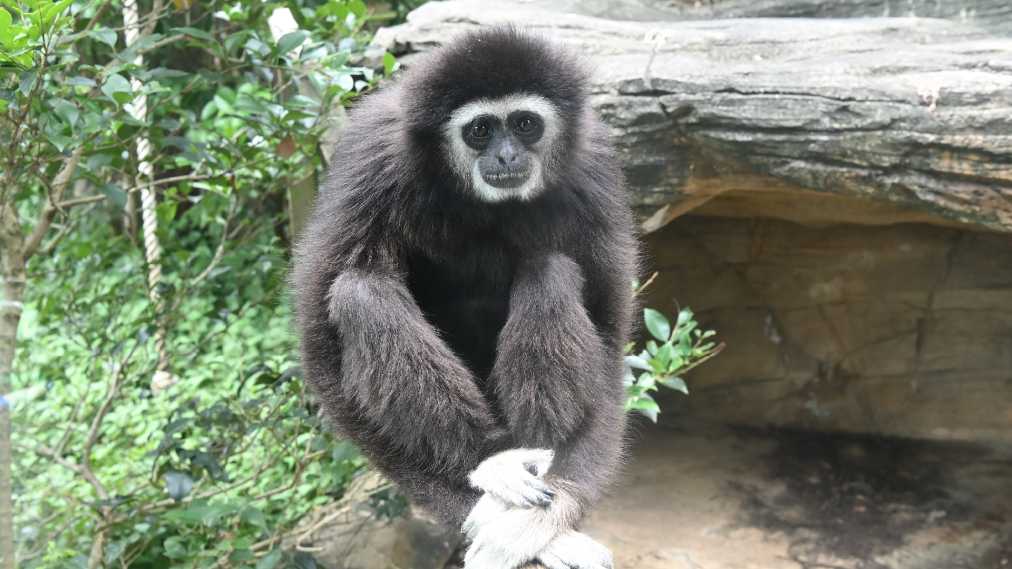
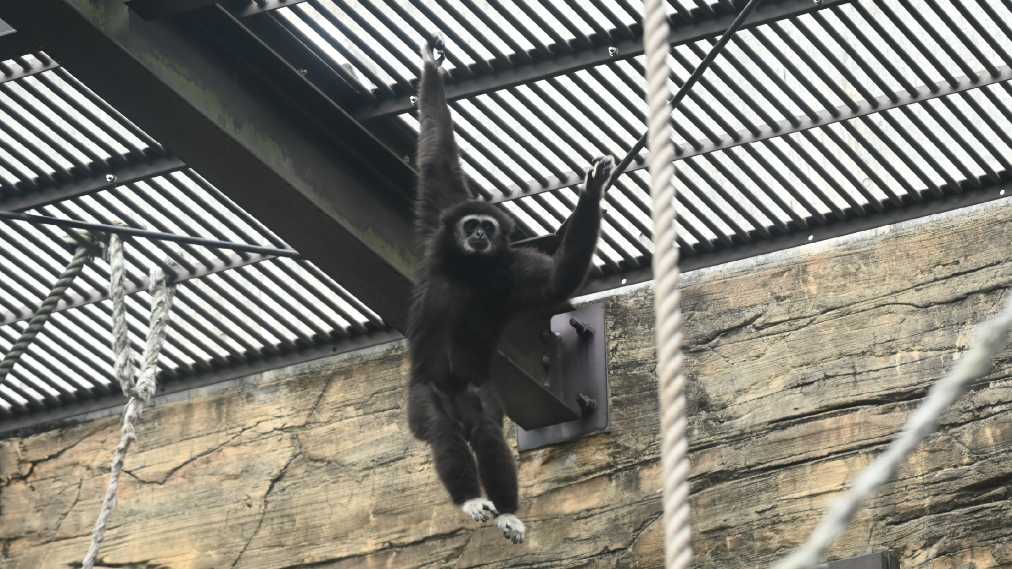
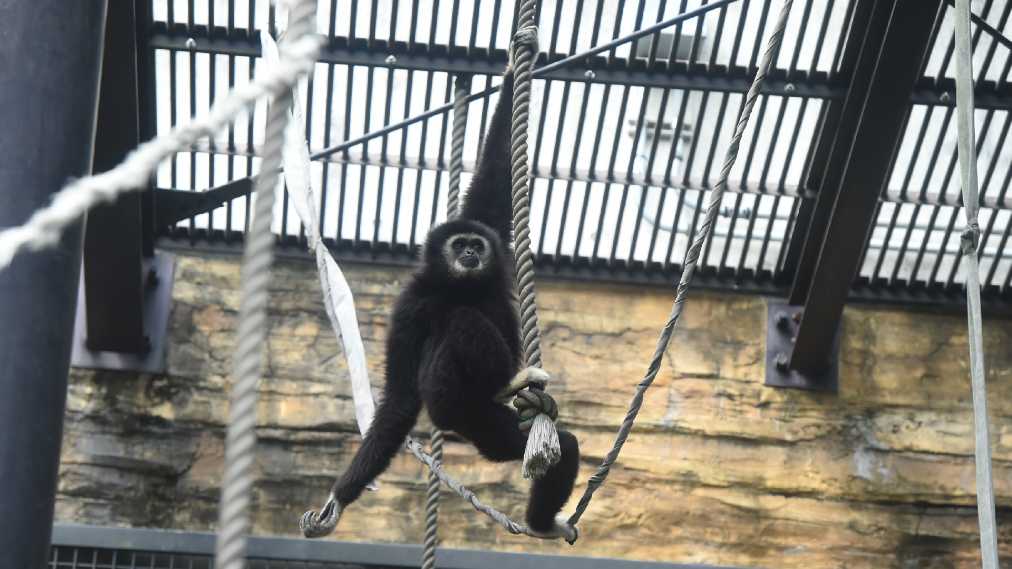
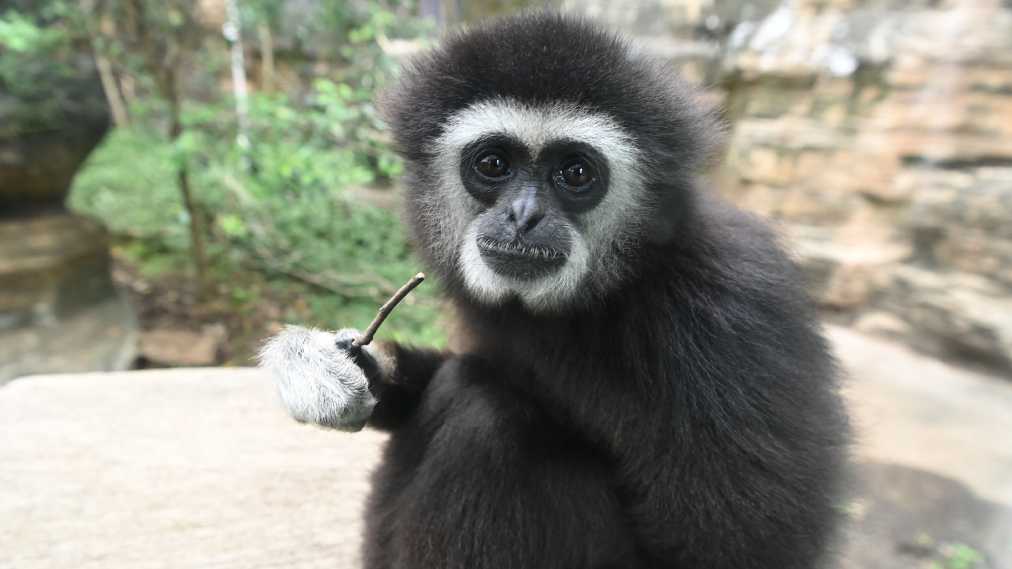
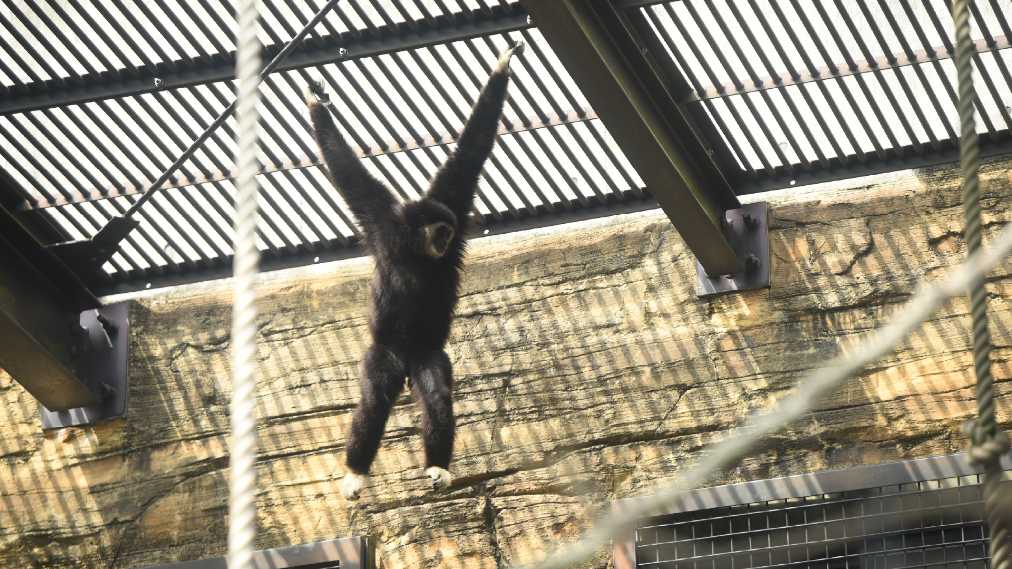
They are characterized by their white furry limbs and long arms. They are an ape-like species closely related to humans and do not have tails. They live in pairs in the trees in the forest. Their calls, which can be heard far and wide, help to strengthen the bond between the pair and to assert their territory against other individuals. Their numbers are declining due to deforestation caused by the development of large-scale palm plantations for palm oil.
| classification | Mammals, Primates, Gibbons |
|---|---|
| English name | White-handed Gibbon |
| distribution | Southeast Asia (Indonesia, Laos, Malaysia, Myanmar, Thailand) |
| Residence | Forest canopy to mid-story |
| Size |
Head torso length: 45-60cm
Weight: 5-6 kg |
| food | Fruits, nuts, leaves, insects, etc. |
| Red List |
IUCN: EN (crisis)
|
What color is its body?
The area around the face and the tops of the hands and feet are all white, but the color of the body varies from one animal to another, ranging from whitish to brown to black, regardless of gender.
Let's see how it moves
They hang from trees and move with their arms alternately, like they're doing monkey bars. To gain speed, they perform a stunt called letting go of the previous branch before grabbing the next.
cry
They form small groups and move within their territories. They communicate using calls that can be heard from far away.