

Zoo Stock Species and the Red List
Zoo Stock Species and the Red List
Zoo Stock

This indicates that the species is included in the Second Zoo Stock Plan, which was formulated by the Tokyo Metropolitan Government in 2018. The plan sets goals for the next 10 years in three areas: "species conservation," "contribution to wildlife conservation," and "environmental education and conservation awareness." 124 animal species are included.
What is the Red List?
Based on scientific research, this is a list of wildlife classified by rank (category) indicating the degree of risk of extinction.
Livng Things Encyclopedia shows the categories (mainland and islands) assessed by the IUCN (International Union for Conservation of Nature) at the global level, the Ministry of the Environment for Japan, and the Tokyo Metropolitan Government for Tokyo.
The higher the category in each table, the higher the risk of extinction, and CR, EN, and VU are the three categories known as "endangered species." In Tokyo, species that are not at the NT (near threatened) level but are relatively rare are considered "species of concern."
|
IUCN categories |
|
|---|---|
|
EX |
extinction |
|
EW |
Extinction in the wild |
|
CR+EN |
— |
|
CR |
Serious crisis |
|
EN |
crisis |
|
VU |
emergency |
|
NT |
Near Threatened |
|
LC・○ |
Low Concern |
|
DD |
Data shortage |
|
LP |
— |
|
Japan (Ministry of the Environment) Category |
|
|---|---|
|
EX |
extinction |
|
EW |
Extinction in the wild |
|
CR+EN |
Endangered species |
|
CR |
Critically Endangered |
|
EN |
Endangered species |
|
VU |
Endangered species |
|
NT |
Near Threatened |
|
LC・○ |
— |
|
DD |
Lack of information |
|
LP |
Endangered |
|
Tokyo Category |
|
|---|---|
|
EX |
extinction |
|
EW |
Extinction in the wild |
|
CR+EN |
Endangered species |
|
CR |
Critically Endangered |
|
EN |
Endangered species |
|
VU |
Endangered species |
|
NT |
Near Threatened |
|
LC・○ |
Unranked |
|
DD |
Lack of information |
|
LP |
Endangered |
Creatures at Tama Zoo
Creatures at Tama Zoo
Water Buffalo
livestock
Water Buffalo
livestockBuBalus buBaluis
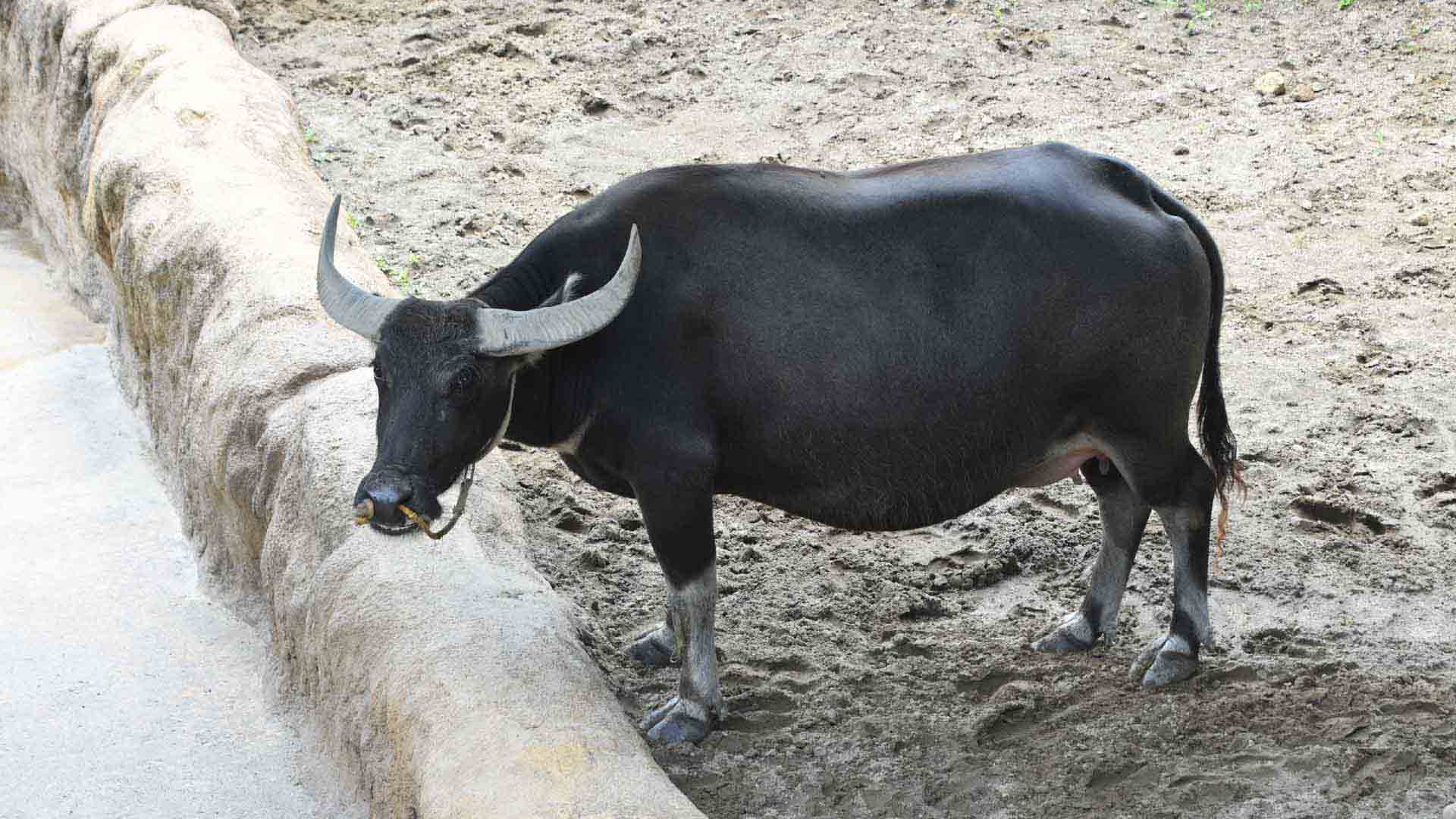
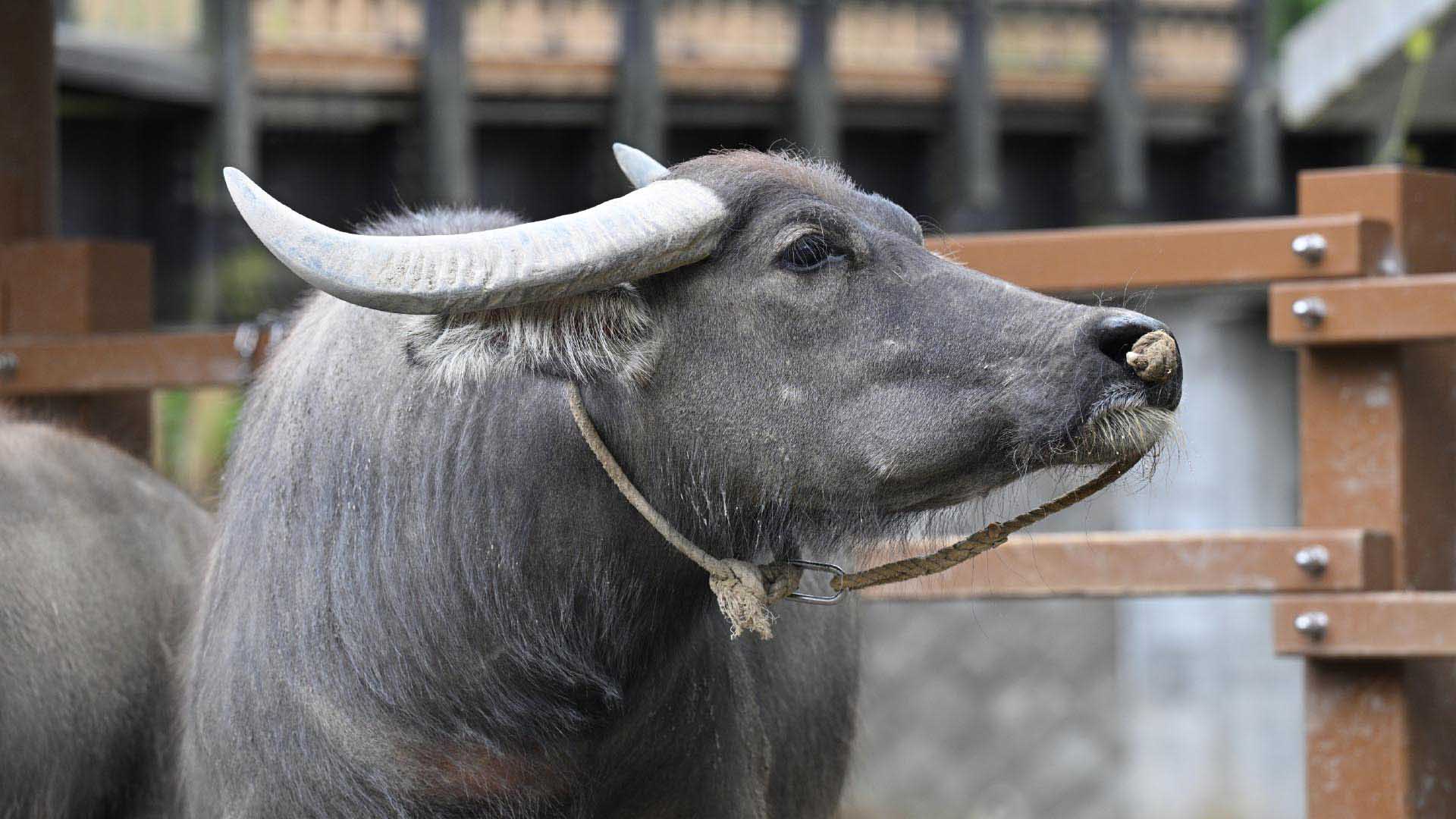
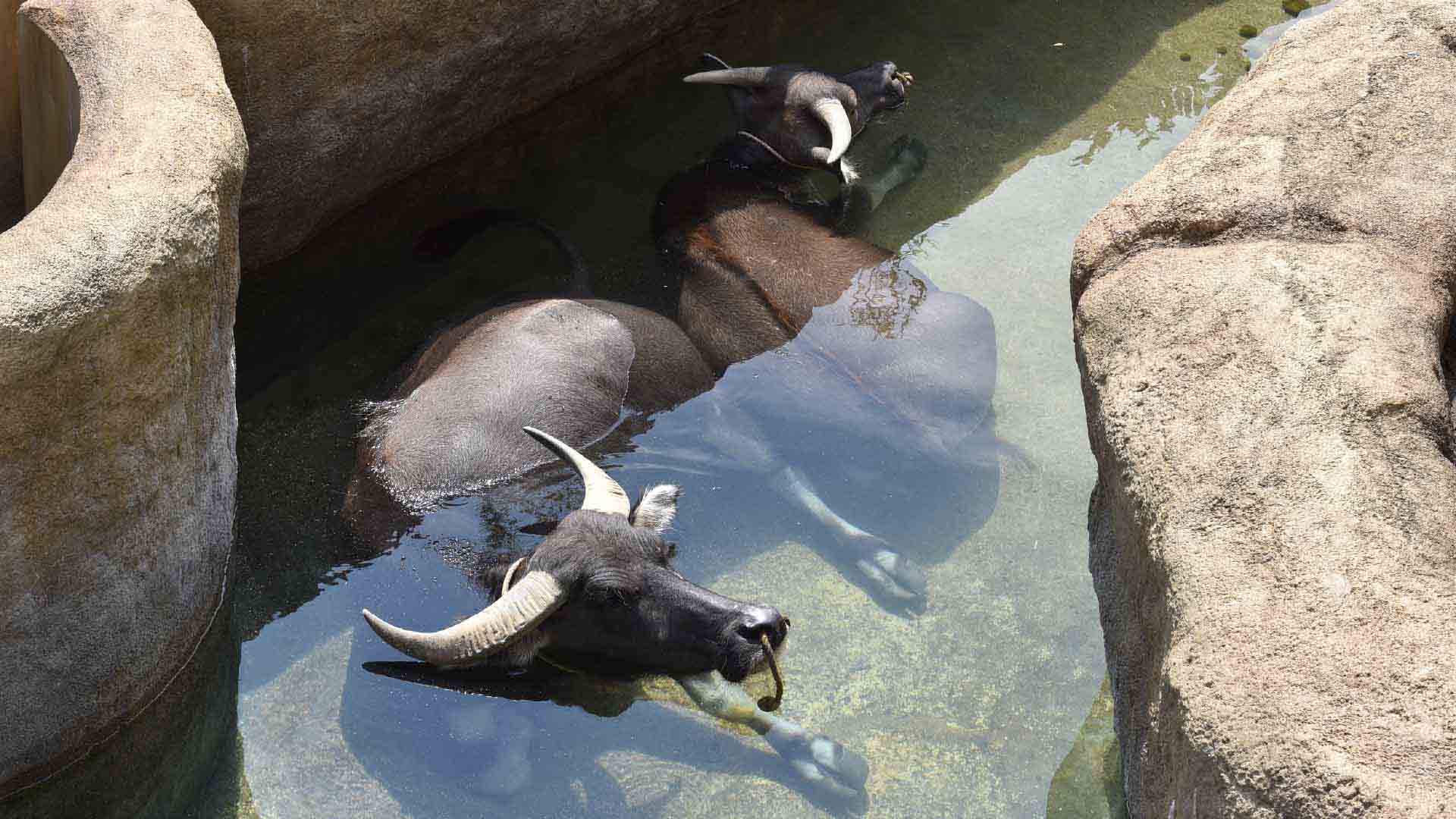
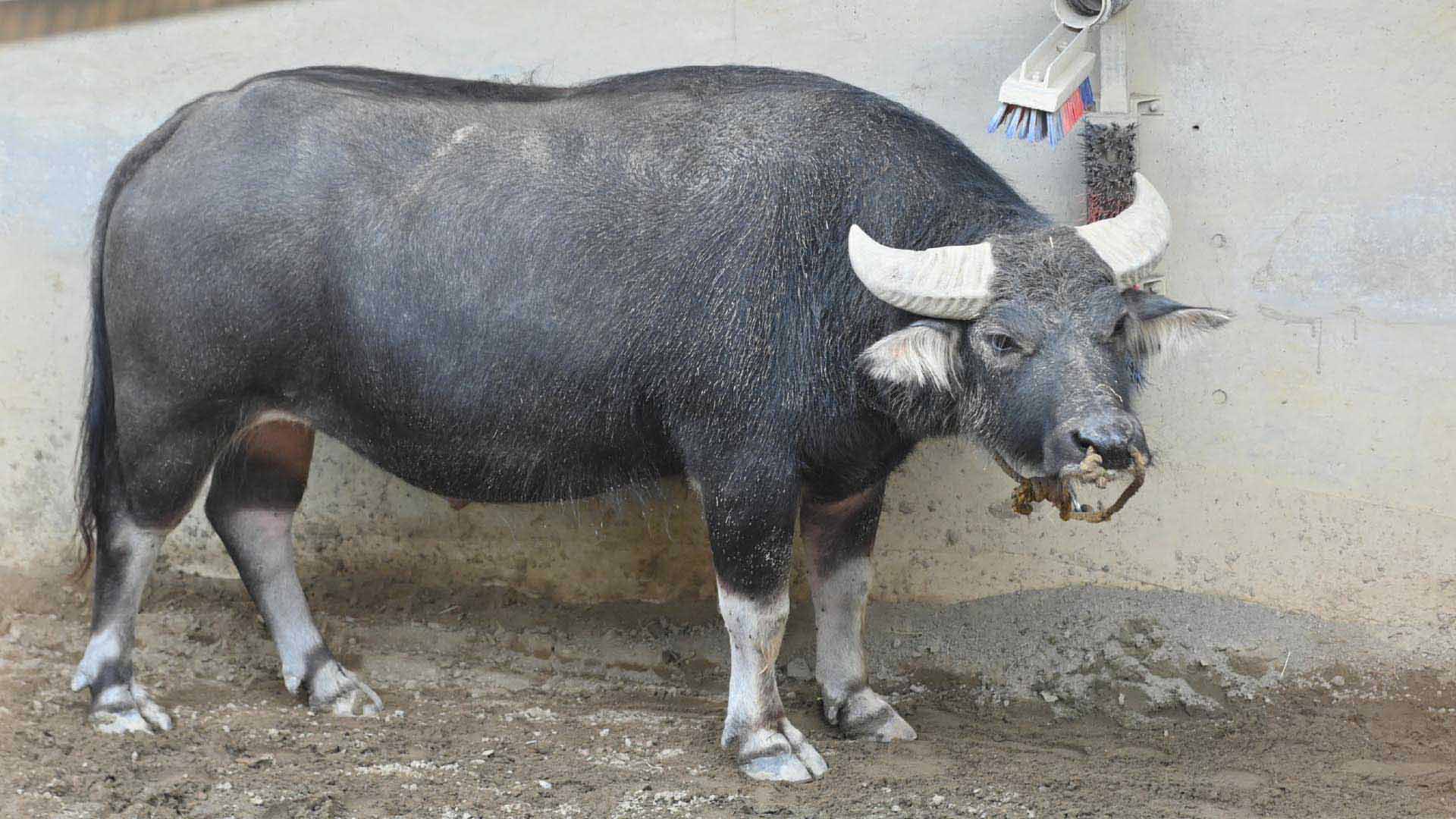
This is a livestock species that originated from the Asian Water Buffalo. Because it is stronger than cattle or Domestic Horse and more tolerant of heat, it has long been bred in various parts of Asia and used for cultivating rice paddies and fields. However, due to the mechanization of agriculture, its population is currently decreasing.
| classification | Mammalia, Artiodactyla, Bovidae |
|---|---|
| English name | Water Buffalo |
| distribution | Tropical to subtropical regions of Asia, Mediterranean coast, etc. |
| Residence | ー |
| Size |
Shoulder height: Males approximately 130cm, females approximately 124cm
Weight: 400-1,000 kg |
| food | Hay, green grass, aquatic plants, branches and leaves, concentrated feed |
| Red List |
Not rated for livestock
|
The situation of the original wild Asian Water Buffalo
They are endangered and only a few remain in the wetland national parks and protected areas of India, Nepal and Sri Lanka.
About the animals kept at Tama Zoo
On Yubu Island, the home of Water Buffalo kept at Tama Zoo, Water Buffalo have long cultivated fields and supported people's livelihoods. Currently, they play an active role in tourism, pulling tourist water buffalo carts and the like. Water Buffalo are raised with care and close contact with humans from the moment they are born. As a result, they have become very accustomed to people. At Tama Zoo, we continue to raise Water Buffalo using the same methods used by the people of Yubu Island.