

Zoo Stock Species and the Red List
Zoo Stock Species and the Red List
Zoo Stock

This indicates that the species is included in the Second Zoo Stock Plan, which was formulated by the Tokyo Metropolitan Government in 2018. The plan sets goals for the next 10 years in three areas: "species conservation," "contribution to wildlife conservation," and "environmental education and conservation awareness." 124 animal species are included.
What is the Red List?
Based on scientific research, this is a list of wildlife classified by rank (category) indicating the degree of risk of extinction.
Livng Things Encyclopedia shows the categories (mainland and islands) assessed by the IUCN (International Union for Conservation of Nature) at the global level, the Ministry of the Environment for Japan, and the Tokyo Metropolitan Government for Tokyo.
The higher the category in each table, the higher the risk of extinction, and CR, EN, and VU are the three categories known as "endangered species." In Tokyo, species that are not at the NT (near threatened) level but are relatively rare are considered "species of concern."
|
IUCN categories |
|
|---|---|
|
EX |
extinction |
|
EW |
Extinction in the wild |
|
CR+EN |
— |
|
CR |
Serious crisis |
|
EN |
crisis |
|
VU |
emergency |
|
NT |
Near Threatened |
|
LC・○ |
Low Concern |
|
DD |
Data shortage |
|
LP |
— |
|
Japan (Ministry of the Environment) Category |
|
|---|---|
|
EX |
extinction |
|
EW |
Extinction in the wild |
|
CR+EN |
Endangered species |
|
CR |
Critically Endangered |
|
EN |
Endangered species |
|
VU |
Endangered species |
|
NT |
Near Threatened |
|
LC・○ |
— |
|
DD |
Lack of information |
|
LP |
Endangered |
|
Tokyo Category |
|
|---|---|
|
EX |
extinction |
|
EW |
Extinction in the wild |
|
CR+EN |
Endangered species |
|
CR |
Critically Endangered |
|
EN |
Endangered species |
|
VU |
Endangered species |
|
NT |
Near Threatened |
|
LC・○ |
Unranked |
|
DD |
Lack of information |
|
LP |
Endangered |
Creatures at Tama Zoo
Creatures at Tama Zoo

Tundra Bean Goose
Tundra Bean Goose
Anser fabalis
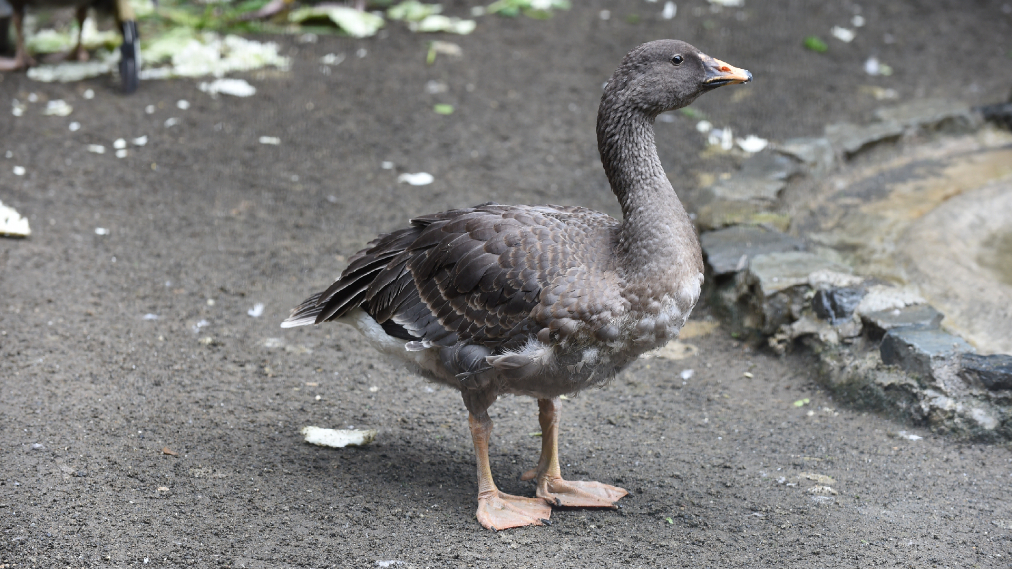
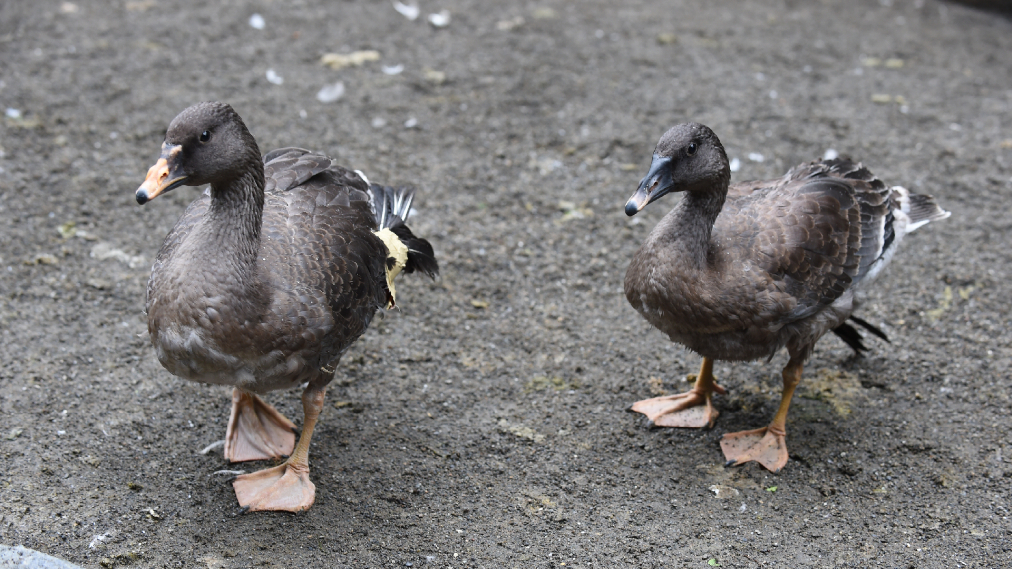
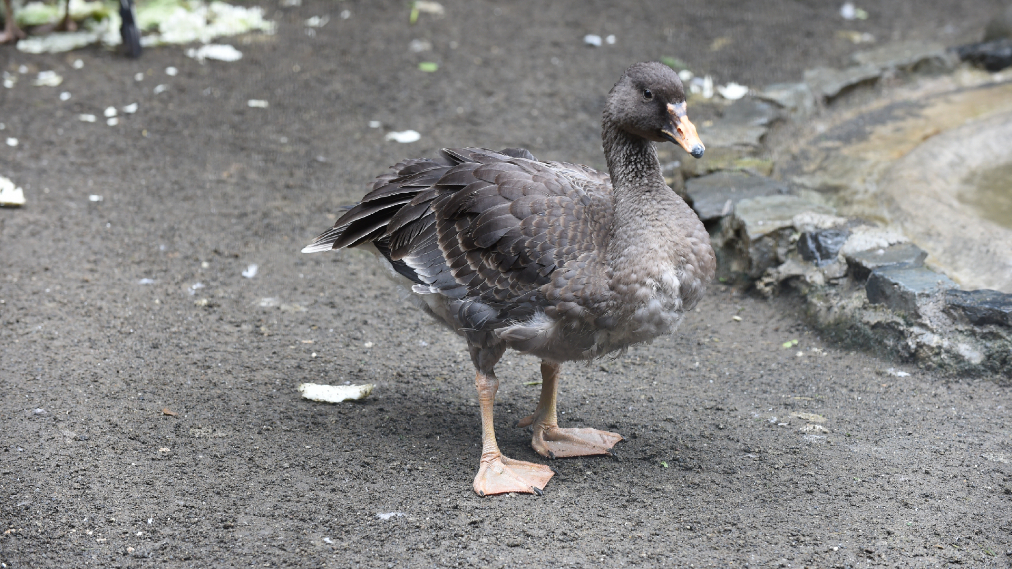
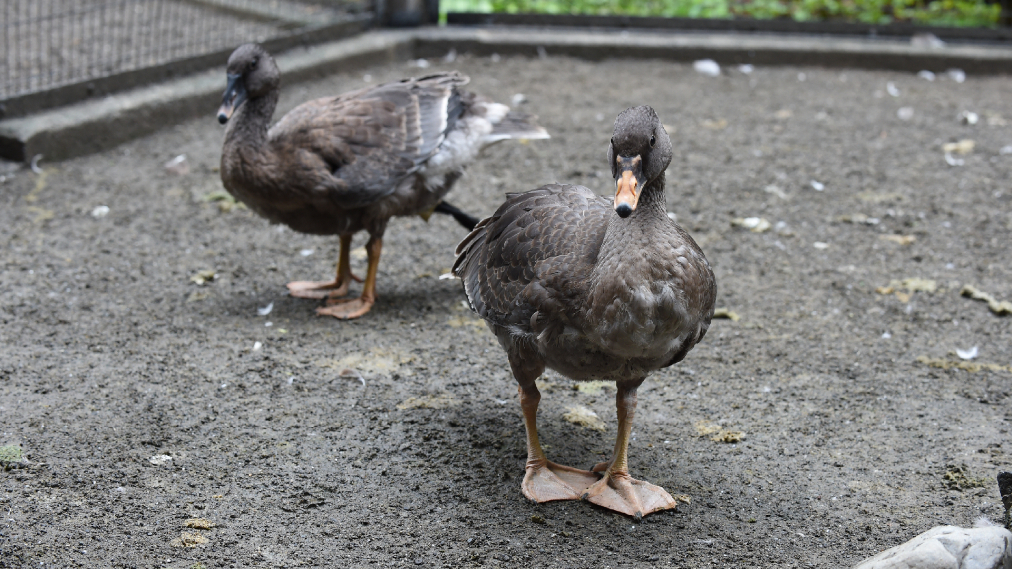
They are dark brown overall with an orange band on the tip of their beak. Breeding begins in May or June, when they build a nest made of down and grass in a depression in the ground and lay 4 to 6 eggs. Nests are usually built at a height that will not be submerged even in floods. After breeding, they undergo molting, and after molting is complete, they leave their breeding grounds around early September and arrive at their wintering grounds between late September and October.
| classification | Aves, Anseriformes, Anatidae |
|---|---|
| English name | Tundra Bean Goose |
| distribution | Breeding location: Northern Eurasia Wintering areas: East Asia, Kazakhstan, Europe |
| Residence | Breeding season: Lakes, marshes, and rivers in the taiga and tundra Wintering period: grassland, farmland, wetland |
| Size |
全長:66~89cm
翼開長:142~175cm 体重:3.2~3.9kg |
| food | Grass blades, stems, roots, seeds, aquatic plants, grains |
| Red List |
IUCN: LC (Least Concern)
Japan: NT (Near Threatened) Tokyo: EX (Extinct) |
How to distinguish between Greylag Goose, Greater White-fronted Goose, and Lesser White-fronted Goose
Tundra Bean Goose has a black beak and does not have the black spots on its abdomen that are seen in Greater White-fronted Goose and Lesser White-fronted Goose.
Danger in the wild
Due to increased hunting, their population declined in the mid-1900s, along with that of other species such as the white-Greater White-fronted Goose that migrate to Japan. In order to conserve these geese, which have long been beloved by the Japanese people, they were designated a national natural monument in 1971. Since the 1970s, their population has gradually increased, and as of around 2020, there are approximately 10,000 birds wintering in Japan.