

Zoo Stock Species and the Red List
Zoo Stock Species and the Red List
Zoo Stock

This indicates that the species is included in the Second Zoo Stock Plan, which was formulated by the Tokyo Metropolitan Government in 2018. The plan sets goals for the next 10 years in three areas: "species conservation," "contribution to wildlife conservation," and "environmental education and conservation awareness." 124 animal species are included.
What is the Red List?
Based on scientific research, this is a list of wildlife classified by rank (category) indicating the degree of risk of extinction.
Livng Things Encyclopedia shows the categories (mainland and islands) assessed by the IUCN (International Union for Conservation of Nature) at the global level, the Ministry of the Environment for Japan, and the Tokyo Metropolitan Government for Tokyo.
The higher the category in each table, the higher the risk of extinction, and CR, EN, and VU are the three categories known as "endangered species." In Tokyo, species that are not at the NT (near threatened) level but are relatively rare are considered "species of concern."
|
IUCN categories |
|
|---|---|
|
EX |
extinction |
|
EW |
Extinction in the wild |
|
CR+EN |
— |
|
CR |
Serious crisis |
|
EN |
crisis |
|
VU |
emergency |
|
NT |
Near Threatened |
|
LC・○ |
Low Concern |
|
DD |
Data shortage |
|
LP |
— |
|
Japan (Ministry of the Environment) Category |
|
|---|---|
|
EX |
extinction |
|
EW |
Extinction in the wild |
|
CR+EN |
Endangered species |
|
CR |
Critically Endangered |
|
EN |
Endangered species |
|
VU |
Endangered species |
|
NT |
Near Threatened |
|
LC・○ |
— |
|
DD |
Lack of information |
|
LP |
Endangered |
|
Tokyo Category |
|
|---|---|
|
EX |
extinction |
|
EW |
Extinction in the wild |
|
CR+EN |
Endangered species |
|
CR |
Critically Endangered |
|
EN |
Endangered species |
|
VU |
Endangered species |
|
NT |
Near Threatened |
|
LC・○ |
Unranked |
|
DD |
Lack of information |
|
LP |
Endangered |
Creatures at Tama Zoo
Creatures at Tama Zoo
Tasmanian Devil
Tasmanian Devil
Sarcophilus harrisii
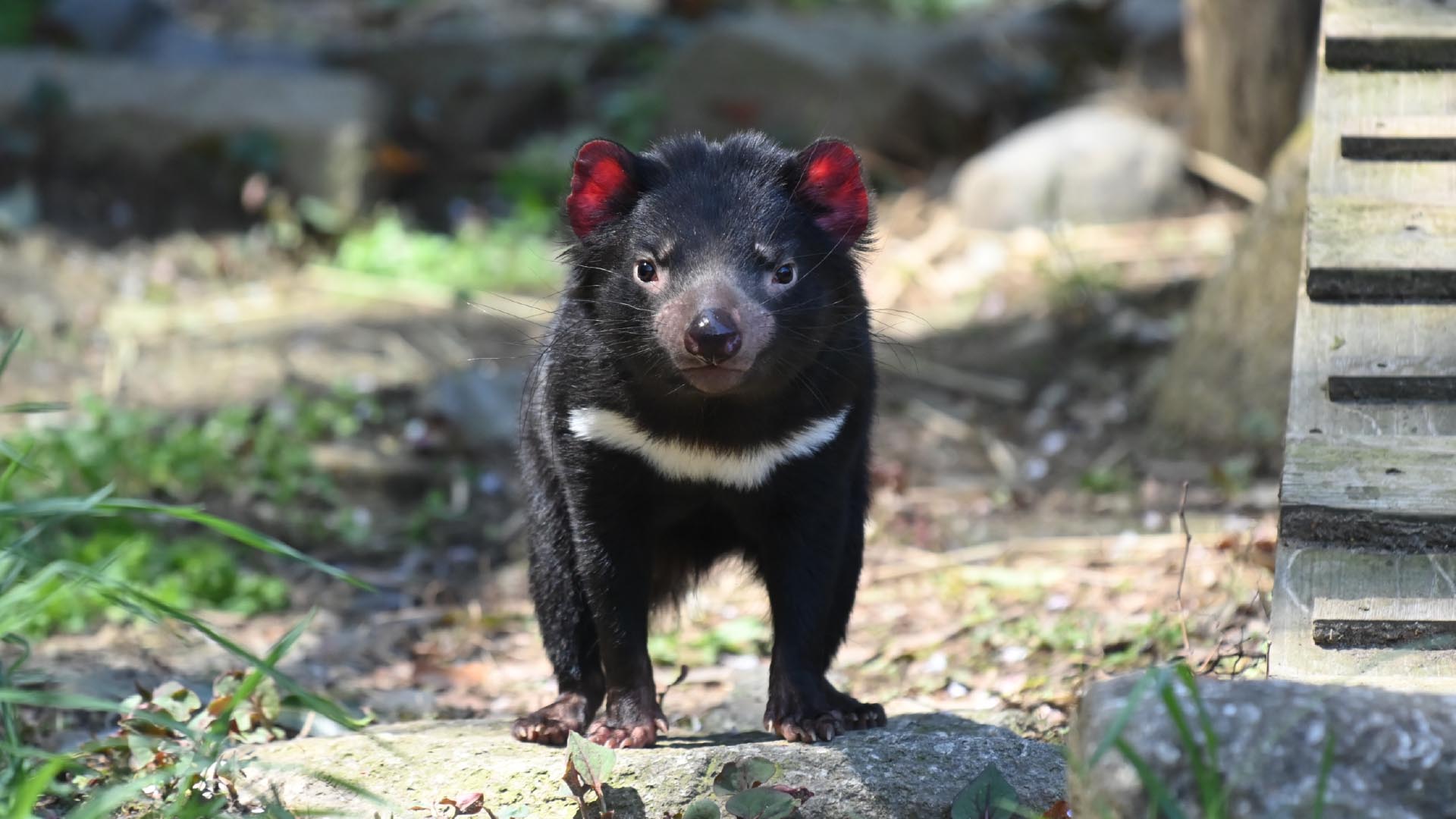
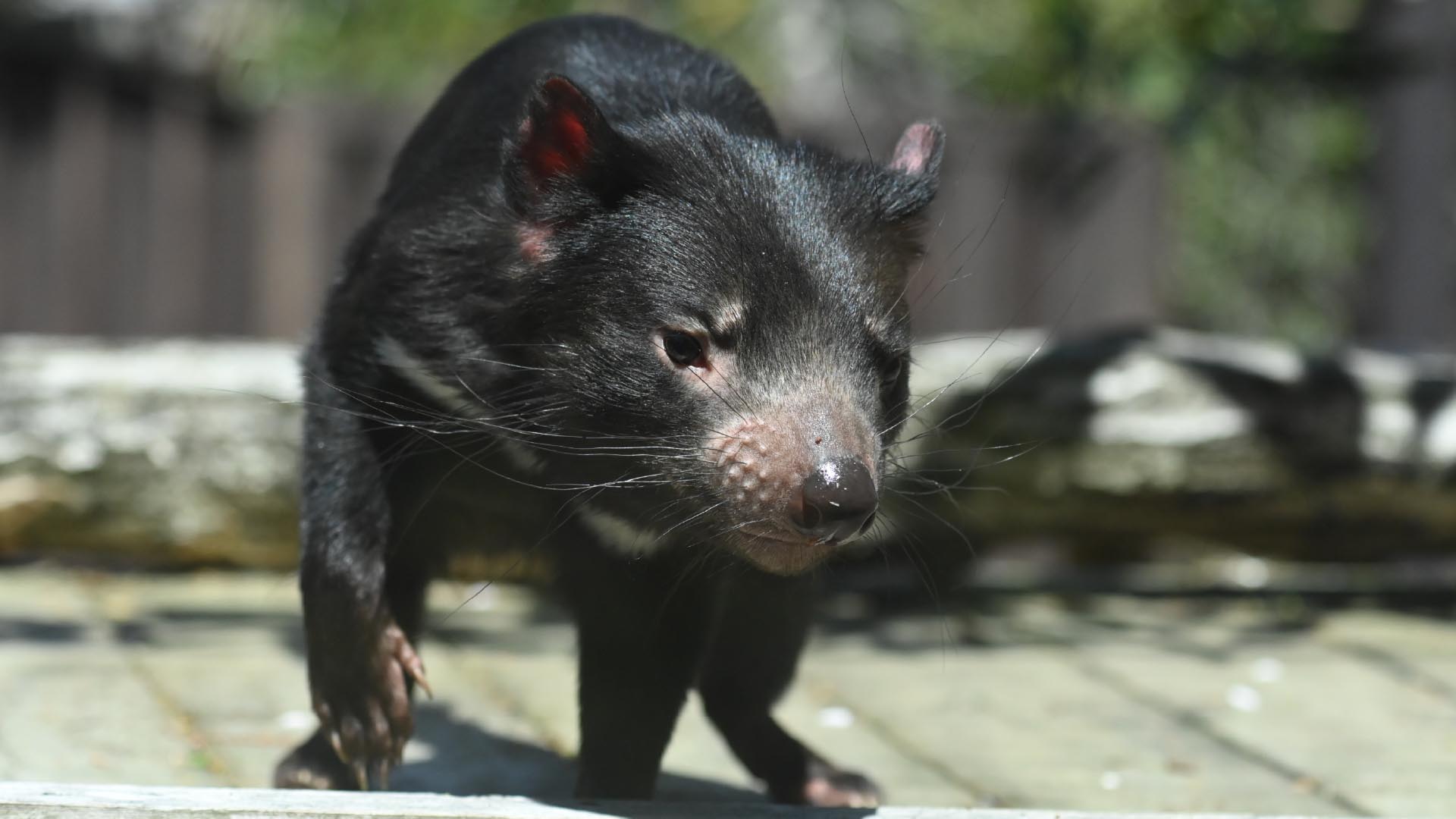
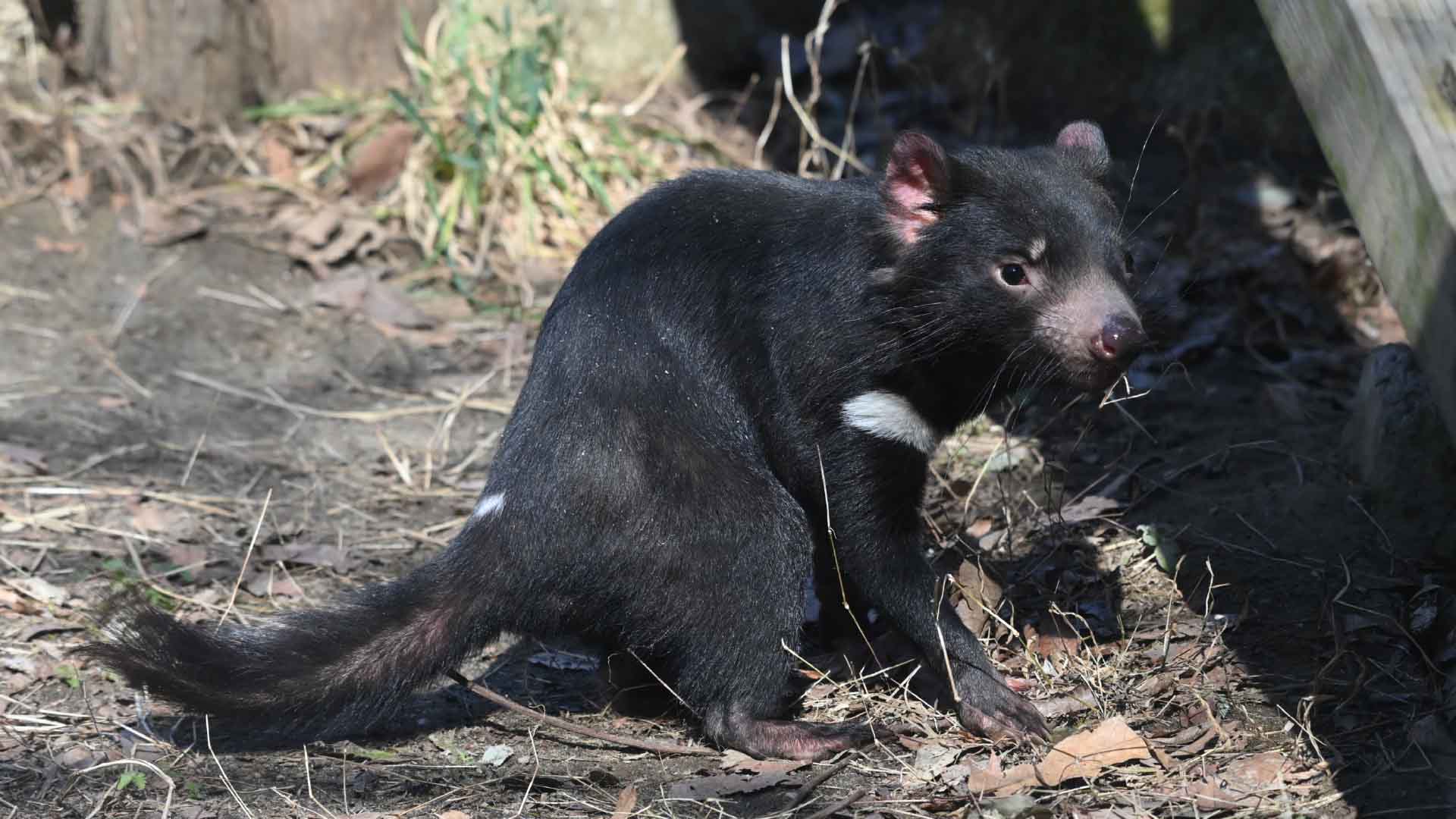
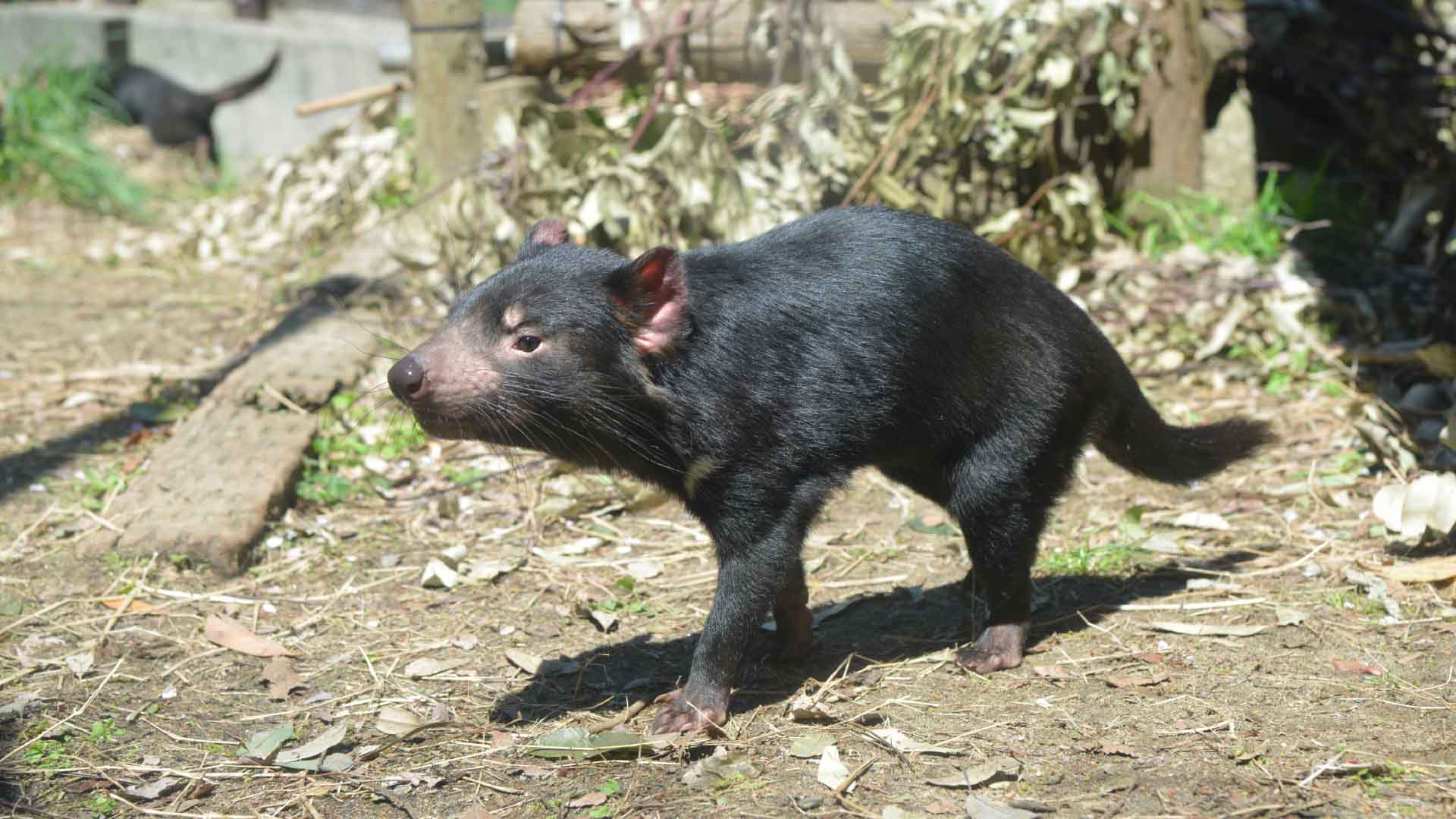
It is the largest living carnivorous marsupial. Its body is black with white patterns on its chest and waist. It is nocturnal, resting in the bushes or in crevices between rocks during the day and searching for food after dark. It has a keen sense of smell and can detect odors up to 2km away. It generally acts alone, but will eat in groups when feeding on the carcass of a large animal.
| classification | Mammalia, Order Dasqulli, Family Dasqullidae |
|---|---|
| English name | Tasmanian Devil |
| distribution | Australia (Kawakawa) |
| Residence | From the coast to the forest |
| Size |
Head torso length: 60cm
Weight: Males 10kg, Females 6-7kg |
| food | Mainly carrion: wallabies, possums, wombats, various small mammals, birds, reptiles, amphibians, insects, fish, shellfish etc. |
| Red List |
IUCN: EN (crisis)
|
mouth
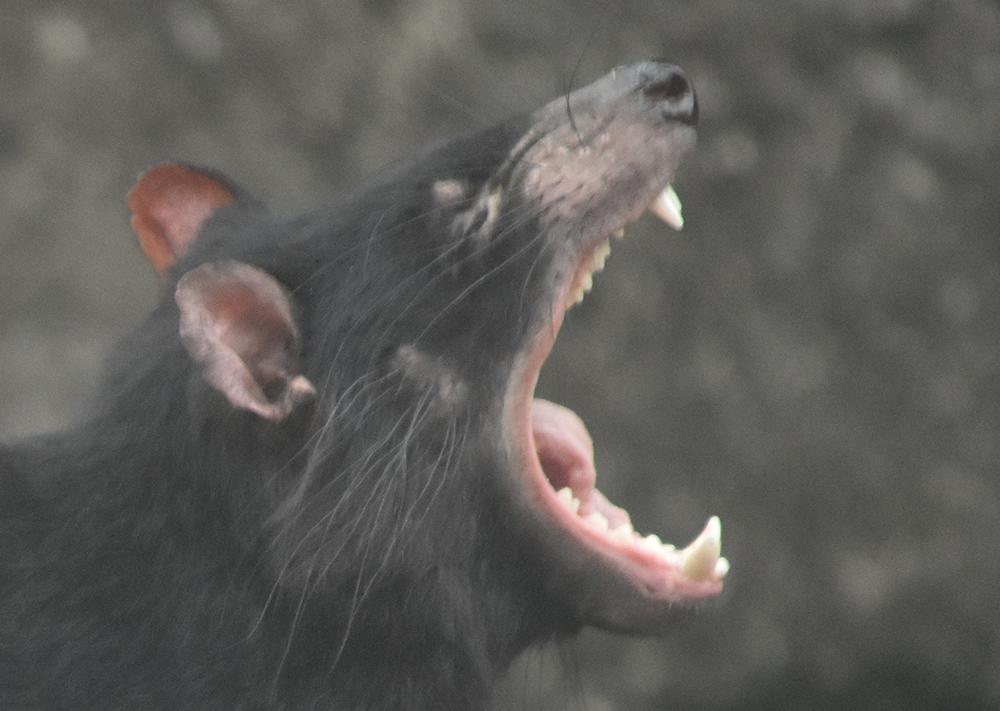
Its mouth opens wide, and it has strong jaws and sharp teeth that allow it to chew through dead animals, skin and bones alike.
long beard
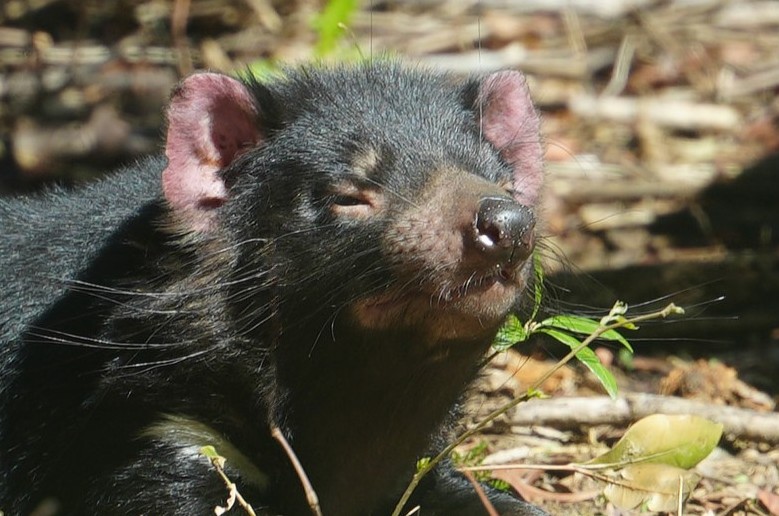
It helps them find food in the dark and gauge the distance between them and other individuals.
Running style
They run rhythmically, bobbing their heads up and down like a horse galloping.
Birth and child development
Females have a pouch with an opening facing backwards on their abdomen. They give birth to an average of 18 small, underdeveloped babies, but sometimes as many as 20 to 50. However, there are only four nipples in the pouch, so a maximum of four babies will develop, and in most cases only two or three will develop. The babies spend about 16 weeks in the pouch, and it takes about two years for them to grow to adult size.
cry
It makes a distinctive, loud growling sound. It is said that this terrifying voice is why it was described as a devil.