

Zoo Stock Species and the Red List
Zoo Stock Species and the Red List
Zoo Stock
This indicates that the species is included in the Second Zoo Stock Plan, which was formulated by the Tokyo Metropolitan Government in 2018. The plan sets goals for the next 10 years in three areas: "species conservation," "contribution to wildlife conservation," and "environmental education and conservation awareness." 124 animal species are included.
What is the Red List?
Based on scientific research, this is a list of wildlife classified by rank (category) indicating the degree of risk of extinction.
Livng Things Encyclopedia shows the categories (mainland and islands) assessed by the IUCN (International Union for Conservation of Nature) at the global level, the Ministry of the Environment for Japan, and the Tokyo Metropolitan Government for Tokyo.
The higher the category in each table, the higher the risk of extinction, and CR, EN, and VU are the three categories known as "endangered species." In Tokyo, species that are not at the NT (near threatened) level but are relatively rare are considered "species of concern."
|
IUCN categories |
|
|---|---|
|
EX |
extinction |
|
EW |
Extinction in the wild |
|
CR+EN |
— |
|
CR |
Serious crisis |
|
EN |
crisis |
|
VU |
emergency |
|
NT |
Near Threatened |
|
LC・○ |
Low Concern |
|
DD |
Data shortage |
|
LP |
— |
|
Japan (Ministry of the Environment) Category |
|
|---|---|
|
EX |
extinction |
|
EW |
Extinction in the wild |
|
CR+EN |
Endangered species |
|
CR |
Critically Endangered |
|
EN |
Endangered species |
|
VU |
Endangered species |
|
NT |
Near Threatened |
|
LC・○ |
— |
|
DD |
Lack of information |
|
LP |
Endangered |
|
Tokyo Category |
|
|---|---|
|
EX |
extinction |
|
EW |
Extinction in the wild |
|
CR+EN |
Endangered species |
|
CR |
Critically Endangered |
|
EN |
Endangered species |
|
VU |
Endangered species |
|
NT |
Near Threatened |
|
LC・○ |
Unranked |
|
DD |
Lack of information |
|
LP |
Endangered |
Creatures at Tama Zoo
Creatures at Tama Zoo
Takin
Subspecies: Golden Takin
Takin
Subspecies: Golden TakinBudorcas taxicolor bedfordi
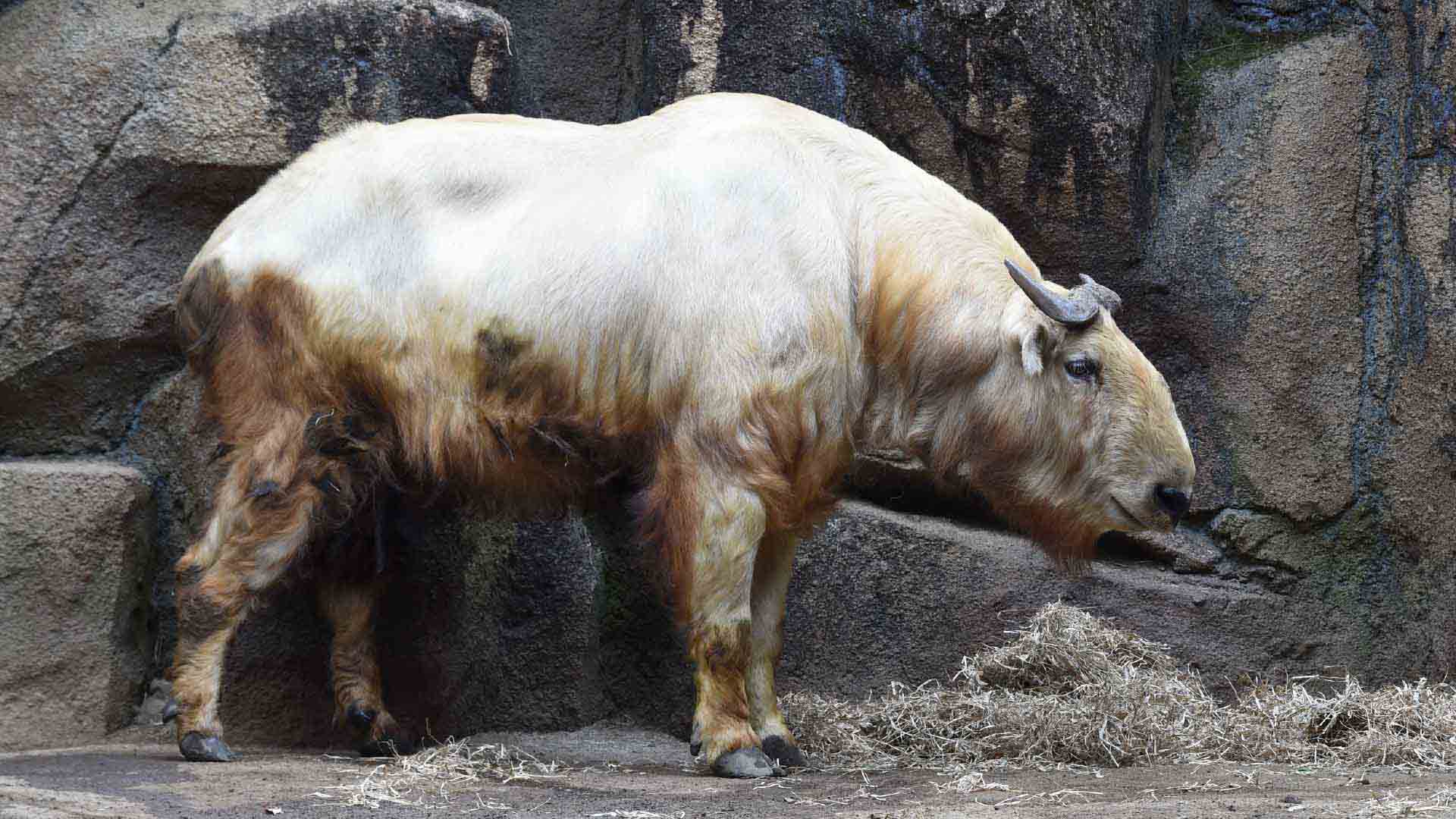
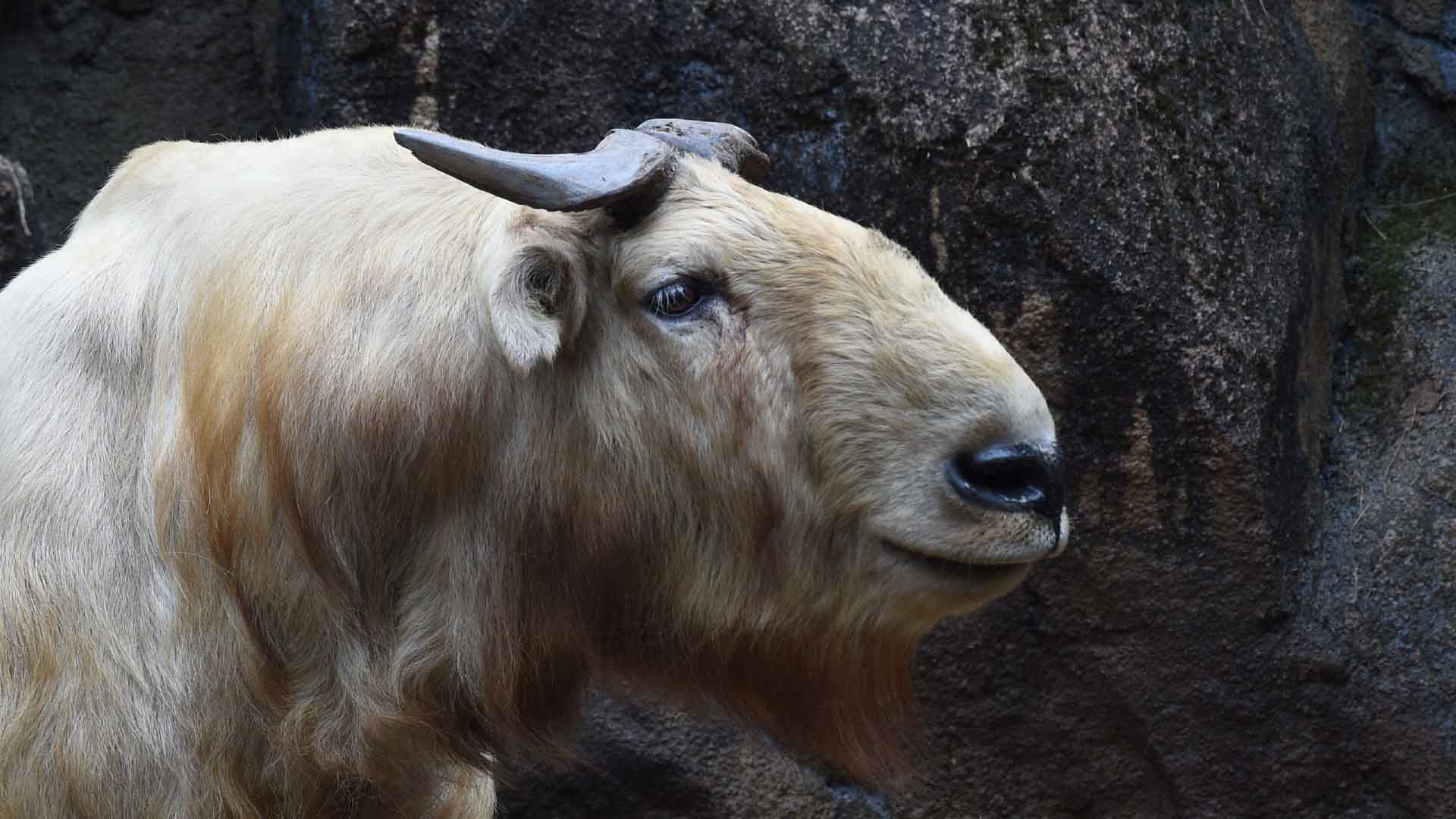
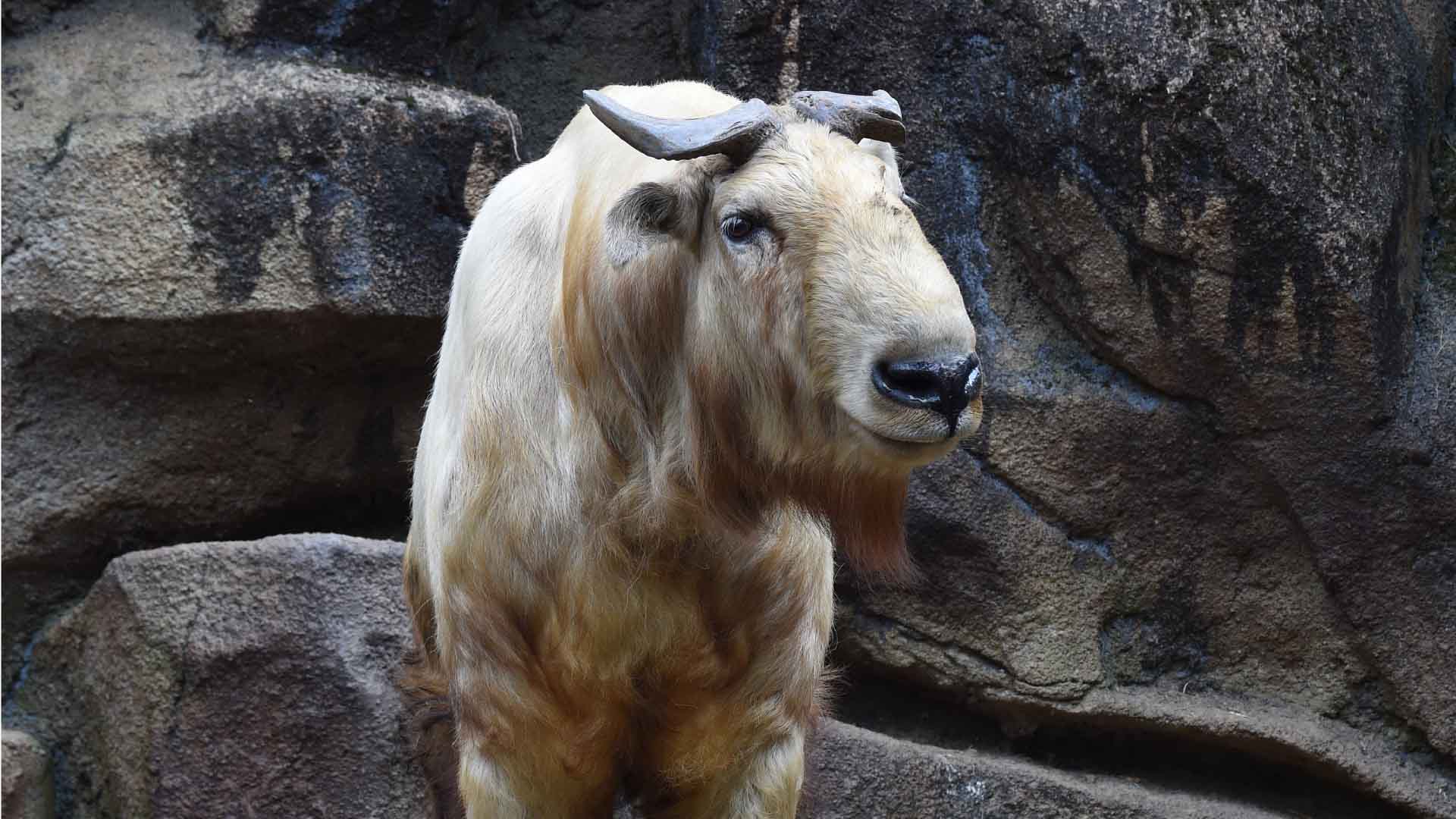
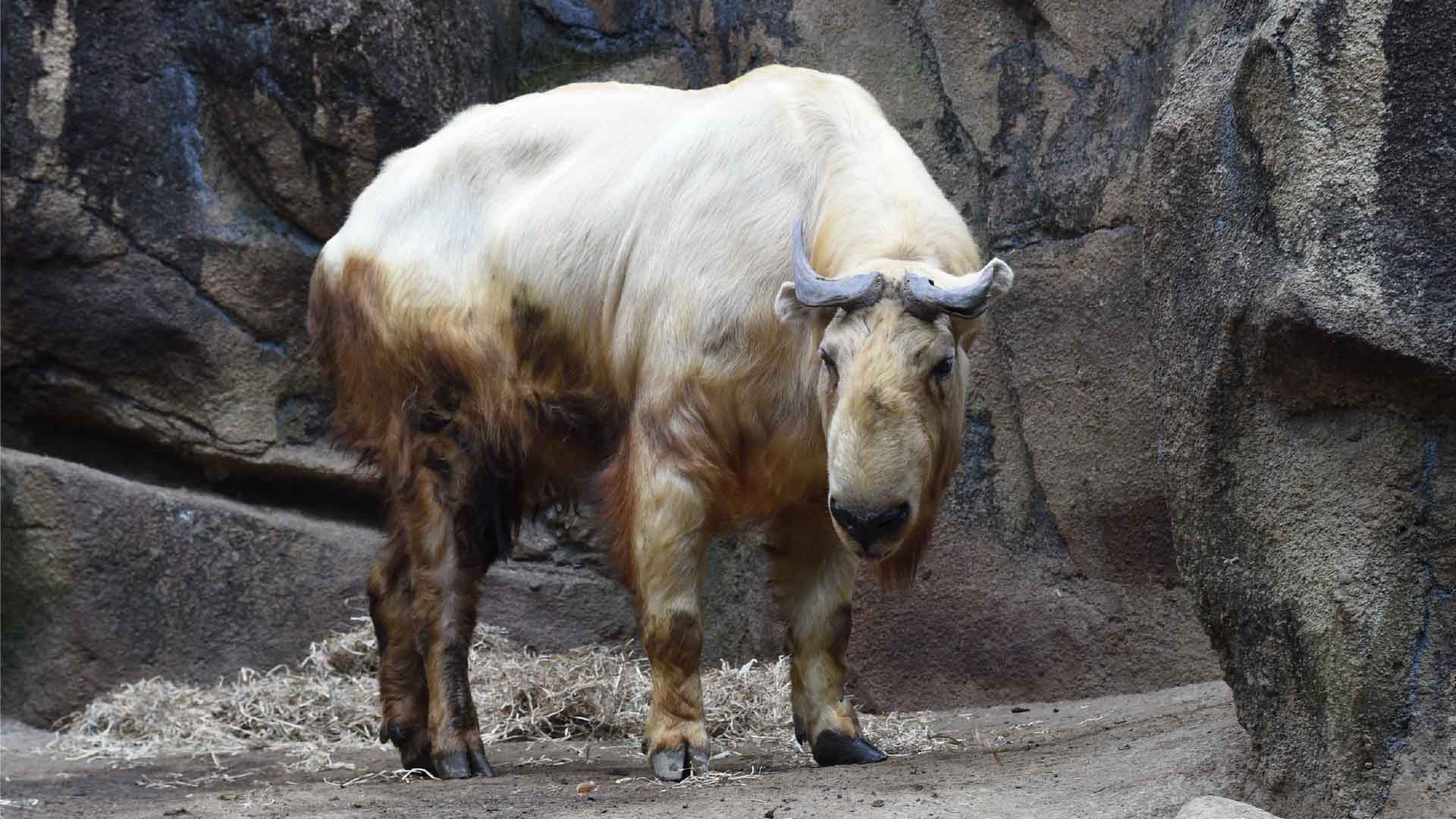
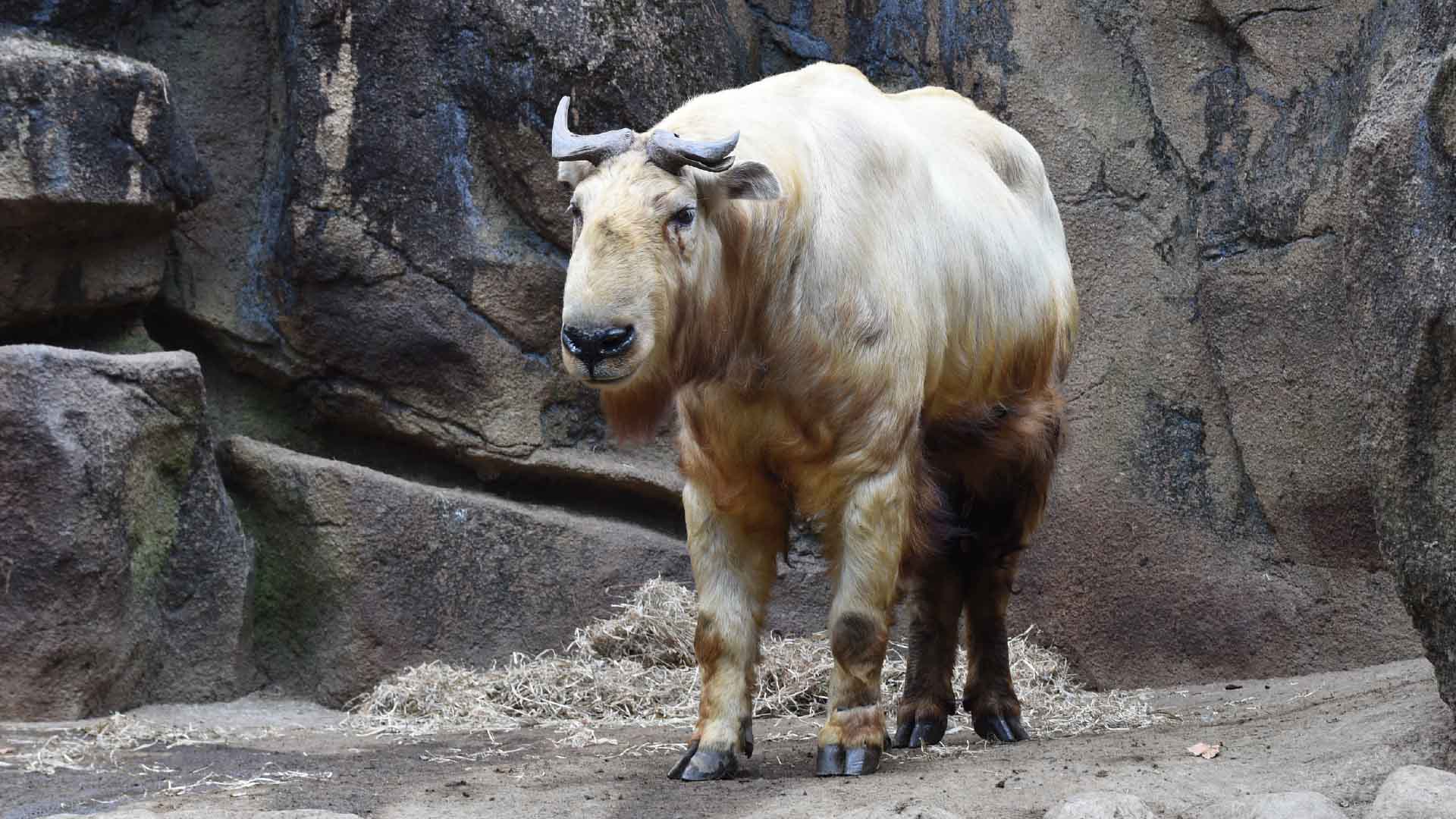
There are four subspecies of Takin, of which this subspecies lives in Shaanxi Province, China. The name of the subspecies comes from the fact that adult males have a golden-white body color. Females have a stronger brown color. They live in groups of around 10 to 20 individuals, consisting of one male, several females, and their young. Sometimes groups are made up of only males. Mature males are said to often act alone.
| classification | Mammalia, Artiodactyla, Bovidae |
|---|---|
| English name | Golden Takin |
| distribution | Southern Shaanxi Province, China |
| Residence | mountainous areas |
| Size |
Head torso length: 170-220cm
Shoulder height: 107-140cm Weight: 150-350 kg |
| food | Grass, leaves, bark, bamboo shoots, etc. |
| Red List |
IUCN: VU (Very)
|
Facial features
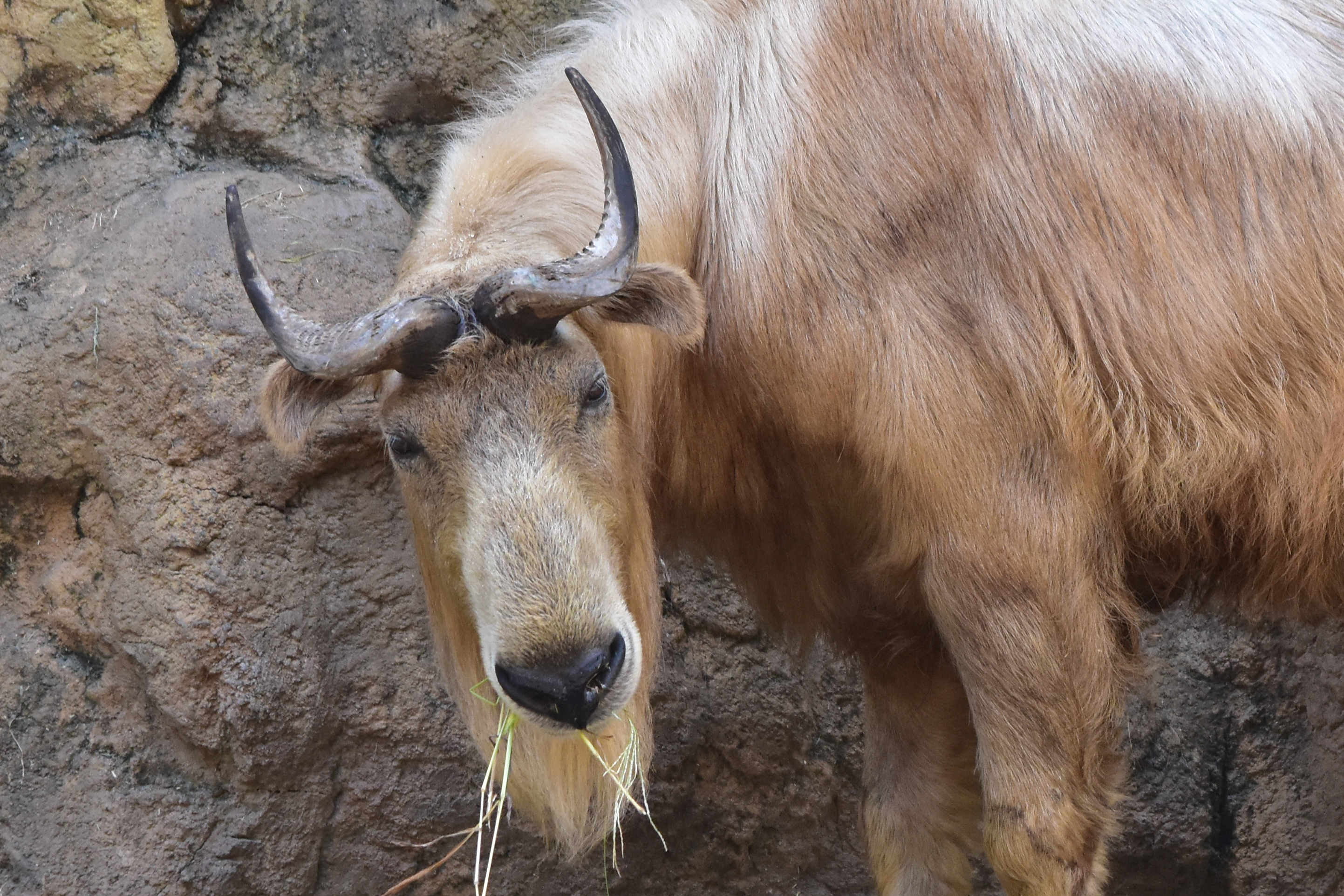
The nose is raised and there is long hair under the chin.
Danger in the wild
Habitat development, the expansion of agriculture, and road construction are reducing forests and fragmenting habitats. Furthermore, hunting, deforestation, and the impact of invasive species are compounding the decline in populations. Reassessing human activities and protecting the natural environment is the key to preventing extinction.