

Zoo Stock Species and the Red List
Zoo Stock Species and the Red List
Zoo Stock

This indicates that the species is included in the Second Zoo Stock Plan, which was formulated by the Tokyo Metropolitan Government in 2018. The plan sets goals for the next 10 years in three areas: "species conservation," "contribution to wildlife conservation," and "environmental education and conservation awareness." 124 animal species are included.
What is the Red List?
Based on scientific research, this is a list of wildlife classified by rank (category) indicating the degree of risk of extinction.
Livng Things Encyclopedia shows the categories (mainland and islands) assessed by the IUCN (International Union for Conservation of Nature) at the global level, the Ministry of the Environment for Japan, and the Tokyo Metropolitan Government for Tokyo.
The higher the category in each table, the higher the risk of extinction, and CR, EN, and VU are the three categories known as "endangered species." In Tokyo, species that are not at the NT (near threatened) level but are relatively rare are considered "species of concern."
|
IUCN categories |
|
|---|---|
|
EX |
extinction |
|
EW |
Extinction in the wild |
|
CR+EN |
— |
|
CR |
Serious crisis |
|
EN |
crisis |
|
VU |
emergency |
|
NT |
Near Threatened |
|
LC・○ |
Low Concern |
|
DD |
Data shortage |
|
LP |
— |
|
Japan (Ministry of the Environment) Category |
|
|---|---|
|
EX |
extinction |
|
EW |
Extinction in the wild |
|
CR+EN |
Endangered species |
|
CR |
Critically Endangered |
|
EN |
Endangered species |
|
VU |
Endangered species |
|
NT |
Near Threatened |
|
LC・○ |
— |
|
DD |
Lack of information |
|
LP |
Endangered |
|
Tokyo Category |
|
|---|---|
|
EX |
extinction |
|
EW |
Extinction in the wild |
|
CR+EN |
Endangered species |
|
CR |
Critically Endangered |
|
EN |
Endangered species |
|
VU |
Endangered species |
|
NT |
Near Threatened |
|
LC・○ |
Unranked |
|
DD |
Lack of information |
|
LP |
Endangered |
Creatures at Tama Zoo
Creatures at Tama Zoo
Steller's Sea Eagle
Steller's Sea Eagle
Haliaeetus pelagicus
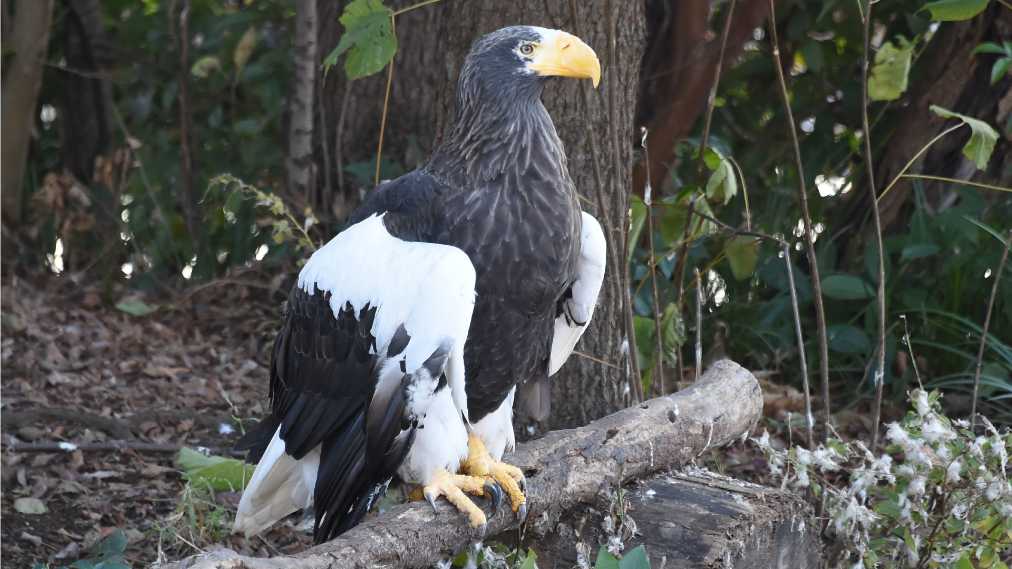
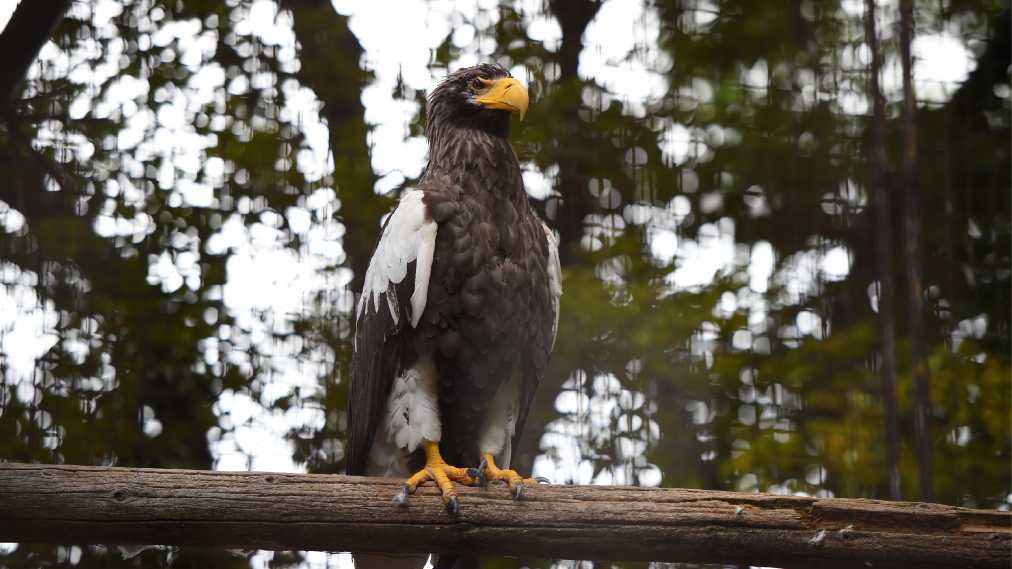
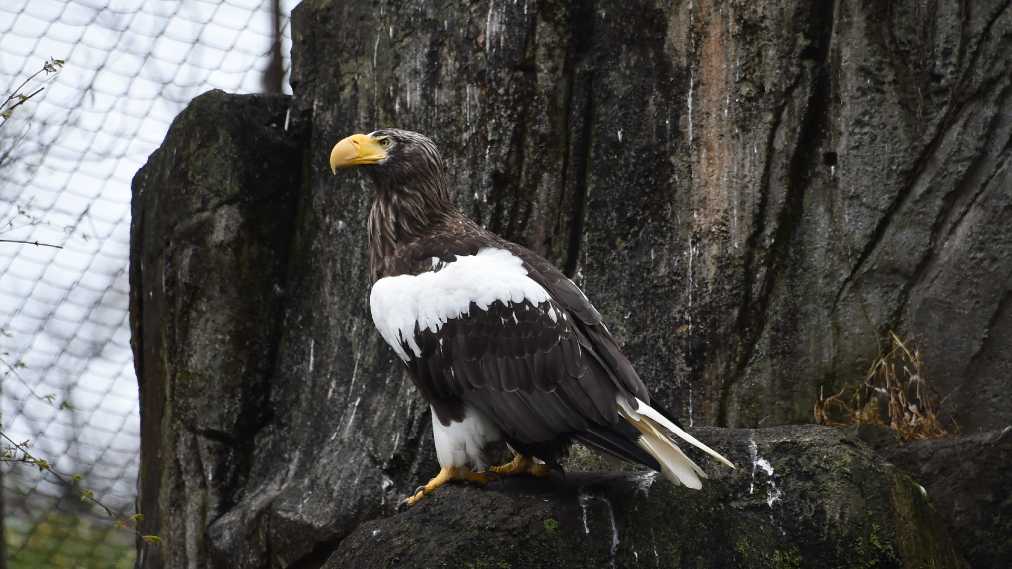
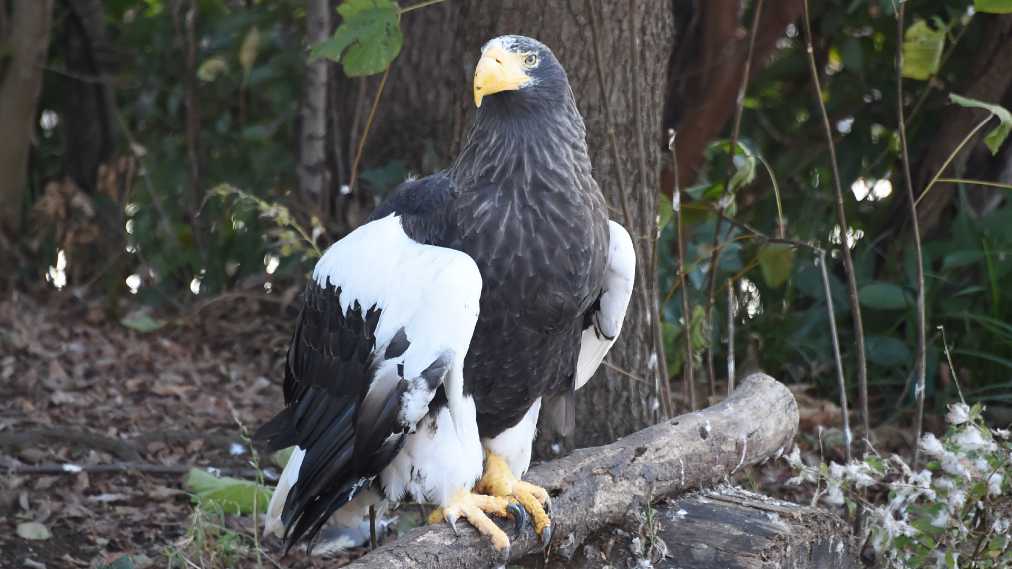
They raise their young along the northern coast of the Sea of Okhotsk, then fly to the Korean Peninsula and northern Japan to spend the winter. They are one of the largest eagles found in Japan, and while they mainly catch and eat fish on the coasts and in rivers, they also prey on baby seals and birds such as ducks. They are fairly easy to observe at the fishing ports of Hokkaido's Shiretoko Peninsula, where they gather to prey on fish from fishing boats. They have been designated a natural monument.
| classification | Aves, Accipitridae, Accipitridae |
|---|---|
| English name | Steller's Sea Eagle |
| distribution | Russian Far East and Japan, including Hokkaido and Tohoku in Japan |
| Residence | Near the coast, lakes and marshes |
| Size |
Total length: male 88cm, female 102cm
Wingspan: Males 56-65cm, females 60-65cm Wing expansion: 220-250cm |
| food | Large fish such as salmon and trout, weak fish, birds, etc. |
| Red List |
IUCN: VU (Very)
Japan: VU (Vulnerable) |
What color?
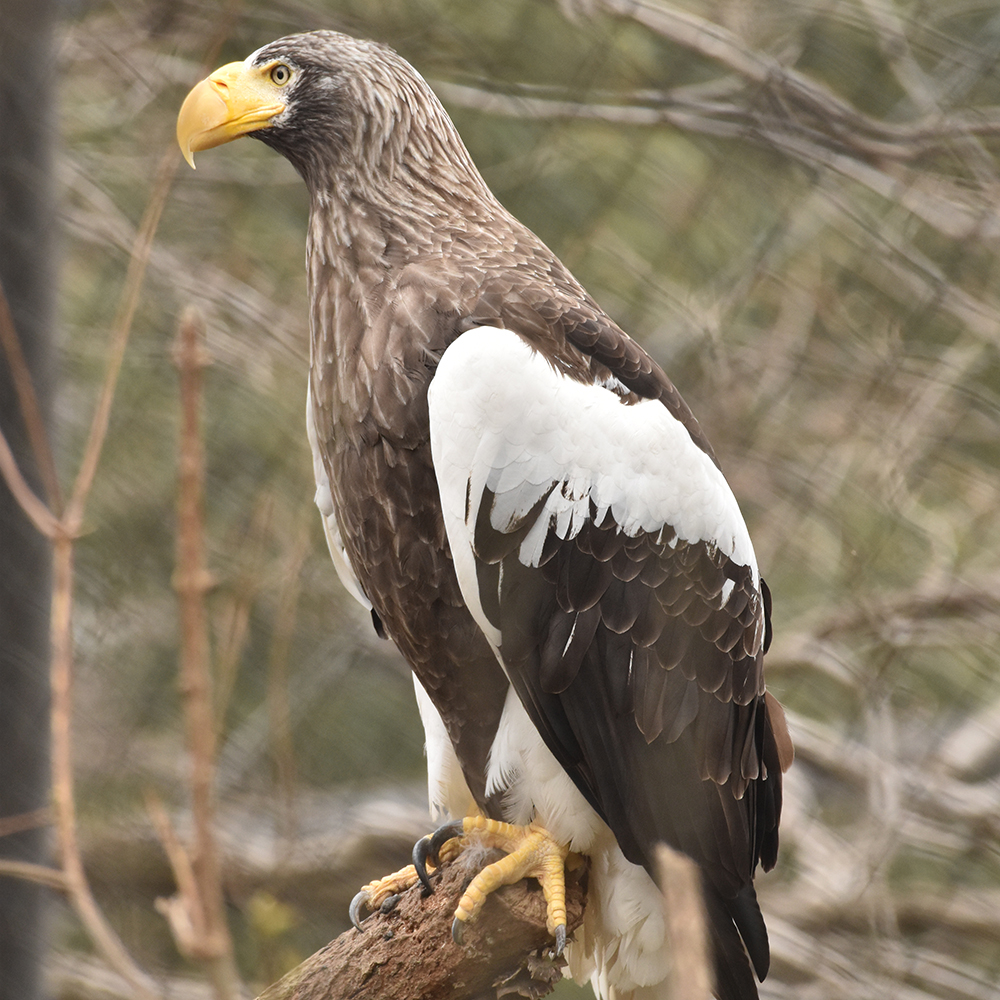
Its shoulders have white feathers that resemble snow, allowing it to blend in well with the landscapes of Hokkaido and Russia where it lives in the wild. Its beak and legs are bright yellow, and its beak in particular stands out, being larger than necessary for tearing meat apart. This is a sign of a mature adult.
What kind of feet?
They use their four fingers, which extend out front and back, and their long, sharp claws to firmly grab fish. The claws are also useful for carrying caught fish and for holding them firmly when eating.