

Zoo Stock Species and the Red List
Zoo Stock Species and the Red List
Zoo Stock

This indicates that the species is included in the Second Zoo Stock Plan, which was formulated by the Tokyo Metropolitan Government in 2018. The plan sets goals for the next 10 years in three areas: "species conservation," "contribution to wildlife conservation," and "environmental education and conservation awareness." 124 animal species are included.
What is the Red List?
Based on scientific research, this is a list of wildlife classified by rank (category) indicating the degree of risk of extinction.
Livng Things Encyclopedia shows the categories (mainland and islands) assessed by the IUCN (International Union for Conservation of Nature) at the global level, the Ministry of the Environment for Japan, and the Tokyo Metropolitan Government for Tokyo.
The higher the category in each table, the higher the risk of extinction, and CR, EN, and VU are the three categories known as "endangered species." In Tokyo, species that are not at the NT (near threatened) level but are relatively rare are considered "species of concern."
|
IUCN categories |
|
|---|---|
|
EX |
extinction |
|
EW |
Extinction in the wild |
|
CR+EN |
— |
|
CR |
Serious crisis |
|
EN |
crisis |
|
VU |
emergency |
|
NT |
Near Threatened |
|
LC・○ |
Low Concern |
|
DD |
Data shortage |
|
LP |
— |
|
Japan (Ministry of the Environment) Category |
|
|---|---|
|
EX |
extinction |
|
EW |
Extinction in the wild |
|
CR+EN |
Endangered species |
|
CR |
Critically Endangered |
|
EN |
Endangered species |
|
VU |
Endangered species |
|
NT |
Near Threatened |
|
LC・○ |
— |
|
DD |
Lack of information |
|
LP |
Endangered |
|
Tokyo Category |
|
|---|---|
|
EX |
extinction |
|
EW |
Extinction in the wild |
|
CR+EN |
Endangered species |
|
CR |
Critically Endangered |
|
EN |
Endangered species |
|
VU |
Endangered species |
|
NT |
Near Threatened |
|
LC・○ |
Unranked |
|
DD |
Lack of information |
|
LP |
Endangered |
Creatures at Tama Zoo
Creatures at Tama Zoo
Small Japanese Mole
Small Japanese Mole
Mogera imaizumii
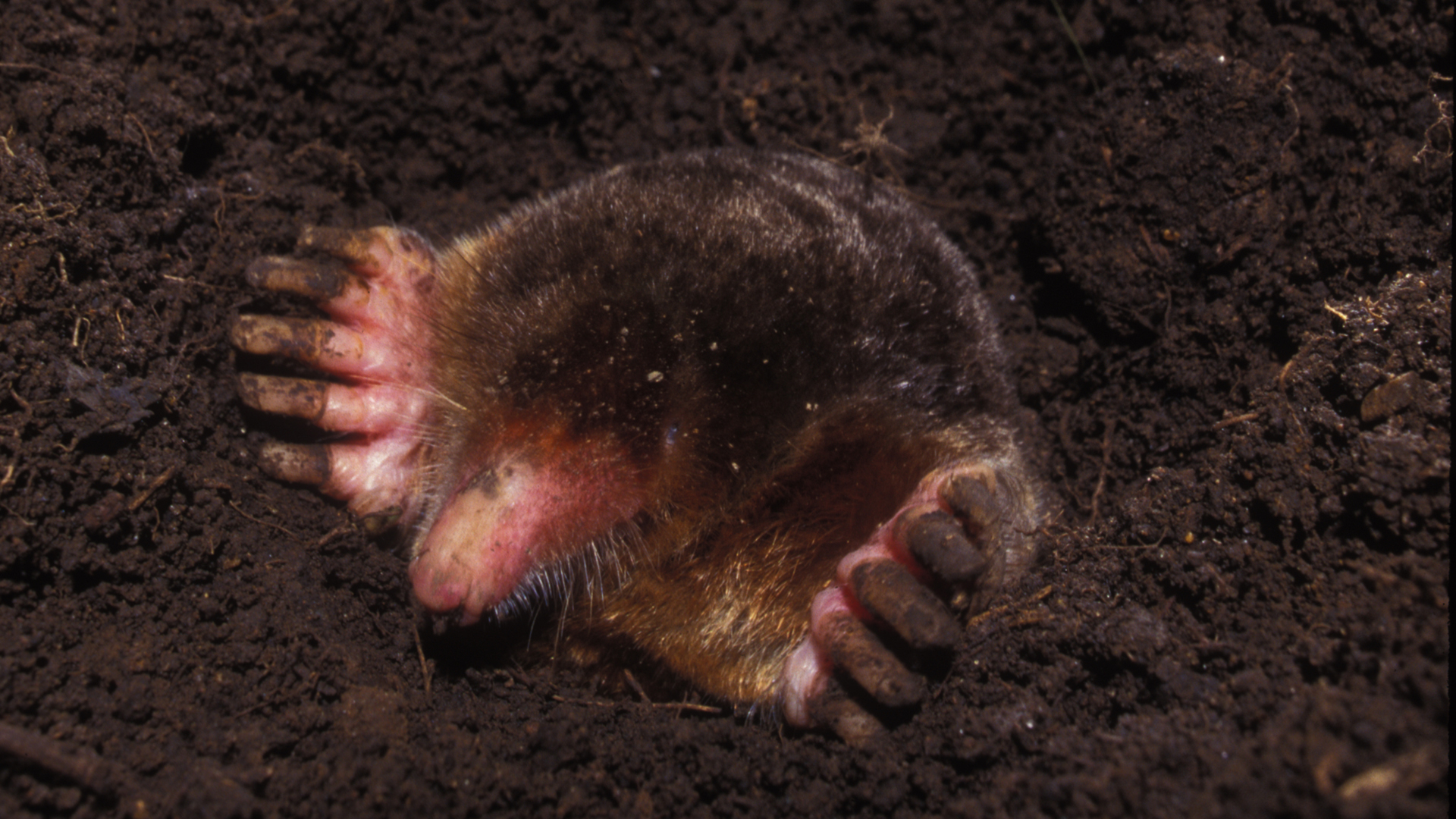
This species is endemic to Japan. It spends most of its life underground, making it a creature that is close by yet rarely seen. It digs tunnels underground and patrols and repairs the tunnels while preying on earthworms and other creatures that stray into them. It has a strong sense of territory and lives alone. The soil excavated during tunnel digging is raised above ground to form "molehills," which are often seen from autumn to winter as the species moves to deeper areas to prepare for the cold. It does not hibernate. It breeds mainly in the spring and gives birth to 2-6 young. Its lifespan is thought to be around 3 years. Originally, its main habitat was in central and southern Honshu, but it is thought to have been gradually driven to northeastern Honshu by the larger Japanese Mole.
| classification | Mammalia, Soricidae, Talpidae |
|---|---|
| English name | Small Japanese Mole |
| distribution | Japan (the area north of central Honshu (Shizuoka, Nagano, Ishikawa) excluding parts of the Echigo Plain, Awashima Island in Niigata Prefecture, Kyoto Prefecture, Kii Peninsula, Hiroshima Prefecture, mountainous areas such as Mt. Tsurugi and Mt. Ishizuchi in Shikoku, and parts of Shodoshima) |
| Residence | Grasslands, farmlands, and mountain forests |
| Size |
頭胴長:121~159mm
尾長:14~22mm 体重:48~127g |
| food | Insects, earthworms, gymnosperms, leeches, plant seeds, etc. |
| Red List |
IUCN: LC (Least Concern)
Tokyo: ○ (not ranked) |
Front legs
Their strong clawed front feet, with a wide, sickle-shaped toe on the outside of their big toe, allow them to scoop up a lot of soil, and only their wrists extend beyond their body, allowing them to dig efficiently.
hind legs
There is another finger-like protrusion on the outside of the big toe, which is thought to increase the surface area of the hind legs and allow them to efficiently shovel the soil that they have dug up with their front legs.
tail
They have short tails with tentacles that help them sense what is behind them.
body hair
Their soft, velvety hair grows vertically from their bodies, has no whorl, and can bend forward or backward to allow them to move smoothly back and forth through the tunnel.
eye
Their small eyes, covered by thin skin, cannot see very well, but they can distinguish between light and dark.
nose
They use the tip of their nose, which is packed with nerves that sense vibrations, and the long, thin tentacles that grow around it to check their surroundings.
Moles "cultivating the forest"
Moles not only patrol the tunnels they have dug, but also frequently dig new tunnels. This allows the soil to absorb a lot of air and become softer. This increases the activity of microorganisms and small animals in the soil, and makes it easier for plants to spread their roots deep into the ground. Soft soil also stores a lot of moisture and nutrients, which promotes plant growth. If plants grow well, it will eventually become a forest, attracting a variety of living creatures. It is thought that moles' behavior is one of the factors that contribute to maintaining the rich ecosystem of forests.