

Zoo Stock Species and the Red List
Zoo Stock Species and the Red List
Zoo Stock

This indicates that the species is included in the Second Zoo Stock Plan, which was formulated by the Tokyo Metropolitan Government in 2018. The plan sets goals for the next 10 years in three areas: "species conservation," "contribution to wildlife conservation," and "environmental education and conservation awareness." 124 animal species are included.
What is the Red List?
Based on scientific research, this is a list of wildlife classified by rank (category) indicating the degree of risk of extinction.
Livng Things Encyclopedia shows the categories (mainland and islands) assessed by the IUCN (International Union for Conservation of Nature) at the global level, the Ministry of the Environment for Japan, and the Tokyo Metropolitan Government for Tokyo.
The higher the category in each table, the higher the risk of extinction, and CR, EN, and VU are the three categories known as "endangered species." In Tokyo, species that are not at the NT (near threatened) level but are relatively rare are considered "species of concern."
|
IUCN categories |
|
|---|---|
|
EX |
extinction |
|
EW |
Extinction in the wild |
|
CR+EN |
— |
|
CR |
Serious crisis |
|
EN |
crisis |
|
VU |
emergency |
|
NT |
Near Threatened |
|
LC・○ |
Low Concern |
|
DD |
Data shortage |
|
LP |
— |
|
Japan (Ministry of the Environment) Category |
|
|---|---|
|
EX |
extinction |
|
EW |
Extinction in the wild |
|
CR+EN |
Endangered species |
|
CR |
Critically Endangered |
|
EN |
Endangered species |
|
VU |
Endangered species |
|
NT |
Near Threatened |
|
LC・○ |
— |
|
DD |
Lack of information |
|
LP |
Endangered |
|
Tokyo Category |
|
|---|---|
|
EX |
extinction |
|
EW |
Extinction in the wild |
|
CR+EN |
Endangered species |
|
CR |
Critically Endangered |
|
EN |
Endangered species |
|
VU |
Endangered species |
|
NT |
Near Threatened |
|
LC・○ |
Unranked |
|
DD |
Lack of information |
|
LP |
Endangered |
Creatures at Tama Zoo
Creatures at Tama Zoo
Serval
Serval
Leptailurus serval
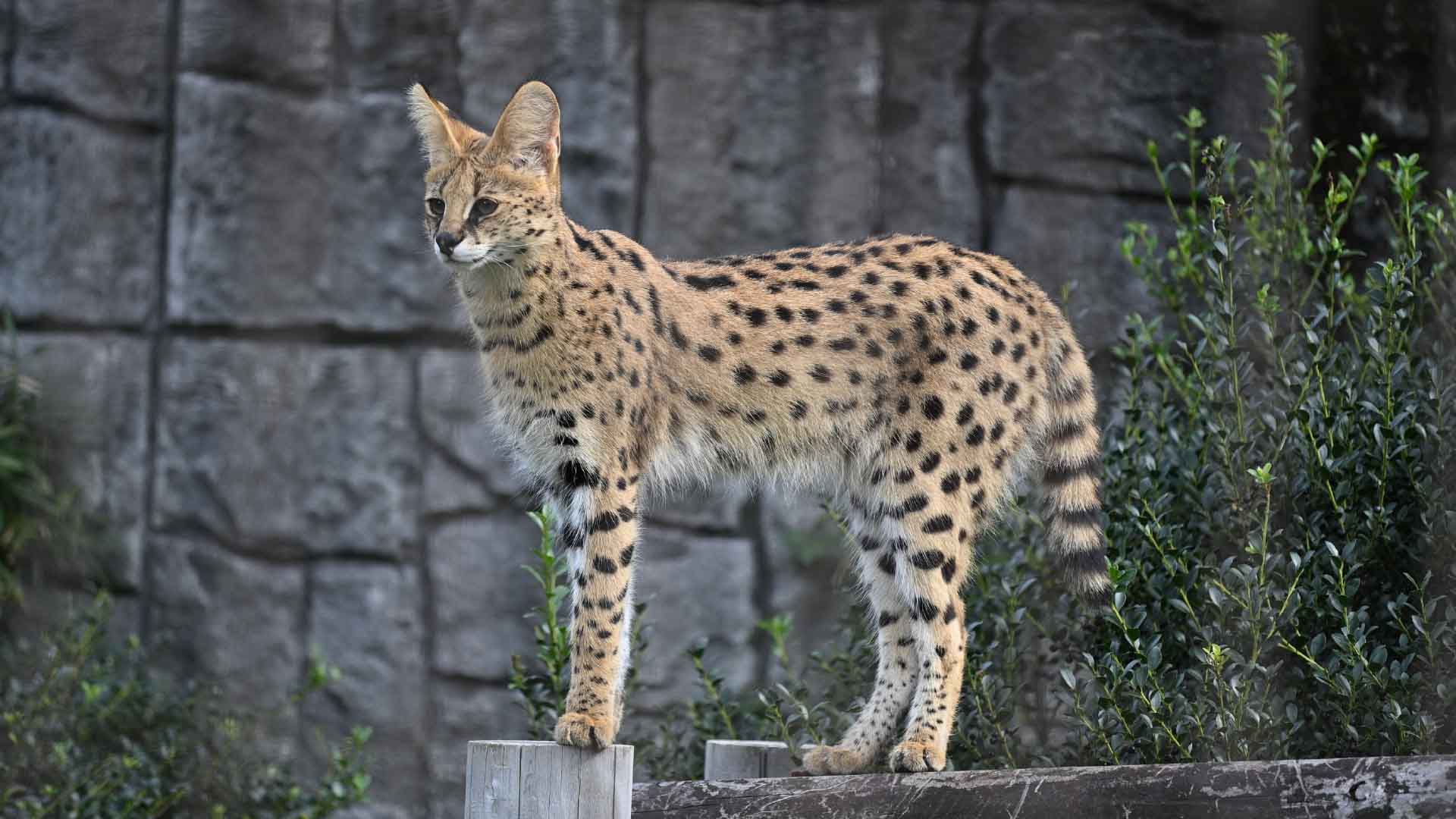
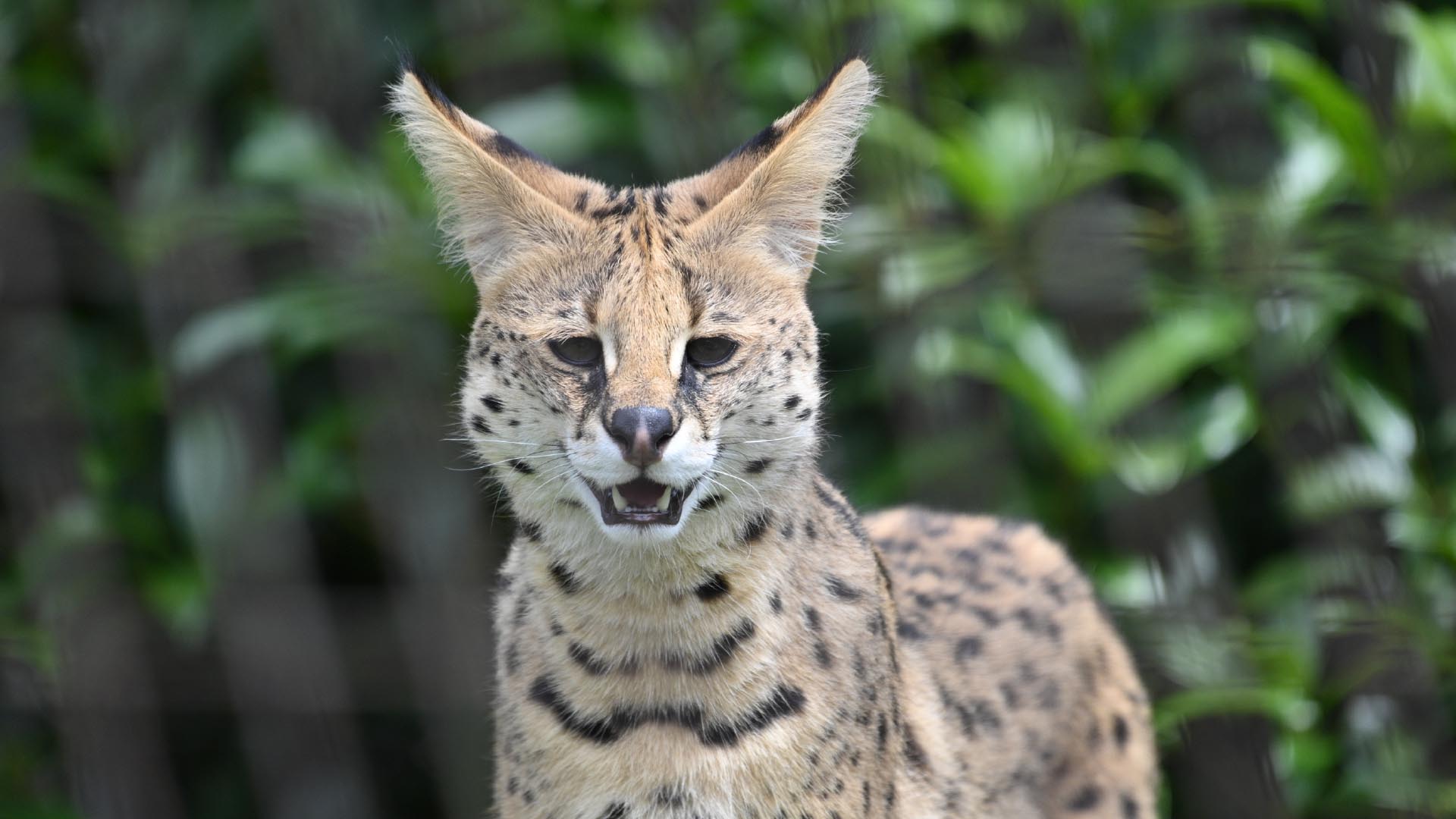
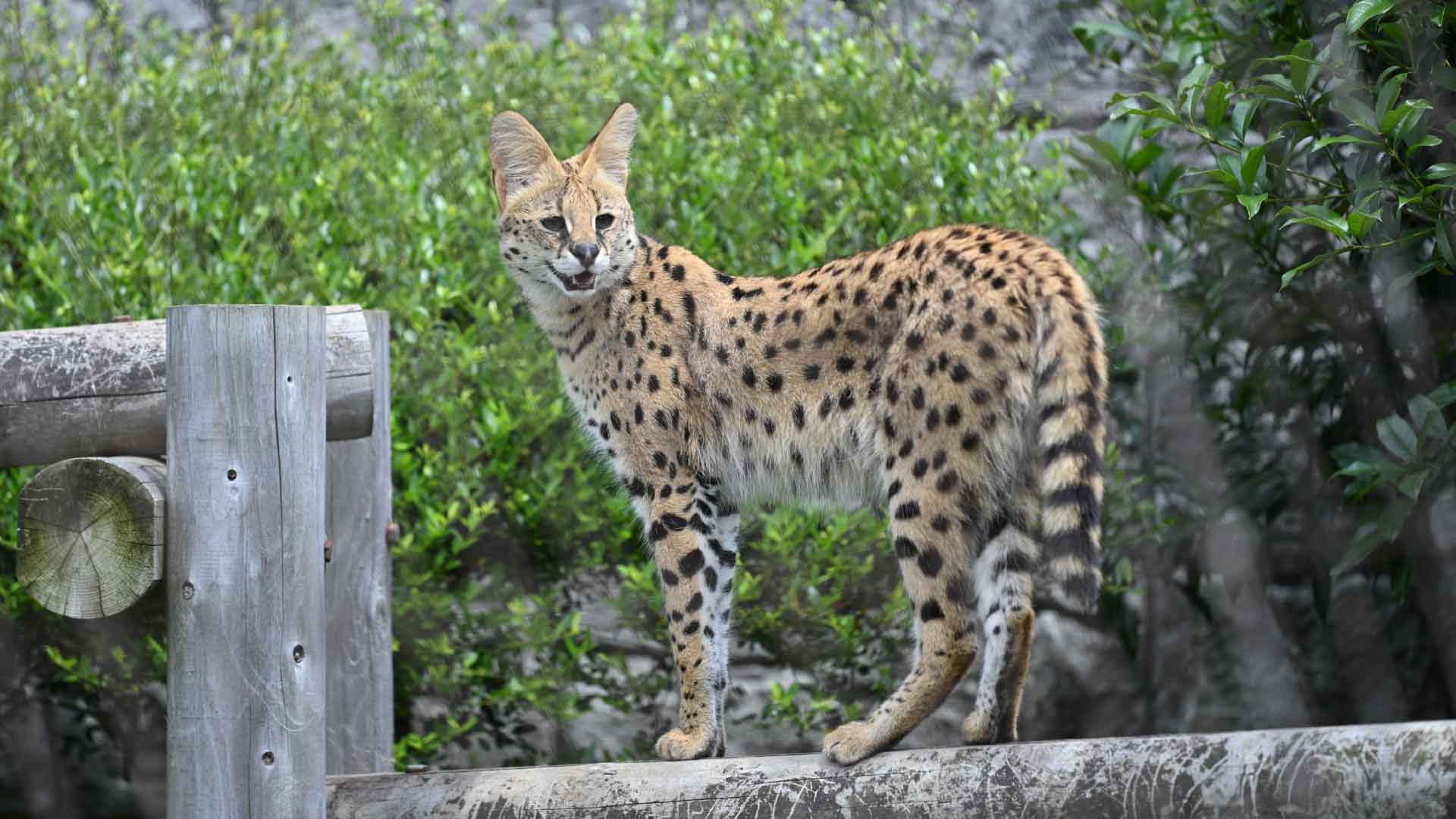
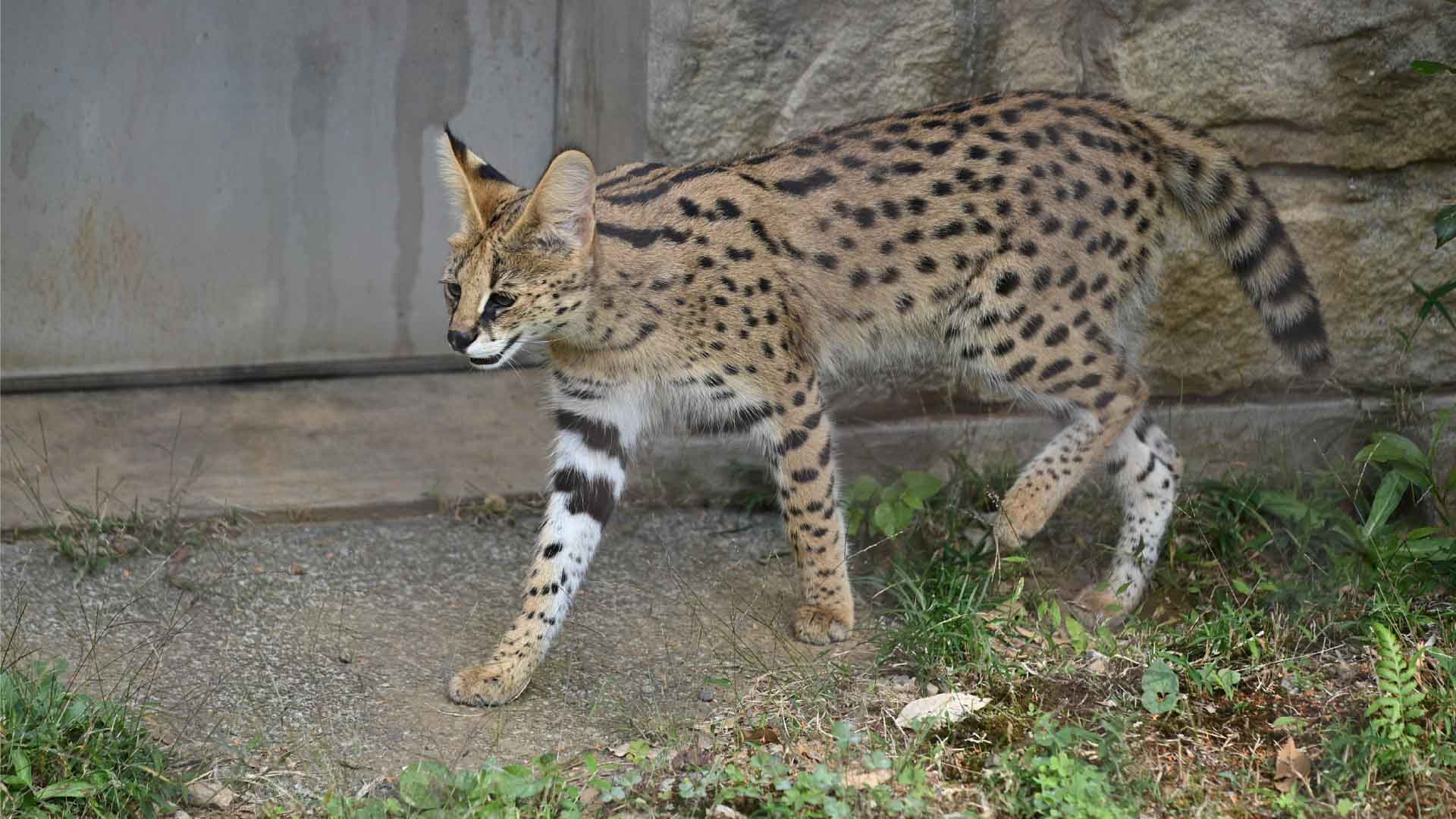
This medium-sized feline is tall and slender, possessing the longest legs among all felines. It has a small head and distinctive large, parabolic-like ears. Its body is pale yellowish-brown to golden in color, with black spots scattered across its body, and fine mottled patterns on its neck and legs. Its tail is relatively short, about one-third the length of its body.
| classification | Mammalia, Carnivora, Felidae |
|---|---|
| English name | Serval |
| distribution | Sub-Saharan Africa |
| Residence | Eurasian Moorhen, grassland, waterside |
| Size |
Head and body length: Males 59-92cm, Females 63-82cm
Tail length: 20-38cm Weight: Males 7.9-18 kg, females 6-12.5 kg |
| food | Rodents, shrews, birds, reptiles, amphibians, insects, etc. |
| Red List |
IUCN: LC (Least Concern)
|
feet
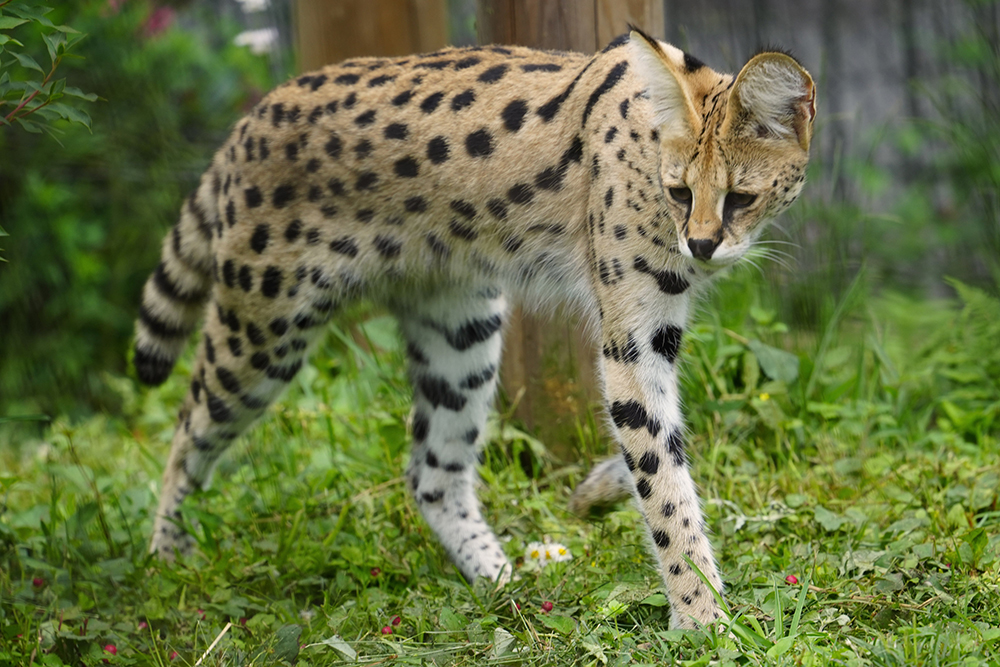
Serval have the longest legs of any cat, allowing them to move around efficiently and catch prey.
ear
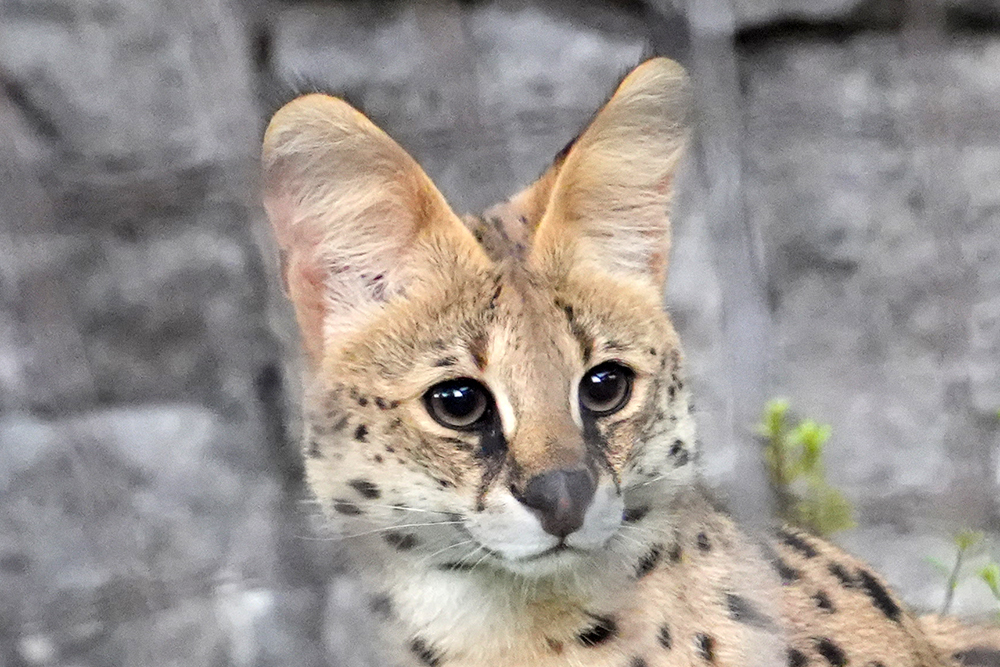
Serval have very large ears and excellent hearing, which allows them to detect even the slightest sound and helps them find prey hiding in the grass.
hunting
Serval are specialized for hunting small mammals in tall grasslands. They use their large ears to detect hidden prey and their long legs to move efficiently through the grass. Once they find their prey, they pounce with an arching jump, which can reach a maximum width of 1.5 meters and a height of 3.6 meters. They also use their long legs to dig rodents out of their burrows and make high vertical jumps to catch birds and insects.
Danger in the wild
Serval has lost its primary hunting grounds due to the disappearance of wetlands, and prey is declining due to the degradation of grasslands caused by agricultural development and grazing. Furthermore, the fur trade continues in West Africa, increasing the risk of local extinction. A very small population remains in northwestern Africa, but it is isolated from other habitats.