

Zoo Stock Species and the Red List
Zoo Stock Species and the Red List
Zoo Stock

This indicates that the species is included in the Second Zoo Stock Plan, which was formulated by the Tokyo Metropolitan Government in 2018. The plan sets goals for the next 10 years in three areas: "species conservation," "contribution to wildlife conservation," and "environmental education and conservation awareness." 124 animal species are included.
What is the Red List?
Based on scientific research, this is a list of wildlife classified by rank (category) indicating the degree of risk of extinction.
Livng Things Encyclopedia shows the categories (mainland and islands) assessed by the IUCN (International Union for Conservation of Nature) at the global level, the Ministry of the Environment for Japan, and the Tokyo Metropolitan Government for Tokyo.
The higher the category in each table, the higher the risk of extinction, and CR, EN, and VU are the three categories known as "endangered species." In Tokyo, species that are not at the NT (near threatened) level but are relatively rare are considered "species of concern."
|
IUCN categories |
|
|---|---|
|
EX |
extinction |
|
EW |
Extinction in the wild |
|
CR+EN |
— |
|
CR |
Serious crisis |
|
EN |
crisis |
|
VU |
emergency |
|
NT |
Near Threatened |
|
LC・○ |
Low Concern |
|
DD |
Data shortage |
|
LP |
— |
|
Japan (Ministry of the Environment) Category |
|
|---|---|
|
EX |
extinction |
|
EW |
Extinction in the wild |
|
CR+EN |
Endangered species |
|
CR |
Critically Endangered |
|
EN |
Endangered species |
|
VU |
Endangered species |
|
NT |
Near Threatened |
|
LC・○ |
— |
|
DD |
Lack of information |
|
LP |
Endangered |
|
Tokyo Category |
|
|---|---|
|
EX |
extinction |
|
EW |
Extinction in the wild |
|
CR+EN |
Endangered species |
|
CR |
Critically Endangered |
|
EN |
Endangered species |
|
VU |
Endangered species |
|
NT |
Near Threatened |
|
LC・○ |
Unranked |
|
DD |
Lack of information |
|
LP |
Endangered |
Creatures at Tama Zoo
Creatures at Tama Zoo
Scimitar-horned Oryx
Scimitar-horned Oryx
Oryx dammah
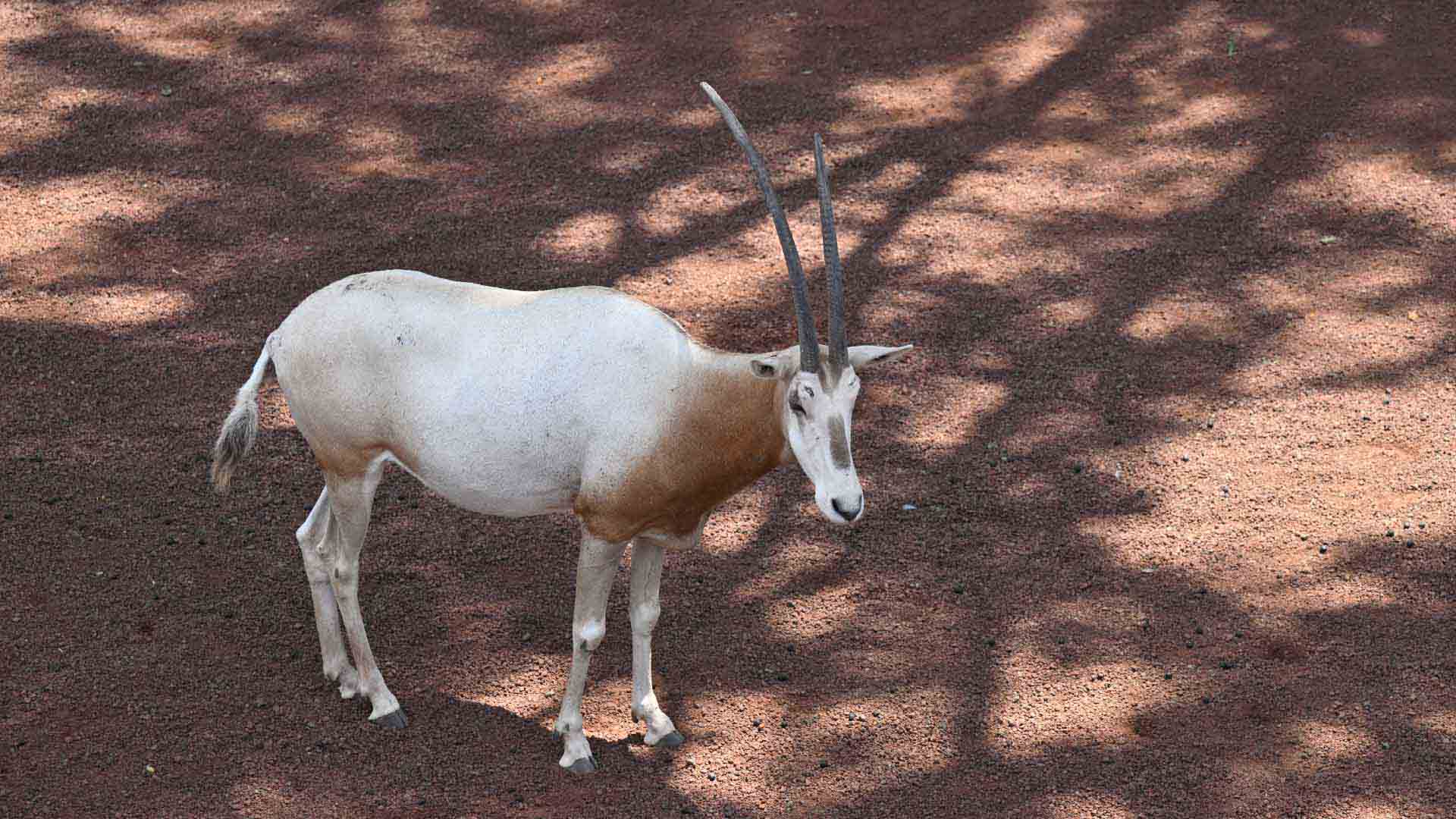
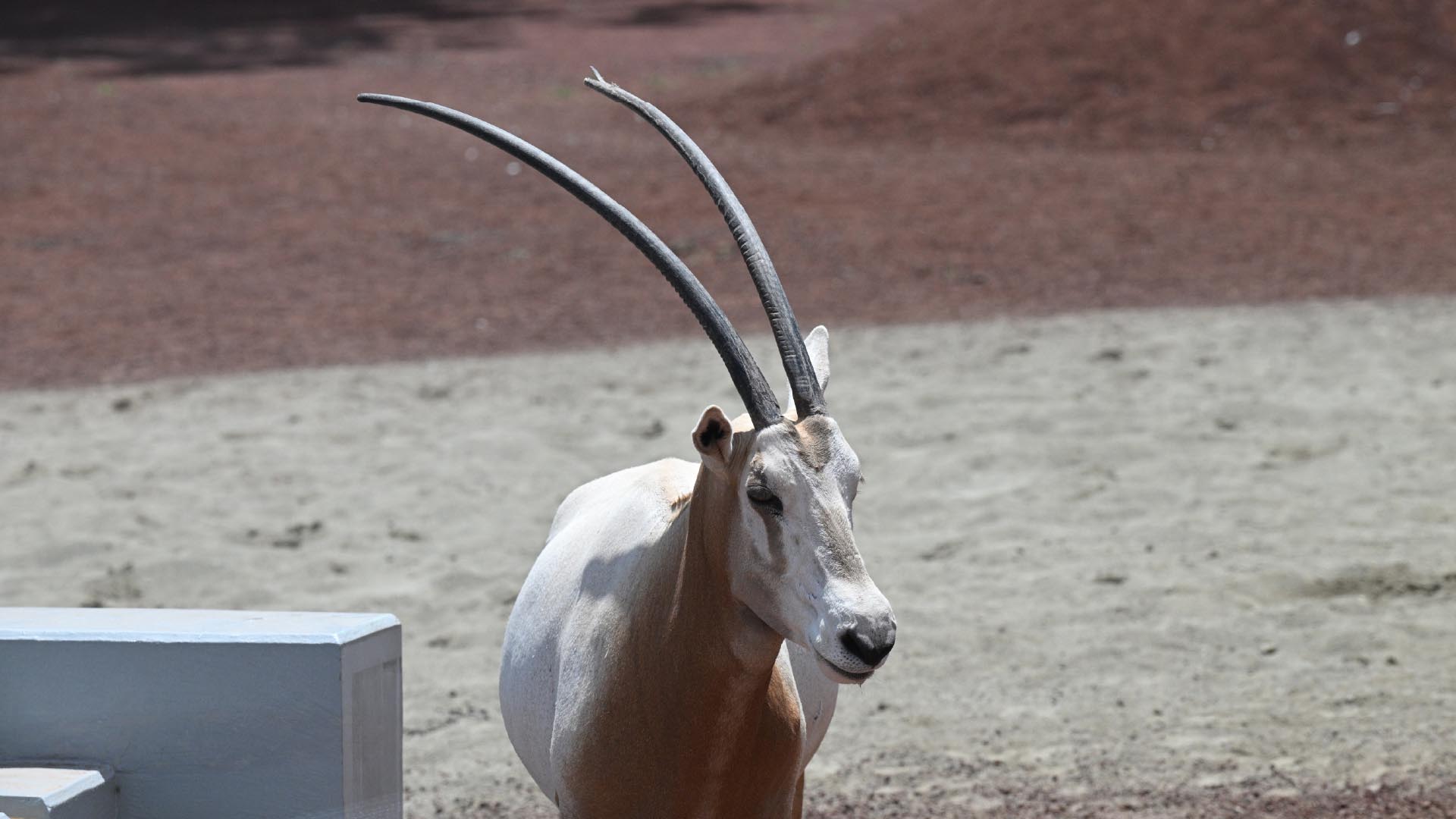
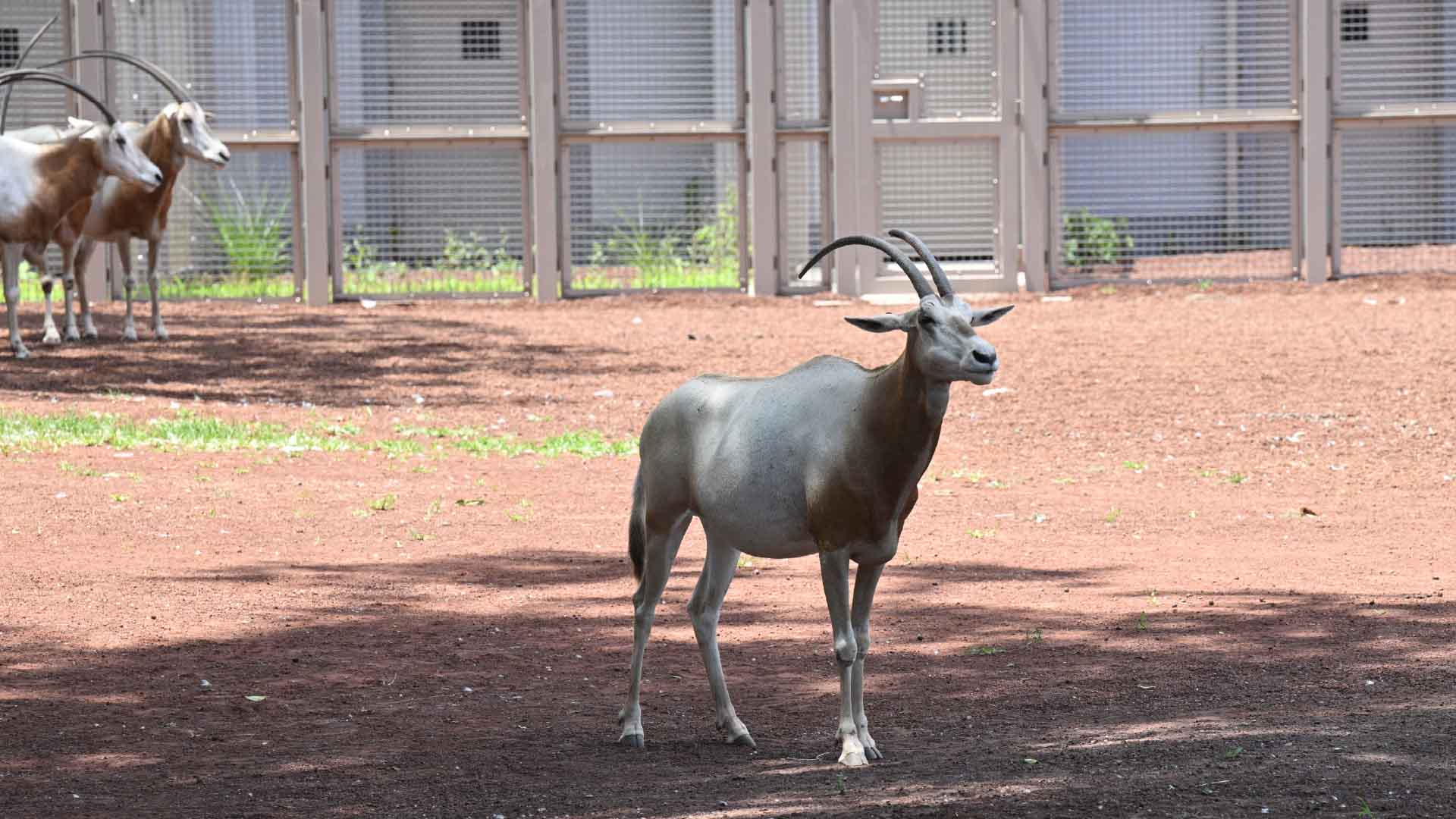
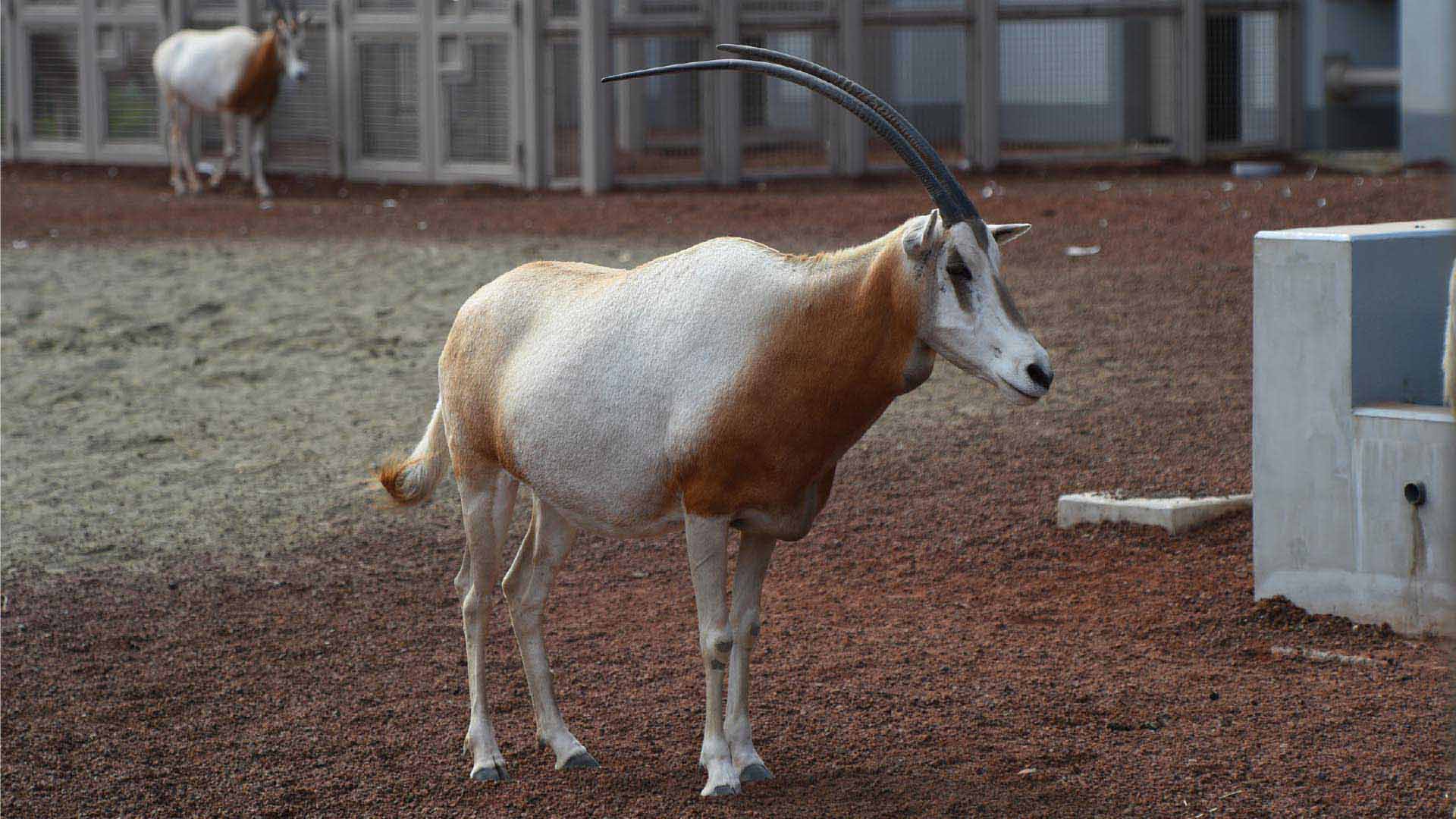
Of the four species of oryx, Scimitar-horned Oryx is the only one with saber-shaped horns. They live in groups of around 20 to 60 individuals. In environments with abundant water, they drink water every day, but it is said that they can survive for long periods without drinking water.
| classification | Mammalia, Artiodactyla, Bovidae |
|---|---|
| English name | Scimitar-horned Oryx |
| distribution | Republic of Chad in Central Africa (reintroduced) |
| Residence | Semi-desert areas, grasslands |
| Size |
Shoulder height: 110cm-125cm
Weight: 180-200 kg |
| food | Grass and legume plants, succulents, acacia pods, etc. |
| Red List |
IUCN: EN (crisis)
|
corner
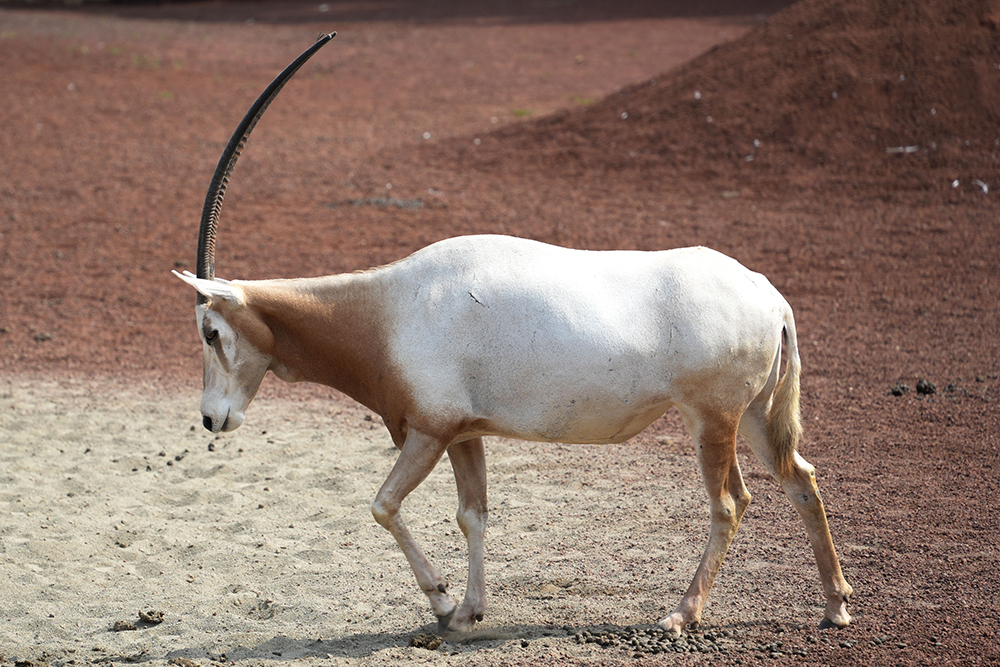
Both males and females have saber-shaped horns that curve gently backward. They can grow to over 1 meter in length. Due to the shape of their horns, they are also known as the "crescent-horned oryx."
Colors and patterns
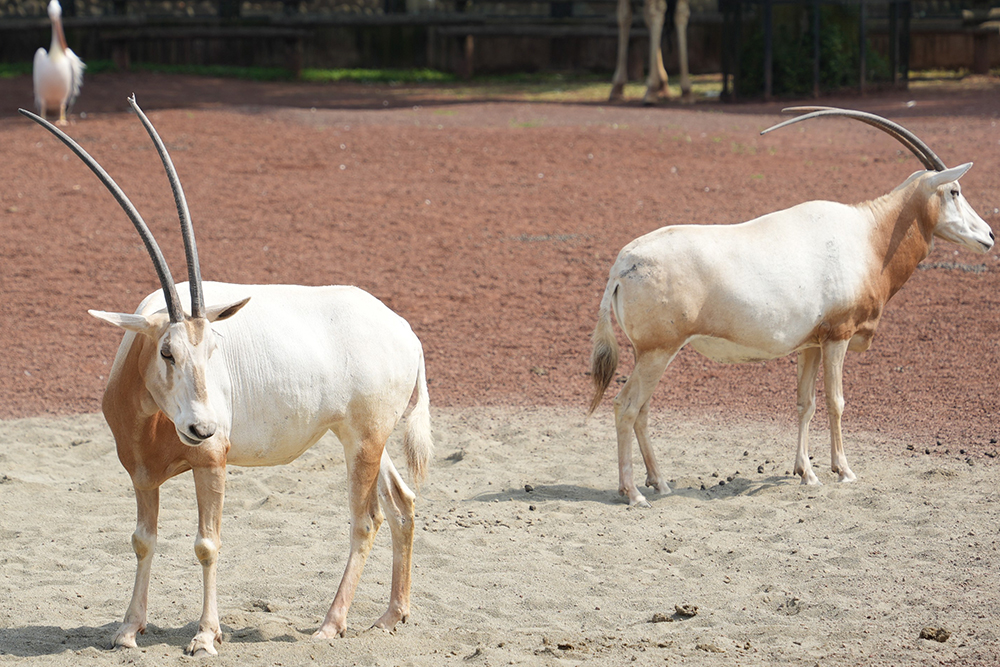
The fur is white, the neck and chest are reddish brown, and the face has brown markings.
Pregnancy and childbirth
The gestation period is approximately 240 to 260 days, and they give birth to one calf at a time.
Sexual maturity and lifespan
They reach sexual maturity at about 1.5 to 2 years old, and their lifespan in captivity is about 15 to 20 years.
Extinction in the wild
They once lived in the desert regions north and south of the Sahara Desert, but extinction was reported in various places from the 1850s, and they became extinct in Chad in 1989 when the last wild individuals were shot. The causes of their extinction are thought to be hunting, loss of habitat due to overgrazing, drought, and civil war.
reintroduction
The reintroduction began in 2016 with the release of captive individuals into a protected area in Chad. By 2022, nine groups had been released, with an estimated population of 140-160 individuals.
History of breeding at Tama Zoo
Tama Zoo began raising these animals in 1967. At the time they arrived, there were very few of them being kept in zoos around the world, making them extremely rare. Since their first breeding in 1968, the park has maintained a captive population.