

Zoo Stock Species and the Red List
Zoo Stock Species and the Red List
Zoo Stock

This indicates that the species is included in the Second Zoo Stock Plan, which was formulated by the Tokyo Metropolitan Government in 2018. The plan sets goals for the next 10 years in three areas: "species conservation," "contribution to wildlife conservation," and "environmental education and conservation awareness." 124 animal species are included.
What is the Red List?
Based on scientific research, this is a list of wildlife classified by rank (category) indicating the degree of risk of extinction.
Livng Things Encyclopedia shows the categories (mainland and islands) assessed by the IUCN (International Union for Conservation of Nature) at the global level, the Ministry of the Environment for Japan, and the Tokyo Metropolitan Government for Tokyo.
The higher the category in each table, the higher the risk of extinction, and CR, EN, and VU are the three categories known as "endangered species." In Tokyo, species that are not at the NT (near threatened) level but are relatively rare are considered "species of concern."
|
IUCN categories |
|
|---|---|
|
EX |
extinction |
|
EW |
Extinction in the wild |
|
CR+EN |
— |
|
CR |
Serious crisis |
|
EN |
crisis |
|
VU |
emergency |
|
NT |
Near Threatened |
|
LC・○ |
Low Concern |
|
DD |
Data shortage |
|
LP |
— |
|
Japan (Ministry of the Environment) Category |
|
|---|---|
|
EX |
extinction |
|
EW |
Extinction in the wild |
|
CR+EN |
Endangered species |
|
CR |
Critically Endangered |
|
EN |
Endangered species |
|
VU |
Endangered species |
|
NT |
Near Threatened |
|
LC・○ |
— |
|
DD |
Lack of information |
|
LP |
Endangered |
|
Tokyo Category |
|
|---|---|
|
EX |
extinction |
|
EW |
Extinction in the wild |
|
CR+EN |
Endangered species |
|
CR |
Critically Endangered |
|
EN |
Endangered species |
|
VU |
Endangered species |
|
NT |
Near Threatened |
|
LC・○ |
Unranked |
|
DD |
Lack of information |
|
LP |
Endangered |
Creatures at Tama Zoo
Creatures at Tama Zoo
Tree Lizard
Subspecies: Sakishima Tree Lizard
Tree Lizard
Subspecies: Sakishima Tree LizardJapalura polygonata ishigakiensis
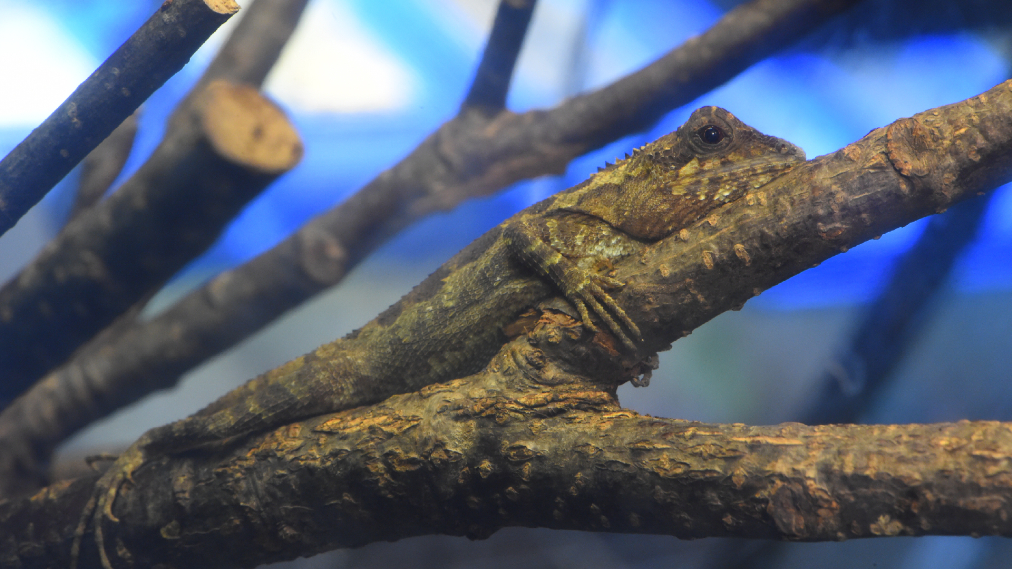
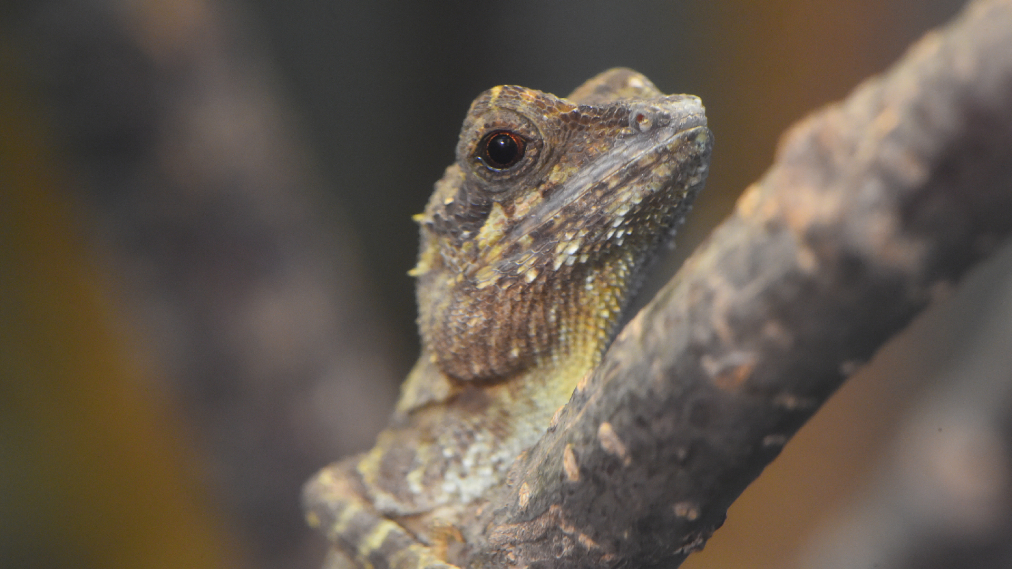
This subspecies is endemic to Japan. It mainly lives in highly natural forests, but can also be found in slightly more open areas such as limestone vegetation. It resembles the Yonaguni Tree Lizard, but can be distinguished by the fact that the white area on the side of the male's body is not divided but rather a single continuous vertical band, and the female's base color is dark brown, reddish brown, or dull green.
| classification | Reptiles Squamatora Agamatidae |
|---|---|
| English name | Sakishima Tree Lizard |
| distribution | Japan (Miyako Islands, Yaeyama Islands) |
| Residence | In forests, mainly arboreal |
| Size |
Total length: Male 27cm, Female 20cm
Head and body length: Males 68-77mm, Females 65-68mm |
| food | Insects, spiders, etc. |
| Red List |
IUCN: NT (Near Threatened)
Japan: NT (Near Threatened) |
Adaptation to living environment
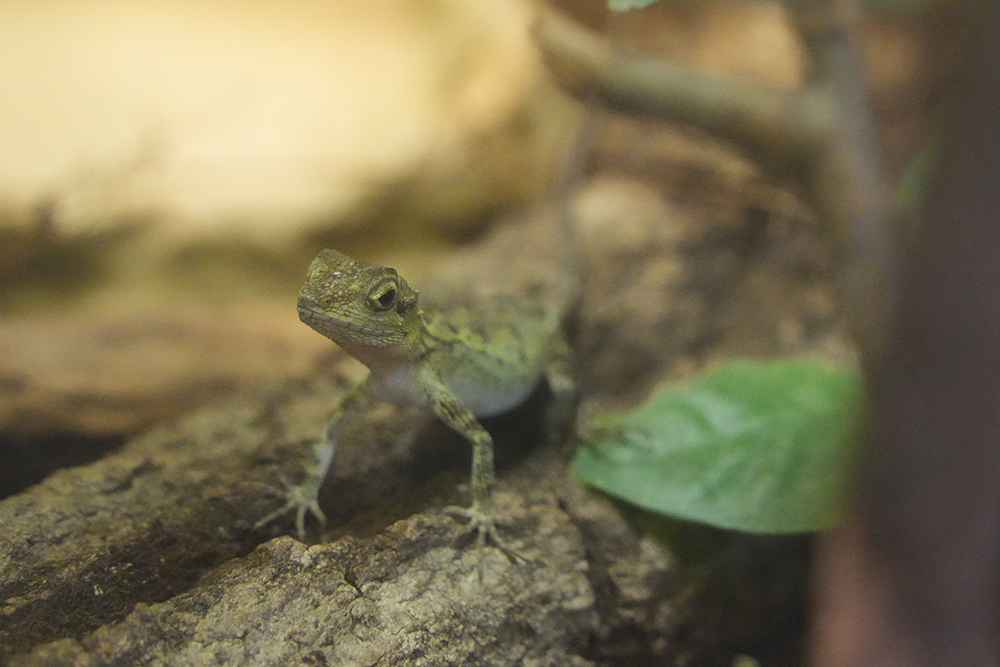
As a lizard that lives in trees, it has long legs and large claws. Its tail is also long, but it rarely breaks off like the Japanese grass lizard, which is more familiar to us.
About body size
The population in the Miyako Islands is larger than the population in the Yaeyama Islands. The individuals at Tama Zoo originate from the Yaeyama Islands.
At Tama Zoo
It is displayed in the same case as Sakishima Grass Lizard, but it is often found on branches higher than Sakishima Grass Lizard.
In the backyard
They can often be seen submerged in water in a container that serves as a drinking fountain, but for some reason, I have never seen them submerged in water on display.