

Zoo Stock Species and the Red List
Zoo Stock Species and the Red List
Zoo Stock

This indicates that the species is included in the Second Zoo Stock Plan, which was formulated by the Tokyo Metropolitan Government in 2018. The plan sets goals for the next 10 years in three areas: "species conservation," "contribution to wildlife conservation," and "environmental education and conservation awareness." 124 animal species are included.
What is the Red List?
Based on scientific research, this is a list of wildlife classified by rank (category) indicating the degree of risk of extinction.
Livng Things Encyclopedia shows the categories (mainland and islands) assessed by the IUCN (International Union for Conservation of Nature) at the global level, the Ministry of the Environment for Japan, and the Tokyo Metropolitan Government for Tokyo.
The higher the category in each table, the higher the risk of extinction, and CR, EN, and VU are the three categories known as "endangered species." In Tokyo, species that are not at the NT (near threatened) level but are relatively rare are considered "species of concern."
|
IUCN categories |
|
|---|---|
|
EX |
extinction |
|
EW |
Extinction in the wild |
|
CR+EN |
— |
|
CR |
Serious crisis |
|
EN |
crisis |
|
VU |
emergency |
|
NT |
Near Threatened |
|
LC・○ |
Low Concern |
|
DD |
Data shortage |
|
LP |
— |
|
Japan (Ministry of the Environment) Category |
|
|---|---|
|
EX |
extinction |
|
EW |
Extinction in the wild |
|
CR+EN |
Endangered species |
|
CR |
Critically Endangered |
|
EN |
Endangered species |
|
VU |
Endangered species |
|
NT |
Near Threatened |
|
LC・○ |
— |
|
DD |
Lack of information |
|
LP |
Endangered |
|
Tokyo Category |
|
|---|---|
|
EX |
extinction |
|
EW |
Extinction in the wild |
|
CR+EN |
Endangered species |
|
CR |
Critically Endangered |
|
EN |
Endangered species |
|
VU |
Endangered species |
|
NT |
Near Threatened |
|
LC・○ |
Unranked |
|
DD |
Lack of information |
|
LP |
Endangered |
Creatures at Tama Zoo
Creatures at Tama Zoo
Sakishima Grass Lizard
Sakishima Grass Lizard
Takydromus dorsalis
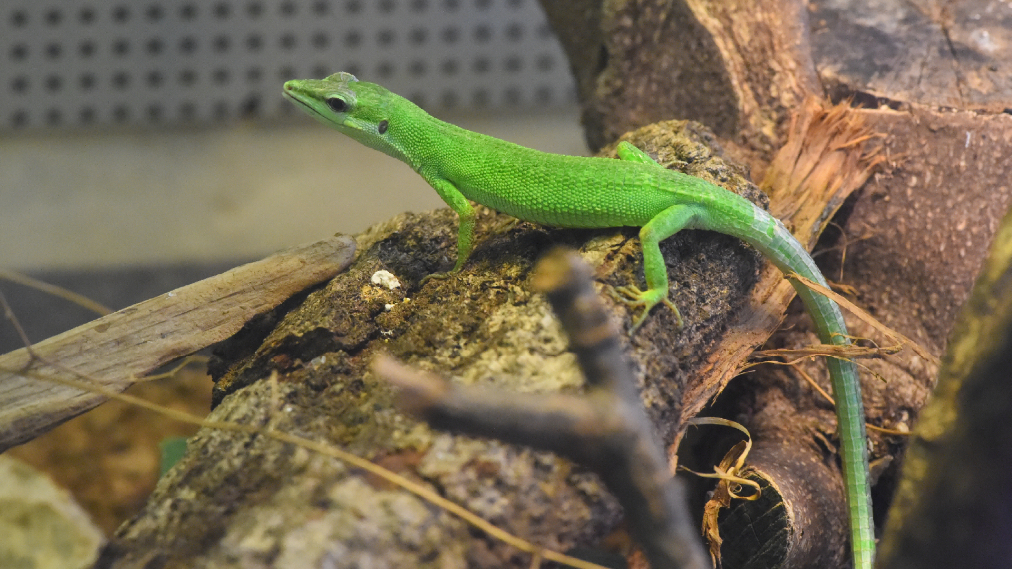
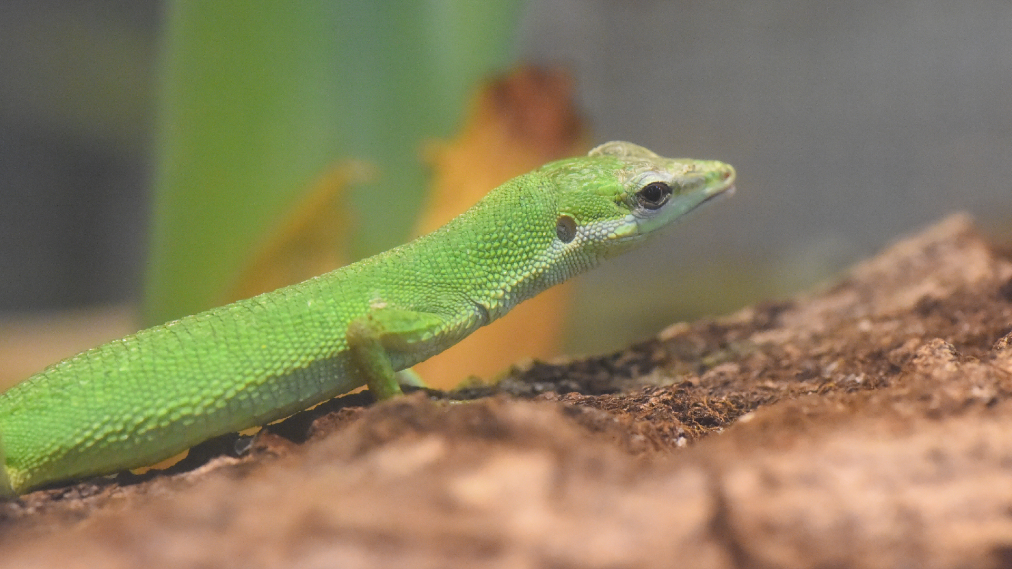
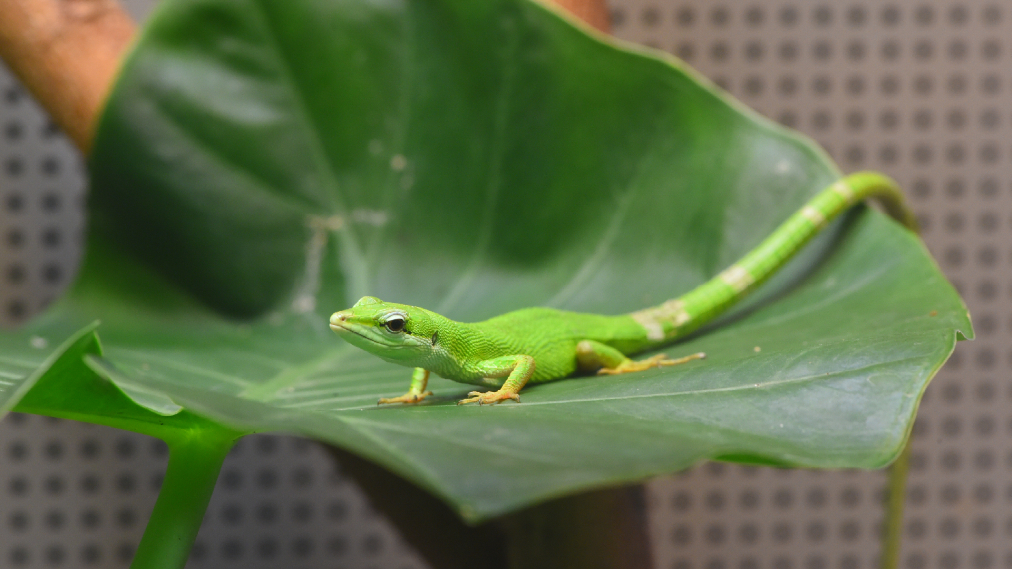
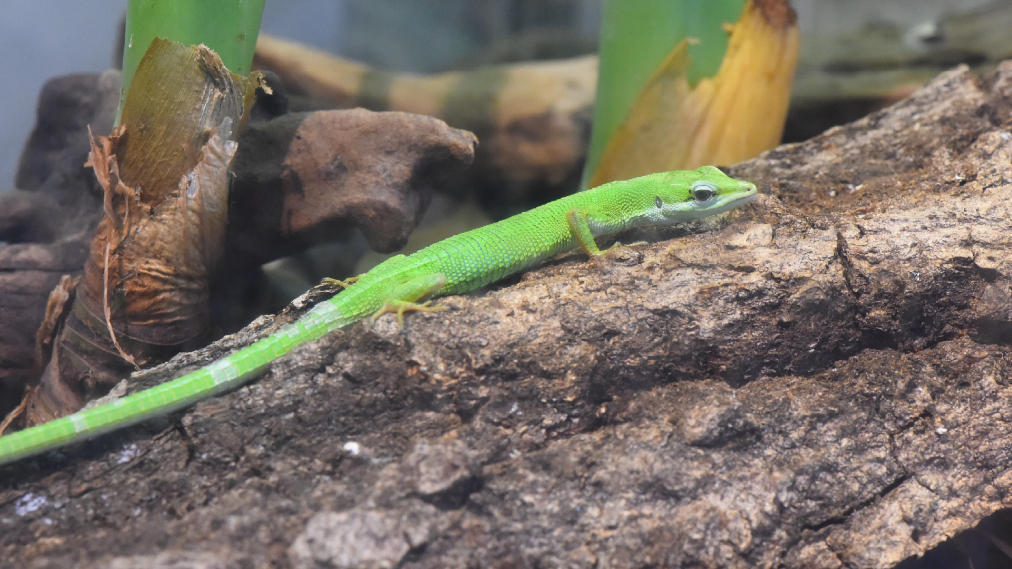
This species is endemic to Japan. It has a strong arboreal habit and moves widely through the canopies of shrubs and thickets of grass. Its back and sides are bright green, with black stripes in front and behind the eyes. While other species of Lacerta, such as the green grass lizard, have large, angular dorsal scales, this species has small, rounded dorsal scales and a smooth back. It lays one to two eggs multiple times from spring to summer. An undisturbed environment with a mixture of grassland and forest is ideal for this species, but its habitat is rapidly decreasing.
| classification | Reptilia, Squamata, Lacertidae |
|---|---|
| English name | Sakishima Grass Lizard |
| distribution | Japan (Ishigaki Island, Kuroshima Island, Iriomote Island) |
| Residence | Grasslands and light woodlands, mainly shrub crowns and tussock |
| Size |
Total length: 250-320mm
Head torso length: 60-70mm |
| food | Insects, spiders, etc. |
| Red List |
IUCN: EN (crisis)
Japan: VU (Vulnerable) |
Very long tail
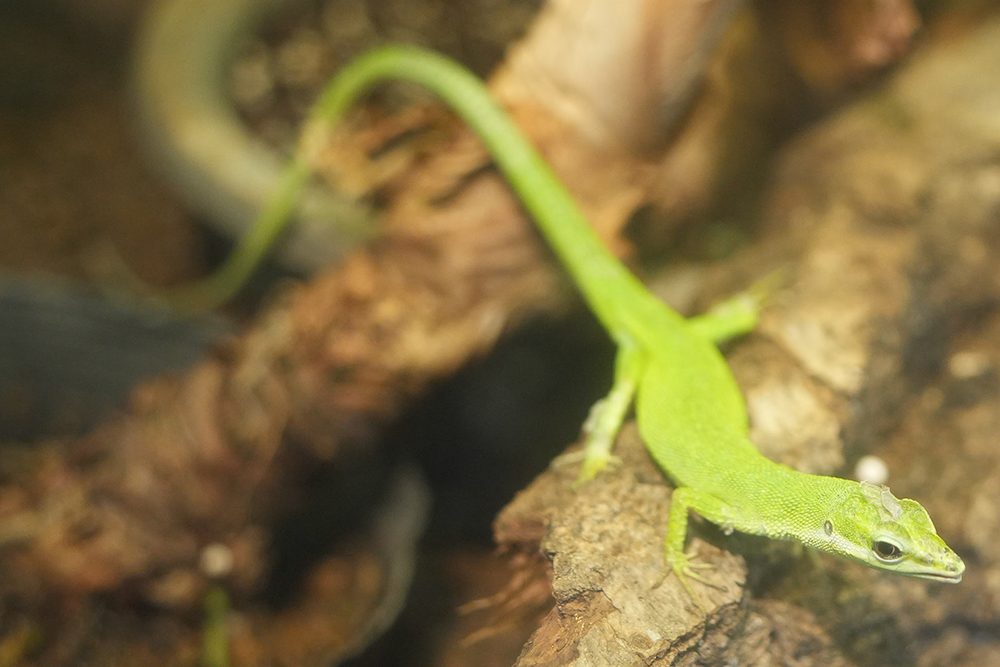
They have very long tails, which they use to balance and support themselves in the trees, and it is rare for their tails to break off in captivity.
Designated by law or ordinance
It is designated as a rare domestic wild plant and animal species under the Species Conservation Act, and is also designated as a species under the Ishigaki City Natural Environment Conservation Ordinance (as of 2025).
At Tama Zoo
It is displayed in the same case as Sakishima Tree Lizard, but it is often found on the grass at a lower level than Sakishima Tree Lizard.