

Zoo Stock Species and the Red List
Zoo Stock Species and the Red List
Zoo Stock
This indicates that the species is included in the Second Zoo Stock Plan, which was formulated by the Tokyo Metropolitan Government in 2018. The plan sets goals for the next 10 years in three areas: "species conservation," "contribution to wildlife conservation," and "environmental education and conservation awareness." 124 animal species are included.
What is the Red List?
Based on scientific research, this is a list of wildlife classified by rank (category) indicating the degree of risk of extinction.
Livng Things Encyclopedia shows the categories (mainland and islands) assessed by the IUCN (International Union for Conservation of Nature) at the global level, the Ministry of the Environment for Japan, and the Tokyo Metropolitan Government for Tokyo.
The higher the category in each table, the higher the risk of extinction, and CR, EN, and VU are the three categories known as "endangered species." In Tokyo, species that are not at the NT (near threatened) level but are relatively rare are considered "species of concern."
|
IUCN categories |
|
|---|---|
|
EX |
extinction |
|
EW |
Extinction in the wild |
|
CR+EN |
— |
|
CR |
Serious crisis |
|
EN |
crisis |
|
VU |
emergency |
|
NT |
Near Threatened |
|
LC・○ |
Low Concern |
|
DD |
Data shortage |
|
LP |
— |
|
Japan (Ministry of the Environment) Category |
|
|---|---|
|
EX |
extinction |
|
EW |
Extinction in the wild |
|
CR+EN |
Endangered species |
|
CR |
Critically Endangered |
|
EN |
Endangered species |
|
VU |
Endangered species |
|
NT |
Near Threatened |
|
LC・○ |
— |
|
DD |
Lack of information |
|
LP |
Endangered |
|
Tokyo Category |
|
|---|---|
|
EX |
extinction |
|
EW |
Extinction in the wild |
|
CR+EN |
Endangered species |
|
CR |
Critically Endangered |
|
EN |
Endangered species |
|
VU |
Endangered species |
|
NT |
Near Threatened |
|
LC・○ |
Unranked |
|
DD |
Lack of information |
|
LP |
Endangered |
Creatures at Tama Zoo
Creatures at Tama Zoo
Red Kangaroo
Red Kangaroo
Macropus rufus
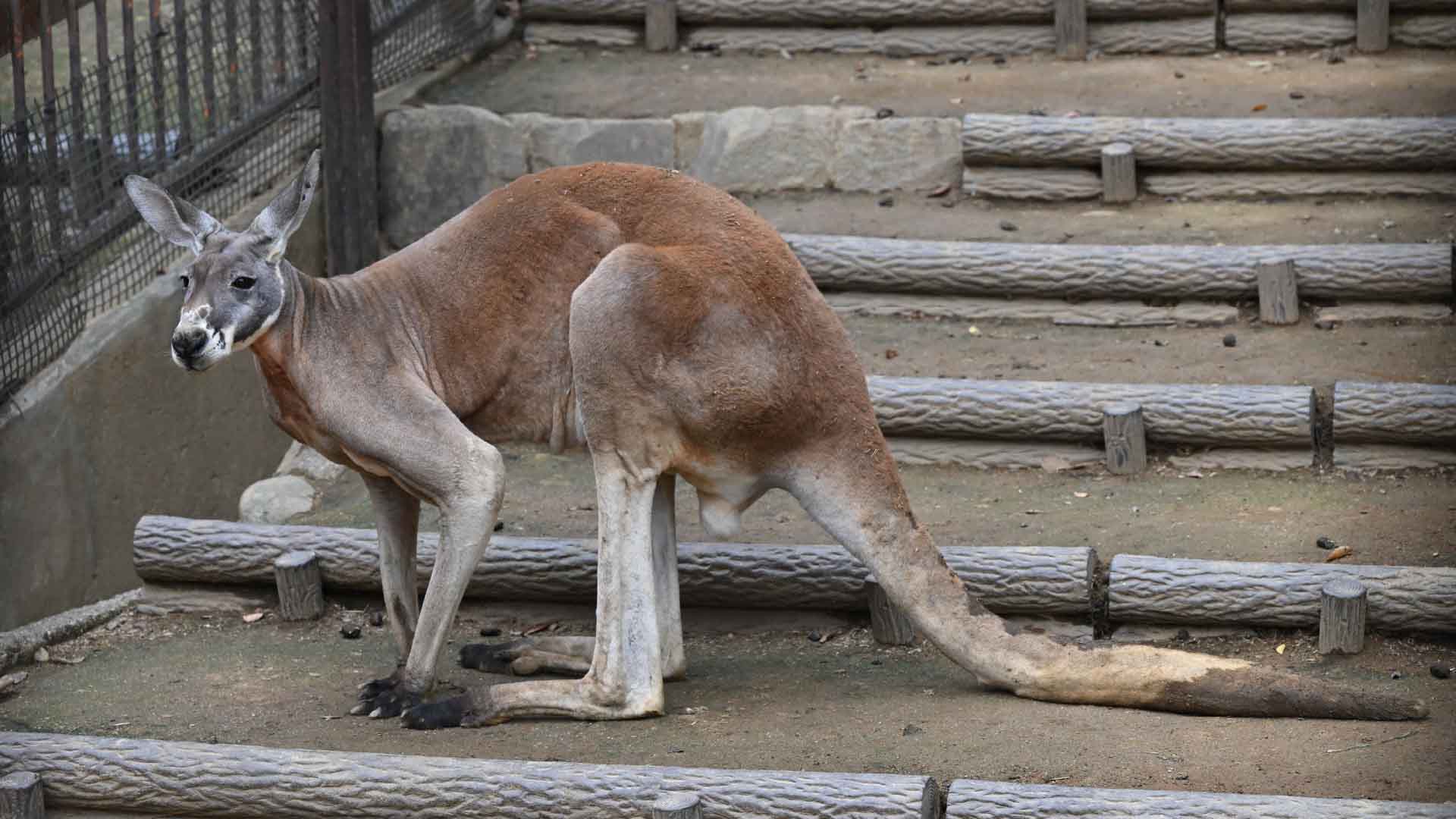
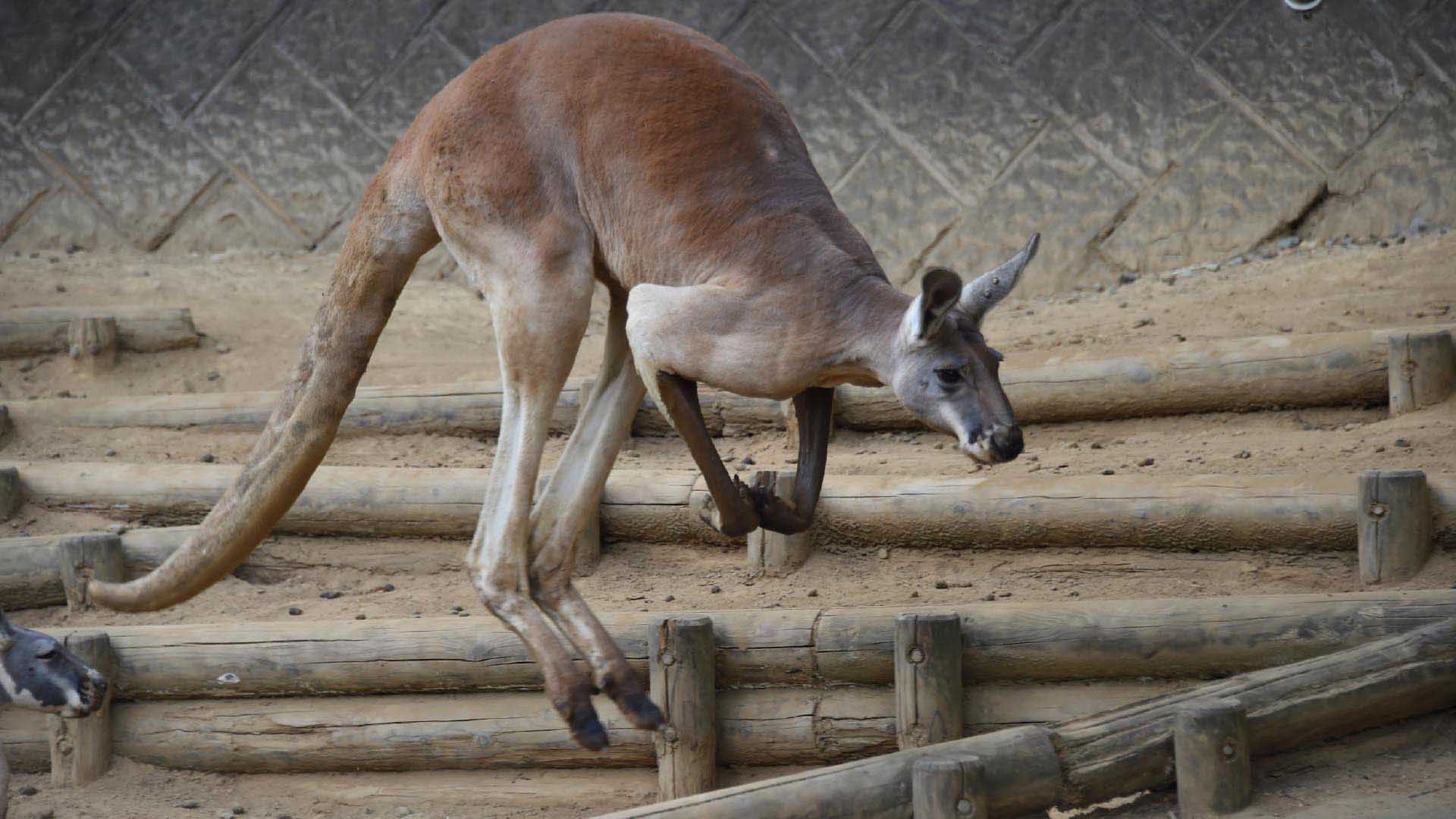
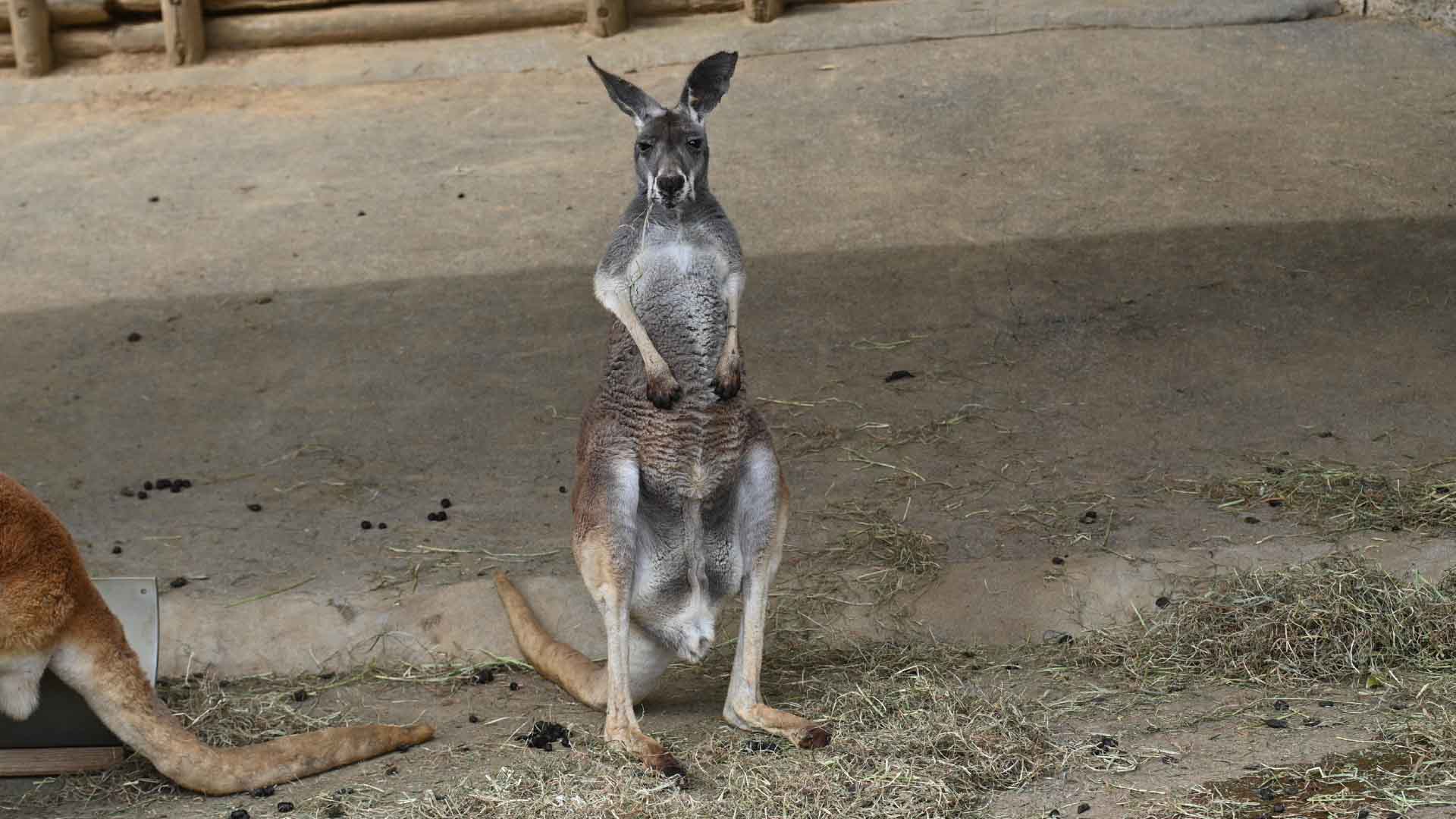
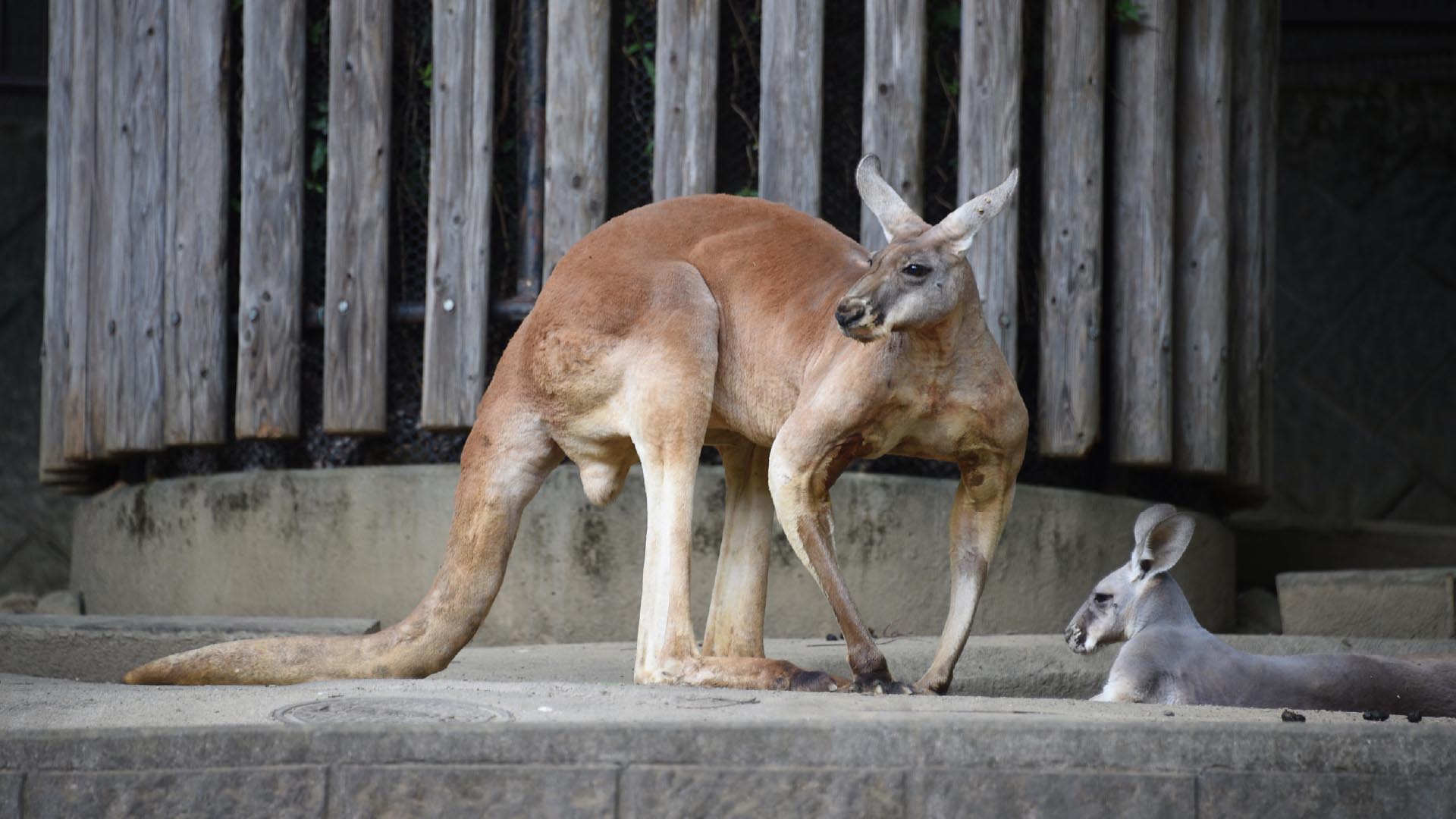
It is the largest species of extant marsupial. It lives in open grasslands in groups of 10 to 12 individuals. It rests during the day, avoiding direct sunlight, and is active at night. When walking, it places both front legs and its tail on the ground and steps forward with both hind legs. When running, it lifts its front legs and jumps forward using only its hind legs. When doing so, it stretches its long tail behind it to maintain balance.
| classification | Mammalia, Diprodontidae, Macropodidae |
|---|---|
| English name | Red Kangaroo |
| distribution | Australia |
| Residence | Grasslands, semi-desert areas, wastelands |
| Size |
Head and body length: Males 95-140cm, Females 75-110cm
Weight: Males 25kg-85kg, Females 20kg-35kg |
| food | Grass, leaves |
| Red List |
IUCN: LC (Least Concern)
|
Compare the front and back legs
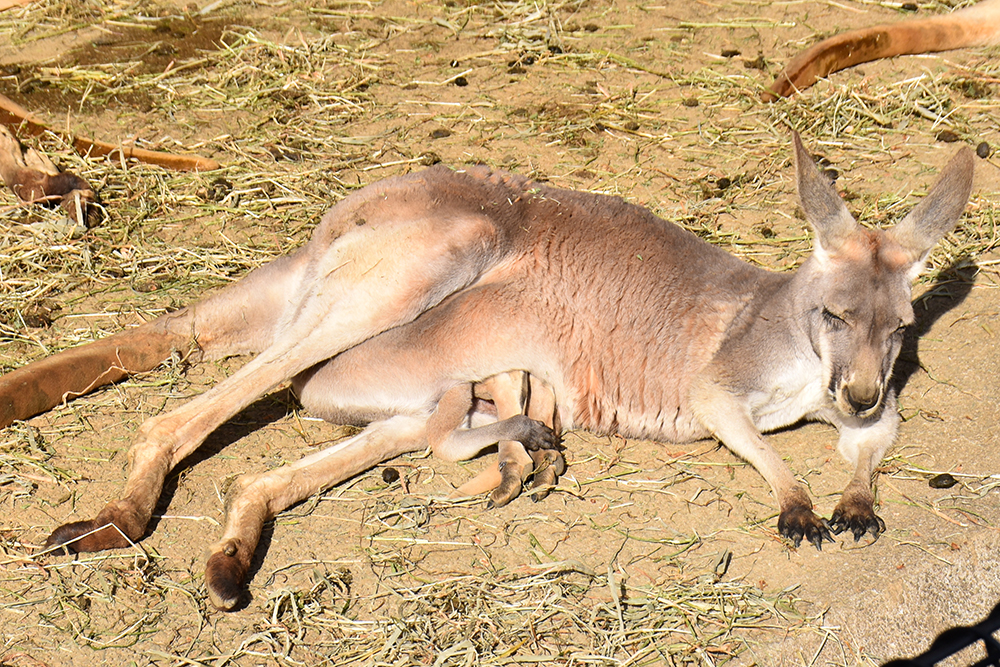
The hind legs have well-developed thigh muscles. They have four toes, but the first toe is missing. The fourth toe is thick and large. The second and third toes are fused, with only the claws separated into two. The front legs are thinner and shorter than the hind legs. They have five toes.
cloaca
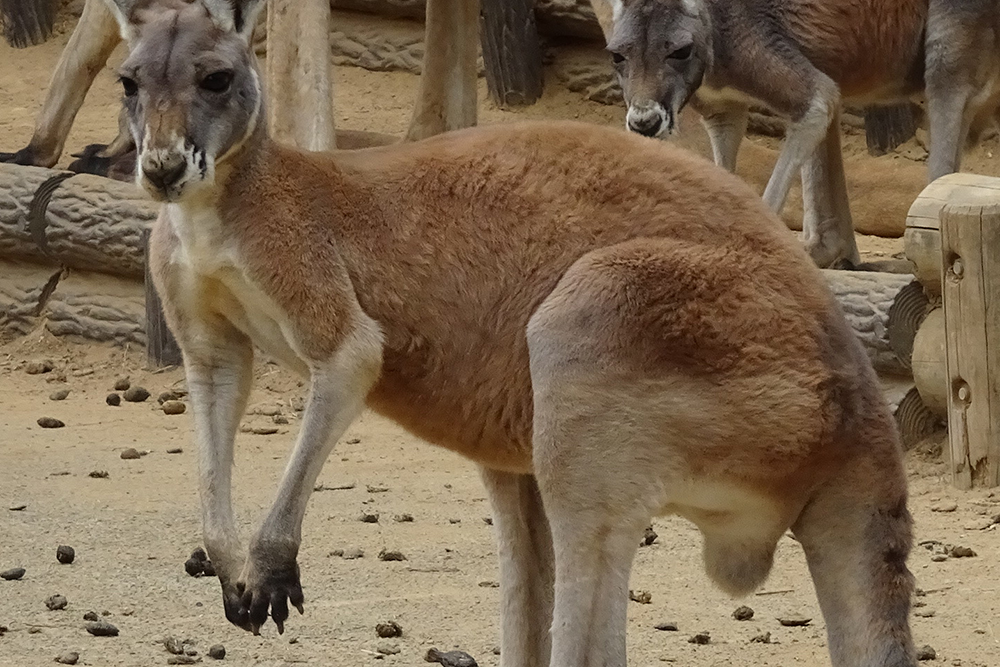
Both pee and feces come out of the cloaca. Babies are born from here too.
Pregnancy and childbirth
The gestation period is about 33 days, and the newborn baby is about 2 cm long and weighs about 0.8 g.
Child growth
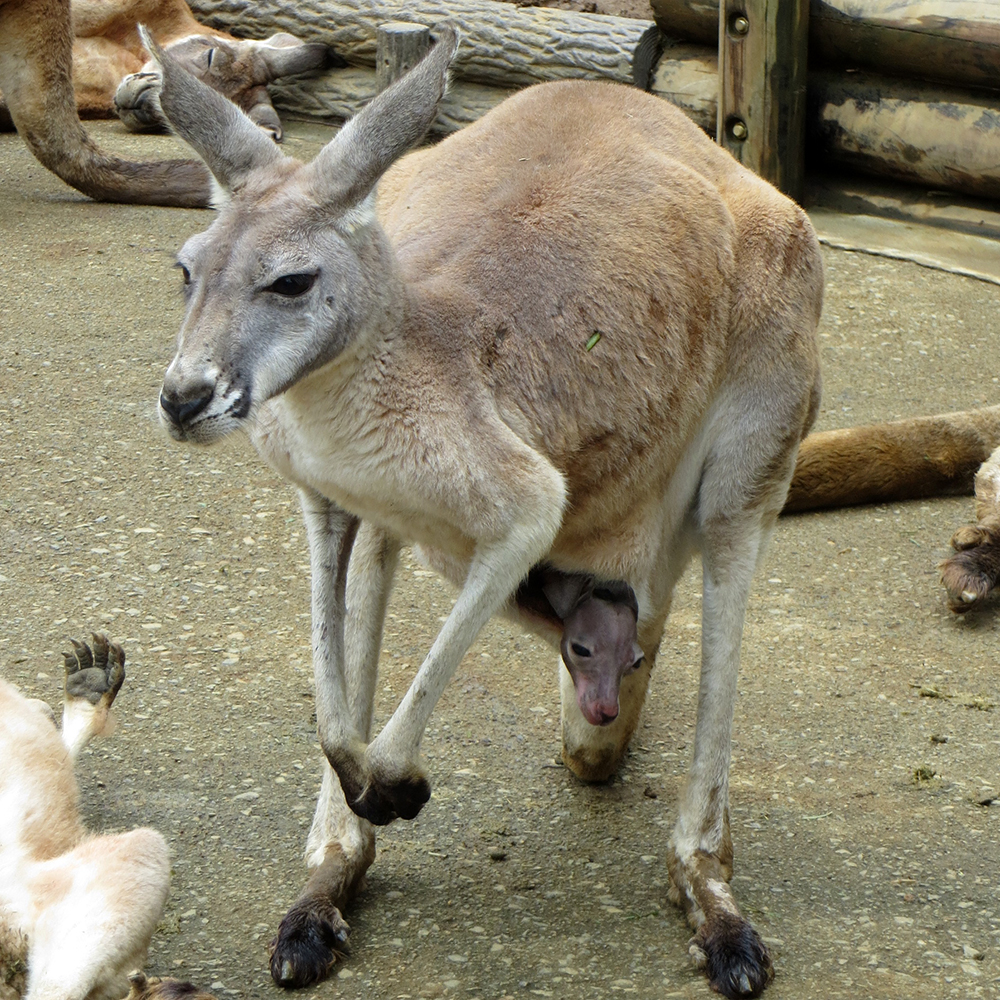
Immediately after birth, the baby climbs up its mother's body and enters her mother's pouch. There are four nipples inside the pouch, and it latches onto one of them. It stays inside the pouch for a while, and then at around five months of age, it starts to poke its head and legs out of the pouch, and after six months it starts to go in and out of the pouch. At seven to eight months of age, it will no longer return to the pouch, and will be weaned after about a year.