

Zoo Stock Species and the Red List
Zoo Stock Species and the Red List
Zoo Stock

This indicates that the species is included in the Second Zoo Stock Plan, which was formulated by the Tokyo Metropolitan Government in 2018. The plan sets goals for the next 10 years in three areas: "species conservation," "contribution to wildlife conservation," and "environmental education and conservation awareness." 124 animal species are included.
What is the Red List?
Based on scientific research, this is a list of wildlife classified by rank (category) indicating the degree of risk of extinction.
Livng Things Encyclopedia shows the categories (mainland and islands) assessed by the IUCN (International Union for Conservation of Nature) at the global level, the Ministry of the Environment for Japan, and the Tokyo Metropolitan Government for Tokyo.
The higher the category in each table, the higher the risk of extinction, and CR, EN, and VU are the three categories known as "endangered species." In Tokyo, species that are not at the NT (near threatened) level but are relatively rare are considered "species of concern."
|
IUCN categories |
|
|---|---|
|
EX |
extinction |
|
EW |
Extinction in the wild |
|
CR+EN |
— |
|
CR |
Serious crisis |
|
EN |
crisis |
|
VU |
emergency |
|
NT |
Near Threatened |
|
LC・○ |
Low Concern |
|
DD |
Data shortage |
|
LP |
— |
|
Japan (Ministry of the Environment) Category |
|
|---|---|
|
EX |
extinction |
|
EW |
Extinction in the wild |
|
CR+EN |
Endangered species |
|
CR |
Critically Endangered |
|
EN |
Endangered species |
|
VU |
Endangered species |
|
NT |
Near Threatened |
|
LC・○ |
— |
|
DD |
Lack of information |
|
LP |
Endangered |
|
Tokyo Category |
|
|---|---|
|
EX |
extinction |
|
EW |
Extinction in the wild |
|
CR+EN |
Endangered species |
|
CR |
Critically Endangered |
|
EN |
Endangered species |
|
VU |
Endangered species |
|
NT |
Near Threatened |
|
LC・○ |
Unranked |
|
DD |
Lack of information |
|
LP |
Endangered |
Creatures at Tama Zoo
Creatures at Tama Zoo
Red Junglefowl
Red Junglefowl
Gallus gallus
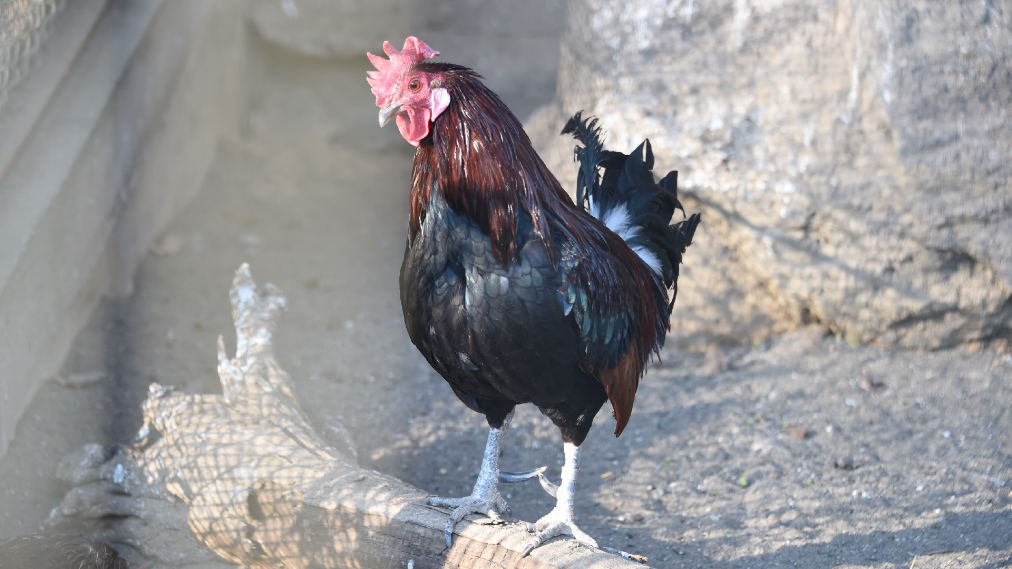
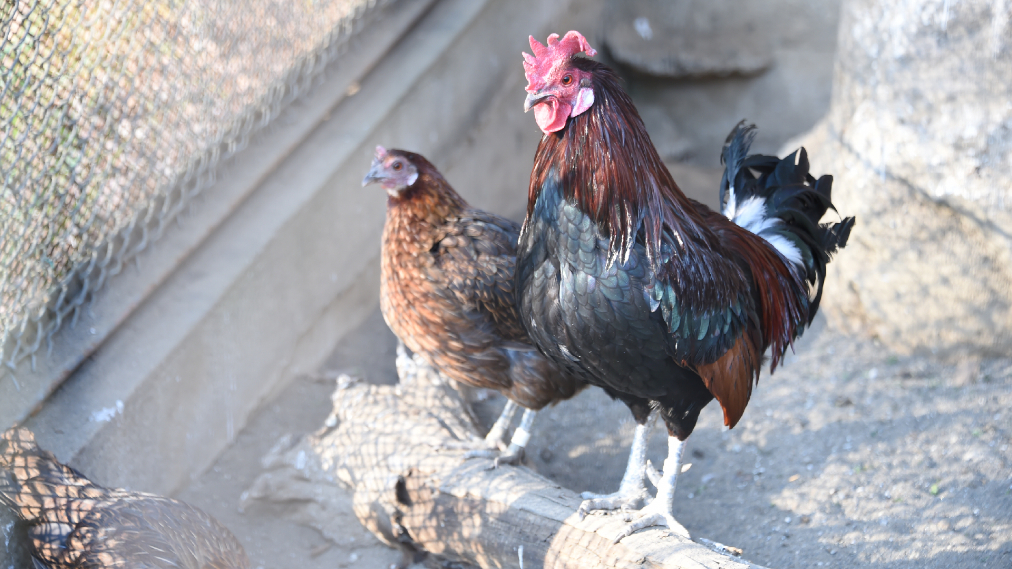
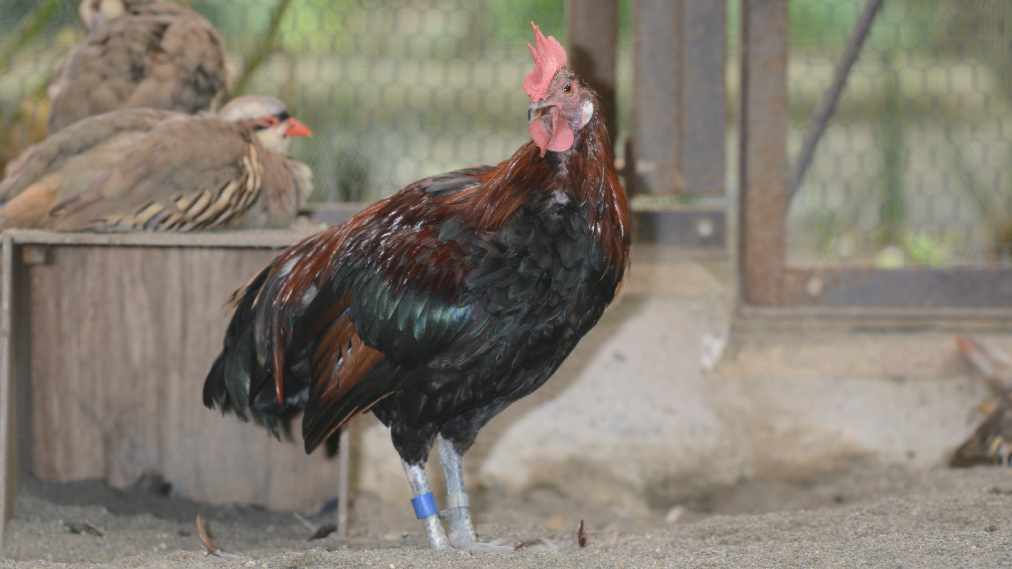
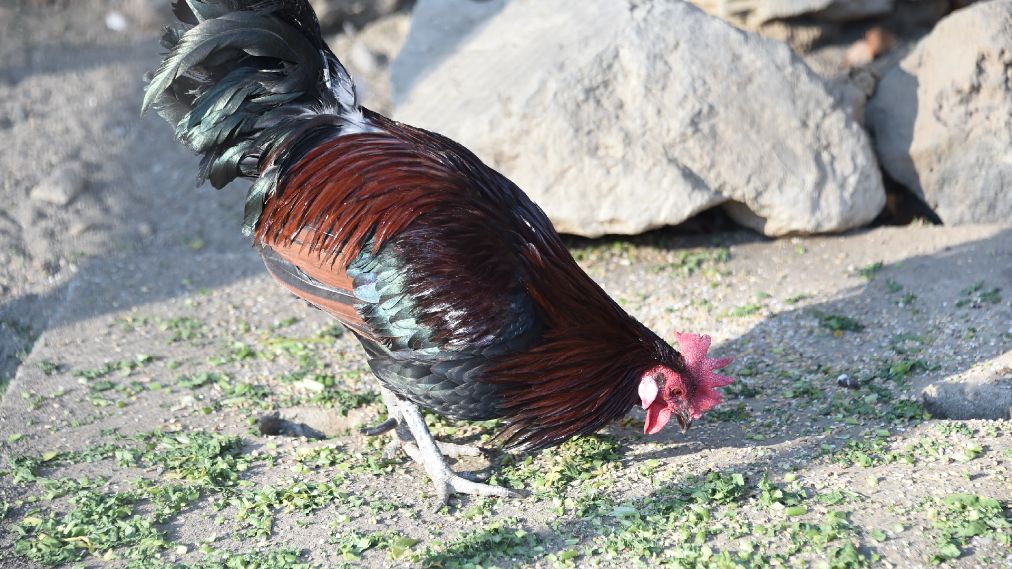
This species is believed to be the ancestor of modern domestic chickens. Like domestic chickens, males and females look very different. Males also stand in high places and crow. They are polygamous, building nests on the ground from dead leaves and grass, and laying 4 to 8 eggs. The female alone incubates the eggs and raises the chicks. Males who are hostile to each other will jump up and kick each other.
| classification | Aves, Galliformes, Phasianidae |
|---|---|
| English name | Red Junglefowl |
| distribution | Northern India, Southeast Asia, China |
| Residence | Forests, woodlands near human settlements |
| Size |
Total length: Males 46-60cm, females 43-48cm
Weight: Males 800-1,000g, Females 500-800g |
| food | Fruits, seeds, grains, insects, etc. |
| Red List |
IUCN: LC (Least Concern)
|
Differences in body color between males and females
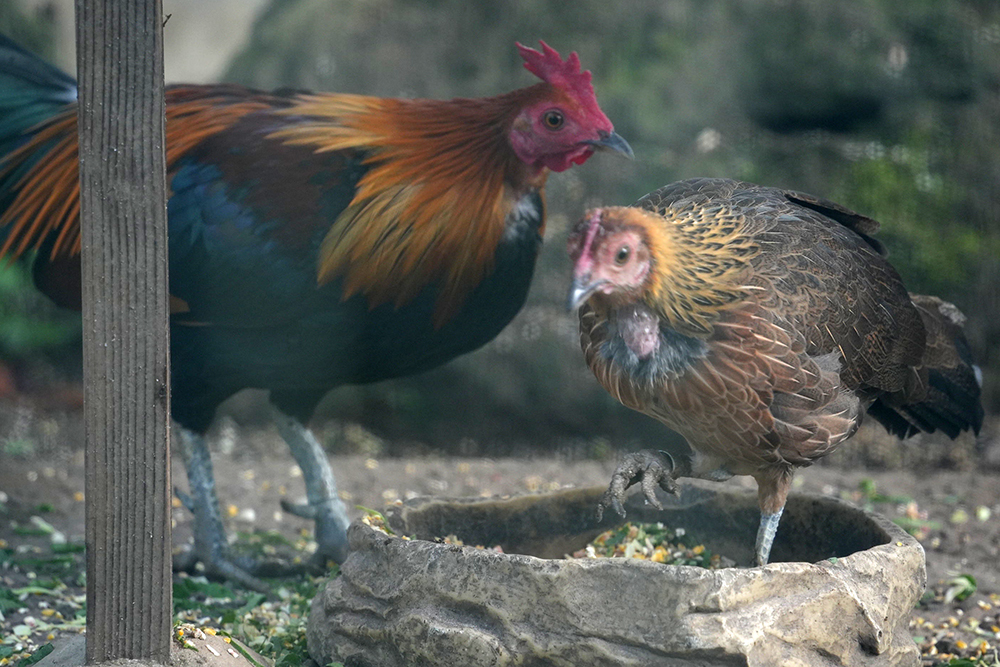
Males have bright pink skin exposed on their faces and a conspicuous crest of the same color. Their bodies are a mixture of light yellow-brown or reddish-brown and black. On the other hand, females have smaller crests, and the colors of their faces and crests are not as bright as those of males. Their bodies are generally a dull brown.