

Zoo Stock Species and the Red List
Zoo Stock Species and the Red List
Zoo Stock

This indicates that the species is included in the Second Zoo Stock Plan, which was formulated by the Tokyo Metropolitan Government in 2018. The plan sets goals for the next 10 years in three areas: "species conservation," "contribution to wildlife conservation," and "environmental education and conservation awareness." 124 animal species are included.
What is the Red List?
Based on scientific research, this is a list of wildlife classified by rank (category) indicating the degree of risk of extinction.
Livng Things Encyclopedia shows the categories (mainland and islands) assessed by the IUCN (International Union for Conservation of Nature) at the global level, the Ministry of the Environment for Japan, and the Tokyo Metropolitan Government for Tokyo.
The higher the category in each table, the higher the risk of extinction, and CR, EN, and VU are the three categories known as "endangered species." In Tokyo, species that are not at the NT (near threatened) level but are relatively rare are considered "species of concern."
|
IUCN categories |
|
|---|---|
|
EX |
extinction |
|
EW |
Extinction in the wild |
|
CR+EN |
— |
|
CR |
Serious crisis |
|
EN |
crisis |
|
VU |
emergency |
|
NT |
Near Threatened |
|
LC・○ |
Low Concern |
|
DD |
Data shortage |
|
LP |
— |
|
Japan (Ministry of the Environment) Category |
|
|---|---|
|
EX |
extinction |
|
EW |
Extinction in the wild |
|
CR+EN |
Endangered species |
|
CR |
Critically Endangered |
|
EN |
Endangered species |
|
VU |
Endangered species |
|
NT |
Near Threatened |
|
LC・○ |
— |
|
DD |
Lack of information |
|
LP |
Endangered |
|
Tokyo Category |
|
|---|---|
|
EX |
extinction |
|
EW |
Extinction in the wild |
|
CR+EN |
Endangered species |
|
CR |
Critically Endangered |
|
EN |
Endangered species |
|
VU |
Endangered species |
|
NT |
Near Threatened |
|
LC・○ |
Unranked |
|
DD |
Lack of information |
|
LP |
Endangered |
Creatures at Tama Zoo
Creatures at Tama Zoo

Oriental White Stork
Oriental White Stork
Ciconia boyciana
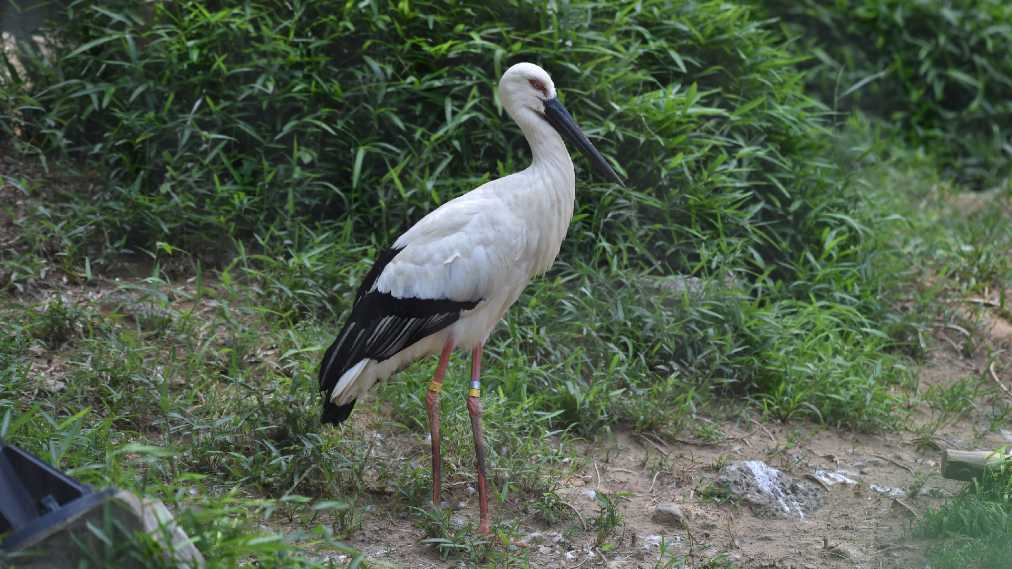
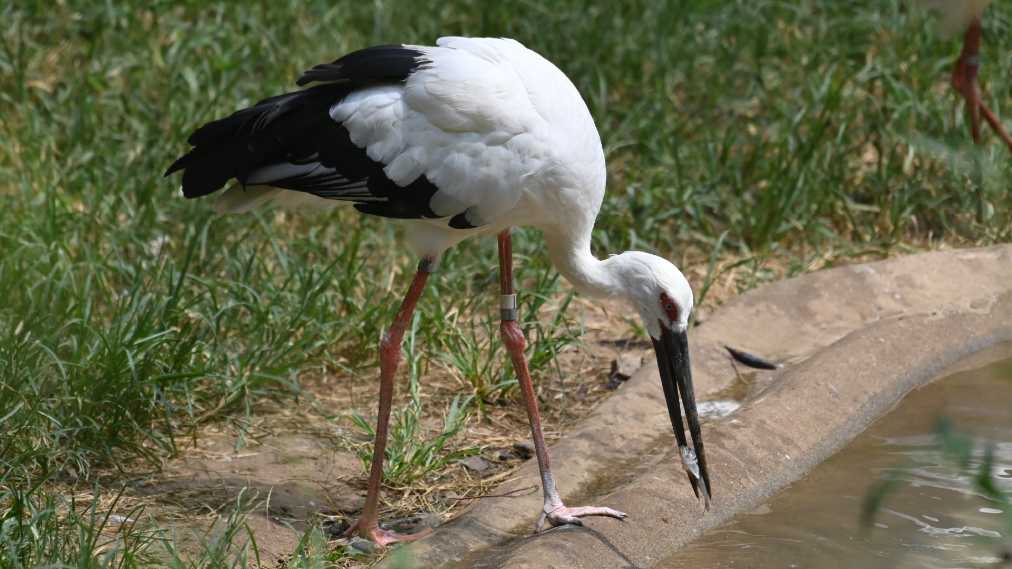
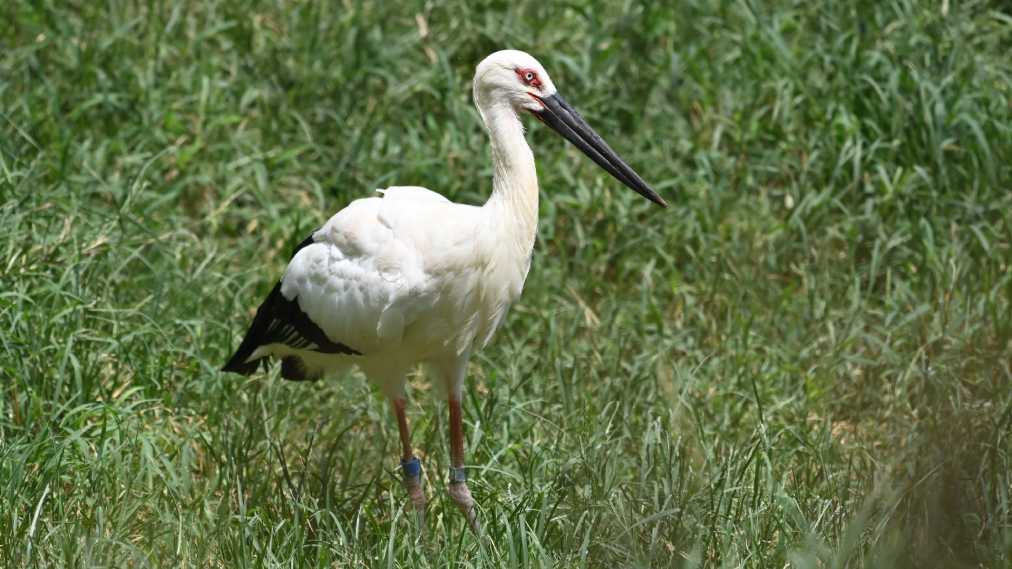
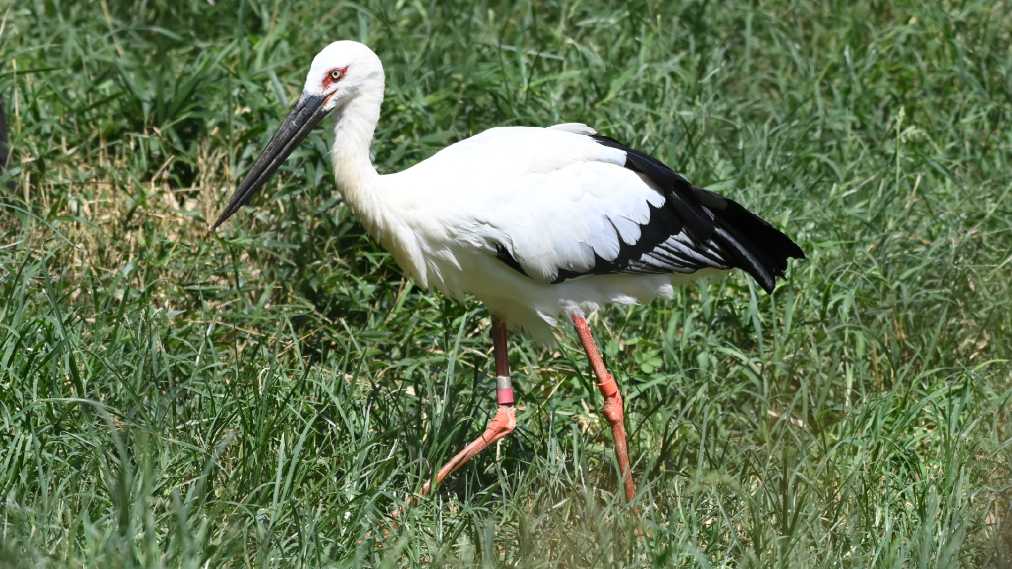
The feathers on their body are white, with black flight feathers and parts of the wing coverts. They also have a black beak and red skin exposed around their eyes. They generally live in pairs or alone. The breeding season is around April to May, when they build nests made of tree branches and grass in trees with good visibility and lay 2 to 6 eggs.
| classification | Aves, Ciconiiformes, Ciconidae |
|---|---|
| English name | Oriental White Stork |
| distribution | Japan, Northeast China, Amur River and Ussuri River basins, Korean Peninsula |
| Residence | Tree-dotted wetlands, grasslands, riverbanks, and rice paddies |
| Size |
全長:100~120cm
翼開長:180~200cm 体重:4~5kg |
| food | Fish, amphibians, small mammals, snails, earthworms, small birds |
| Red List |
IUCN: EN (crisis)
Japan: CR (Critically Endangered) |
Cluttering
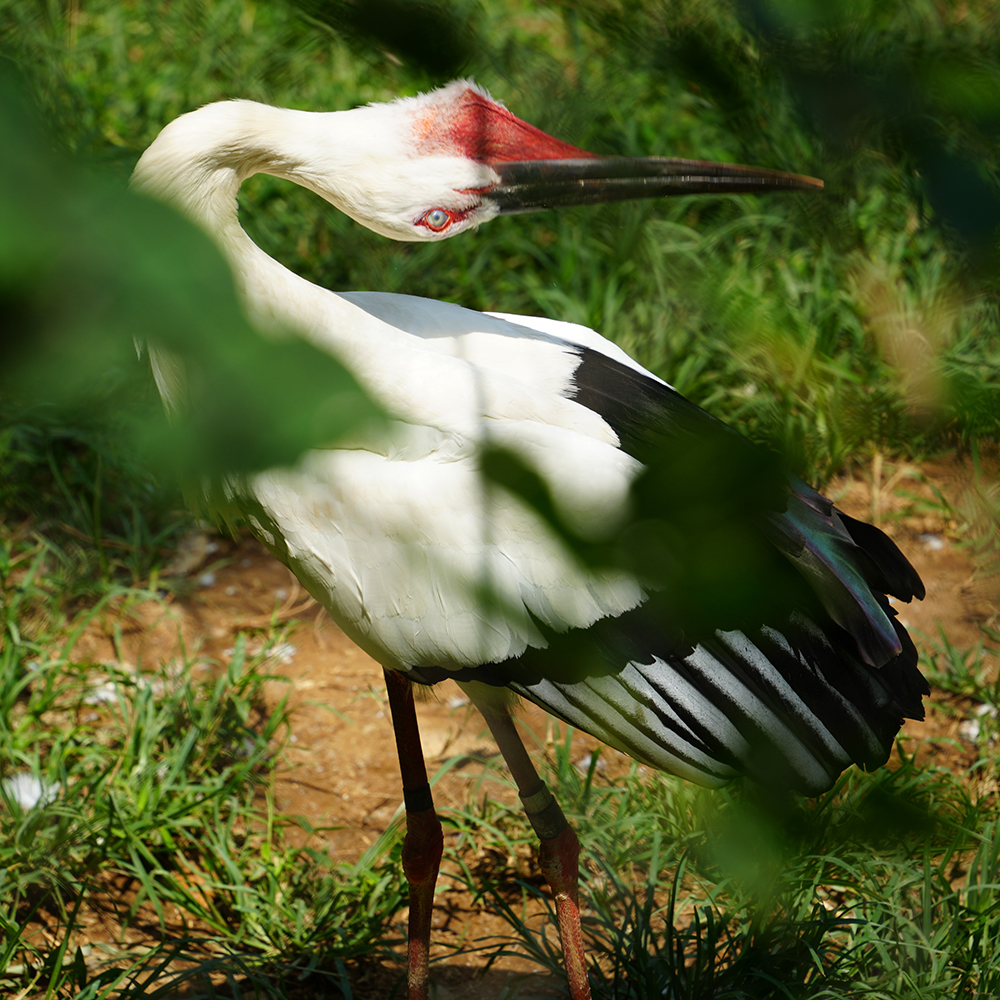
Adult storks have barely developed the organs required for singing and are unable to sing. Instead, they communicate with other birds by clattering their beaks together, a process known as "cluttering." However, they sometimes make a very small "whoosh" sound from their mouths.
Extinction and reintroduction
Until the Meiji period, wild Oriental White Stork raised their young in Japan, but in 1971 the last protected stork died and they disappeared from Japanese skies. Efforts were made to breed them in captivity and reintroduce them into the wild, and in 2005 the first Oriental White Stork. Since then, the population has gradually increased, and they can now be seen flying to various parts of Japan.
Breeding efforts at Tama Zoo
Tama Zoo has been raising storks received from overseas, and in 1988 was the first place in Japan to successfully breed them in captivity. Since then, their numbers have continued to grow steadily, contributing to the maintenance of captive populations. Oriental White Stork house at Tama Zoo is divided into several areas, which are used for different purposes, such as matchmaking areas and breeding areas.