

Zoo Stock Species and the Red List
Zoo Stock Species and the Red List
Zoo Stock

This indicates that the species is included in the Second Zoo Stock Plan, which was formulated by the Tokyo Metropolitan Government in 2018. The plan sets goals for the next 10 years in three areas: "species conservation," "contribution to wildlife conservation," and "environmental education and conservation awareness." 124 animal species are included.
What is the Red List?
Based on scientific research, this is a list of wildlife classified by rank (category) indicating the degree of risk of extinction.
Livng Things Encyclopedia shows the categories (mainland and islands) assessed by the IUCN (International Union for Conservation of Nature) at the global level, the Ministry of the Environment for Japan, and the Tokyo Metropolitan Government for Tokyo.
The higher the category in each table, the higher the risk of extinction, and CR, EN, and VU are the three categories known as "endangered species." In Tokyo, species that are not at the NT (near threatened) level but are relatively rare are considered "species of concern."
|
IUCN categories |
|
|---|---|
|
EX |
extinction |
|
EW |
Extinction in the wild |
|
CR+EN |
— |
|
CR |
Serious crisis |
|
EN |
crisis |
|
VU |
emergency |
|
NT |
Near Threatened |
|
LC・○ |
Low Concern |
|
DD |
Data shortage |
|
LP |
— |
|
Japan (Ministry of the Environment) Category |
|
|---|---|
|
EX |
extinction |
|
EW |
Extinction in the wild |
|
CR+EN |
Endangered species |
|
CR |
Critically Endangered |
|
EN |
Endangered species |
|
VU |
Endangered species |
|
NT |
Near Threatened |
|
LC・○ |
— |
|
DD |
Lack of information |
|
LP |
Endangered |
|
Tokyo Category |
|
|---|---|
|
EX |
extinction |
|
EW |
Extinction in the wild |
|
CR+EN |
Endangered species |
|
CR |
Critically Endangered |
|
EN |
Endangered species |
|
VU |
Endangered species |
|
NT |
Near Threatened |
|
LC・○ |
Unranked |
|
DD |
Lack of information |
|
LP |
Endangered |
Creatures at Tama Zoo
Creatures at Tama Zoo

Northern Bald Ibis
Northern Bald Ibis
Geronticus eremita
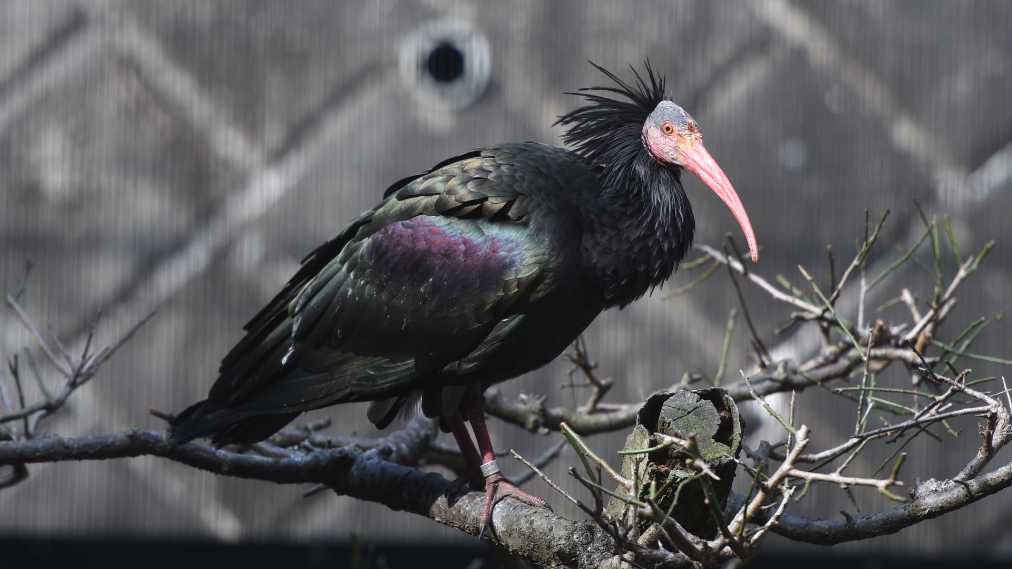
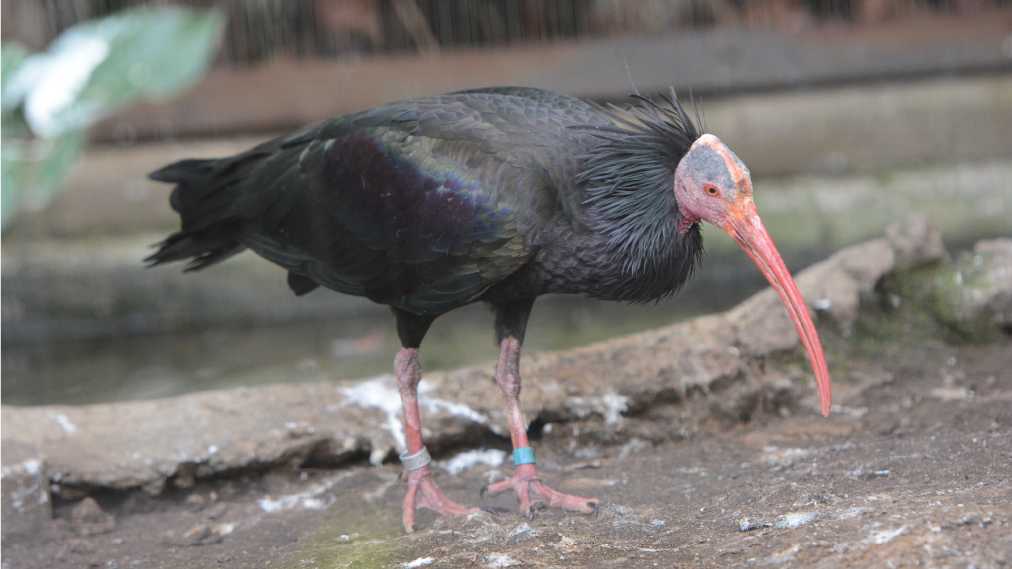
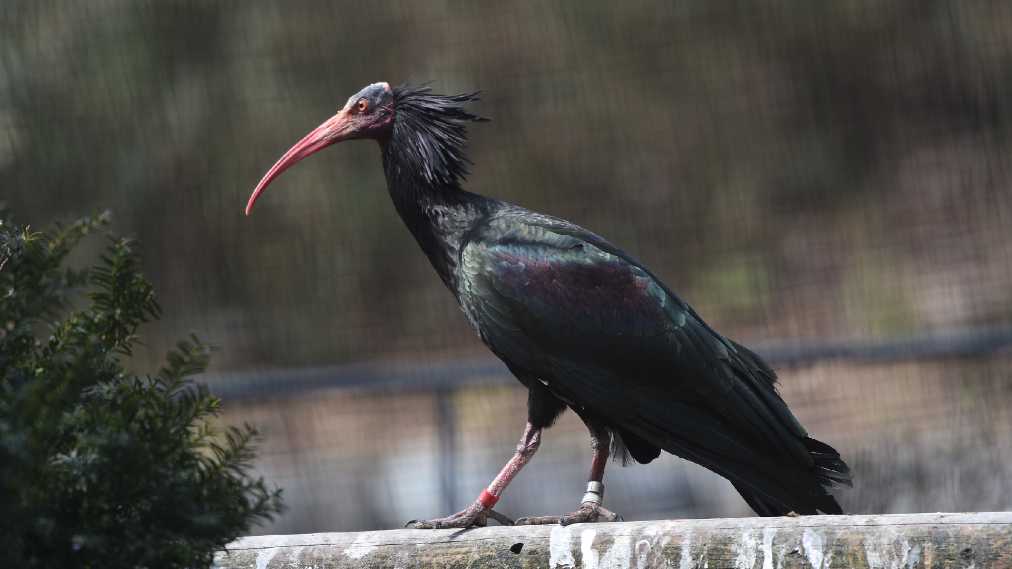
They are characterized by their bare, dark red face and the crest that grows from the back of their head to the back of their neck. The feathers on their entire body, including the crest, are black, but due to structural coloration, they can appear shiny purple or green depending on the angle and lighting. They live in groups regardless of the season, and during the breeding season, up to 40 pairs will nest together.
| classification | Birds, Pelecaniformes, Crested Ibis |
|---|---|
| English name | Northern Bald Ibis |
| distribution | Morocco, Yemen, Syrian Arab Republic, Türkiye |
| Residence | Rocky areas along rivers and coasts in dry areas. They nest on high rocky shelves such as cliffs, and outside the breeding season, they also use mountain grasslands, harvested fields, short grasslands, rocky semi-arid areas, and moist areas in the lowlands of plateaus. |
| Size |
Weight: 1,100–1,400g
|
| food | Insects, spiders, scorpions, earthworms, snails, fish, amphibians, lizards, snakes, small rodents, small birds, berries, shoots, Spirogyra, aquatic plant rhizomes, etc. |
| Red List |
IUCN: EN (crisis)
|
Situation in the wild
It is believed that they were once widely distributed throughout North Africa and the Middle East, but by the beginning of the 20th century, only a small population was left in a limited area. In light of their critical situation, captive breeding and reintroduction projects are underway. Approximately 190 birds were released in Spain between 2004 and 2009, and breeding in the wild has been confirmed.
Reference case study for Crested Ibis breeding project
When the conservation and breeding program for Crested Ibis began in Japan, it was based on the conservation and breeding program for Northern Bald Ibis that was being carried out in Europe. Using a variety of information, such as the contents of food, recipes, artificial incubation, and chick rearing methods, methods for raising Crested Ibis were established.