

Zoo Stock Species and the Red List
Zoo Stock Species and the Red List
Zoo Stock

This indicates that the species is included in the Second Zoo Stock Plan, which was formulated by the Tokyo Metropolitan Government in 2018. The plan sets goals for the next 10 years in three areas: "species conservation," "contribution to wildlife conservation," and "environmental education and conservation awareness." 124 animal species are included.
What is the Red List?
Based on scientific research, this is a list of wildlife classified by rank (category) indicating the degree of risk of extinction.
Livng Things Encyclopedia shows the categories (mainland and islands) assessed by the IUCN (International Union for Conservation of Nature) at the global level, the Ministry of the Environment for Japan, and the Tokyo Metropolitan Government for Tokyo.
The higher the category in each table, the higher the risk of extinction, and CR, EN, and VU are the three categories known as "endangered species." In Tokyo, species that are not at the NT (near threatened) level but are relatively rare are considered "species of concern."
|
IUCN categories |
|
|---|---|
|
EX |
extinction |
|
EW |
Extinction in the wild |
|
CR+EN |
— |
|
CR |
Serious crisis |
|
EN |
crisis |
|
VU |
emergency |
|
NT |
Near Threatened |
|
LC・○ |
Low Concern |
|
DD |
Data shortage |
|
LP |
— |
|
Japan (Ministry of the Environment) Category |
|
|---|---|
|
EX |
extinction |
|
EW |
Extinction in the wild |
|
CR+EN |
Endangered species |
|
CR |
Critically Endangered |
|
EN |
Endangered species |
|
VU |
Endangered species |
|
NT |
Near Threatened |
|
LC・○ |
— |
|
DD |
Lack of information |
|
LP |
Endangered |
|
Tokyo Category |
|
|---|---|
|
EX |
extinction |
|
EW |
Extinction in the wild |
|
CR+EN |
Endangered species |
|
CR |
Critically Endangered |
|
EN |
Endangered species |
|
VU |
Endangered species |
|
NT |
Near Threatened |
|
LC・○ |
Unranked |
|
DD |
Lack of information |
|
LP |
Endangered |
Creatures at Tama Zoo
Creatures at Tama Zoo

Montane Brown Frog
Montane Brown Frog
Rana ornativentris
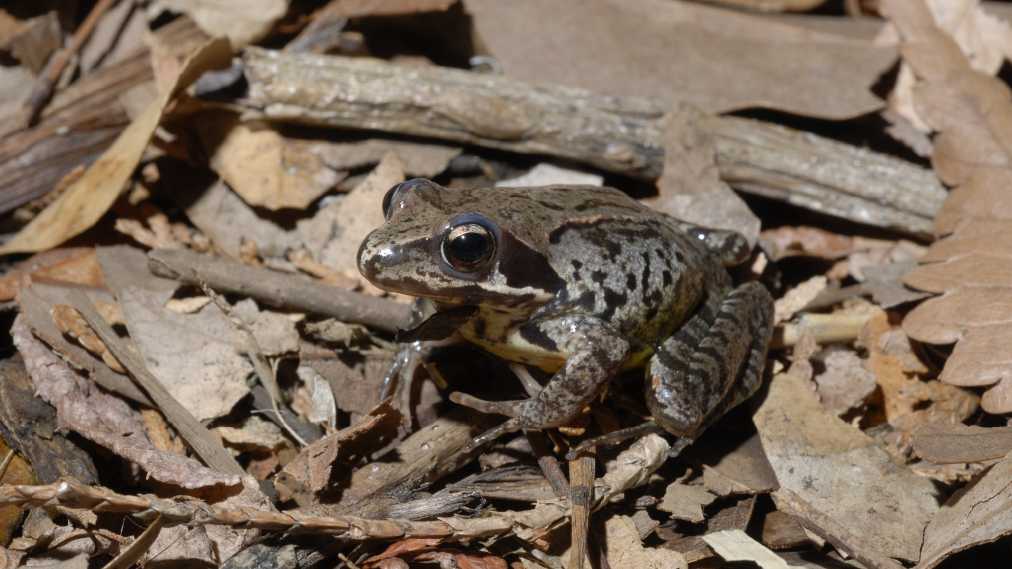
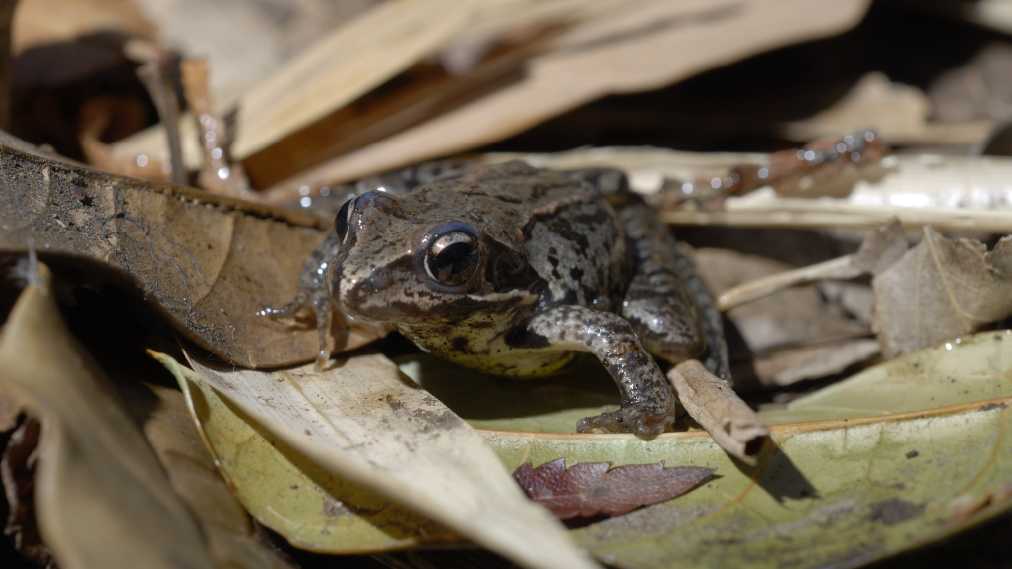
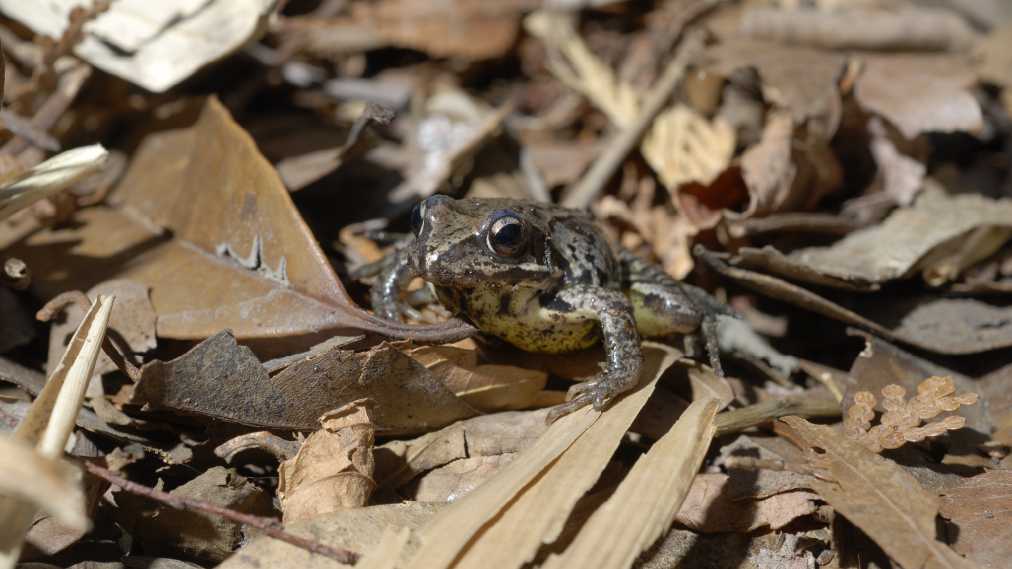
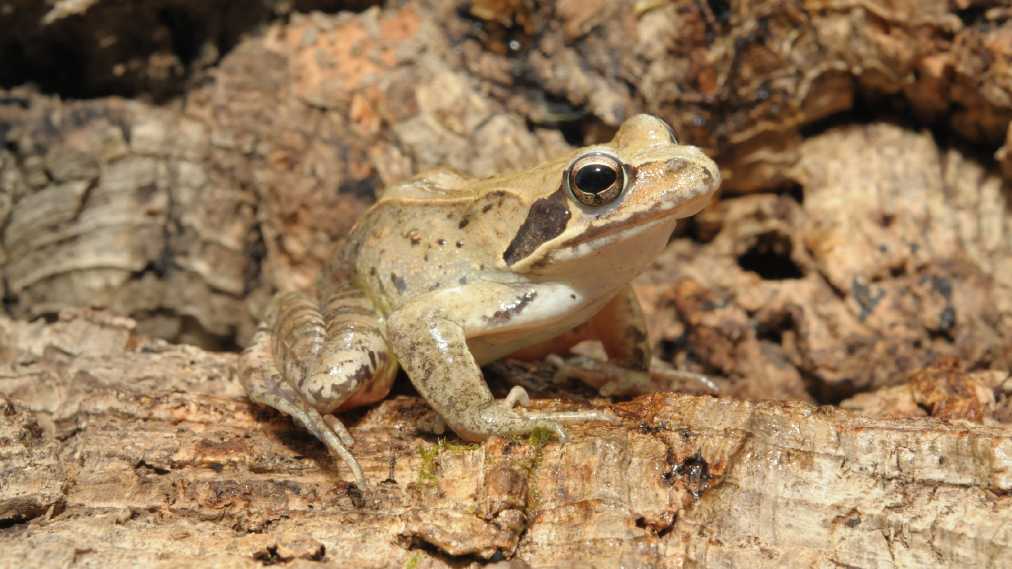
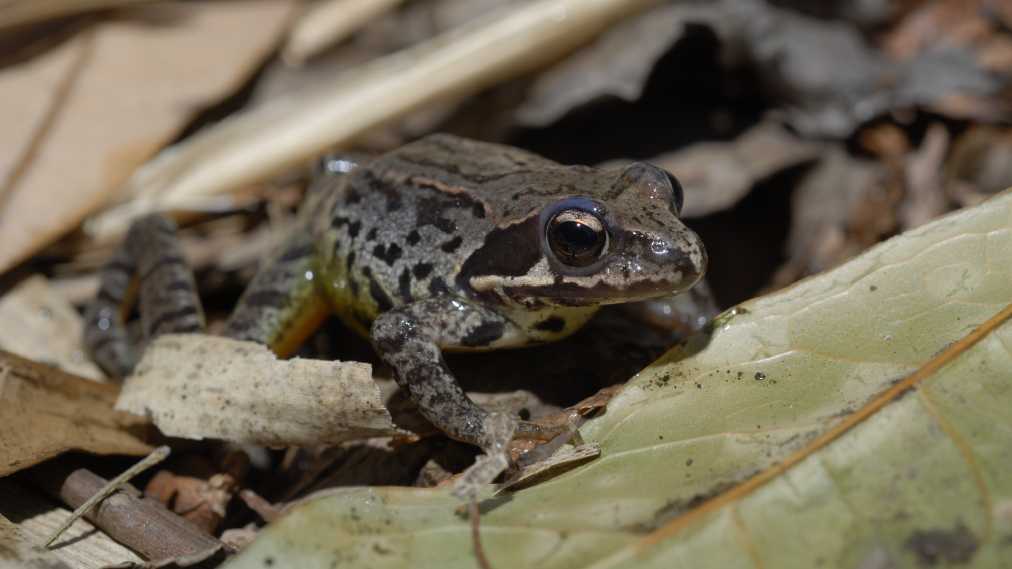
This is a species of brown frog endemic to Japan. It is terrestrial and has well-developed webbed feet on its hind feet. It does not have suckers on its toes, so it does not climb trees. The dorsal line common to brown frogs is often curved behind the eardrum in this species. It has a black marking on its throat.
| classification | Amphibians, Anura, Ranidae |
|---|---|
| English name | Montane Brown Frog |
| distribution | Japan (Honshu, Shikoku, Kyushu, Sado Island) |
| Residence | Hilly to mountainous areas |
| Size |
Body length: 3.6-7.8cm
|
| food | Larvae: Plant material such as fallen leaves and moss Adult: insects, earthworms, etc. |
| Red List |
IUCN: LC (Least Concern)
Tokyo: VU (Various) |
Exhibition at Tama Zoo
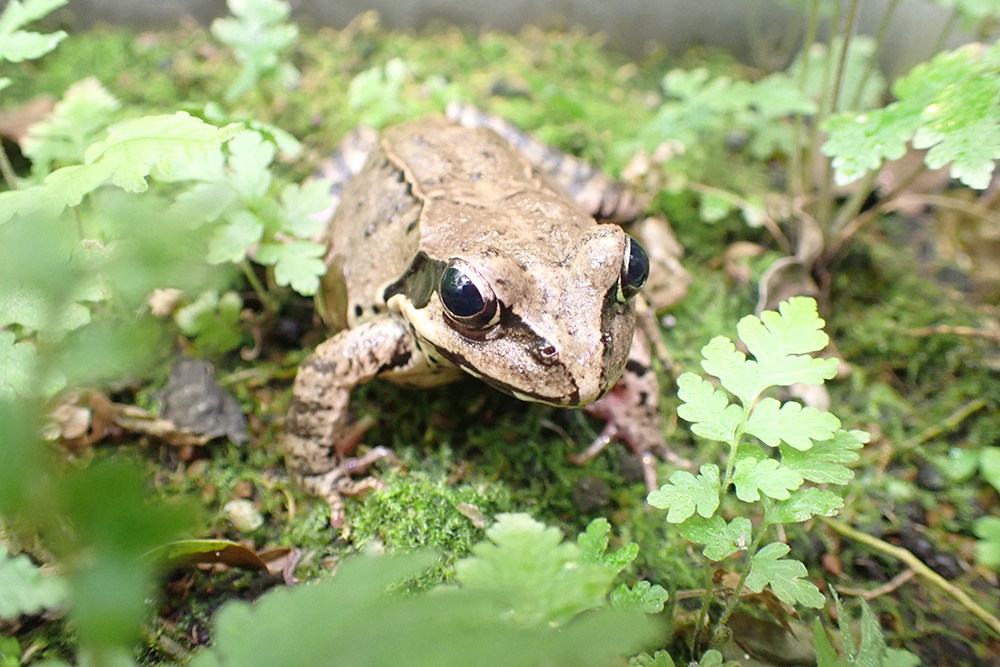
At Insectarium, they are exhibited in the same case as Forest Green Tree Frog. While the Japanese tree Forest Green Tree Frog arboreal and often found on leaves, Montane Brown Frog is terrestrial and often found near the ground.