

Zoo Stock Species and the Red List
Zoo Stock Species and the Red List
Zoo Stock

This indicates that the species is included in the Second Zoo Stock Plan, which was formulated by the Tokyo Metropolitan Government in 2018. The plan sets goals for the next 10 years in three areas: "species conservation," "contribution to wildlife conservation," and "environmental education and conservation awareness." 124 animal species are included.
What is the Red List?
Based on scientific research, this is a list of wildlife classified by rank (category) indicating the degree of risk of extinction.
Livng Things Encyclopedia shows the categories (mainland and islands) assessed by the IUCN (International Union for Conservation of Nature) at the global level, the Ministry of the Environment for Japan, and the Tokyo Metropolitan Government for Tokyo.
The higher the category in each table, the higher the risk of extinction, and CR, EN, and VU are the three categories known as "endangered species." In Tokyo, species that are not at the NT (near threatened) level but are relatively rare are considered "species of concern."
|
IUCN categories |
|
|---|---|
|
EX |
extinction |
|
EW |
Extinction in the wild |
|
CR+EN |
— |
|
CR |
Serious crisis |
|
EN |
crisis |
|
VU |
emergency |
|
NT |
Near Threatened |
|
LC・○ |
Low Concern |
|
DD |
Data shortage |
|
LP |
— |
|
Japan (Ministry of the Environment) Category |
|
|---|---|
|
EX |
extinction |
|
EW |
Extinction in the wild |
|
CR+EN |
Endangered species |
|
CR |
Critically Endangered |
|
EN |
Endangered species |
|
VU |
Endangered species |
|
NT |
Near Threatened |
|
LC・○ |
— |
|
DD |
Lack of information |
|
LP |
Endangered |
|
Tokyo Category |
|
|---|---|
|
EX |
extinction |
|
EW |
Extinction in the wild |
|
CR+EN |
Endangered species |
|
CR |
Critically Endangered |
|
EN |
Endangered species |
|
VU |
Endangered species |
|
NT |
Near Threatened |
|
LC・○ |
Unranked |
|
DD |
Lack of information |
|
LP |
Endangered |
Creatures at Tama Zoo
Creatures at Tama Zoo

Malayan Tapir
Malayan Tapir
Tapirus indicus
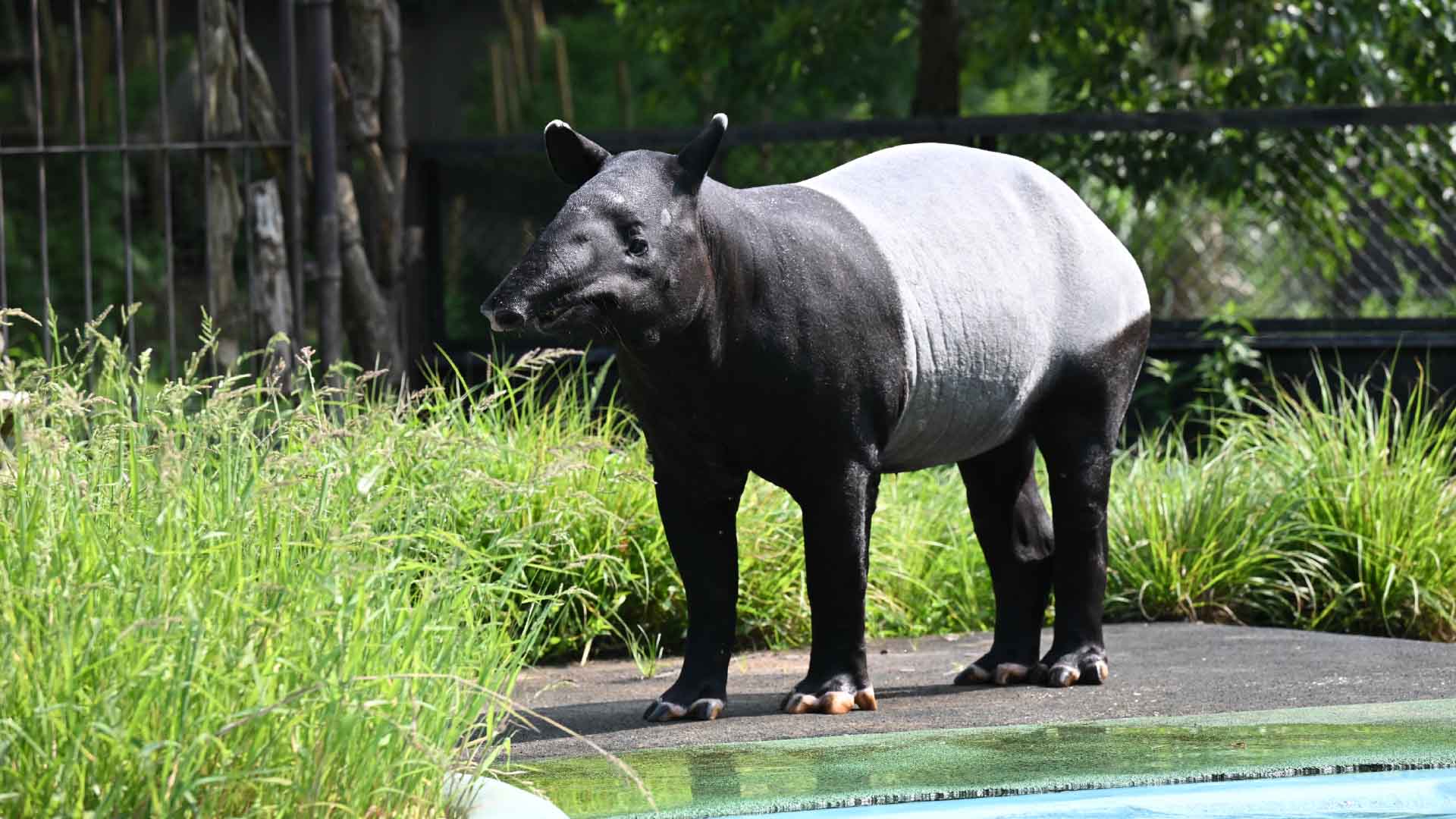
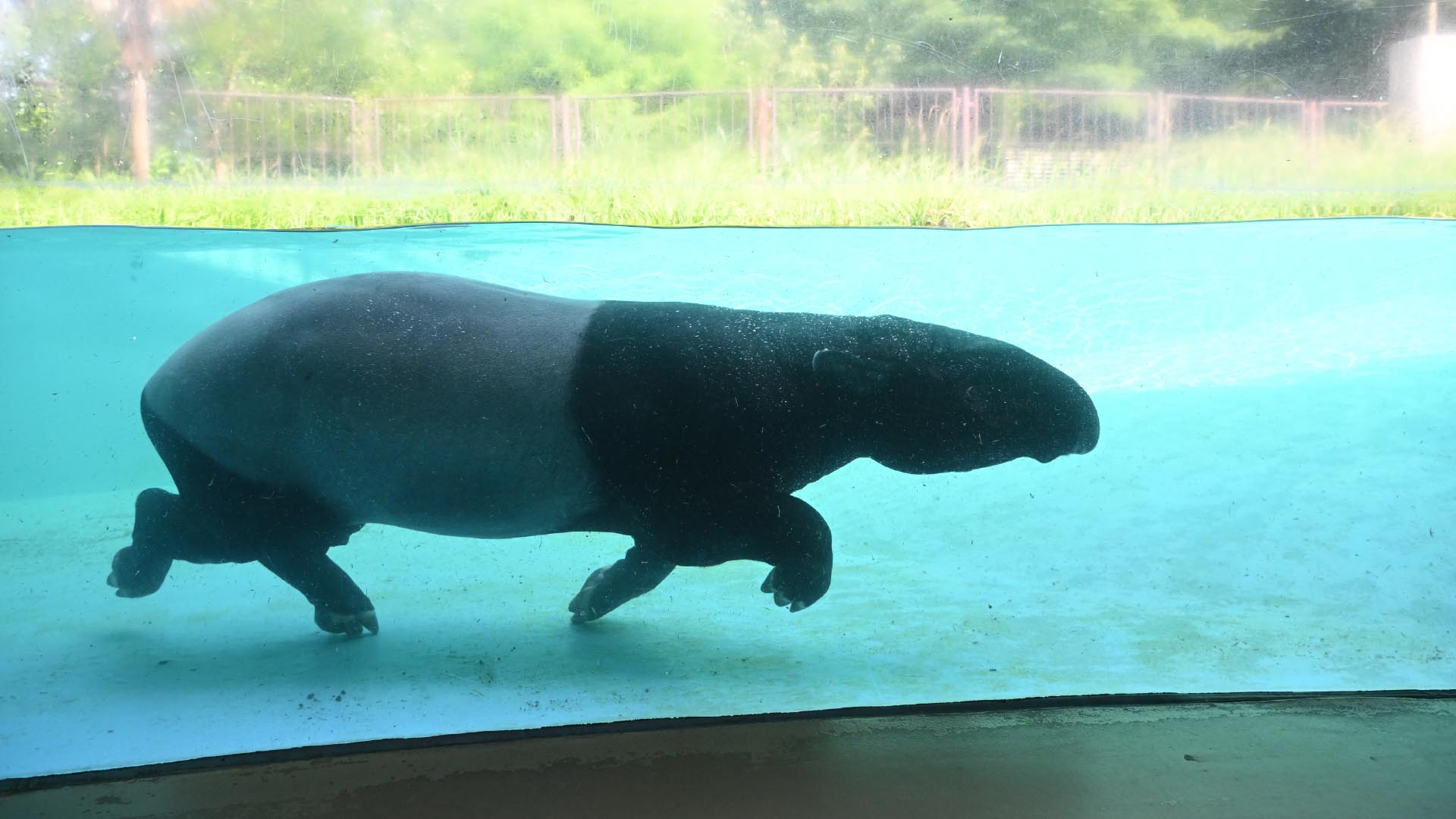
Apart from mothers and calves, they generally live alone. They rest during the day and travel over a wide area to feed in the dim light of dawn and dusk. In some areas, their home ranges can be more than 10 square kilometers. They often use waterside areas such as rivers and swamps. They will immerse themselves in water to cool off, or will retreat into the water if they sense danger, and they often defecate in water as well.
| classification | Mammalia, Perissodactyla, Tapiridae |
|---|---|
| English name | Malayan Tapir |
| distribution | Southeast Asia, Kawakawa |
| Residence | Waterside forests to grasslands (wetlands) |
| Size |
Head torso length: 2.3-2.5m
Shoulder height: 0.9-1m Weight: Approximately 350 kg |
| food | Tree branches, leaves, fruits, grass, and aquatic plants |
| Red List |
IUCN: EN (crisis)
|
nose
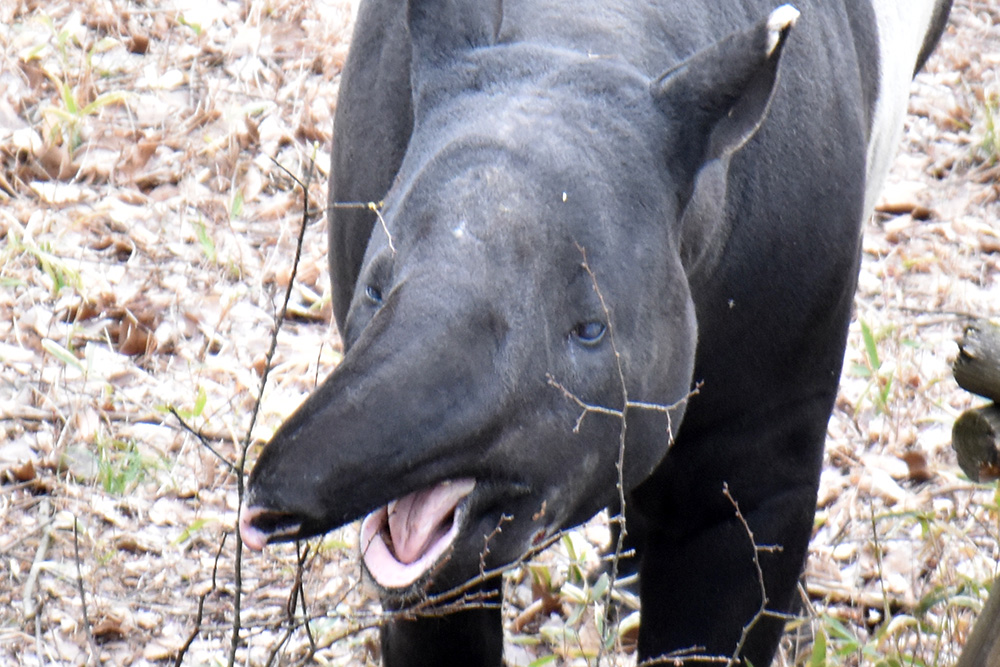
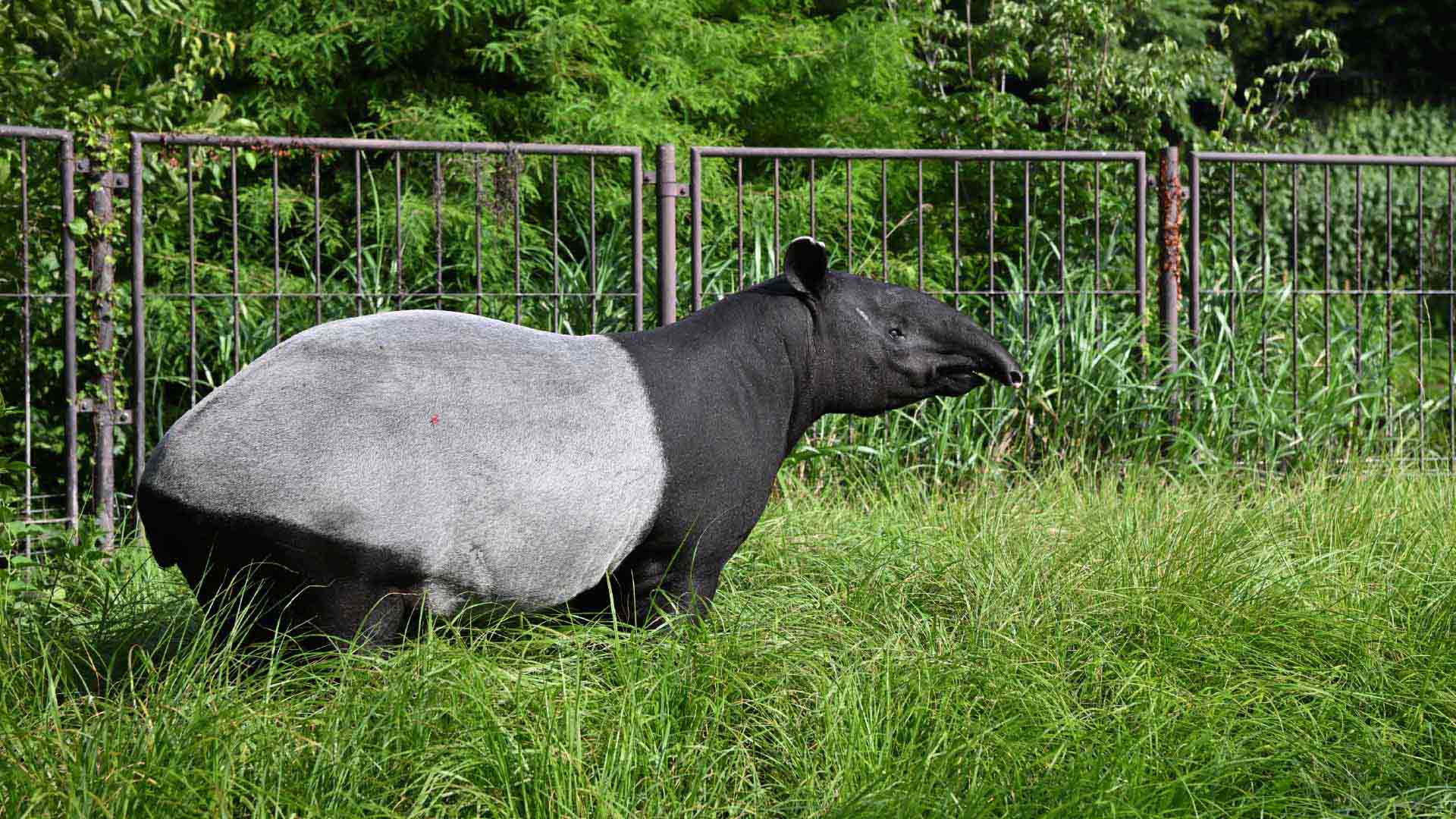
The nose and upper lip are one and long. There is no hard bone at the tip of the nose, it is soft and mobile. They use their nose to pull branches, leaves and grass to their mouths to eat.
Number of fingers
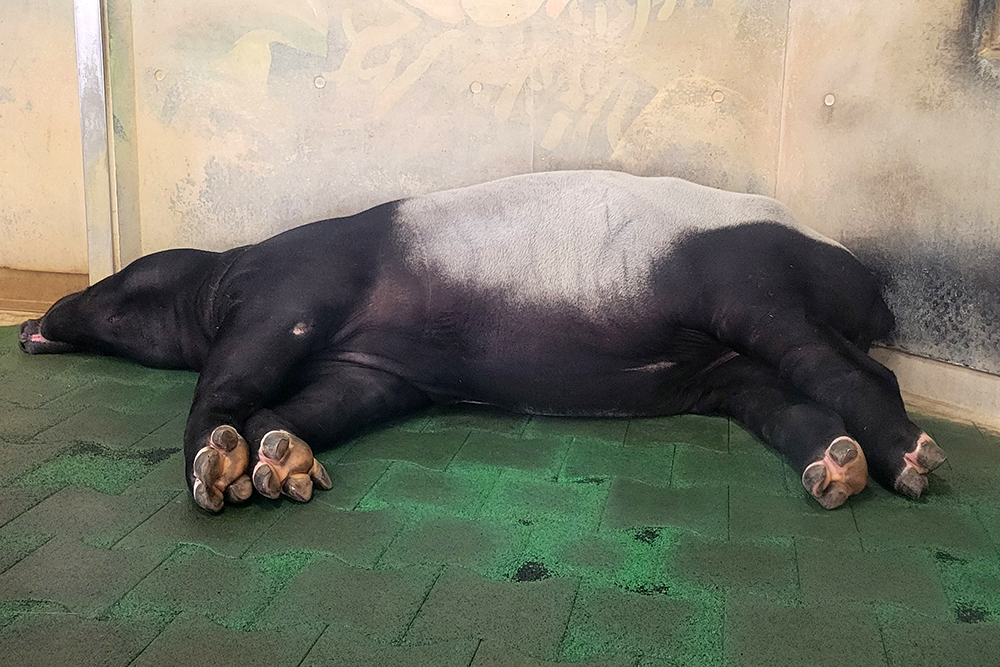
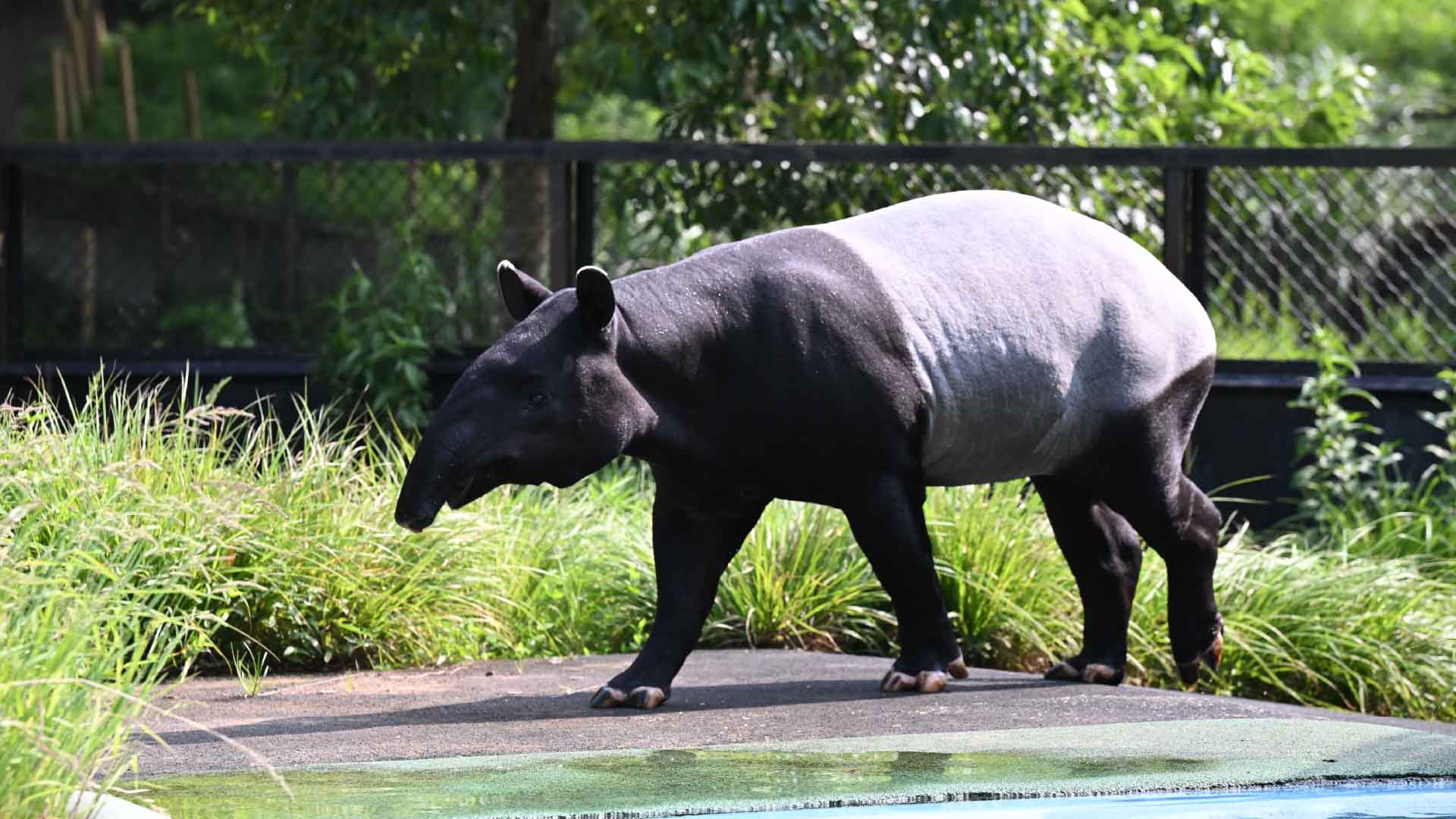
The front legs have four fingers, and the back legs have three. In both cases, the center of gravity is on the third toe.
Body pattern
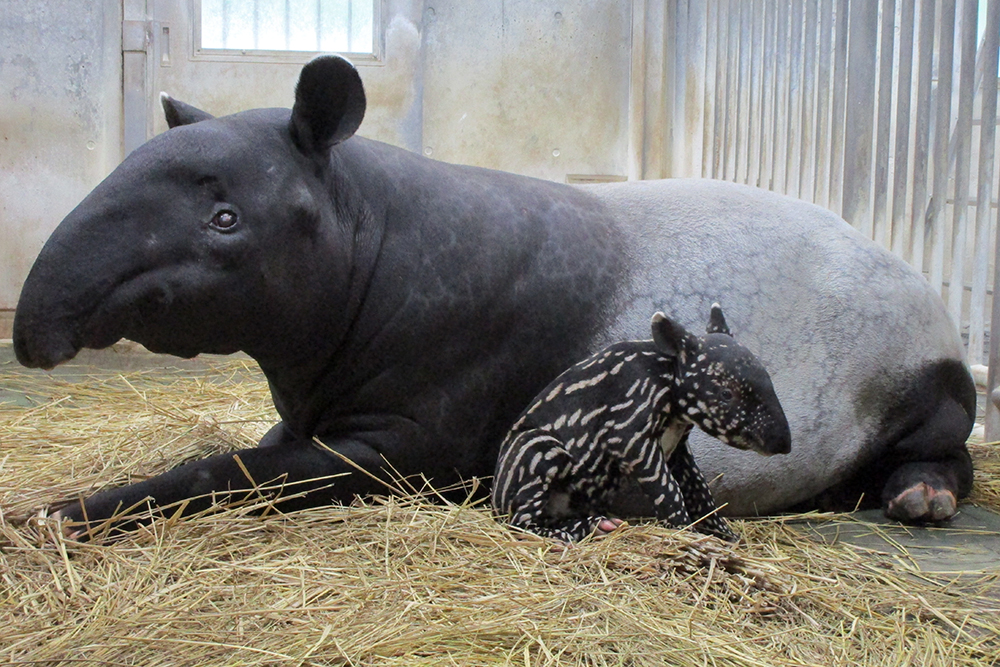
The body pattern of adults is made up of white and black fur. In the dark forest, this makes the black parts of the head and legs less visible and hides the outline of the body. When they are born, they have a gourd pattern, making them easily blended in with the sunlight filtering through the trees. The pattern begins to change around two months after birth, and by six months old it has the same pattern as an adult.
Danger in the wild
Their population is declining due to extensive deforestation and forest fragmentation in their habitat, and illegal hunting is also thought to be a contributing factor.