

Zoo Stock Species and the Red List
Zoo Stock Species and the Red List
Zoo Stock

This indicates that the species is included in the Second Zoo Stock Plan, which was formulated by the Tokyo Metropolitan Government in 2018. The plan sets goals for the next 10 years in three areas: "species conservation," "contribution to wildlife conservation," and "environmental education and conservation awareness." 124 animal species are included.
What is the Red List?
Based on scientific research, this is a list of wildlife classified by rank (category) indicating the degree of risk of extinction.
Livng Things Encyclopedia shows the categories (mainland and islands) assessed by the IUCN (International Union for Conservation of Nature) at the global level, the Ministry of the Environment for Japan, and the Tokyo Metropolitan Government for Tokyo.
The higher the category in each table, the higher the risk of extinction, and CR, EN, and VU are the three categories known as "endangered species." In Tokyo, species that are not at the NT (near threatened) level but are relatively rare are considered "species of concern."
|
IUCN categories |
|
|---|---|
|
EX |
extinction |
|
EW |
Extinction in the wild |
|
CR+EN |
— |
|
CR |
Serious crisis |
|
EN |
crisis |
|
VU |
emergency |
|
NT |
Near Threatened |
|
LC・○ |
Low Concern |
|
DD |
Data shortage |
|
LP |
— |
|
Japan (Ministry of the Environment) Category |
|
|---|---|
|
EX |
extinction |
|
EW |
Extinction in the wild |
|
CR+EN |
Endangered species |
|
CR |
Critically Endangered |
|
EN |
Endangered species |
|
VU |
Endangered species |
|
NT |
Near Threatened |
|
LC・○ |
— |
|
DD |
Lack of information |
|
LP |
Endangered |
|
Tokyo Category |
|
|---|---|
|
EX |
extinction |
|
EW |
Extinction in the wild |
|
CR+EN |
Endangered species |
|
CR |
Critically Endangered |
|
EN |
Endangered species |
|
VU |
Endangered species |
|
NT |
Near Threatened |
|
LC・○ |
Unranked |
|
DD |
Lack of information |
|
LP |
Endangered |
Creatures at Tama Zoo
Creatures at Tama Zoo

Japanese Macaque
Subspecies: Japanese Macaque
Japanese Macaque
Subspecies: Japanese MacaqueMacaca fuscata fuscata
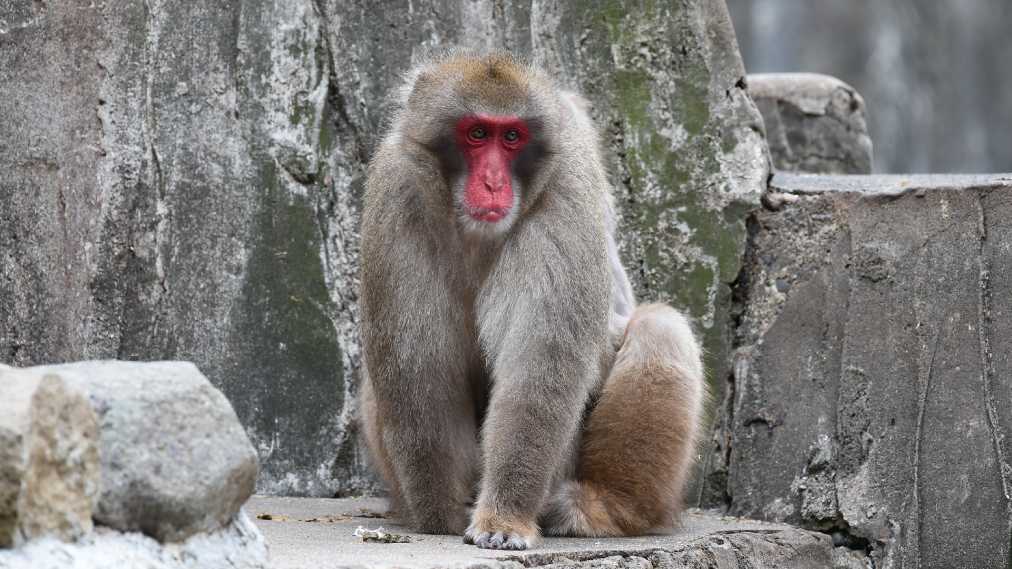
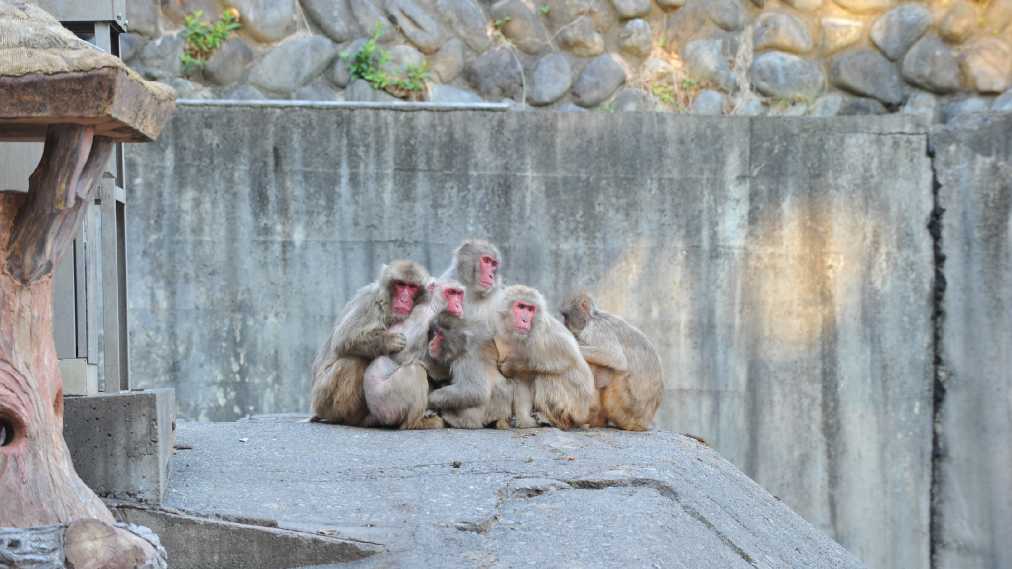
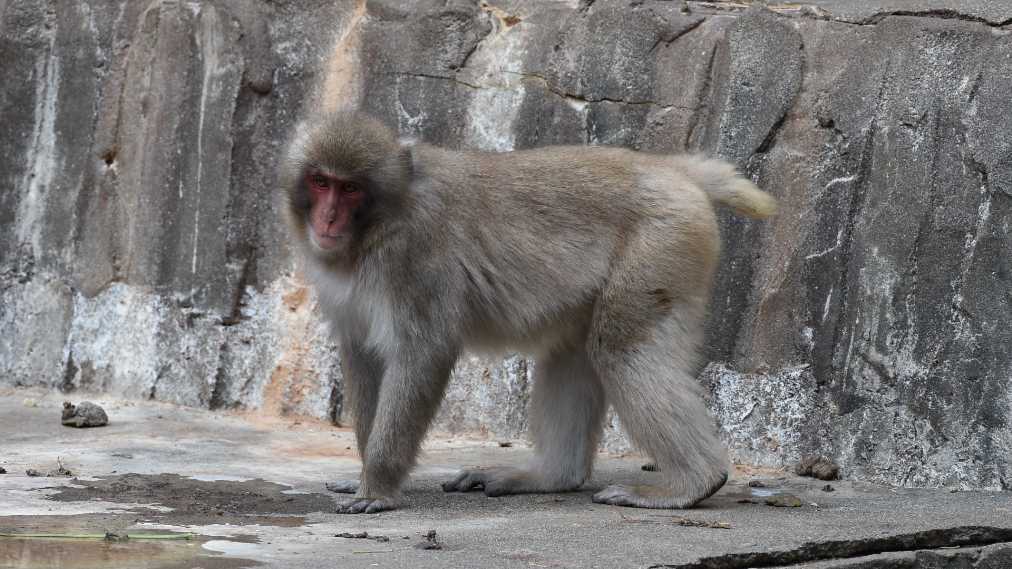
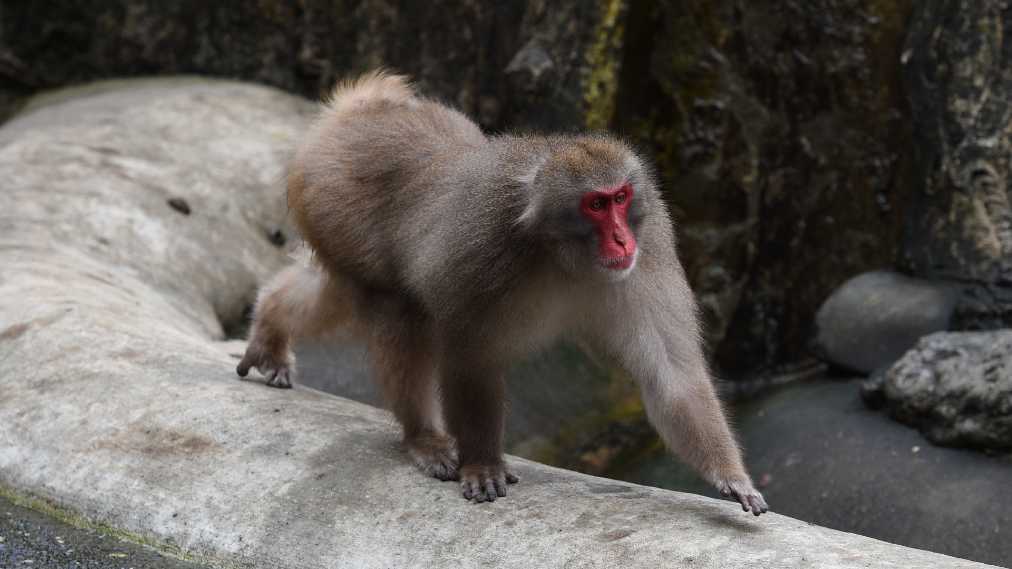
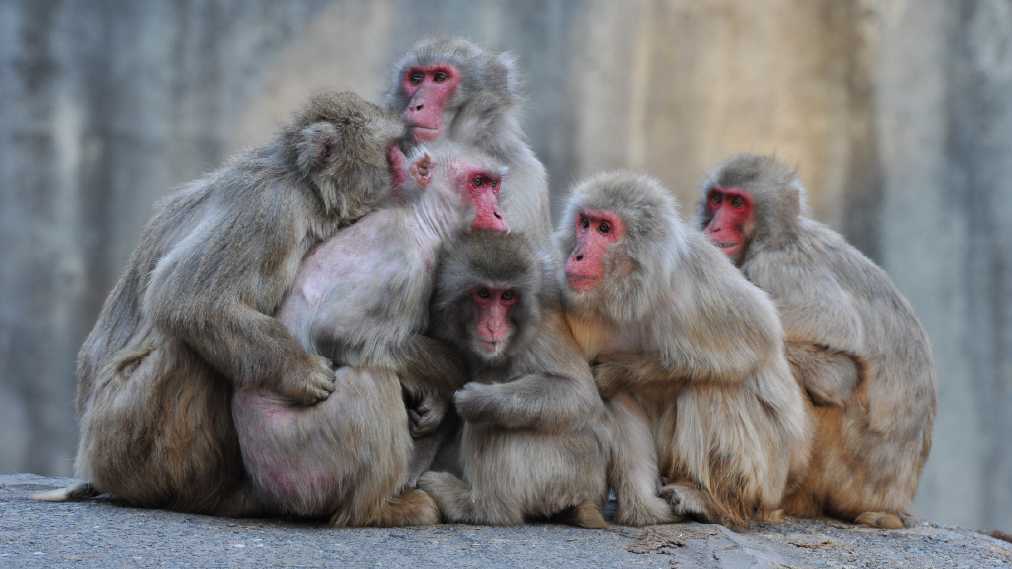
Japanese Macaque are endemic to Japan, and the population of this subspecies that lives on the Shimokita Peninsula in Aomori Prefecture is the northernmost of all primates excluding humans. They live in groups of between a dozen and a hundred individuals, consisting of males, females, and their offspring. In addition, solitary male snub-nosed macaques can also be seen. Mating season is from autumn to winter, and after a gestation period of about six months, they give birth in spring and summer. Males reach maturity at around seven years old and leave their natal group around ten years old. Females remain in the group and area where they were born, giving birth for the first time at the age of five to seven years old. They usually give birth to one offspring every two to three years.
| classification | Mammalia, Primates, Azure-winged Magpie |
|---|---|
| English name | Japanese Macaque |
| distribution | Honshu, Shikoku, Kyushu, Kinkazan Island, Awaji Island, Shodoshima, Koshima |
| Residence | Forest (deciduous broadleaf forest in the north, evergreen broadleaf forest in the south) |
| Size |
Head torso length: 54-61cm
Weight: Males 12-15 kg, Females 8-13 kg |
| food | Seeds, nuts, fruits, young leaves, flowers, buds, stems, roots and rhizomes, herbaceous plants, mushrooms, insects, crustaceans, spiders, shellfish, fish, bird eggs, etc. |
| Red List |
IUCN: LC (Least Concern)
Japan: LP (Local Population at Risk of Extinction) Tokyo: NT (near threatened) |
Red face and buttocks
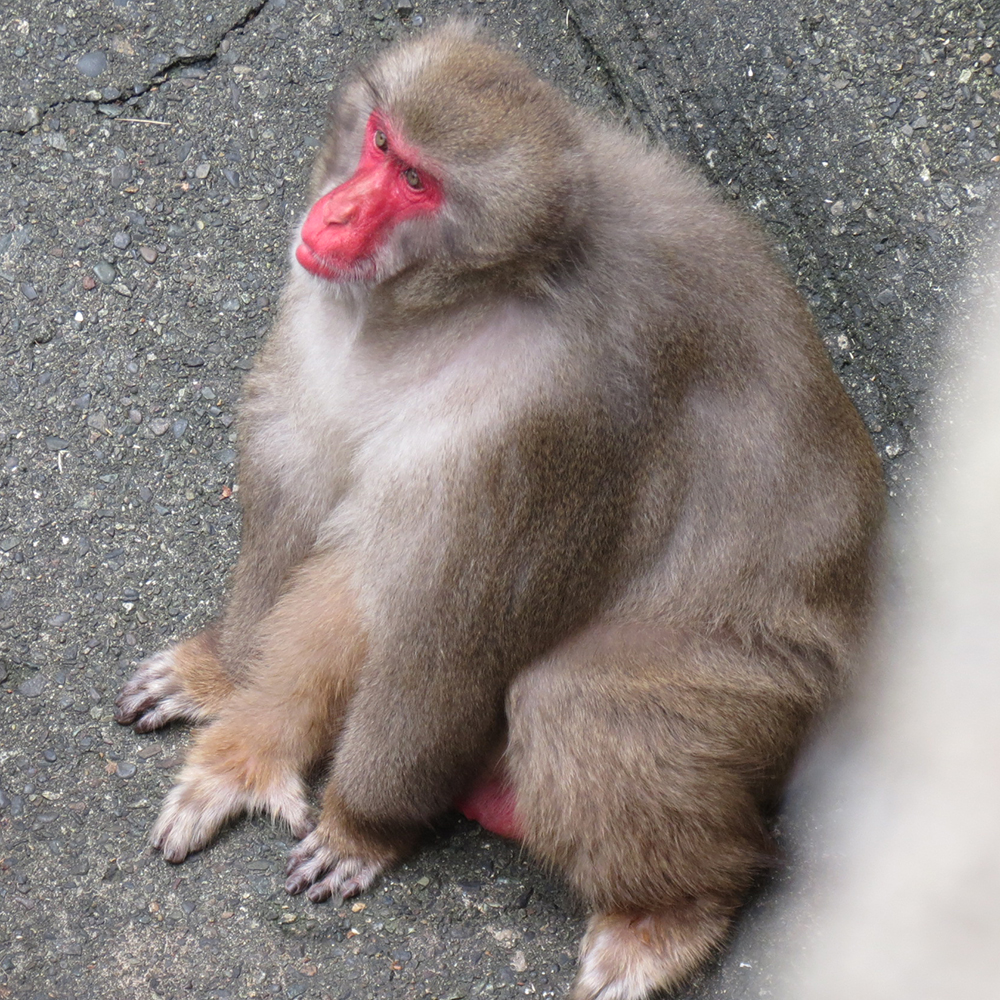
There is no hair on their faces or buttocks, so the skin is exposed. When they are young, they are pale pink, but when they become adults, the blood flowing through the capillaries under the skin becomes visible and they appear red. During mating season, both males and females turn a bright red. Furthermore, during mating season, females' redness intensifies due to the action of hormones around the time of ovulation.
cheek pouch
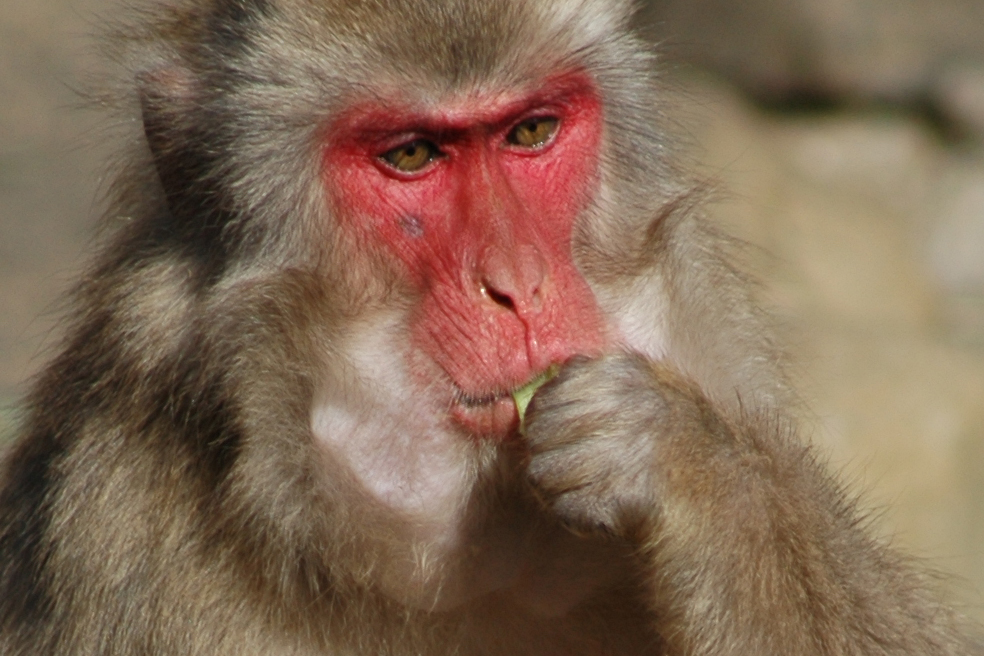
Inside their cheeks, they have cheek pouches to temporarily store food that they put in their mouths. When they are in a hurry, they will not swallow the food but will instead push it into their cheek pouches and slowly spit it out later to eat. In this way, they prevent other individuals from stealing their food.
calluses on the buttocks
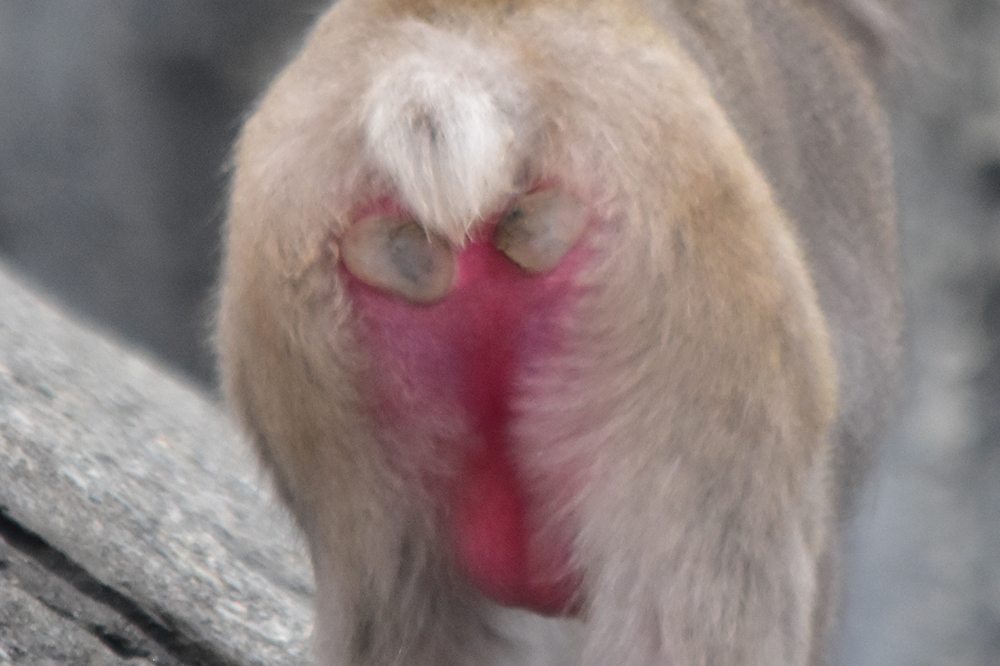
Both males and females have whitish calluses on both sides of their buttocks. They are made of hard connective tissue attached to the tip of the ischial tuberosity of the pelvis. They are fairly soft at birth, but harden as they grow. They are mainly used when sitting on tree branches, etc.
short tail
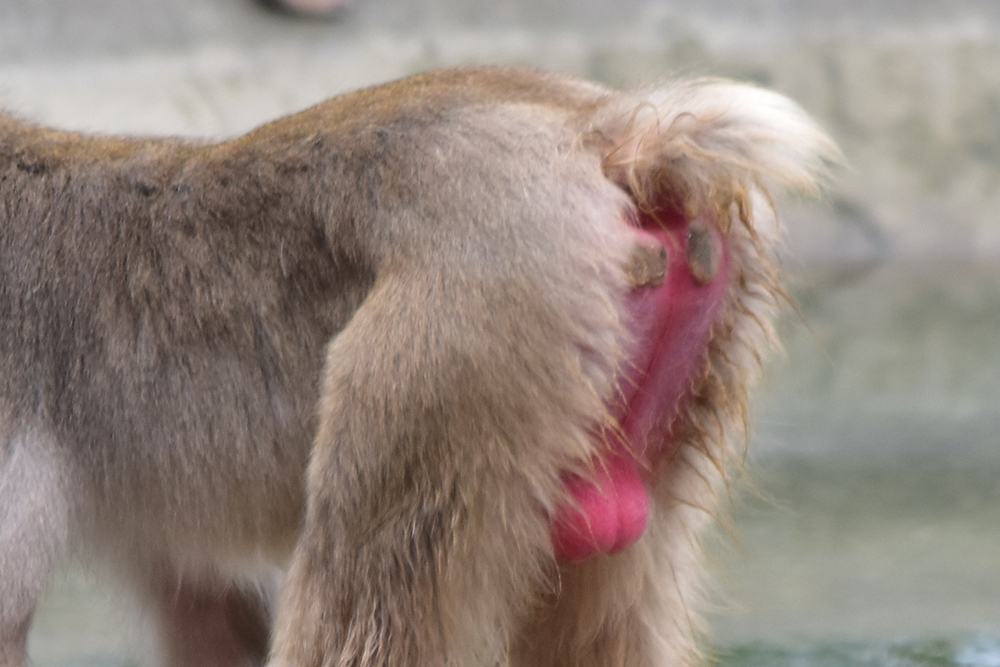
Even adults only reach about 10cm in length, and it is thought that this shortening occurred to help them survive the cold in winter.
cry
Along with a wide range of facial expressions, more than 30 different sounds have been reported, including shouts, roars, whispers, and calls.