

Zoo Stock Species and the Red List
Zoo Stock Species and the Red List
Zoo Stock

This indicates that the species is included in the Second Zoo Stock Plan, which was formulated by the Tokyo Metropolitan Government in 2018. The plan sets goals for the next 10 years in three areas: "species conservation," "contribution to wildlife conservation," and "environmental education and conservation awareness." 124 animal species are included.
What is the Red List?
Based on scientific research, this is a list of wildlife classified by rank (category) indicating the degree of risk of extinction.
Livng Things Encyclopedia shows the categories (mainland and islands) assessed by the IUCN (International Union for Conservation of Nature) at the global level, the Ministry of the Environment for Japan, and the Tokyo Metropolitan Government for Tokyo.
The higher the category in each table, the higher the risk of extinction, and CR, EN, and VU are the three categories known as "endangered species." In Tokyo, species that are not at the NT (near threatened) level but are relatively rare are considered "species of concern."
|
IUCN categories |
|
|---|---|
|
EX |
extinction |
|
EW |
Extinction in the wild |
|
CR+EN |
— |
|
CR |
Serious crisis |
|
EN |
crisis |
|
VU |
emergency |
|
NT |
Near Threatened |
|
LC・○ |
Low Concern |
|
DD |
Data shortage |
|
LP |
— |
|
Japan (Ministry of the Environment) Category |
|
|---|---|
|
EX |
extinction |
|
EW |
Extinction in the wild |
|
CR+EN |
Endangered species |
|
CR |
Critically Endangered |
|
EN |
Endangered species |
|
VU |
Endangered species |
|
NT |
Near Threatened |
|
LC・○ |
— |
|
DD |
Lack of information |
|
LP |
Endangered |
|
Tokyo Category |
|
|---|---|
|
EX |
extinction |
|
EW |
Extinction in the wild |
|
CR+EN |
Endangered species |
|
CR |
Critically Endangered |
|
EN |
Endangered species |
|
VU |
Endangered species |
|
NT |
Near Threatened |
|
LC・○ |
Unranked |
|
DD |
Lack of information |
|
LP |
Endangered |
Creatures at Tama Zoo
Creatures at Tama Zoo
Indian Peafowl
Indian Peafowl
Pavo cristatus
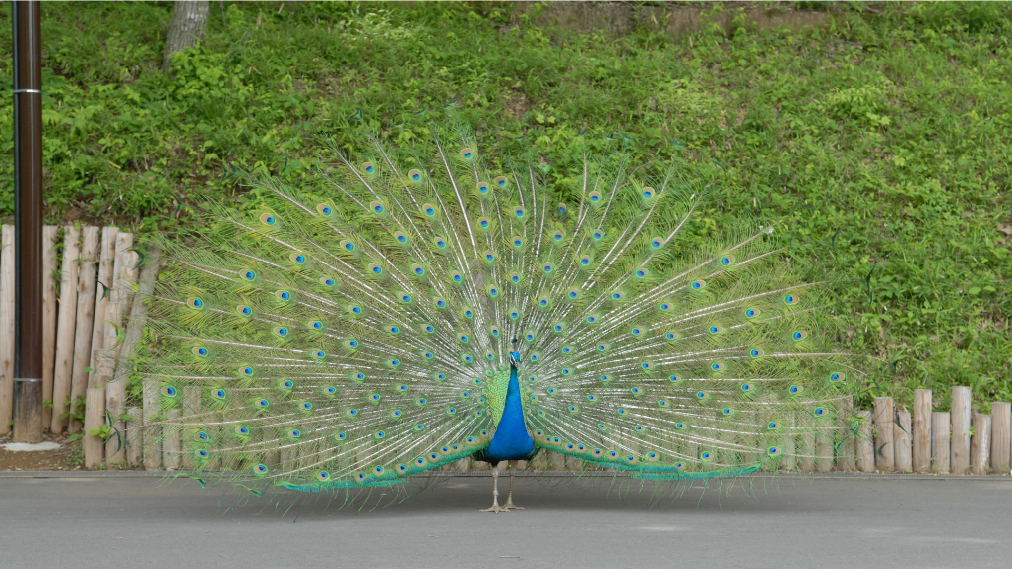
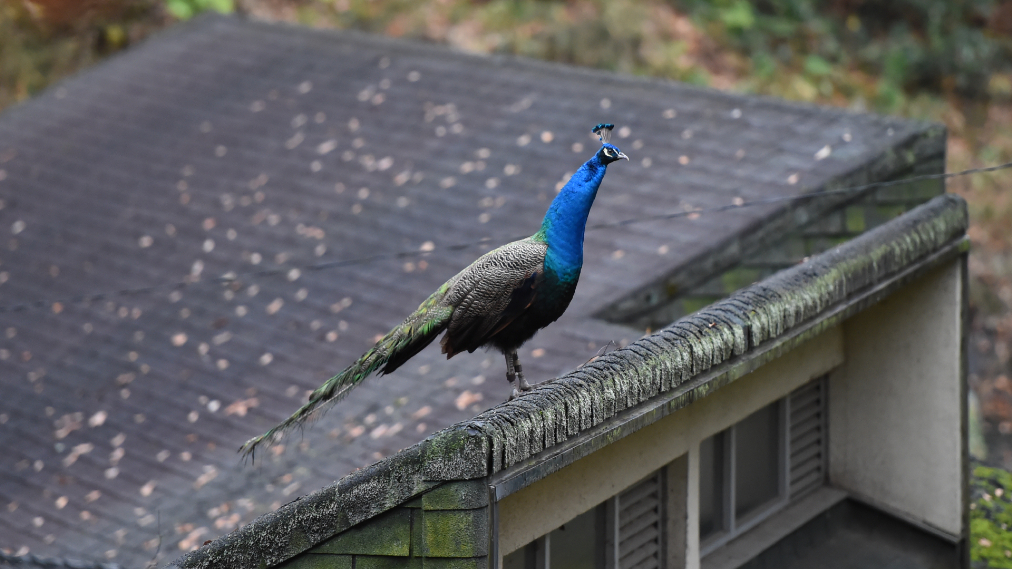
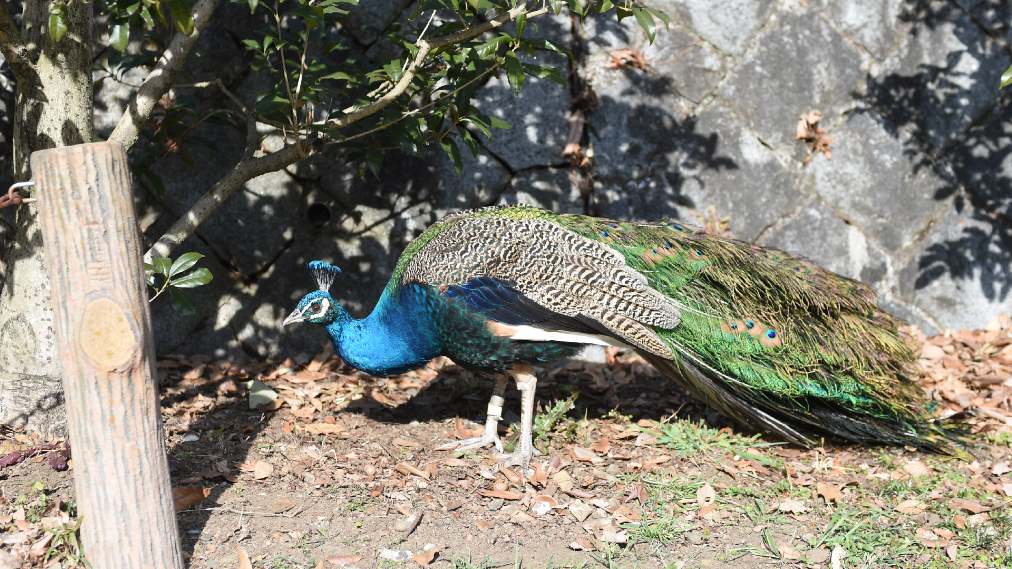
This bird is loved and kept in gardens and parks around the world. During the breeding season, males spread their rump feathers to attract females. A single male and four to five females form small flocks, laying 8 to 20 eggs in a hollow in the bush and guarding the nest. After the breeding season ends, males live with other males, while females form groups with their young. At night, they sleep on specific tree branches.
| classification | Aves, Galliformes, Phasianidae |
|---|---|
| English name | Indian Peafowl |
| distribution | India, Sri Lanka, Pakistan, Nepal, Eurasian Moorhen |
| Residence | Slightly open areas in forests, low mountain forests, grasslands, and farmlands |
| Size |
Total length: Males 1.8-2.3m, females 0.9-1m
Weight: Approximately 4kg |
| food | Grass, nuts, fruits, young shoots, insects, etc. |
| Red List |
IUCN: LC (Least Concern)
|
About the male's rump feathers (upper tail feathers)
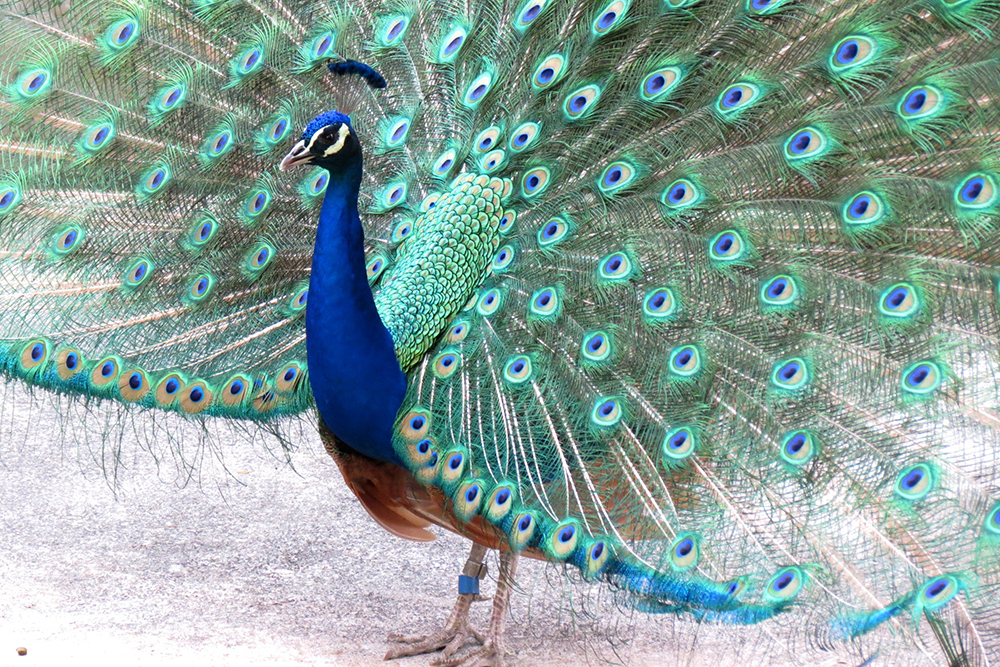
There is one distinctive eyeball pattern on each upper tail covert, so each bird has about 150. When the breeding season ends and molting begins, the upper tail coverts are the first to fall out.