

Zoo Stock Species and the Red List
Zoo Stock Species and the Red List
Zoo Stock

This indicates that the species is included in the Second Zoo Stock Plan, which was formulated by the Tokyo Metropolitan Government in 2018. The plan sets goals for the next 10 years in three areas: "species conservation," "contribution to wildlife conservation," and "environmental education and conservation awareness." 124 animal species are included.
What is the Red List?
Based on scientific research, this is a list of wildlife classified by rank (category) indicating the degree of risk of extinction.
Livng Things Encyclopedia shows the categories (mainland and islands) assessed by the IUCN (International Union for Conservation of Nature) at the global level, the Ministry of the Environment for Japan, and the Tokyo Metropolitan Government for Tokyo.
The higher the category in each table, the higher the risk of extinction, and CR, EN, and VU are the three categories known as "endangered species." In Tokyo, species that are not at the NT (near threatened) level but are relatively rare are considered "species of concern."
|
IUCN categories |
|
|---|---|
|
EX |
extinction |
|
EW |
Extinction in the wild |
|
CR+EN |
— |
|
CR |
Serious crisis |
|
EN |
crisis |
|
VU |
emergency |
|
NT |
Near Threatened |
|
LC・○ |
Low Concern |
|
DD |
Data shortage |
|
LP |
— |
|
Japan (Ministry of the Environment) Category |
|
|---|---|
|
EX |
extinction |
|
EW |
Extinction in the wild |
|
CR+EN |
Endangered species |
|
CR |
Critically Endangered |
|
EN |
Endangered species |
|
VU |
Endangered species |
|
NT |
Near Threatened |
|
LC・○ |
— |
|
DD |
Lack of information |
|
LP |
Endangered |
|
Tokyo Category |
|
|---|---|
|
EX |
extinction |
|
EW |
Extinction in the wild |
|
CR+EN |
Endangered species |
|
CR |
Critically Endangered |
|
EN |
Endangered species |
|
VU |
Endangered species |
|
NT |
Near Threatened |
|
LC・○ |
Unranked |
|
DD |
Lack of information |
|
LP |
Endangered |
Creatures at Tama Zoo
Creatures at Tama Zoo
Inca Tern
Inca Tern
Larosterna inca
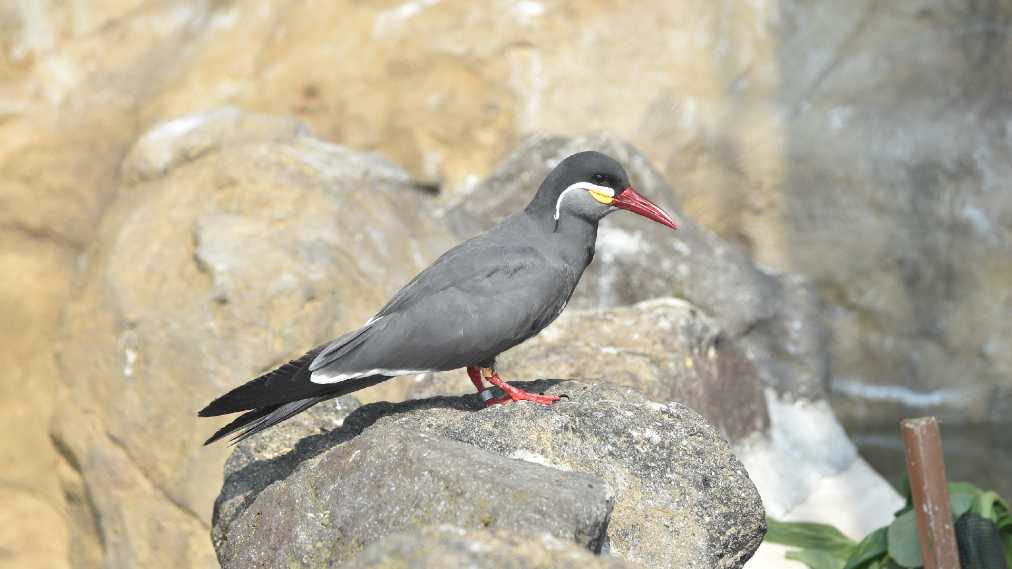
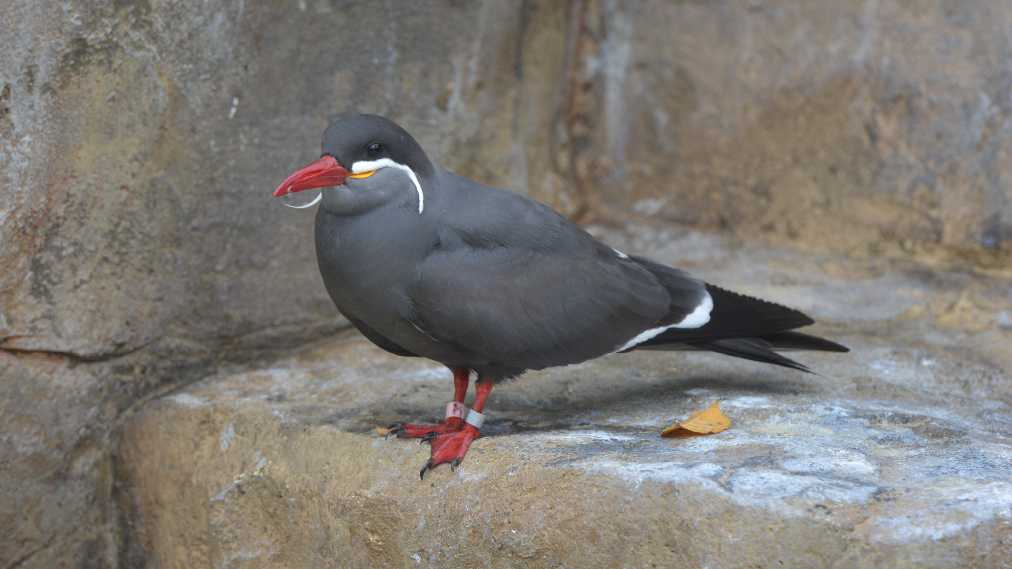
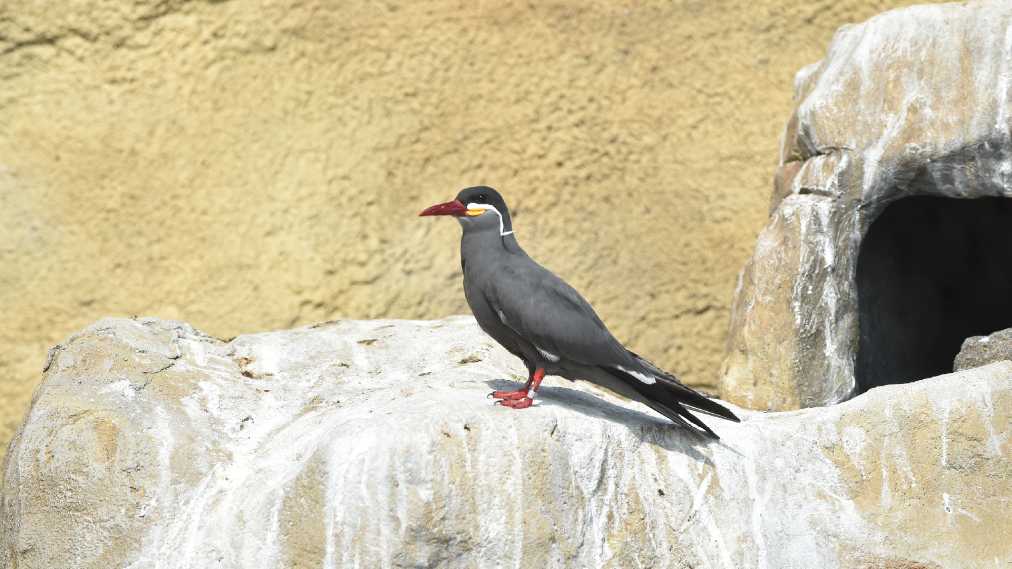
They live on rocky coasts and islands. They nest in rock crevices and hollows, sometimes using old nests of Humboldt Penguin. They incubate one or two eggs for about four weeks, and the chicks leave the nest after seven weeks. They form large flocks with seagulls, numbering several thousand birds. Their main diet is fish, and they fly slowly over the water, hovering in mid-air while searching for prey. When they find it, they swoop down to grab it from the surface and eat it.
| classification | Birds, Charadriiformes, Laridae |
|---|---|
| English name | Inca Tern |
| distribution | Pacific coast from Ecuador to Chile |
| Residence | Rocky shore and sandy beach |
| Size |
Total length: 39-42cm
Weight: 175-200g |
| food | Small fish and plankton |
| Red List |
IUCN: NT (Near Threatened)
|
whisker-like feathers
They are characterized by white whisker-like feathers that extend from under their eyes backward, wrap around and hang down towards their chest. Both males and females have these whisker-like ornamental feathers.