

Zoo Stock Species and the Red List
Zoo Stock Species and the Red List
Zoo Stock

This indicates that the species is included in the Second Zoo Stock Plan, which was formulated by the Tokyo Metropolitan Government in 2018. The plan sets goals for the next 10 years in three areas: "species conservation," "contribution to wildlife conservation," and "environmental education and conservation awareness." 124 animal species are included.
What is the Red List?
Based on scientific research, this is a list of wildlife classified by rank (category) indicating the degree of risk of extinction.
Livng Things Encyclopedia shows the categories (mainland and islands) assessed by the IUCN (International Union for Conservation of Nature) at the global level, the Ministry of the Environment for Japan, and the Tokyo Metropolitan Government for Tokyo.
The higher the category in each table, the higher the risk of extinction, and CR, EN, and VU are the three categories known as "endangered species." In Tokyo, species that are not at the NT (near threatened) level but are relatively rare are considered "species of concern."
|
IUCN categories |
|
|---|---|
|
EX |
extinction |
|
EW |
Extinction in the wild |
|
CR+EN |
— |
|
CR |
Serious crisis |
|
EN |
crisis |
|
VU |
emergency |
|
NT |
Near Threatened |
|
LC・○ |
Low Concern |
|
DD |
Data shortage |
|
LP |
— |
|
Japan (Ministry of the Environment) Category |
|
|---|---|
|
EX |
extinction |
|
EW |
Extinction in the wild |
|
CR+EN |
Endangered species |
|
CR |
Critically Endangered |
|
EN |
Endangered species |
|
VU |
Endangered species |
|
NT |
Near Threatened |
|
LC・○ |
— |
|
DD |
Lack of information |
|
LP |
Endangered |
|
Tokyo Category |
|
|---|---|
|
EX |
extinction |
|
EW |
Extinction in the wild |
|
CR+EN |
Endangered species |
|
CR |
Critically Endangered |
|
EN |
Endangered species |
|
VU |
Endangered species |
|
NT |
Near Threatened |
|
LC・○ |
Unranked |
|
DD |
Lack of information |
|
LP |
Endangered |
Creatures at Tama Zoo
Creatures at Tama Zoo
Greylag Goose
Greylag Goose
Answer answer
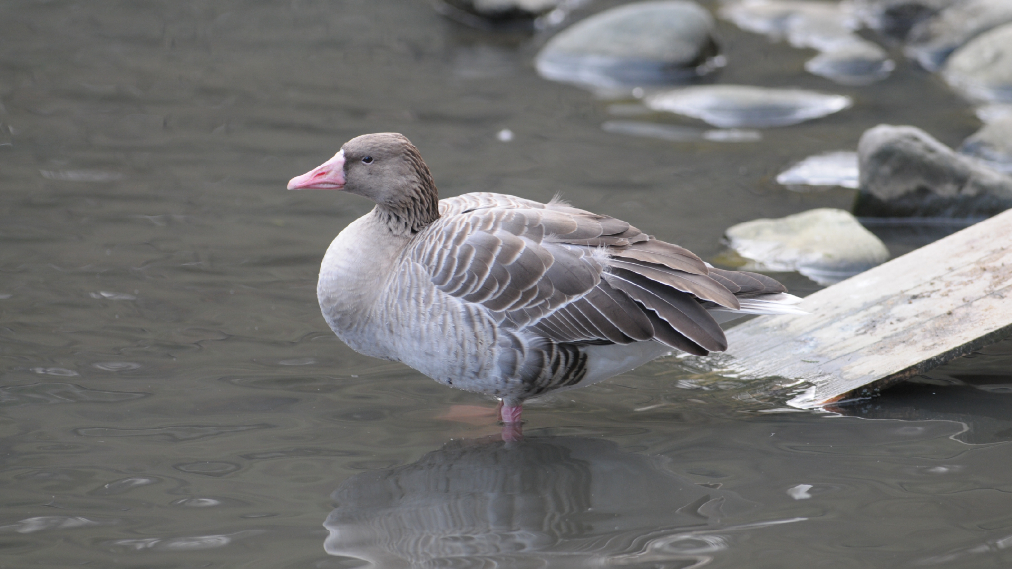
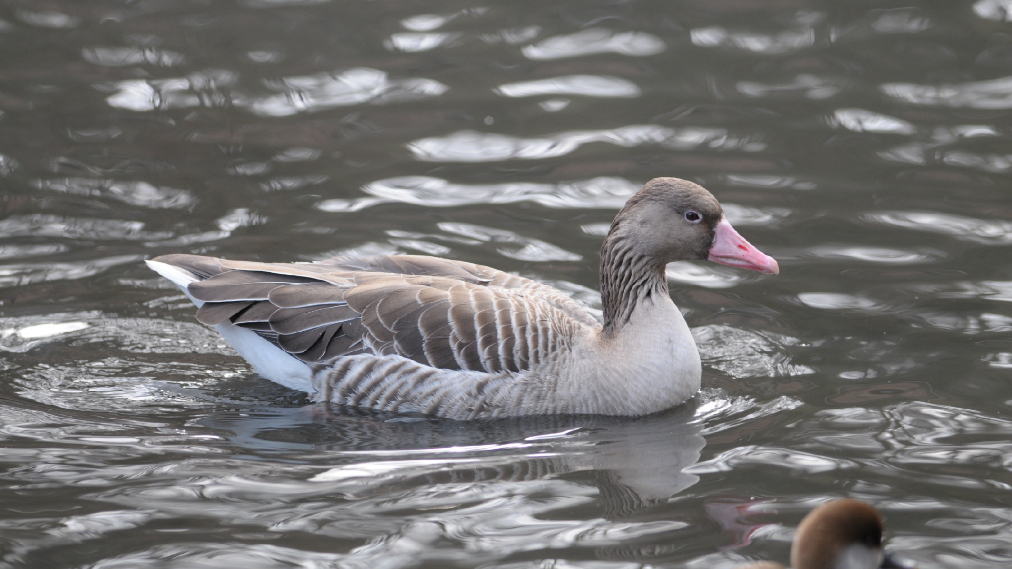
This relatively large goose is the ancestor of the European domestic goose. Its beak and legs are pink, and its body is generally grey with stripes on its sides. Breeding begins in March or April. It builds nests in reed beds or on the ground made of grass stalks, leaves and feathers, and lays 4 to 6 eggs.
| classification | Aves, Anseriformes, Anatidae |
|---|---|
| English name | Greylag Goose |
| distribution | Breeding locations: Northern and central Europe, Turkey, western Russia to northeastern China, Mongolia Wintering areas: Northern India, Southern China, Japan |
| Residence | Breeding season: Lakes and marshes Wintering season: lakes, marshes, farmlands, grasslands |
| Size |
全長:76~89cm
翼開長:147~180cm 体重:2.5~4.1kg |
| food | Grass blades, stems, roots, seeds, and grains |
| Red List |
IUCN: LC (Least Concern)
|
How to distinguish between Tundra Bean Goose, Greater White-fronted Goose and Lesser White-fronted Goose
The most obvious feature is the pink legs.