

Zoo Stock Species and the Red List
Zoo Stock Species and the Red List
Zoo Stock
This indicates that the species is included in the Second Zoo Stock Plan, which was formulated by the Tokyo Metropolitan Government in 2018. The plan sets goals for the next 10 years in three areas: "species conservation," "contribution to wildlife conservation," and "environmental education and conservation awareness." 124 animal species are included.
What is the Red List?
Based on scientific research, this is a list of wildlife classified by rank (category) indicating the degree of risk of extinction.
Livng Things Encyclopedia shows the categories (mainland and islands) assessed by the IUCN (International Union for Conservation of Nature) at the global level, the Ministry of the Environment for Japan, and the Tokyo Metropolitan Government for Tokyo.
The higher the category in each table, the higher the risk of extinction, and CR, EN, and VU are the three categories known as "endangered species." In Tokyo, species that are not at the NT (near threatened) level but are relatively rare are considered "species of concern."
|
IUCN categories |
|
|---|---|
|
EX |
extinction |
|
EW |
Extinction in the wild |
|
CR+EN |
— |
|
CR |
Serious crisis |
|
EN |
crisis |
|
VU |
emergency |
|
NT |
Near Threatened |
|
LC・○ |
Low Concern |
|
DD |
Data shortage |
|
LP |
— |
|
Japan (Ministry of the Environment) Category |
|
|---|---|
|
EX |
extinction |
|
EW |
Extinction in the wild |
|
CR+EN |
Endangered species |
|
CR |
Critically Endangered |
|
EN |
Endangered species |
|
VU |
Endangered species |
|
NT |
Near Threatened |
|
LC・○ |
— |
|
DD |
Lack of information |
|
LP |
Endangered |
|
Tokyo Category |
|
|---|---|
|
EX |
extinction |
|
EW |
Extinction in the wild |
|
CR+EN |
Endangered species |
|
CR |
Critically Endangered |
|
EN |
Endangered species |
|
VU |
Endangered species |
|
NT |
Near Threatened |
|
LC・○ |
Unranked |
|
DD |
Lack of information |
|
LP |
Endangered |
Creatures at Tama Zoo
Creatures at Tama Zoo
Giant Leaf Insect
Giant Leaf Insect
Phyllium giganteum
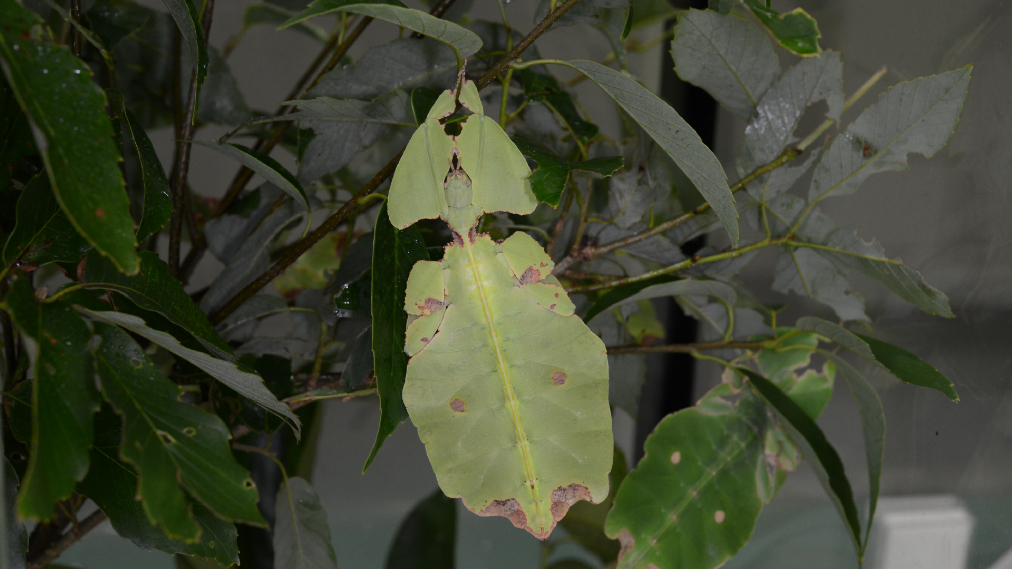
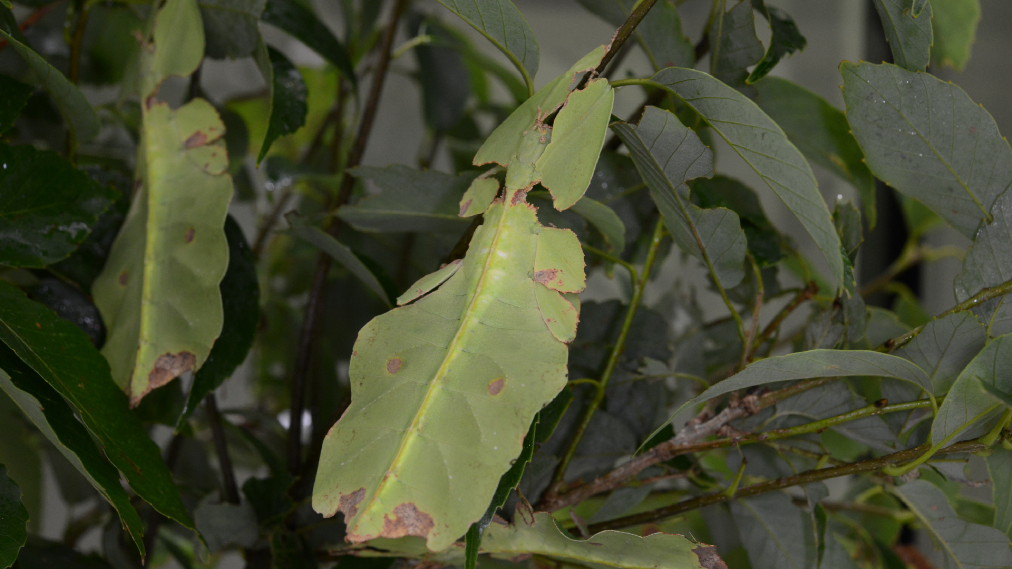
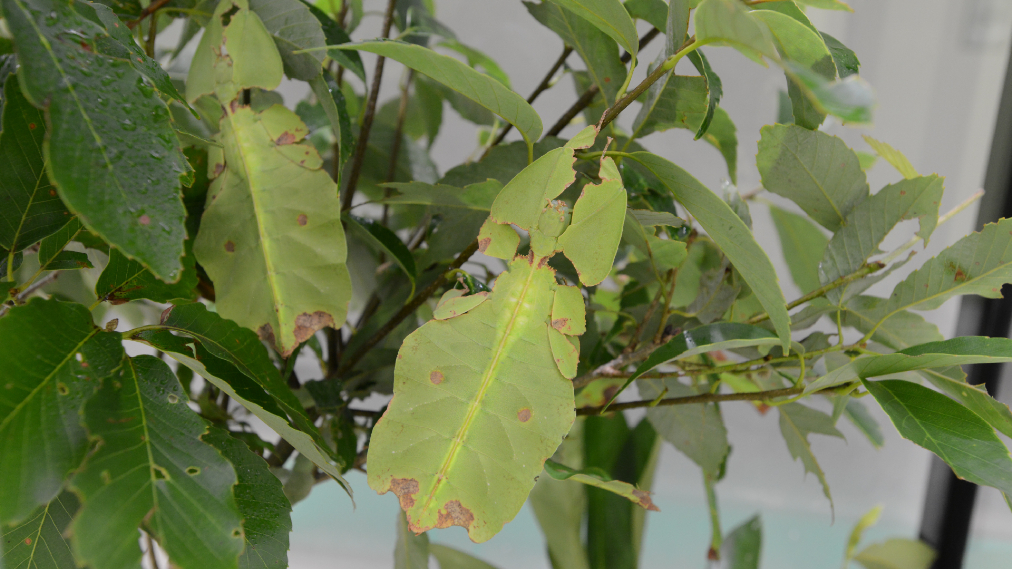
They are a bright yellow-green color and, as their name suggests, resemble leaves. Female Giant Leaf Insect beetles can reproduce without mating with males, and it is rare for males to be born. Their eggs are black, about 9 mm long, and similar in shape to feces, and they are laid carelessly from the trees, dropping one after another.
| classification | Insecta, Phasmoda, Chrysomelidae |
|---|---|
| English name | Giant Leaf Insect |
| distribution | Southeast Asia |
| Residence | tropical rainforest |
| Size |
Body length: Approximately 110 mm
|
| food | plant |
| Red List |
Unrated
|
Similar to a leaf
Its body and wings have veins that resemble leaf veins, and it is not only green in color, but also has brown, withered areas that look like real leaves. Its body is also partially sunken, giving it the appearance of having been eaten by insects. When it moves, it sways back and forth, moving like a leaf blown by the wind.
Let's explore
Because they look so similar to leaves, some people have difficulty finding them even when they are on display. The adult insects are relatively large, about 10cm in length, so please try to find them.