

Zoo Stock Species and the Red List
Zoo Stock Species and the Red List
Zoo Stock
This indicates that the species is included in the Second Zoo Stock Plan, which was formulated by the Tokyo Metropolitan Government in 2018. The plan sets goals for the next 10 years in three areas: "species conservation," "contribution to wildlife conservation," and "environmental education and conservation awareness." 124 animal species are included.
What is the Red List?
Based on scientific research, this is a list of wildlife classified by rank (category) indicating the degree of risk of extinction.
Livng Things Encyclopedia shows the categories (mainland and islands) assessed by the IUCN (International Union for Conservation of Nature) at the global level, the Ministry of the Environment for Japan, and the Tokyo Metropolitan Government for Tokyo.
The higher the category in each table, the higher the risk of extinction, and CR, EN, and VU are the three categories known as "endangered species." In Tokyo, species that are not at the NT (near threatened) level but are relatively rare are considered "species of concern."
|
IUCN categories |
|
|---|---|
|
EX |
extinction |
|
EW |
Extinction in the wild |
|
CR+EN |
— |
|
CR |
Serious crisis |
|
EN |
crisis |
|
VU |
emergency |
|
NT |
Near Threatened |
|
LC・○ |
Low Concern |
|
DD |
Data shortage |
|
LP |
— |
|
Japan (Ministry of the Environment) Category |
|
|---|---|
|
EX |
extinction |
|
EW |
Extinction in the wild |
|
CR+EN |
Endangered species |
|
CR |
Critically Endangered |
|
EN |
Endangered species |
|
VU |
Endangered species |
|
NT |
Near Threatened |
|
LC・○ |
— |
|
DD |
Lack of information |
|
LP |
Endangered |
|
Tokyo Category |
|
|---|---|
|
EX |
extinction |
|
EW |
Extinction in the wild |
|
CR+EN |
Endangered species |
|
CR |
Critically Endangered |
|
EN |
Endangered species |
|
VU |
Endangered species |
|
NT |
Near Threatened |
|
LC・○ |
Unranked |
|
DD |
Lack of information |
|
LP |
Endangered |
Creatures at Tama Zoo
Creatures at Tama Zoo
Eurasian Least Shrew
Subspecies: Eurasian Least Shrew
Eurasian Least Shrew
Subspecies: Eurasian Least ShrewSorex minutissimus hawkeri
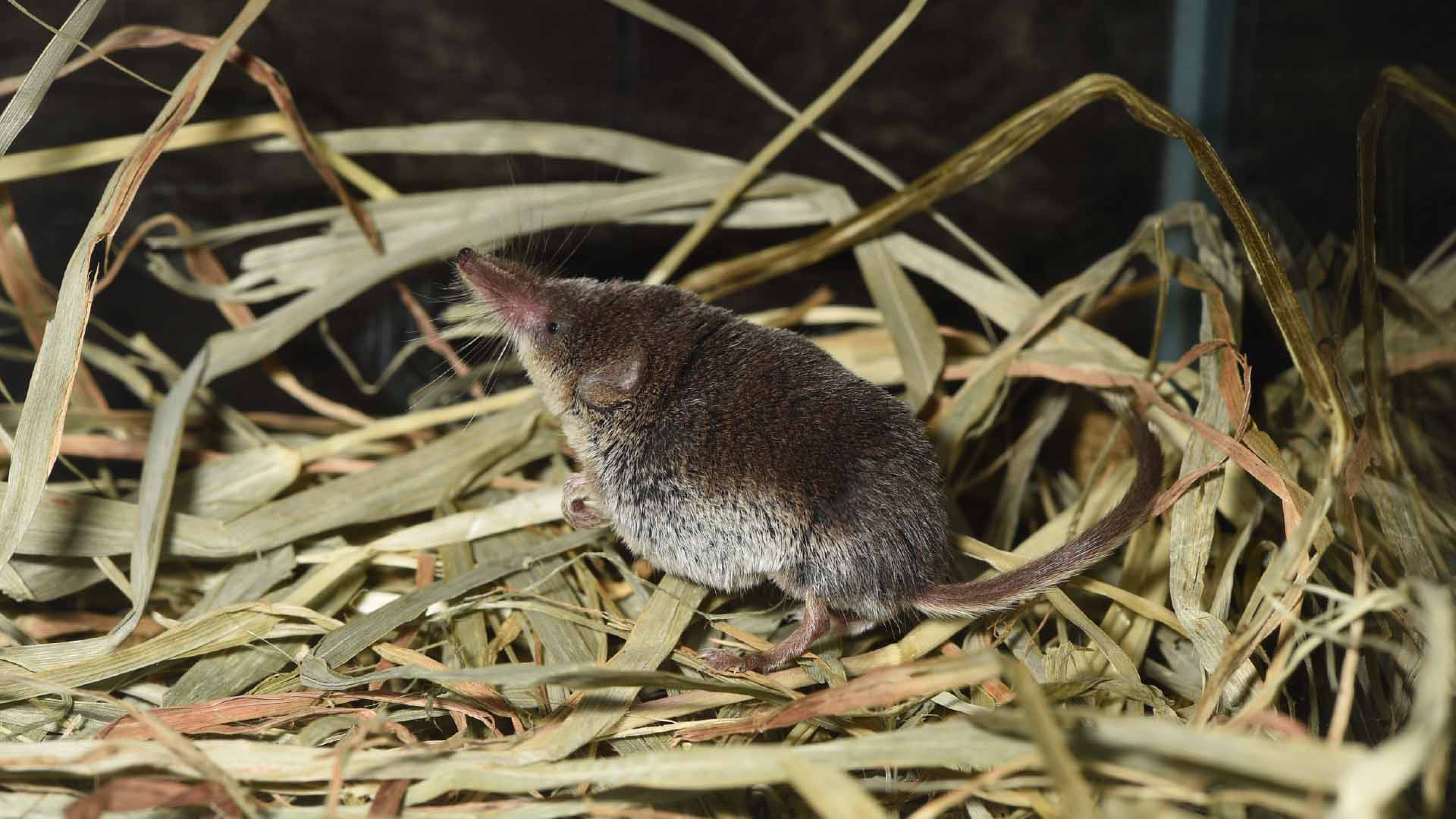
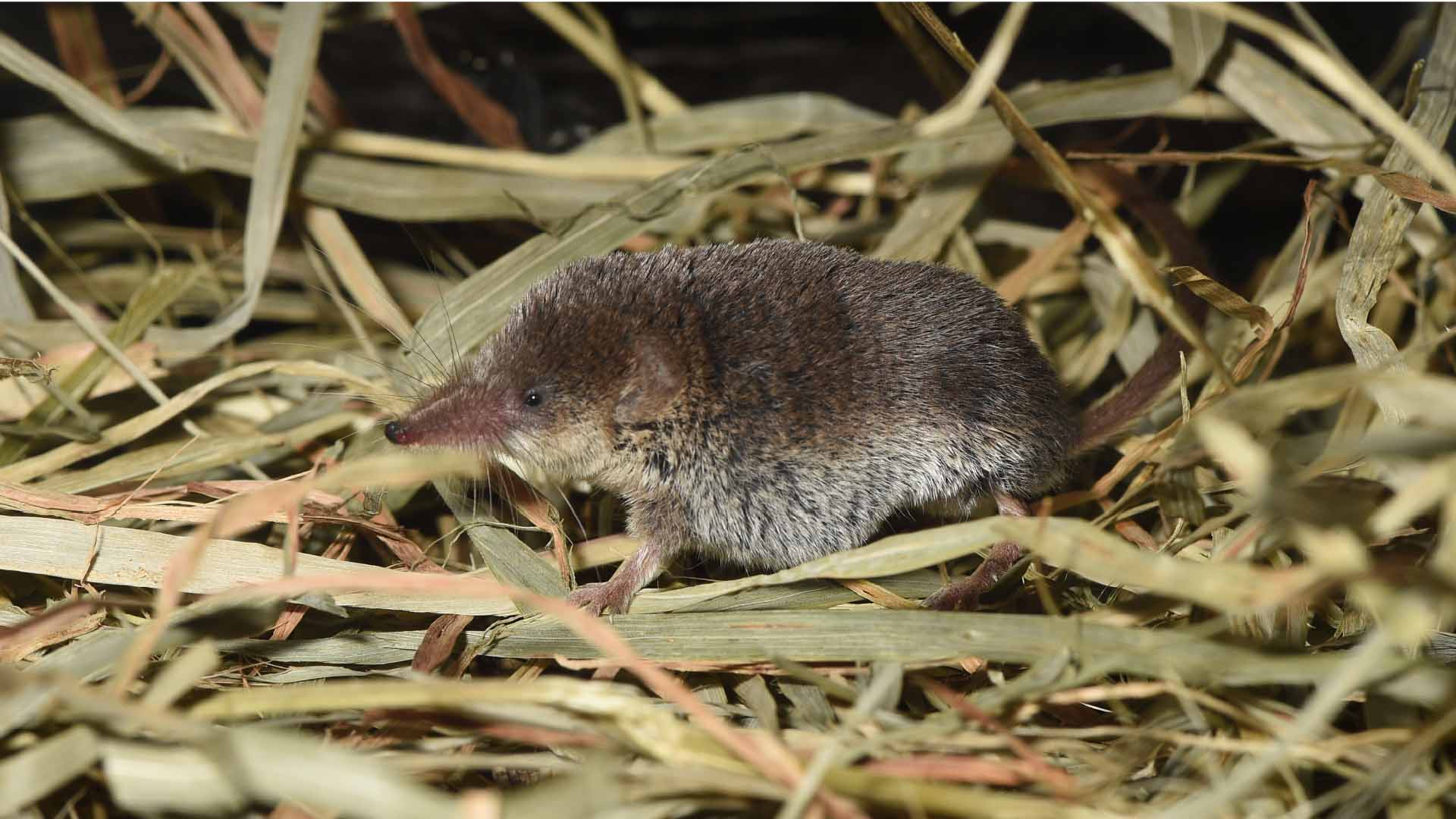
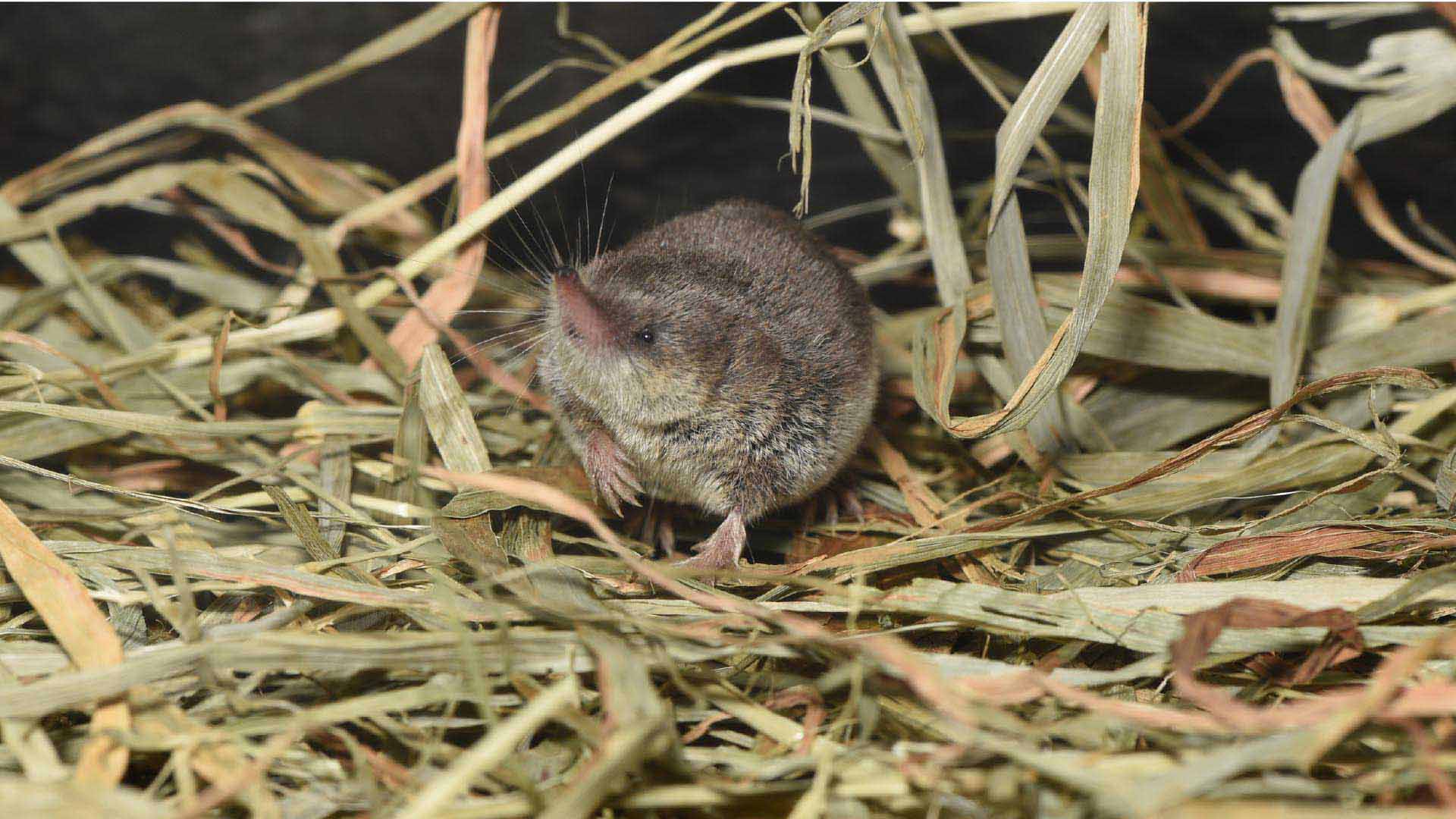
It is not a rat but is more closely related to a mole. It is a subspecies of Eurasian Least Shrew which is widely distributed in northern Eurasia. It is one of the smallest mammal species, and much of its ecology remains a mystery.
| classification | Mammalia, Order Soricidae, Family Soricidae |
|---|---|
| English name | Eurasian Least Shrew |
| distribution | Japan (Hokkaido) |
| Residence | Grasslands, wetlands, shrublands |
| Size |
頭胴長:45~49mm
尾長:27~31mm 体重:1.5~1.8g |
| food | Earthworms, insects, spiders, etc. |
| Red List |
IUCN: LC (Least Concern)
|
About the Japanese name
One theory is that the Japanese name "Eurasian Least Shrew" was given to this subspecies, which is found only in Hokkaido, because the collection location listed on the label attached to the type specimen, "Ezo (Ezo)," was mistaken for "Edo (Edo)."
Breeding efforts for shrews at Tama Zoo
In 2007, Hama-naka Town in Akkeshi County, Hokkaido, and Tama Zoo signed a partnership agreement with the aim of elucidating the physiology and ecology of the shrews that live in the town, as well as protecting and raising awareness of their habitat. We are currently working to elucidate the breeding ecology of Long-clawed Shrew and Eurasian Least Shrew which were collected on Kenbokki Island.