

Zoo Stock Species and the Red List
Zoo Stock Species and the Red List
Zoo Stock
This indicates that the species is included in the Second Zoo Stock Plan, which was formulated by the Tokyo Metropolitan Government in 2018. The plan sets goals for the next 10 years in three areas: "species conservation," "contribution to wildlife conservation," and "environmental education and conservation awareness." 124 animal species are included.
What is the Red List?
Based on scientific research, this is a list of wildlife classified by rank (category) indicating the degree of risk of extinction.
Livng Things Encyclopedia shows the categories (mainland and islands) assessed by the IUCN (International Union for Conservation of Nature) at the global level, the Ministry of the Environment for Japan, and the Tokyo Metropolitan Government for Tokyo.
The higher the category in each table, the higher the risk of extinction, and CR, EN, and VU are the three categories known as "endangered species." In Tokyo, species that are not at the NT (near threatened) level but are relatively rare are considered "species of concern."
|
IUCN categories |
|
|---|---|
|
EX |
extinction |
|
EW |
Extinction in the wild |
|
CR+EN |
— |
|
CR |
Serious crisis |
|
EN |
crisis |
|
VU |
emergency |
|
NT |
Near Threatened |
|
LC・○ |
Low Concern |
|
DD |
Data shortage |
|
LP |
— |
|
Japan (Ministry of the Environment) Category |
|
|---|---|
|
EX |
extinction |
|
EW |
Extinction in the wild |
|
CR+EN |
Endangered species |
|
CR |
Critically Endangered |
|
EN |
Endangered species |
|
VU |
Endangered species |
|
NT |
Near Threatened |
|
LC・○ |
— |
|
DD |
Lack of information |
|
LP |
Endangered |
|
Tokyo Category |
|
|---|---|
|
EX |
extinction |
|
EW |
Extinction in the wild |
|
CR+EN |
Endangered species |
|
CR |
Critically Endangered |
|
EN |
Endangered species |
|
VU |
Endangered species |
|
NT |
Near Threatened |
|
LC・○ |
Unranked |
|
DD |
Lack of information |
|
LP |
Endangered |
Creatures at Tama Zoo
Creatures at Tama Zoo
Emu
Emu
Dromaius novaehollandiae
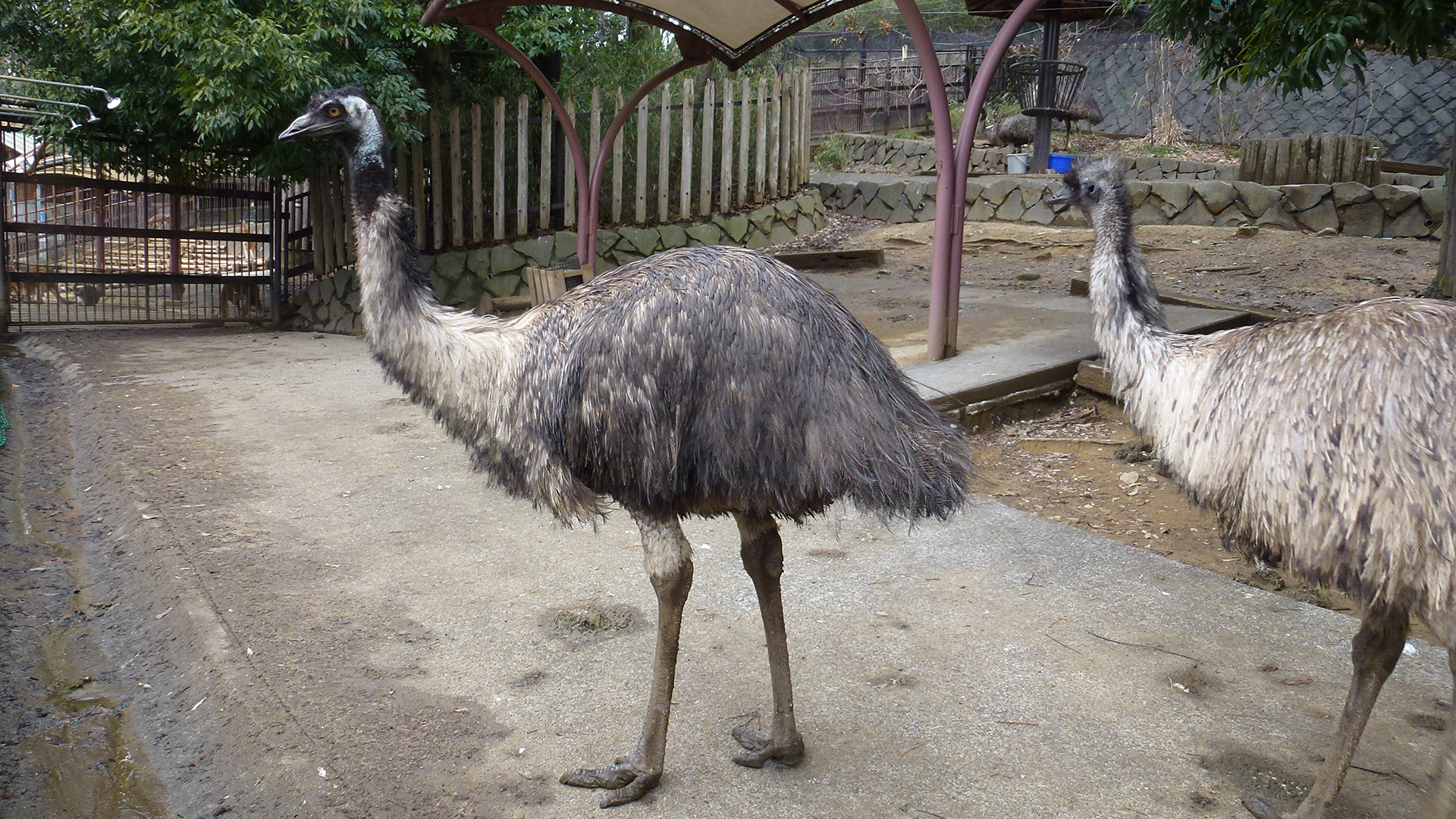
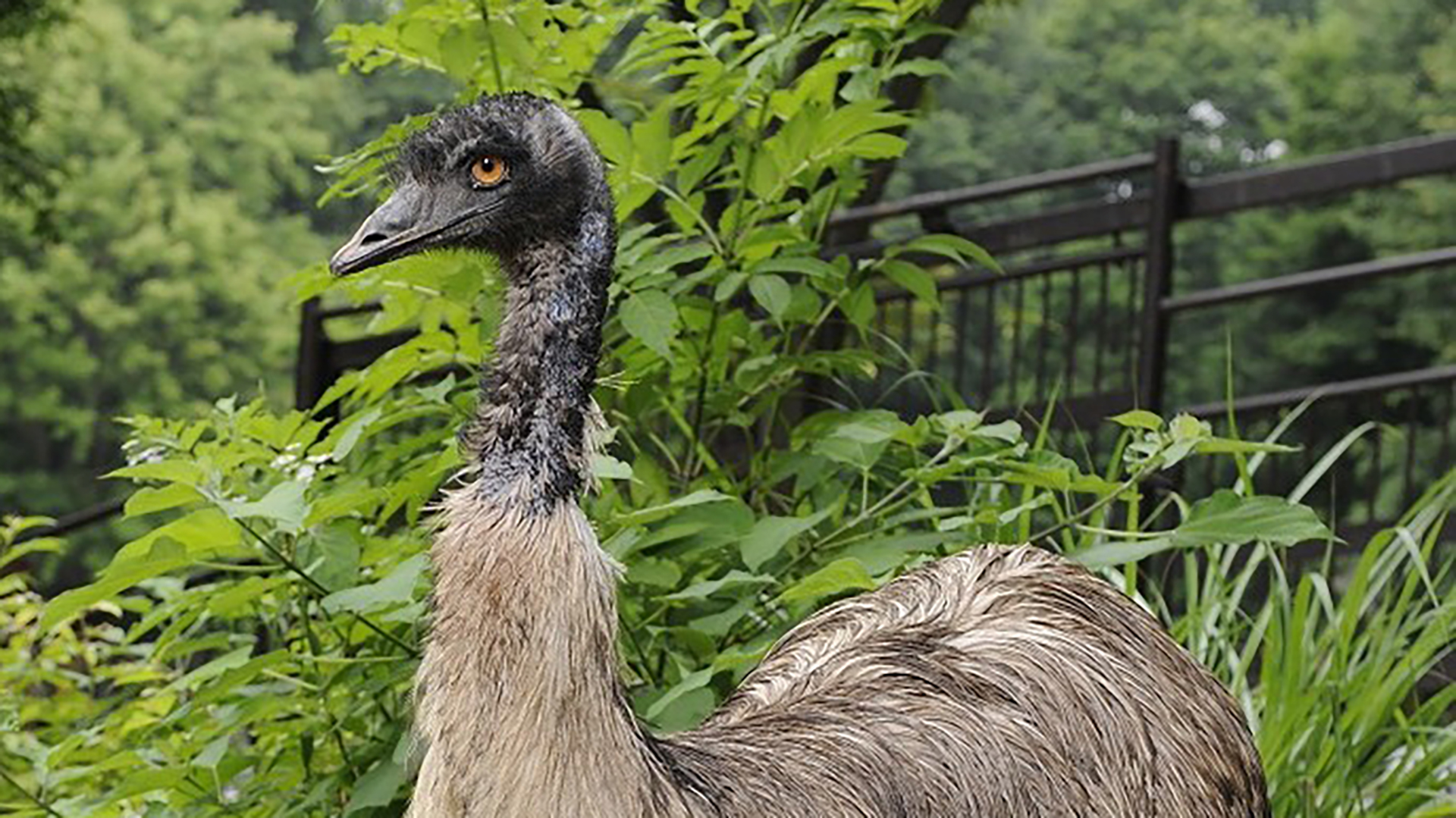
It is the second largest living bird in the world after the ostrich. It has black feathers from its head to its neck, with pale skin visible in some individuals. Its body is brown to gray-brown in color. Its wings are very small and vestigial. It lives alone or in pairs, but can also form flocks of 4 to 9 individuals. It is polyandrous, with females laying 5 to 15 dark green eggs weighing 450 to 650 grams, and the males incubate the eggs and care for the chicks.
| classification | Class Aves, Order Cassowaries, Emu Emu |
|---|---|
| English name | Emu |
| distribution | Australian continent |
| Residence | Various regions, from forests to grasslands, inland to coastal |
| Size |
Total length: 150-190cm
Weight: 30-55 kg |
| food | Seeds, fruits, shoots, grasses, insects |
| Red List |
IUCN: LC (Least Concern)
|
cry
Males and females have different calls. Females generally make a booming, drum-like sound, while males make a low, grunting sound. When they call, their throats expand.
feather
Unlike other birds, Emu have two pairs of feathers.
feet
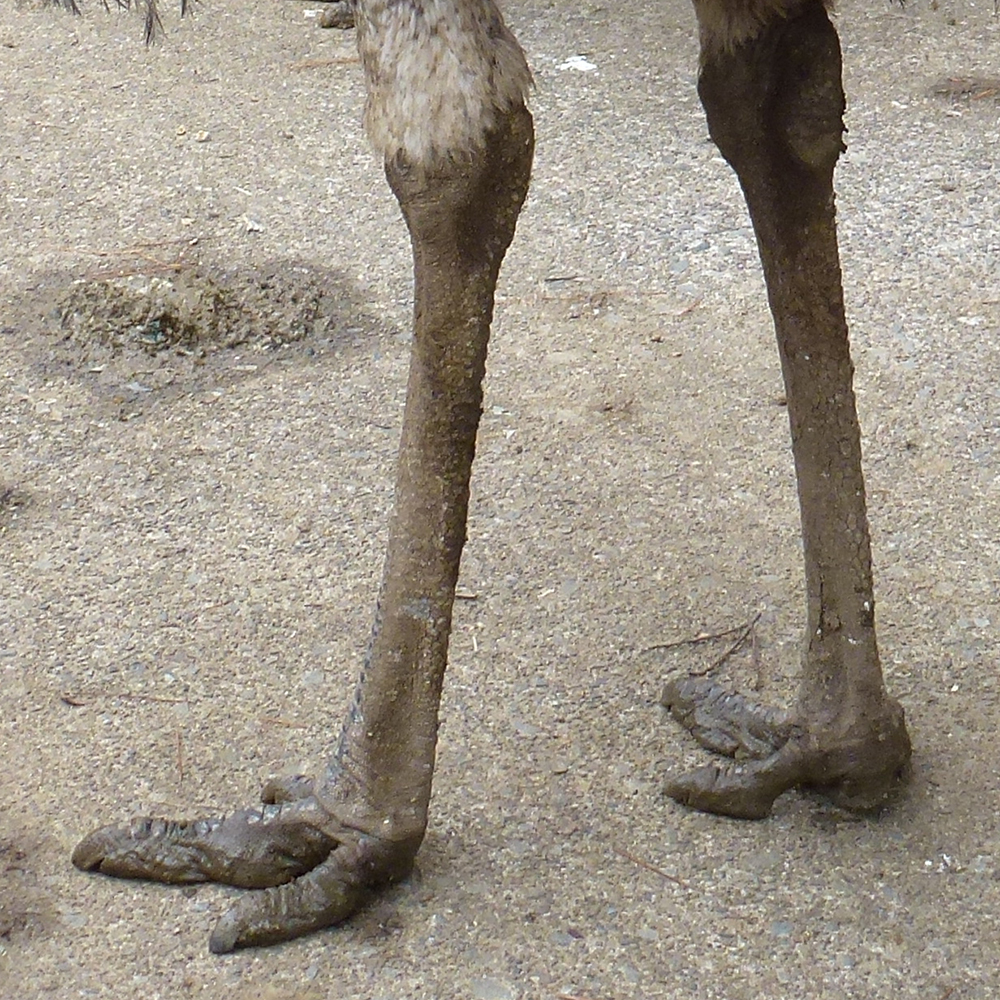
While most birds have four toes, Emu have three.
Island extinction
Emu population on the Australian mainland is currently very large and stable. However, Emu that once inhabited Kawakawa, Kangaroo Island, and King Island became extinct after the arrival of European settlers in the 19th century.