

Zoo Stock Species and the Red List
Zoo Stock Species and the Red List
Zoo Stock

This indicates that the species is included in the Second Zoo Stock Plan, which was formulated by the Tokyo Metropolitan Government in 2018. The plan sets goals for the next 10 years in three areas: "species conservation," "contribution to wildlife conservation," and "environmental education and conservation awareness." 124 animal species are included.
What is the Red List?
Based on scientific research, this is a list of wildlife classified by rank (category) indicating the degree of risk of extinction.
Livng Things Encyclopedia shows the categories (mainland and islands) assessed by the IUCN (International Union for Conservation of Nature) at the global level, the Ministry of the Environment for Japan, and the Tokyo Metropolitan Government for Tokyo.
The higher the category in each table, the higher the risk of extinction, and CR, EN, and VU are the three categories known as "endangered species." In Tokyo, species that are not at the NT (near threatened) level but are relatively rare are considered "species of concern."
|
IUCN categories |
|
|---|---|
|
EX |
extinction |
|
EW |
Extinction in the wild |
|
CR+EN |
— |
|
CR |
Serious crisis |
|
EN |
crisis |
|
VU |
emergency |
|
NT |
Near Threatened |
|
LC・○ |
Low Concern |
|
DD |
Data shortage |
|
LP |
— |
|
Japan (Ministry of the Environment) Category |
|
|---|---|
|
EX |
extinction |
|
EW |
Extinction in the wild |
|
CR+EN |
Endangered species |
|
CR |
Critically Endangered |
|
EN |
Endangered species |
|
VU |
Endangered species |
|
NT |
Near Threatened |
|
LC・○ |
— |
|
DD |
Lack of information |
|
LP |
Endangered |
|
Tokyo Category |
|
|---|---|
|
EX |
extinction |
|
EW |
Extinction in the wild |
|
CR+EN |
Endangered species |
|
CR |
Critically Endangered |
|
EN |
Endangered species |
|
VU |
Endangered species |
|
NT |
Near Threatened |
|
LC・○ |
Unranked |
|
DD |
Lack of information |
|
LP |
Endangered |
Creatures at Tama Zoo
Creatures at Tama Zoo
Common Brushtail
Common Brushtail
Trichosurus vulpecula
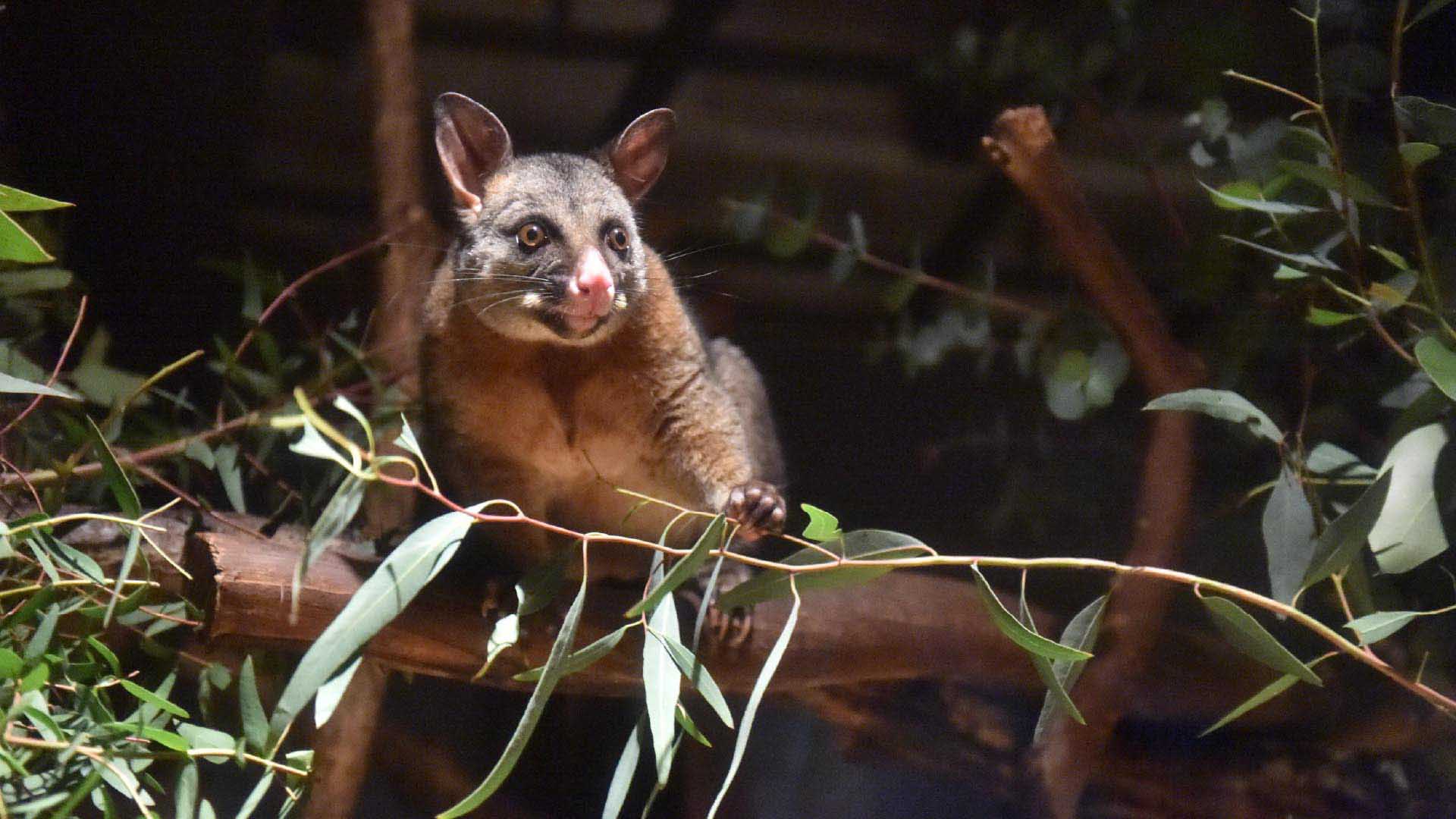
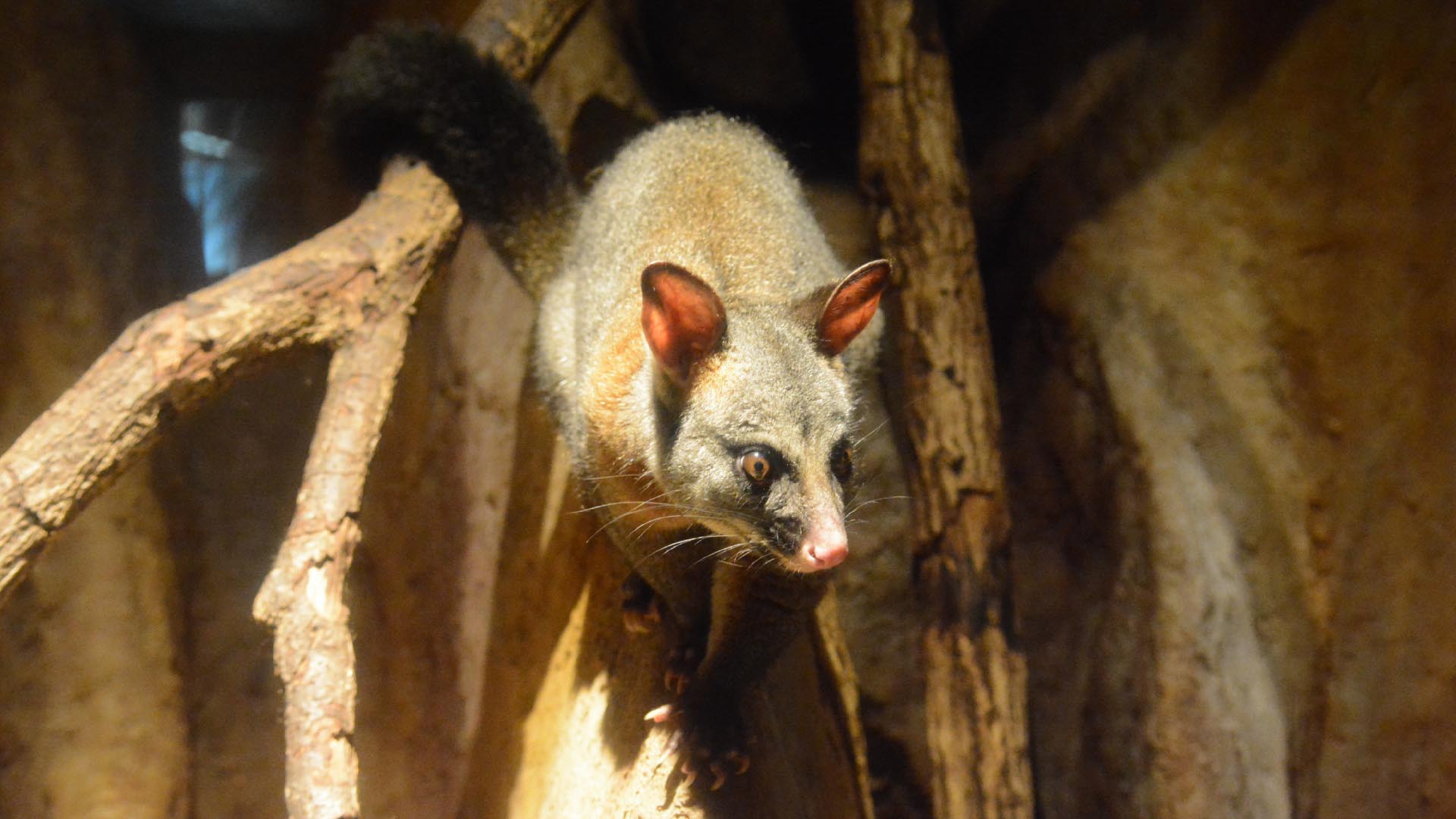
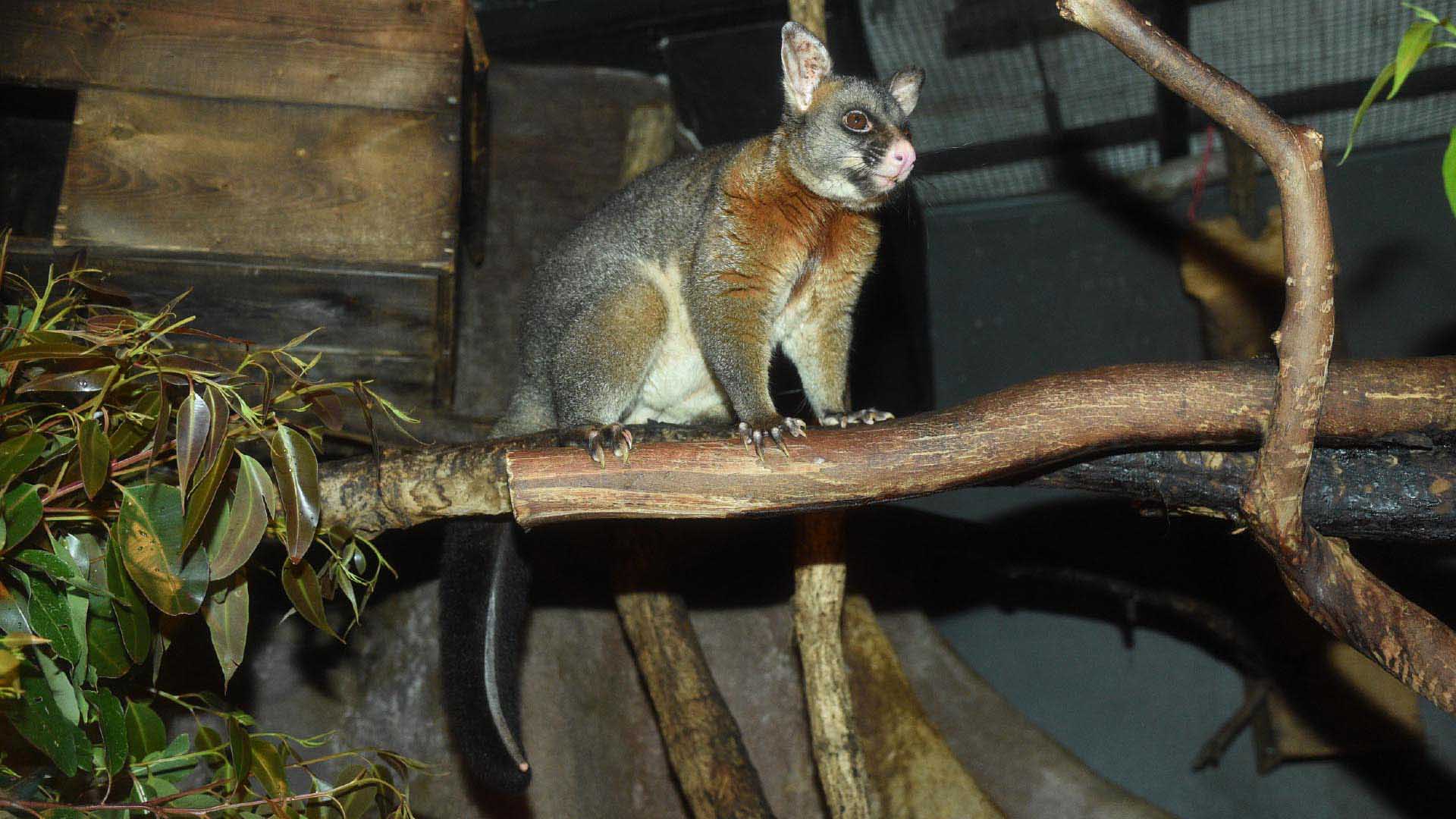
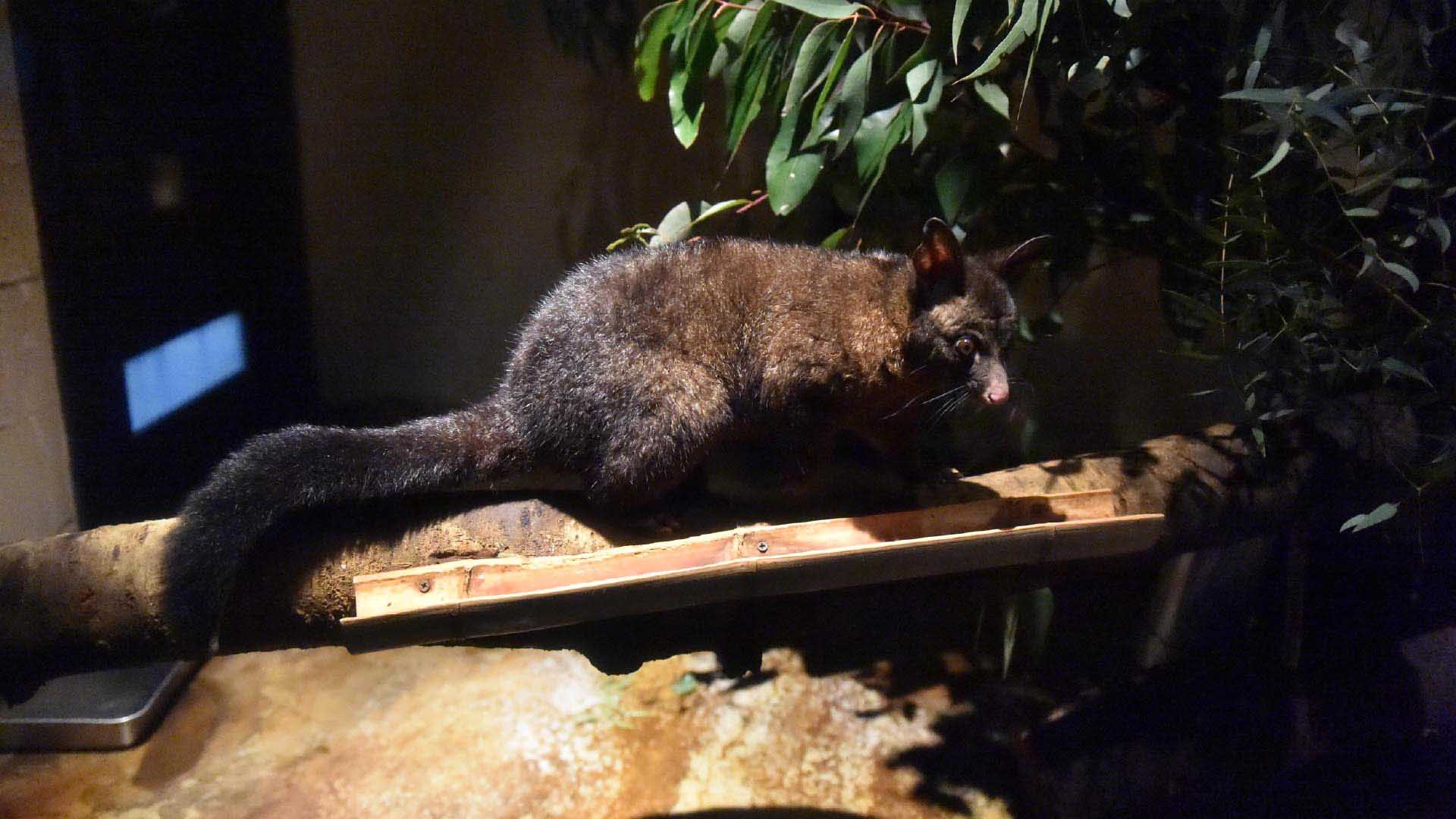
They live in a variety of places, from forests to human settlements. They are primarily arboreal, using eucalyptus bushes and hollows in forests, and holes made by European rabbits on the plains. They also sometimes live in the eaves and attics of houses. In New Zealand, they were introduced by people for fur harvesting in the 1800s and have since become established.
| classification | Mammalia, Diprodontidae, Cuscus |
|---|---|
| English name | Common Brushtail |
| distribution | Australia (northern, eastern, southwestern, and surrounding islands), New Zealand (introduced) |
| Residence | Forests, Eurasian Moorhen, and urban areas |
| Size |
Head torso length: 45-62cm
Tail length: 27-38 cm Weight: 2-3kg |
| food | Leaves, flowers, fruits, seeds, insects, and occasionally bird chicks and eggs |
| Red List |
IUCN: LC (Least Concern)
|
tail
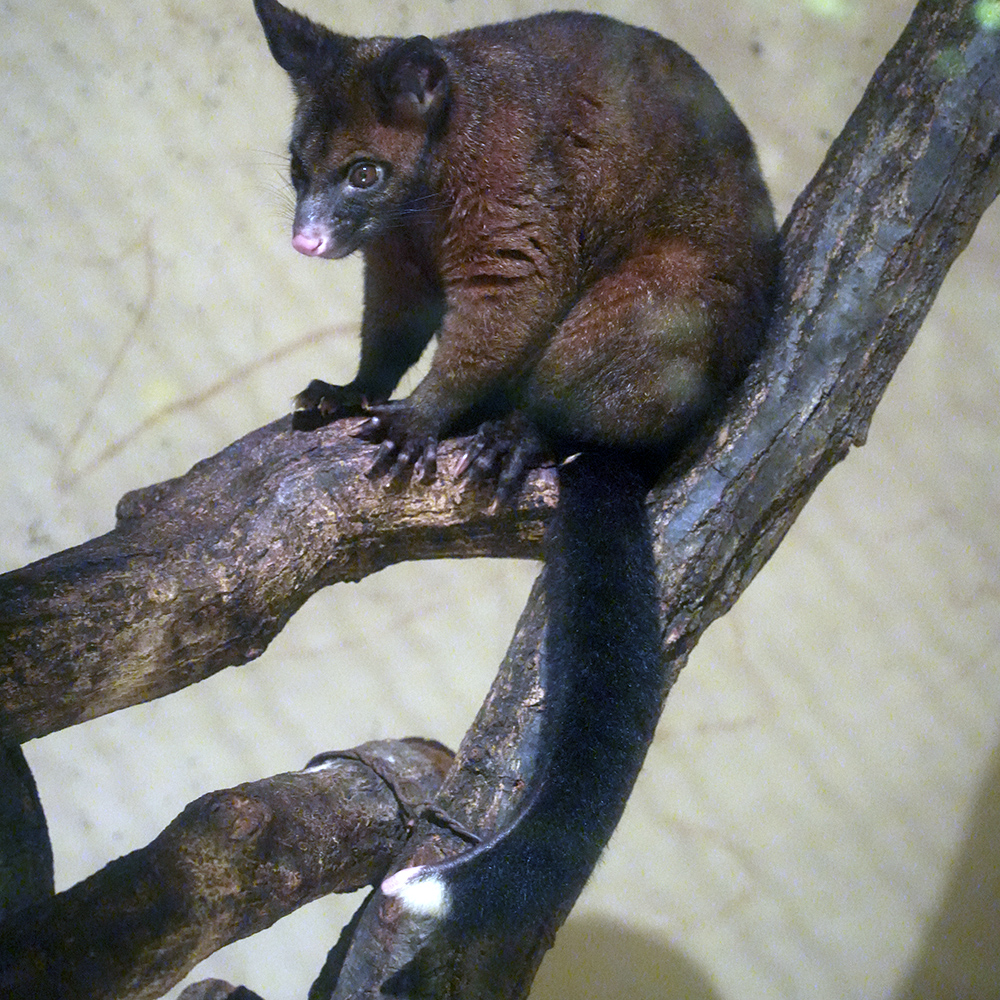
Its long, bushy tail is said to be the origin of its Japanese name, "fox." Common Brushtail 's tail can be curled up toward its ventral side, and it is used to support itself by wrapping it around branches when moving through the trees. There is a hairless section on the inside of the tail, about 10 cm from the tip, which acts as a non-slip surface when the tail is wrapped around a branch.