

Zoo Stock Species and the Red List
Zoo Stock Species and the Red List
Zoo Stock

This indicates that the species is included in the Second Zoo Stock Plan, which was formulated by the Tokyo Metropolitan Government in 2018. The plan sets goals for the next 10 years in three areas: "species conservation," "contribution to wildlife conservation," and "environmental education and conservation awareness." 124 animal species are included.
What is the Red List?
Based on scientific research, this is a list of wildlife classified by rank (category) indicating the degree of risk of extinction.
Livng Things Encyclopedia shows the categories (mainland and islands) assessed by the IUCN (International Union for Conservation of Nature) at the global level, the Ministry of the Environment for Japan, and the Tokyo Metropolitan Government for Tokyo.
The higher the category in each table, the higher the risk of extinction, and CR, EN, and VU are the three categories known as "endangered species." In Tokyo, species that are not at the NT (near threatened) level but are relatively rare are considered "species of concern."
|
IUCN categories |
|
|---|---|
|
EX |
extinction |
|
EW |
Extinction in the wild |
|
CR+EN |
— |
|
CR |
Serious crisis |
|
EN |
crisis |
|
VU |
emergency |
|
NT |
Near Threatened |
|
LC・○ |
Low Concern |
|
DD |
Data shortage |
|
LP |
— |
|
Japan (Ministry of the Environment) Category |
|
|---|---|
|
EX |
extinction |
|
EW |
Extinction in the wild |
|
CR+EN |
Endangered species |
|
CR |
Critically Endangered |
|
EN |
Endangered species |
|
VU |
Endangered species |
|
NT |
Near Threatened |
|
LC・○ |
— |
|
DD |
Lack of information |
|
LP |
Endangered |
|
Tokyo Category |
|
|---|---|
|
EX |
extinction |
|
EW |
Extinction in the wild |
|
CR+EN |
Endangered species |
|
CR |
Critically Endangered |
|
EN |
Endangered species |
|
VU |
Endangered species |
|
NT |
Near Threatened |
|
LC・○ |
Unranked |
|
DD |
Lack of information |
|
LP |
Endangered |
Creatures at Tama Zoo
Creatures at Tama Zoo

Chimpanzee
Chimpanzee
Pan troglodytes
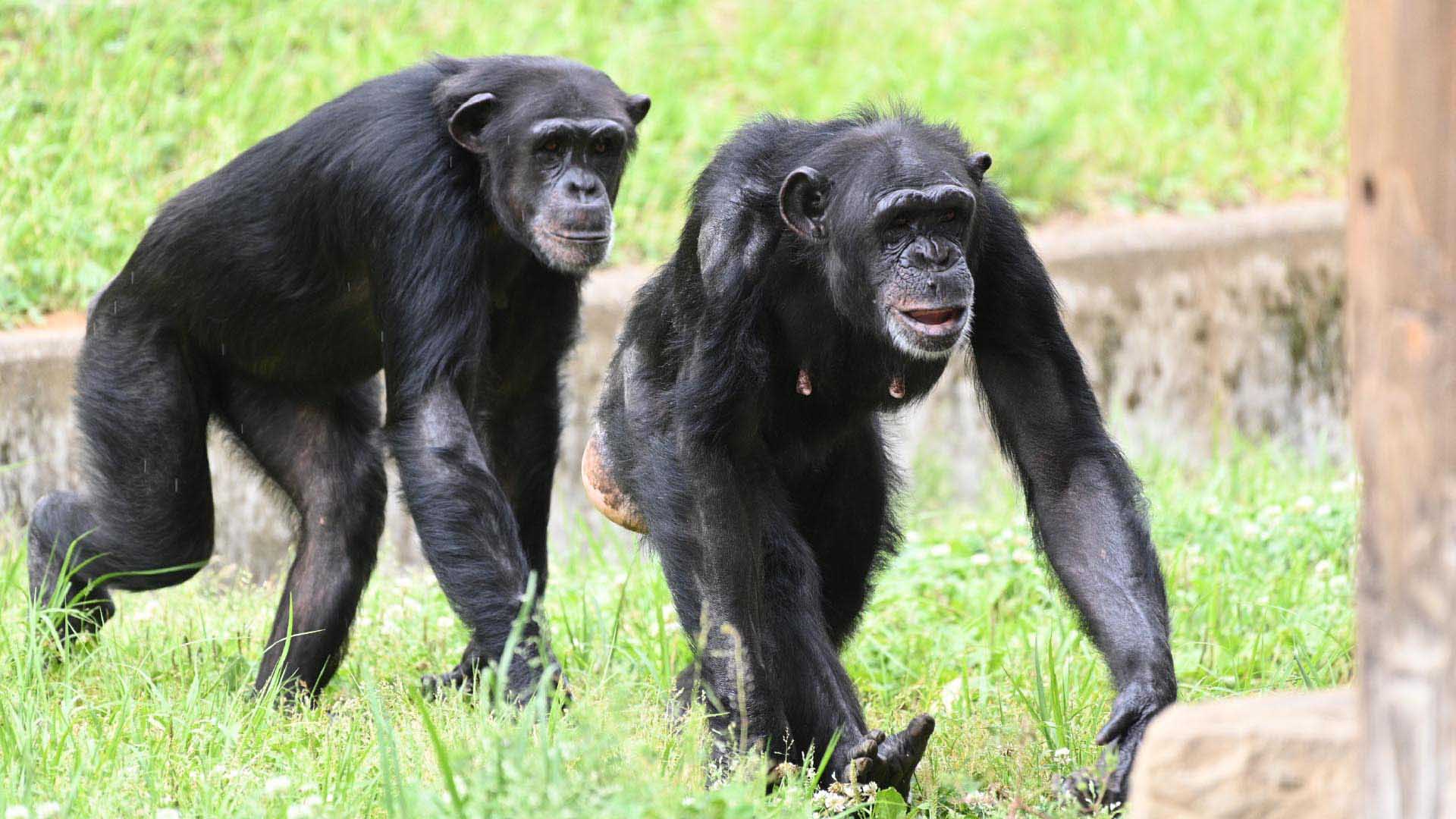
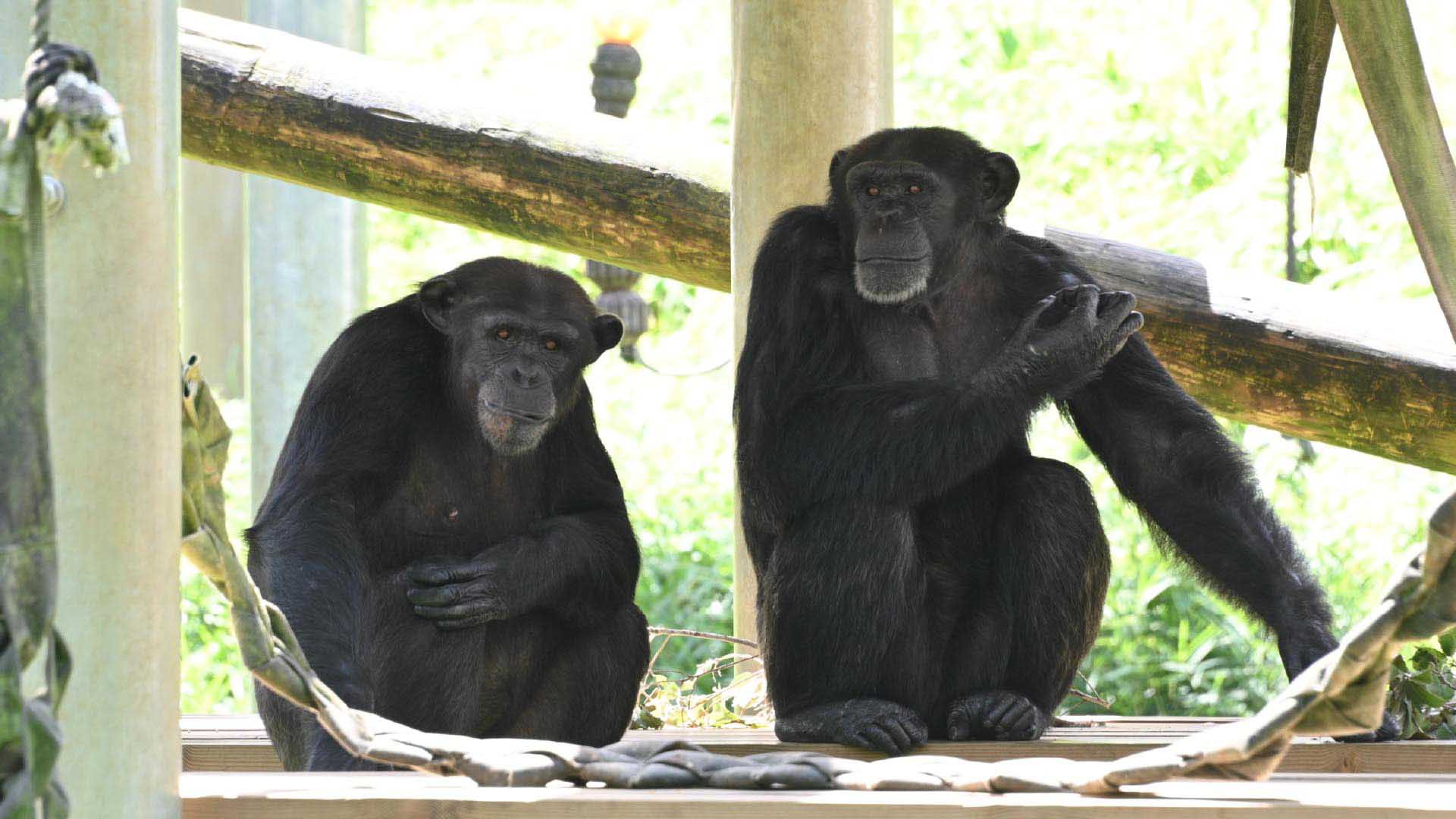
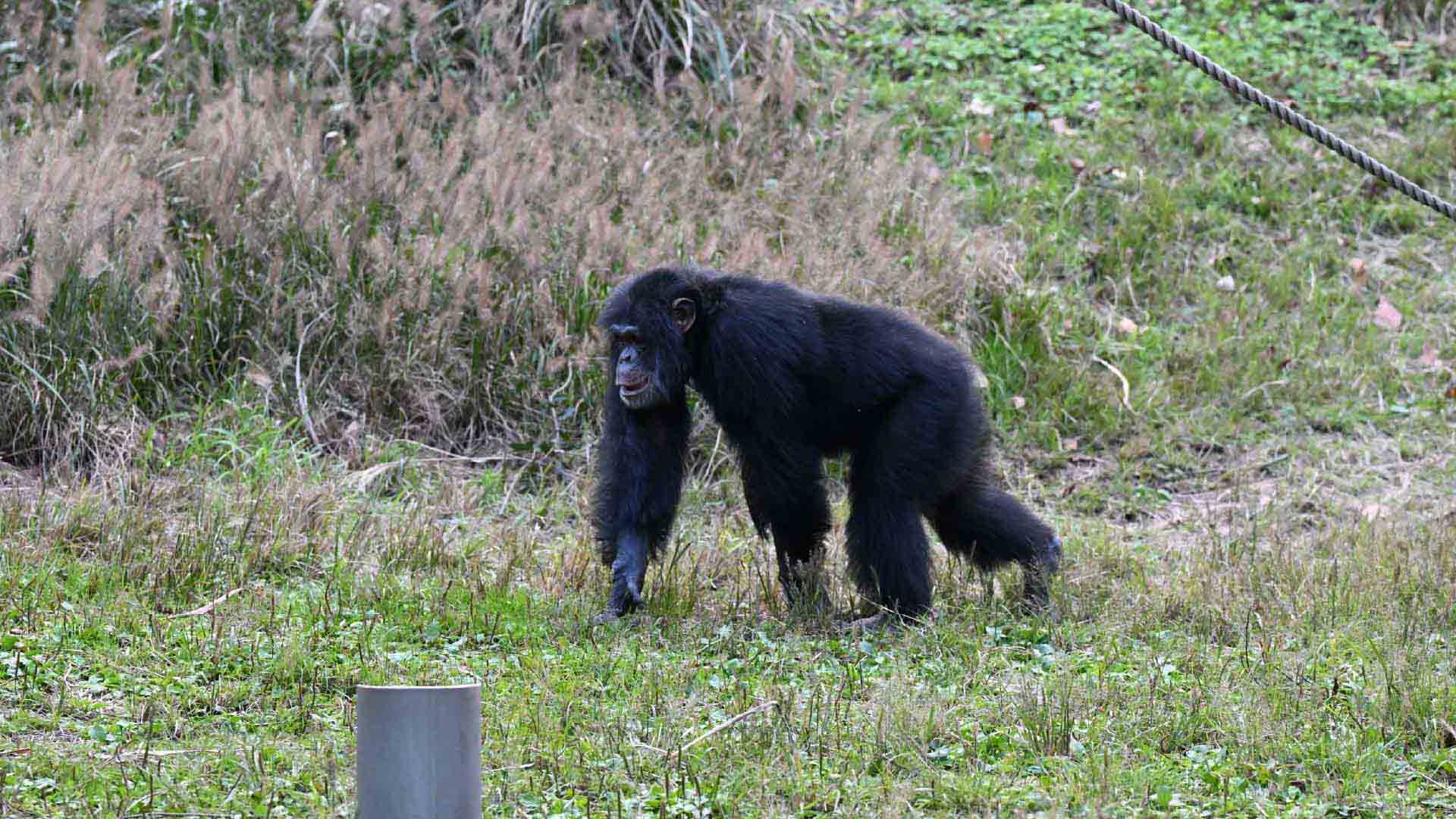
They are the wild animal genetically closest to humans. They form groups of several males and females and live in trees or on the ground, traveling over a wide area in search of food. They reach sexual maturity at 8 to 11 years of age, and while males remain in the group they were born in, females move on to other groups. Groups are a type that separates and regroups, and sometimes members of a group gather together, and sometimes they split into several smaller groups.
| classification | Mammalia, Primates, Hominidae |
|---|---|
| English name | Chimpanzee |
| distribution | West to Central Africa |
| Residence | Tropical Rainforest to Eurasian Moorhen |
| Size |
Head torso length: 63.5-90cm
Weight: Males 40-60 kg, females 32-47 kg |
| food | Leaves, fruits, insects, and occasionally small mammals |
| Red List |
IUCN: EN (crisis)
|
Characteristics of adult males
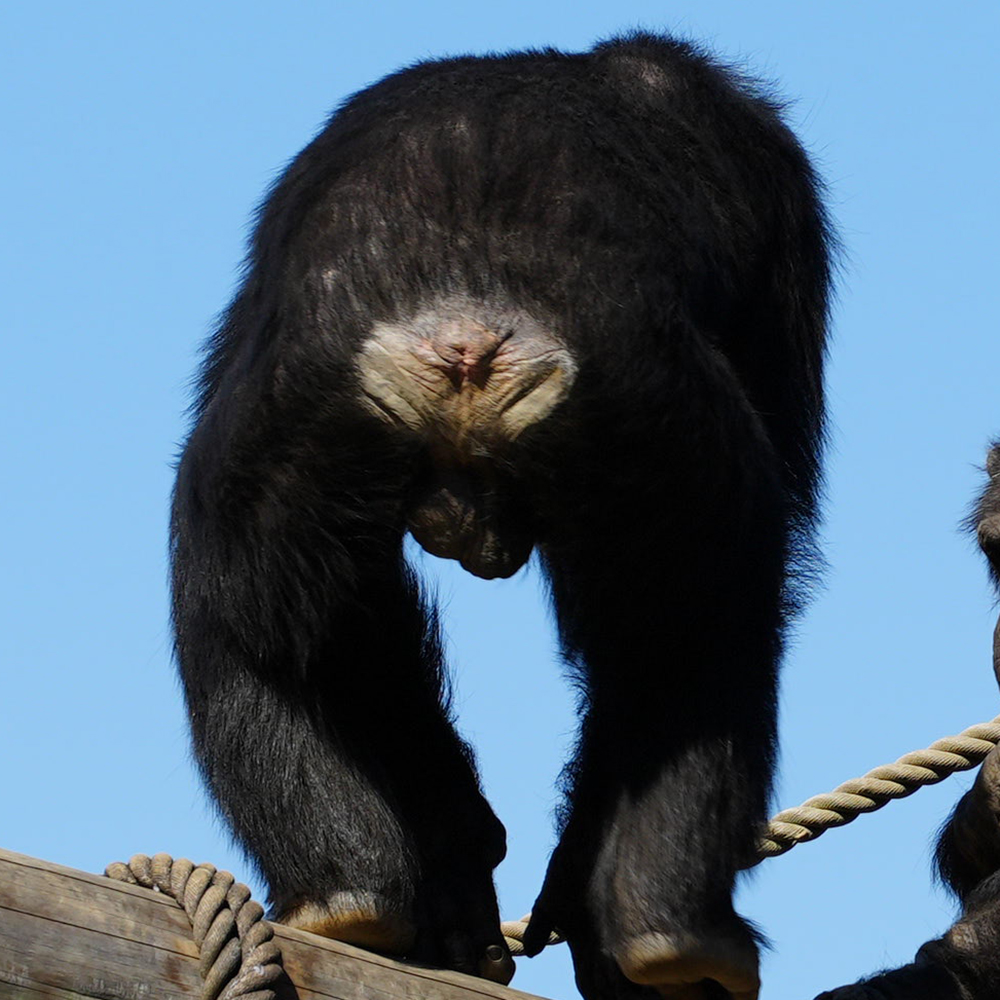
It has a sturdy body and dark buttocks.
Characteristics of adult females
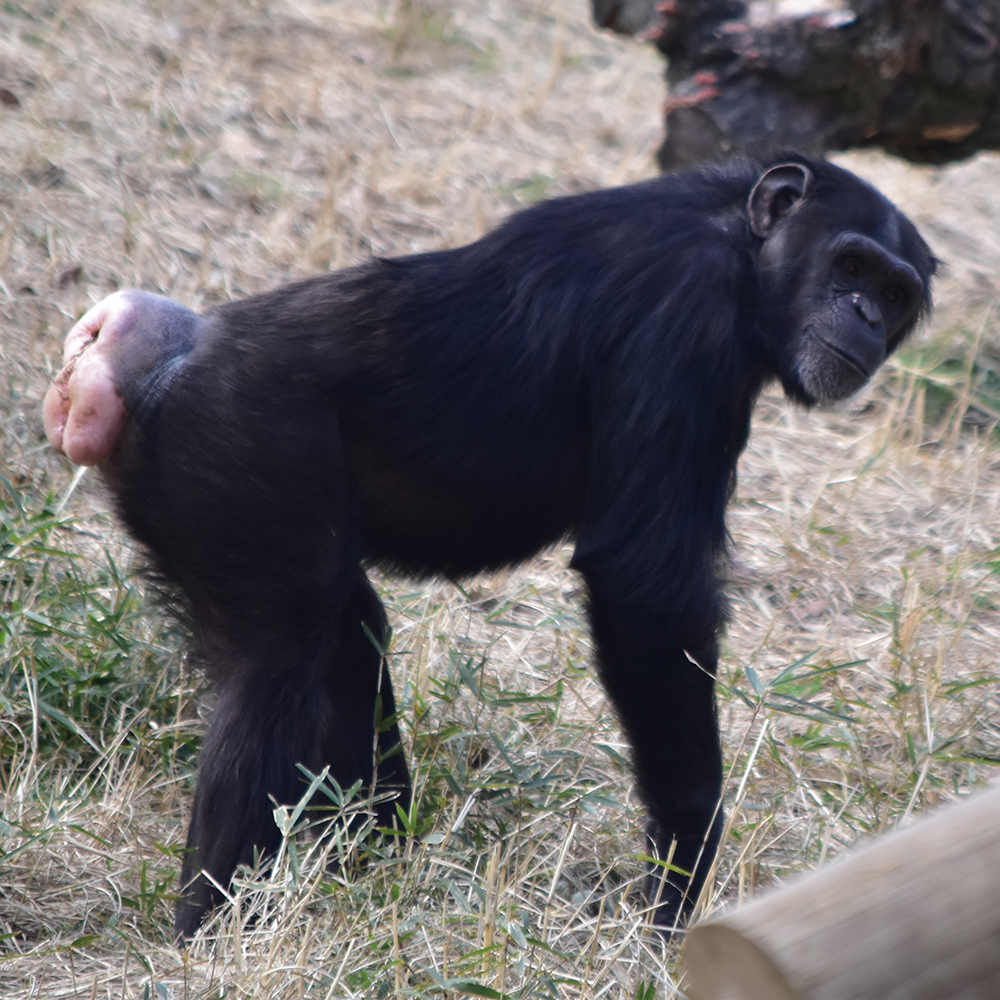
There is pink skin on the buttocks called the "erogenous skin." This skin swells up only when the animal is in heat, and is deflated at other times.
Children's characteristics
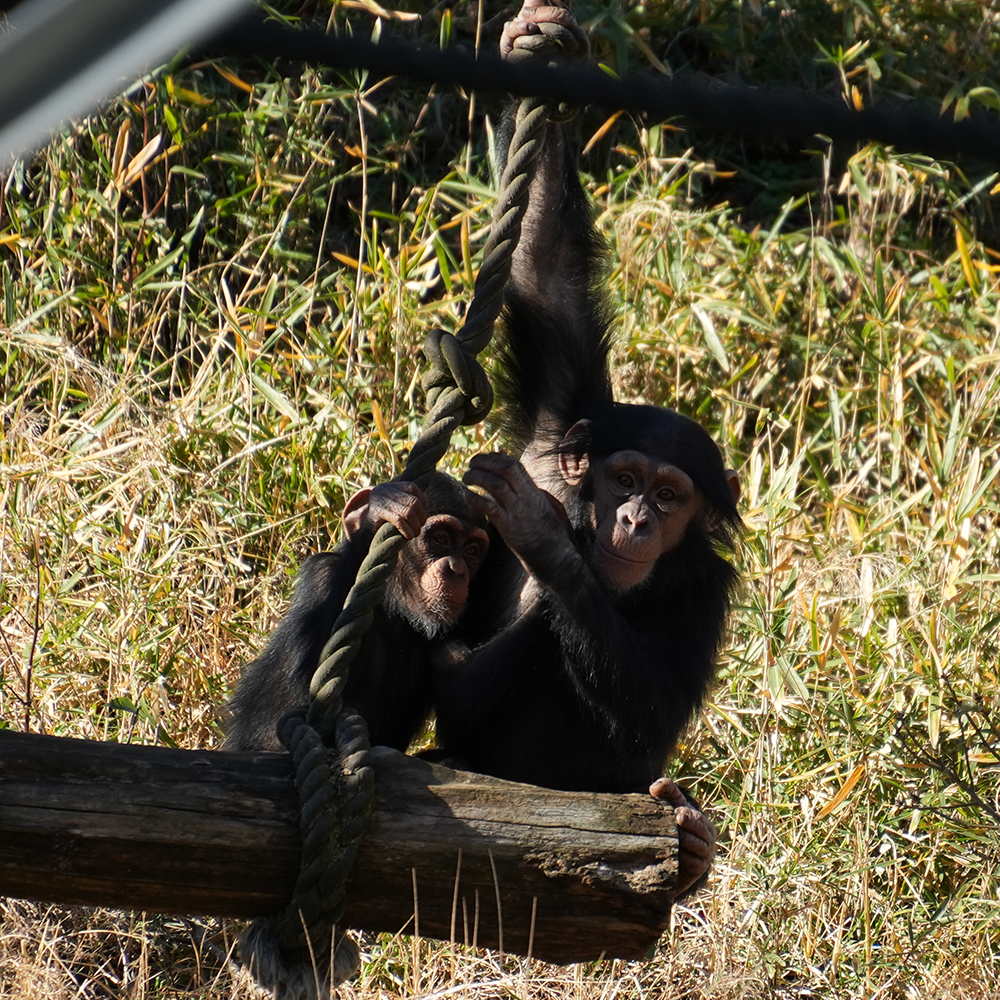
The face and legs of adults are black, while those of young are beige. Until about the age of three, they have white hair on their buttocks, also known as "baby signal hair."
Tool Use and Culture
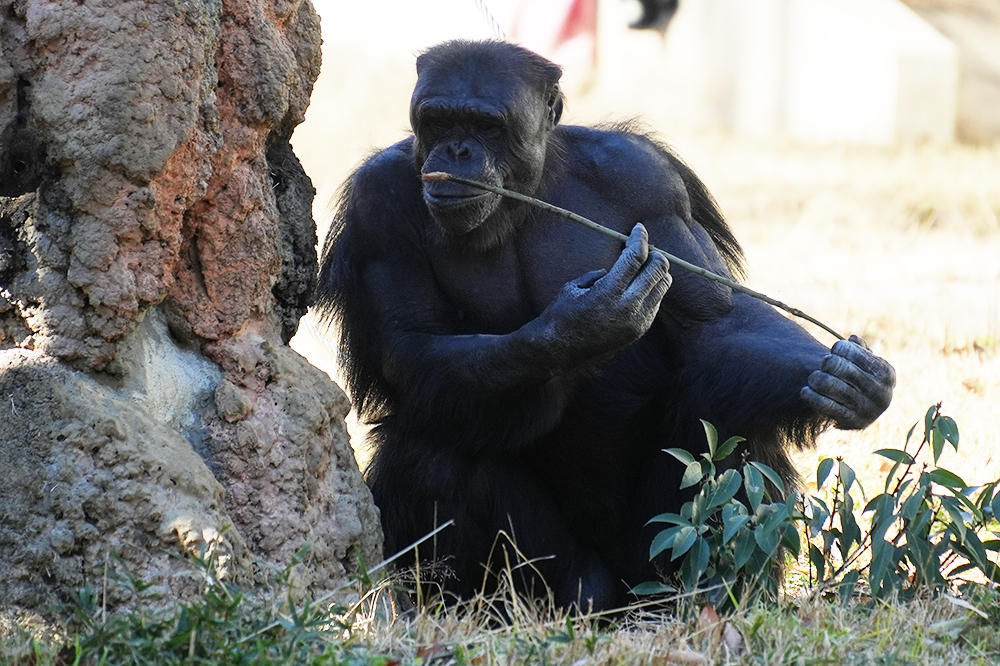
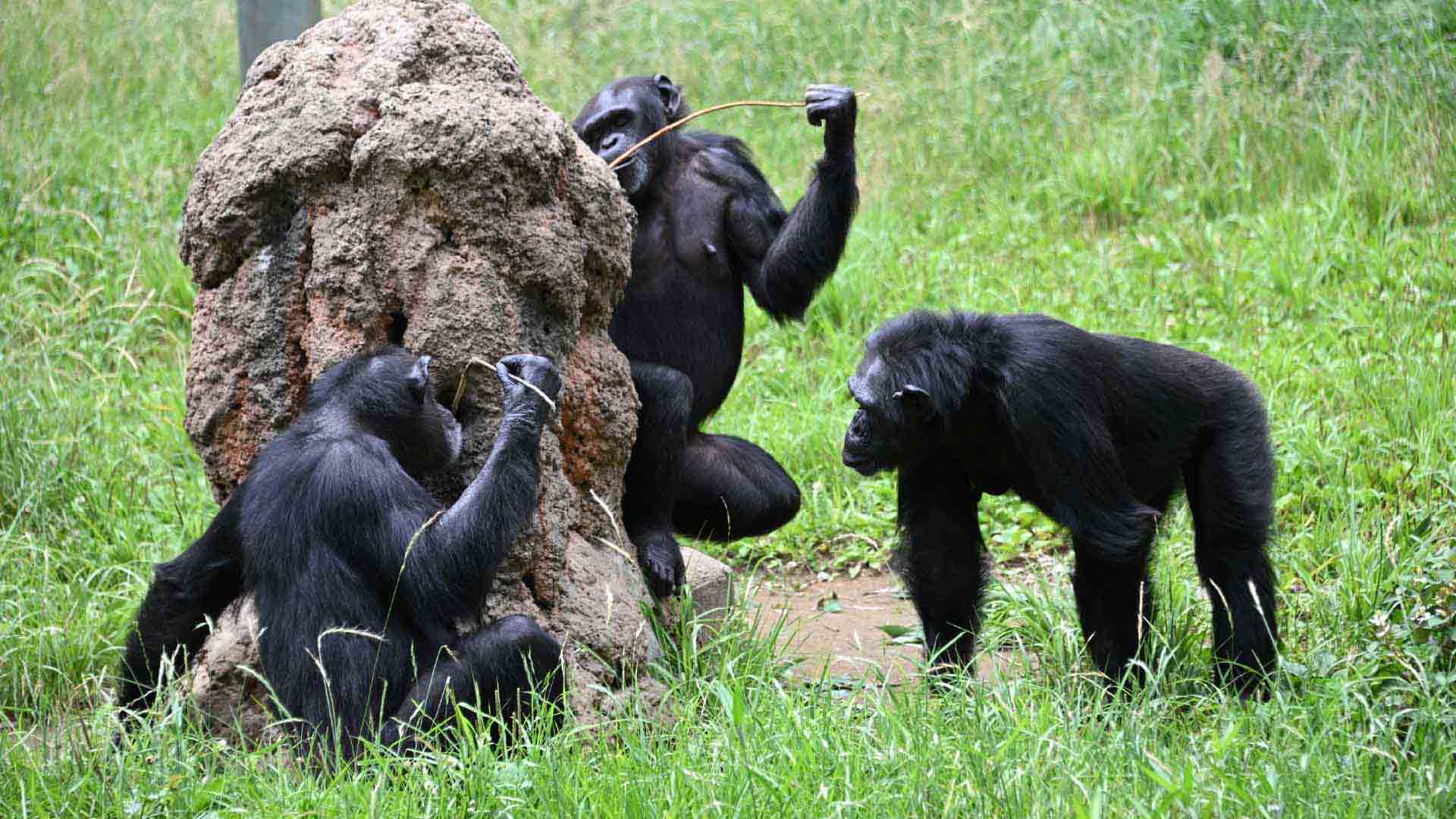
They use a variety of tools to obtain food, and it has been found that there are many variations in tool use depending on the region in which they live, such as using twigs to catch termites, stones to crack nuts, and leaves to drink water.
cry
It is said that they use more than a dozen different vocalizations, ranging from low cries while foraging to screams that can be heard over a kilometer in all directions.