

Zoo Stock Species and the Red List
Zoo Stock Species and the Red List
Zoo Stock
This indicates that the species is included in the Second Zoo Stock Plan, which was formulated by the Tokyo Metropolitan Government in 2018. The plan sets goals for the next 10 years in three areas: "species conservation," "contribution to wildlife conservation," and "environmental education and conservation awareness." 124 animal species are included.
What is the Red List?
Based on scientific research, this is a list of wildlife classified by rank (category) indicating the degree of risk of extinction.
Livng Things Encyclopedia shows the categories (mainland and islands) assessed by the IUCN (International Union for Conservation of Nature) at the global level, the Ministry of the Environment for Japan, and the Tokyo Metropolitan Government for Tokyo.
The higher the category in each table, the higher the risk of extinction, and CR, EN, and VU are the three categories known as "endangered species." In Tokyo, species that are not at the NT (near threatened) level but are relatively rare are considered "species of concern."
|
IUCN categories |
|
|---|---|
|
EX |
extinction |
|
EW |
Extinction in the wild |
|
CR+EN |
— |
|
CR |
Serious crisis |
|
EN |
crisis |
|
VU |
emergency |
|
NT |
Near Threatened |
|
LC・○ |
Low Concern |
|
DD |
Data shortage |
|
LP |
— |
|
Japan (Ministry of the Environment) Category |
|
|---|---|
|
EX |
extinction |
|
EW |
Extinction in the wild |
|
CR+EN |
Endangered species |
|
CR |
Critically Endangered |
|
EN |
Endangered species |
|
VU |
Endangered species |
|
NT |
Near Threatened |
|
LC・○ |
— |
|
DD |
Lack of information |
|
LP |
Endangered |
|
Tokyo Category |
|
|---|---|
|
EX |
extinction |
|
EW |
Extinction in the wild |
|
CR+EN |
Endangered species |
|
CR |
Critically Endangered |
|
EN |
Endangered species |
|
VU |
Endangered species |
|
NT |
Near Threatened |
|
LC・○ |
Unranked |
|
DD |
Lack of information |
|
LP |
Endangered |
Creatures at Tama Zoo
Creatures at Tama Zoo
Blue-and-yellow macaw
Blue-and-yellow macaw
Ara ararauna
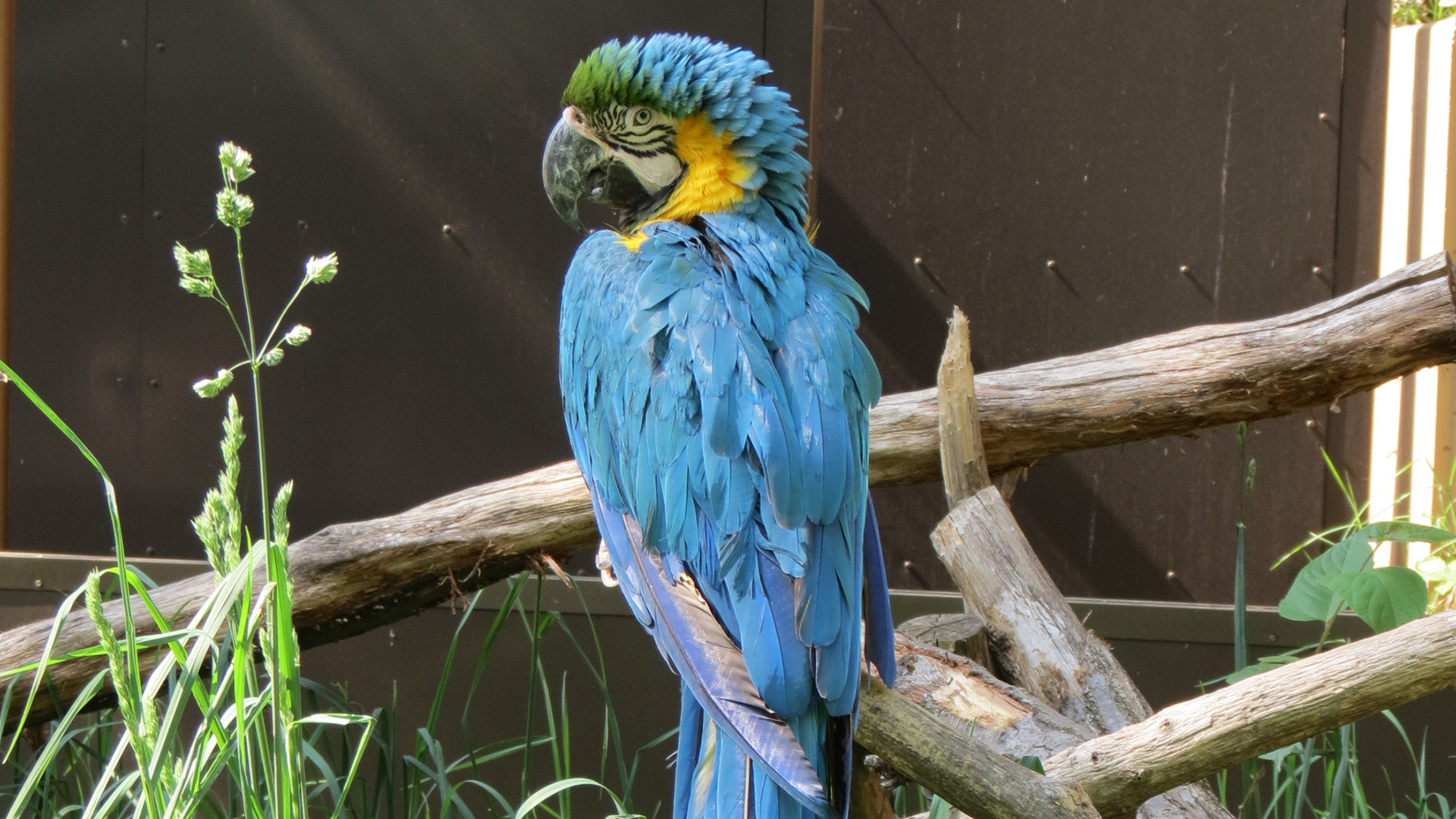
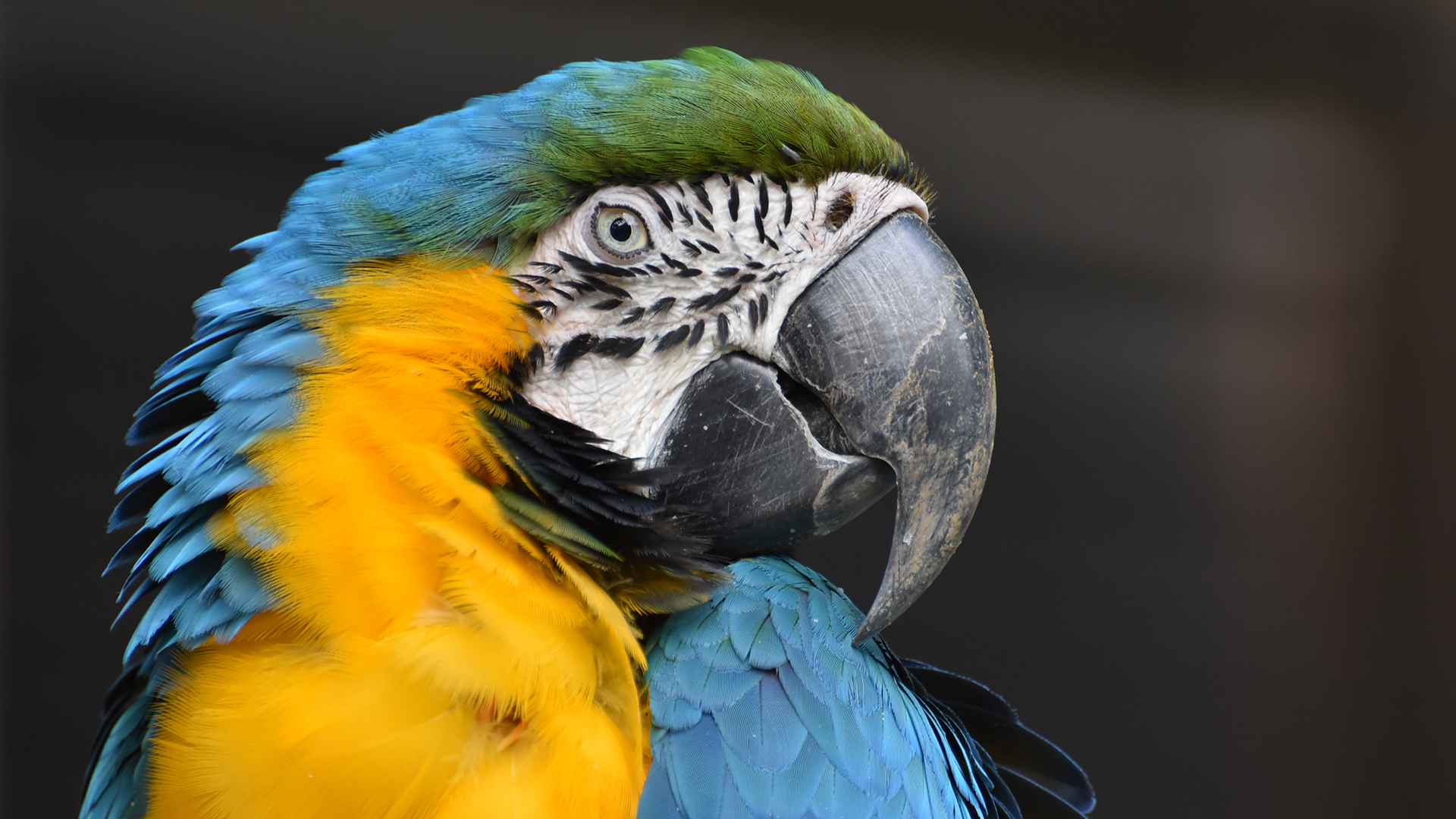
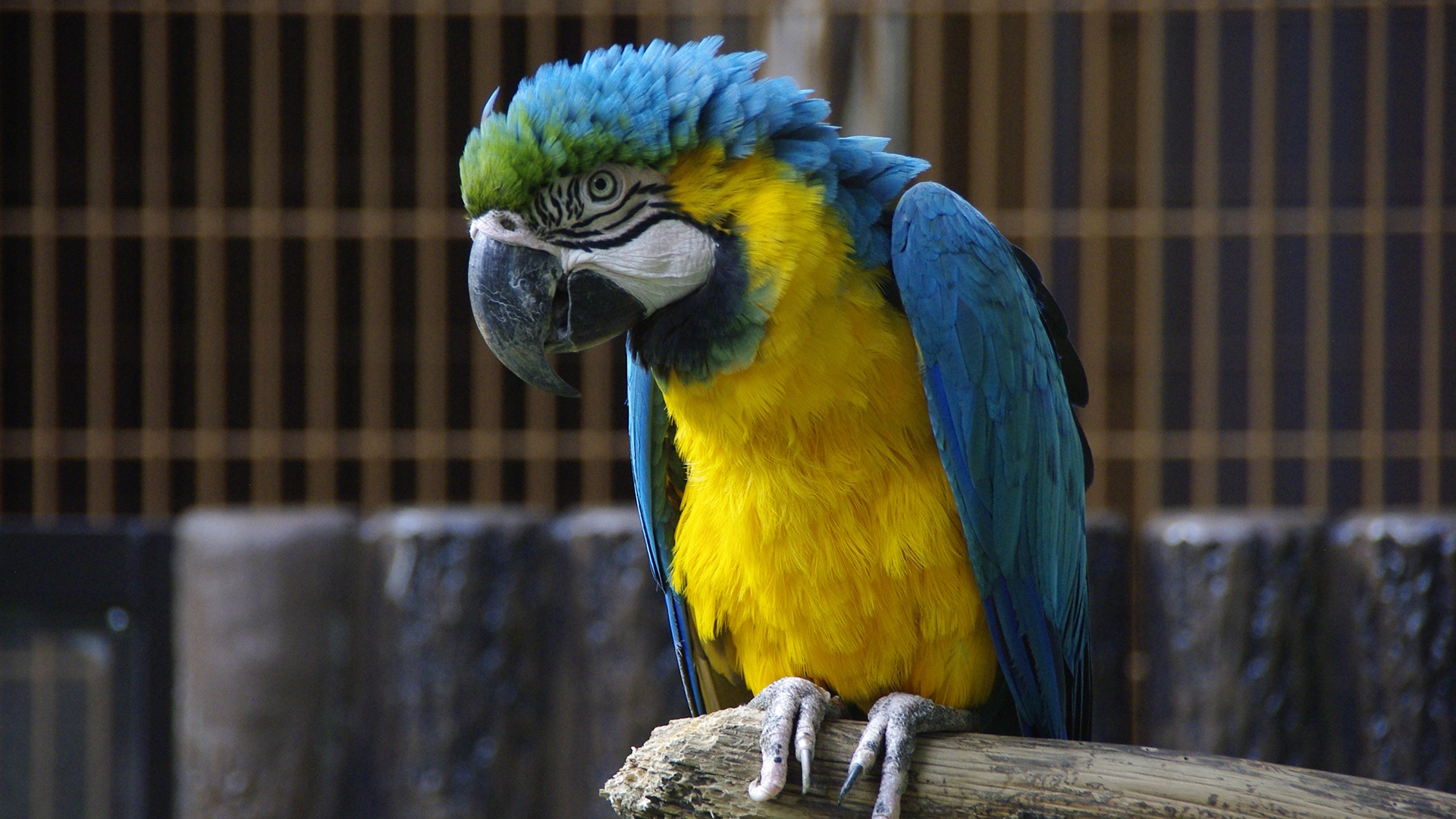
The chest, belly and inner wings are yellow, and the outer wings are blue. The face has white bare skin with black lines, and the forehead is green. They build nests in tree hollows or natural cavities and lay 1 to 3 eggs.
| classification | Aves, Pterygomorpha, Parrotidae |
|---|---|
| English name | Blue-and-yellow macaw |
| distribution | North to central South America |
| Residence | moist evergreen forest |
| Size |
Total length: 86cm
Weight: 995-1,380g |
| food | Seeds, fruits |
| Red List |
IUCN: LC (Least Concern)
|
How to use the beak

They can easily crack hard nuts using their large, powerful beaks, which they use as a third foot to bite branches and support their bodies when moving.
toes
Most birds have three toes in front and one in back, but macaws have two in front and two in back, forming an X. This shape is ideal for grasping food.
Macaw Colors
Its color is very vivid blue, but this is due to structural coloring rather than pigment (the fine structure of its wings reflects only the blue color). The yellow and black are due to pigment. The green color on the top of its head is created by a combination of the blue structural color and the yellow pigment.
Danger in the wild
The main threats to the decline in parrot and parakeet populations are thought to be agriculture, hunting, trapping, and deforestation. Because this species is popular as a pet, it is listed in Appendix II of the Convention on International Trade in Endangered Species of Wild Fauna and Flora (CITES), and continued attention to the trends in wild populations is required.