

Zoo Stock Species and the Red List
Zoo Stock Species and the Red List
Zoo Stock

This indicates that the species is included in the Second Zoo Stock Plan, which was formulated by the Tokyo Metropolitan Government in 2018. The plan sets goals for the next 10 years in three areas: "species conservation," "contribution to wildlife conservation," and "environmental education and conservation awareness." 124 animal species are included.
What is the Red List?
Based on scientific research, this is a list of wildlife classified by rank (category) indicating the degree of risk of extinction.
Livng Things Encyclopedia shows the categories (mainland and islands) assessed by the IUCN (International Union for Conservation of Nature) at the global level, the Ministry of the Environment for Japan, and the Tokyo Metropolitan Government for Tokyo.
The higher the category in each table, the higher the risk of extinction, and CR, EN, and VU are the three categories known as "endangered species." In Tokyo, species that are not at the NT (near threatened) level but are relatively rare are considered "species of concern."
|
IUCN categories |
|
|---|---|
|
EX |
extinction |
|
EW |
Extinction in the wild |
|
CR+EN |
— |
|
CR |
Serious crisis |
|
EN |
crisis |
|
VU |
emergency |
|
NT |
Near Threatened |
|
LC・○ |
Low Concern |
|
DD |
Data shortage |
|
LP |
— |
|
Japan (Ministry of the Environment) Category |
|
|---|---|
|
EX |
extinction |
|
EW |
Extinction in the wild |
|
CR+EN |
Endangered species |
|
CR |
Critically Endangered |
|
EN |
Endangered species |
|
VU |
Endangered species |
|
NT |
Near Threatened |
|
LC・○ |
— |
|
DD |
Lack of information |
|
LP |
Endangered |
|
Tokyo Category |
|
|---|---|
|
EX |
extinction |
|
EW |
Extinction in the wild |
|
CR+EN |
Endangered species |
|
CR |
Critically Endangered |
|
EN |
Endangered species |
|
VU |
Endangered species |
|
NT |
Near Threatened |
|
LC・○ |
Unranked |
|
DD |
Lack of information |
|
LP |
Endangered |
Creatures at Tama Zoo
Creatures at Tama Zoo
American White Ibis
American White Ibis
Eudocimus albus
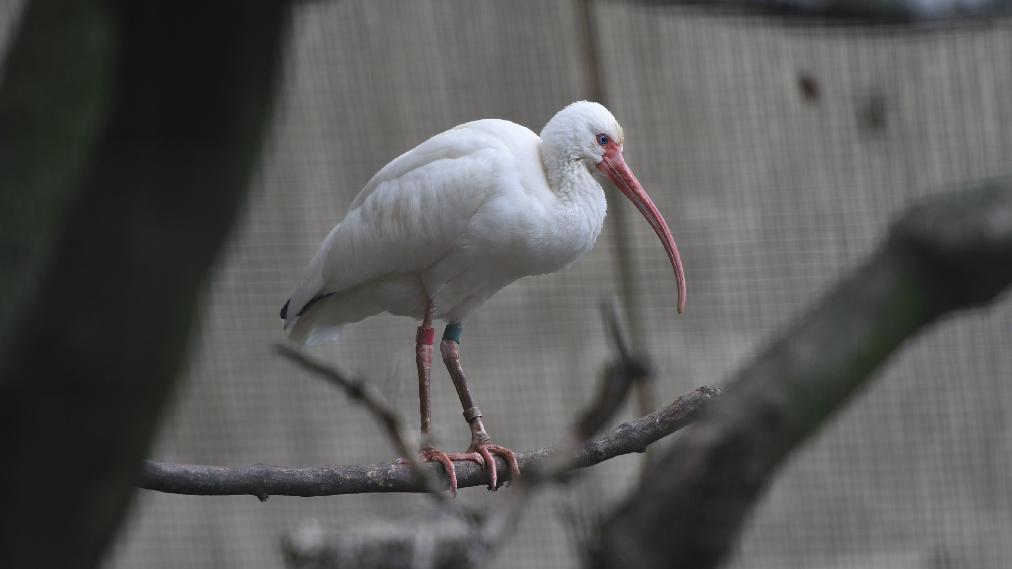
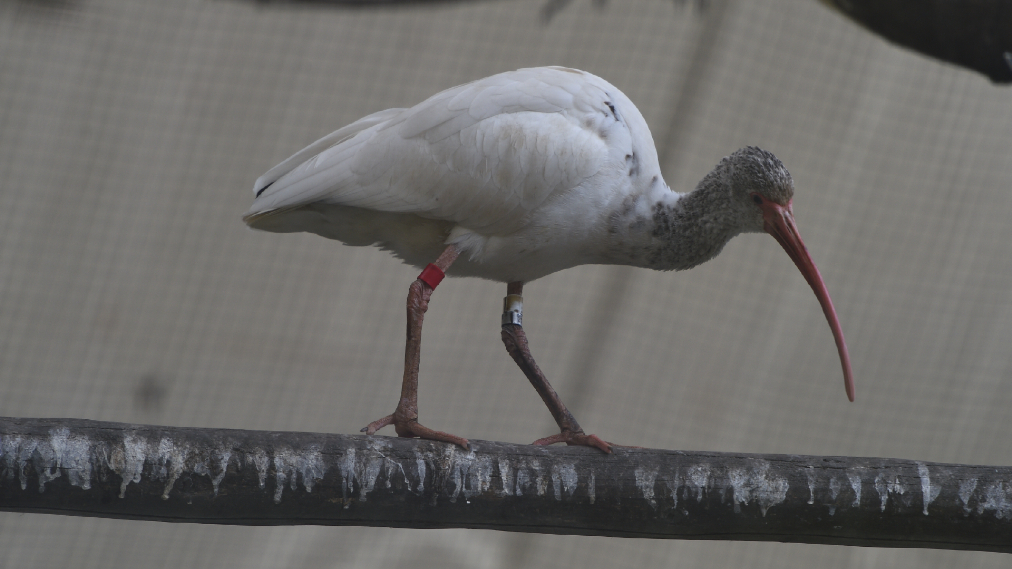
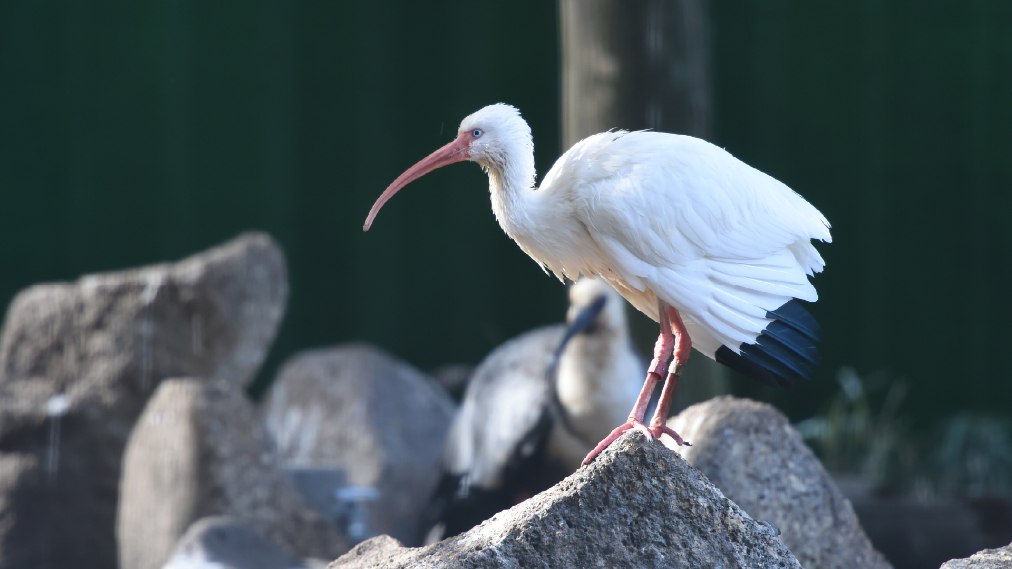
It has a small, slender body, even among members of Crested Ibis family. Its bare face and long, downward-curving beak are orange-red in color. The feathers on its entire body are white, with black tips on its outer primary flight feathers. It is a highly gregarious bird, and in the wild it can form large flocks of 60,000 to 80,000 birds.
| classification | Birds, Pelecaniformes, Crested Ibis |
|---|---|
| English name | American White Ibis |
| distribution | From the Gulf Coast of the United States to Central America and northern South America |
| Residence | Mainly lagoons and coastal marshes |
| Size |
Total length: 56-61cm
|
| food | Crayfish, fish, frogs, snakes, pond snails, aquatic insects, etc. |
| Red List |
IUCN: LC (Least Concern)
|
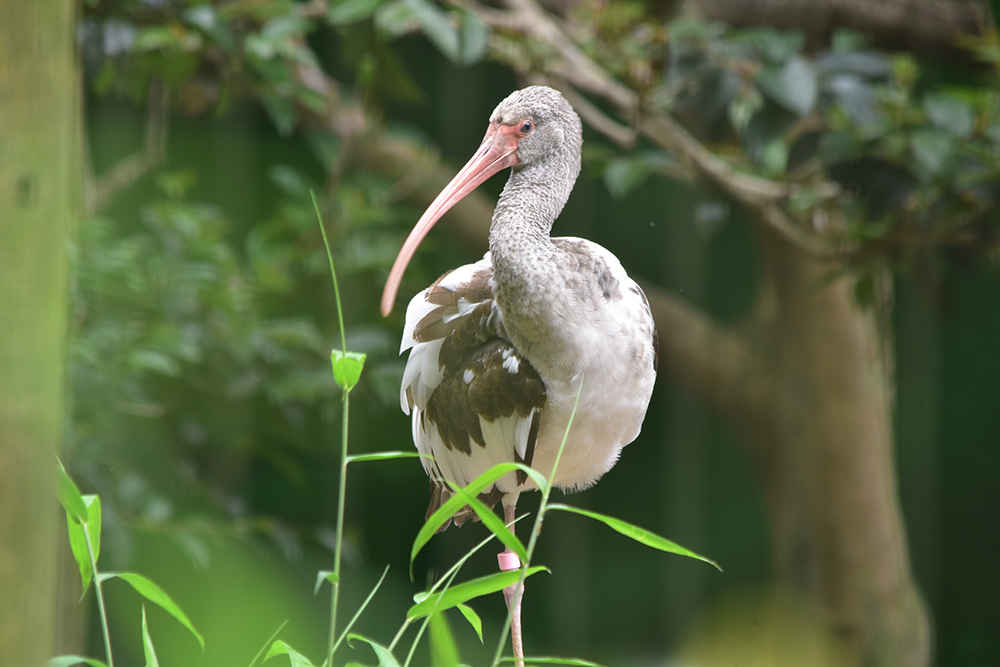
Chick appearance
Newly hatched chicks look different from adult birds. Their entire body feathers are black, making them less noticeable in the nest. Even when they grow big enough to leave the nest, their coloring is still different from that of adults, and after about two years they will turn white like adult birds. Their beaks are also short and straight, and will elongate and then curve as they grow.