

Butterfly pupae can hatch even when placed on their side! Rearing and exhibiting butterfly pupae.
November 13, 2026
"The pupa's silk thread broke and it fell. What should I do?"
The staff at the insectarium recently received the following inquiry.
This is a common problem when raising butterflies, but it can be saved if the pupa is a girdle-type pupa (a pupa that attaches its abdomen to a branch or other object and supports its body with silk), such as swallowtails or white butterflies. If there is still silk remaining that is holding the pupa's body in place, first remove it. At this time, moisten the silk with water using a spray bottle and leave it for a few minutes, and the silk will loosen and become easier to remove.
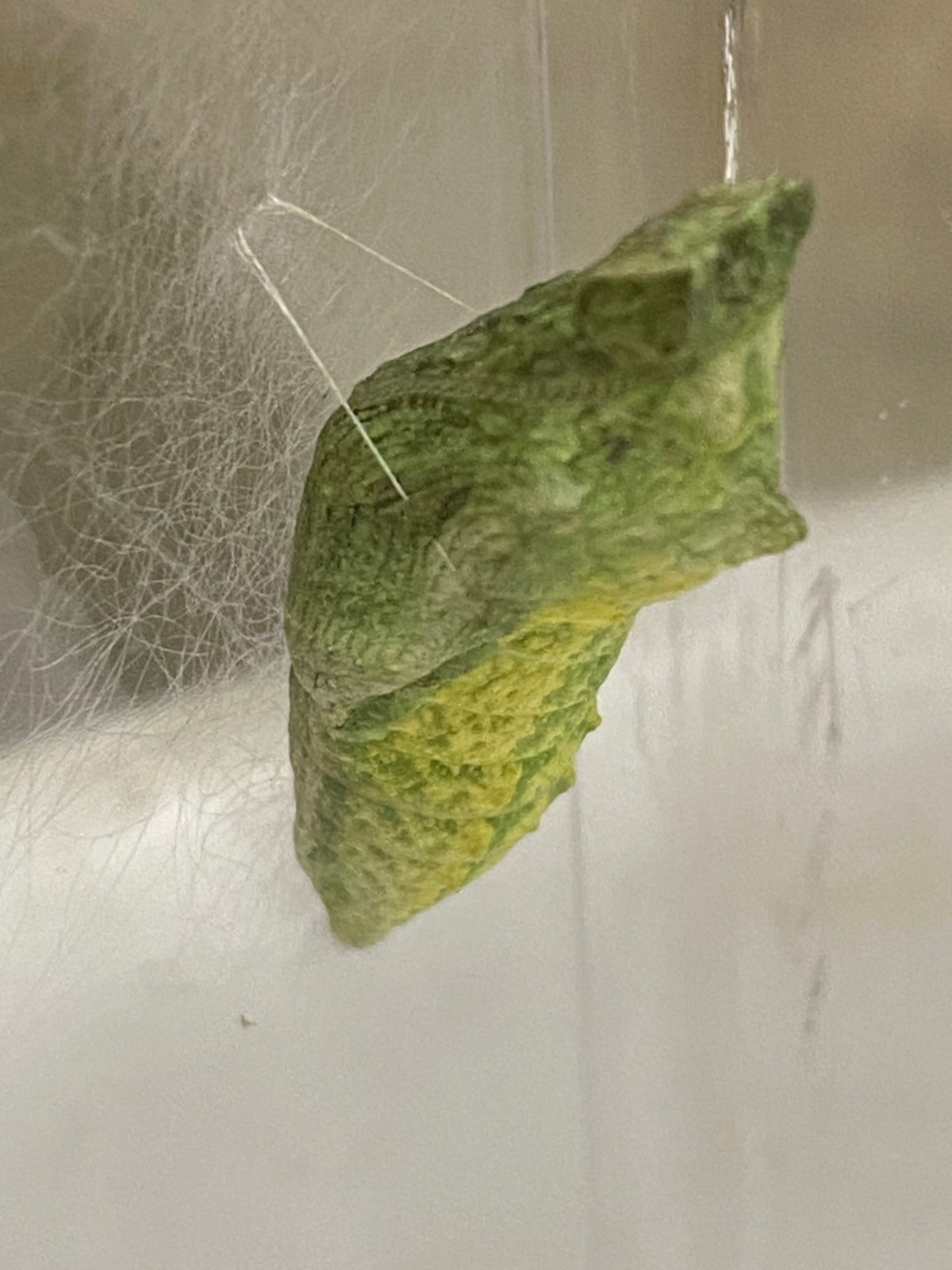
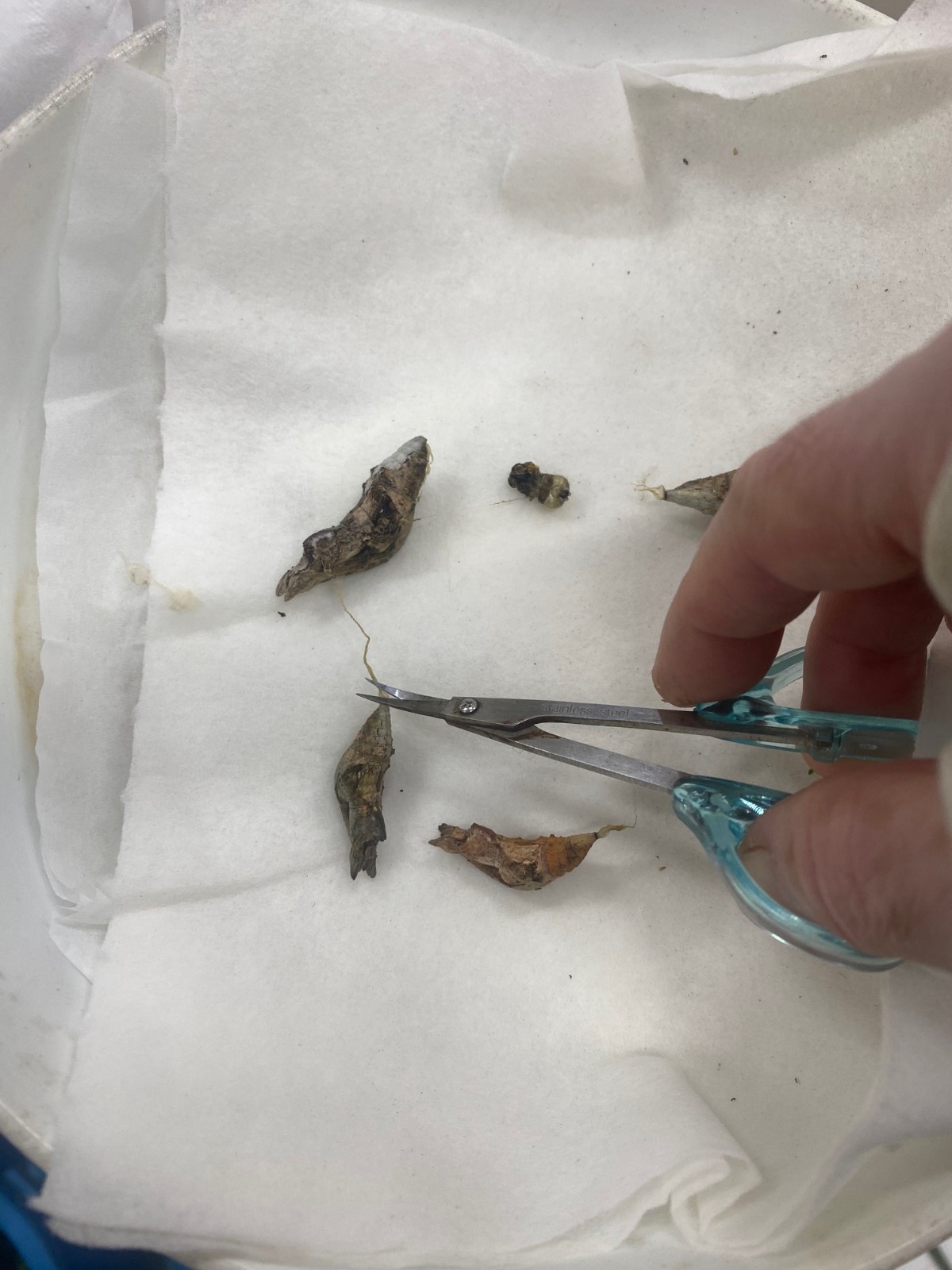
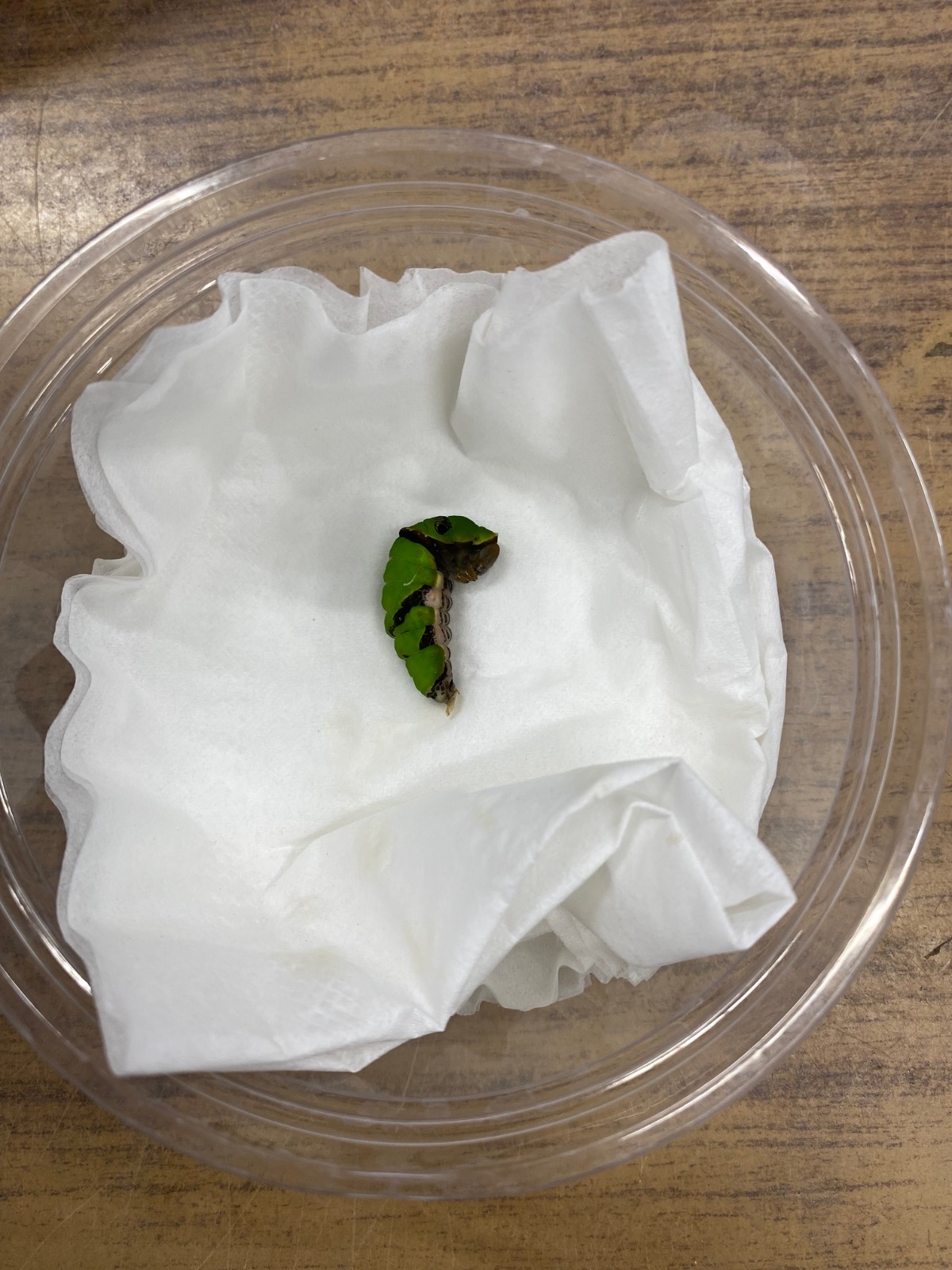
If the pre-pupa falls off the floor before it molts into a pupa, place a layer of tissue paper or similar material on the floor and put the pre-pupa on top. Eventually, it will skillfully twist its body and molt into a pupa.
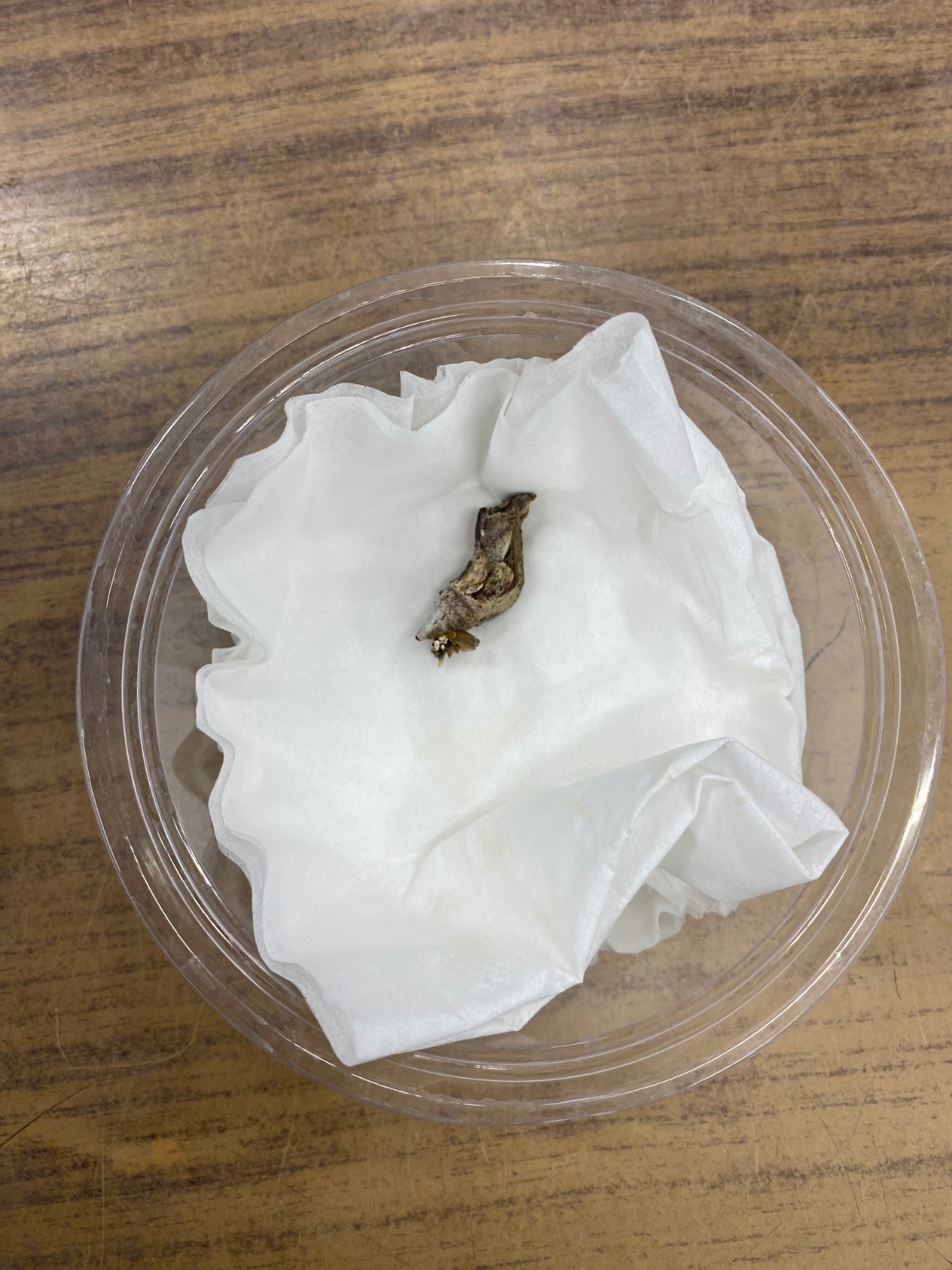
After two to three days have passed since the pupa was formed and its body surface has hardened, lay it on its side on the bottom of the case for emergence. These species can walk firmly on their own legs even immediately after emergence, so pupas of the girdle type can emerge even when placed on their side. At this time, it is important to ensure that there is a foothold near the pupa that the butterfly can climb to when it emerges and grab onto firmly, as well as enough space for it to hang and extend its wings.
The insectarium raises a large number of butterflies, and to make efficient use of the management space, all pupa-type pupae are laid horizontally to allow them to emerge. The shelves in the rearing room are lined with specialized boxes for managing pupae of each butterfly species. Previously, we would collect the butterflies that emerged from these boxes with an insect net and carry them to the large greenhouse to release them. However, this method often damaged the wings when transferring them to the net, and improvement was a challenge.
So I decided to try using a commercially available net cage for insect rearing. The net cage, with its sides covered in fine nylon mesh, is very lightweight, so I can carry it to the large greenhouse with the newly emerged butterflies inside and release them all at once simply by opening the zipper. This eliminates the hassle of transferring them to an insect net and reduces the risk of damaging their wings.
Although this net cage is originally designed to be used vertically, I intentionally used it horizontally to allow for more pupae to be placed inside. Furthermore, by placing the transparent vinyl side upwards, it became easier to observe the pupae from above. It could also be used for exhibits that allow for observation of the changes in pupae.
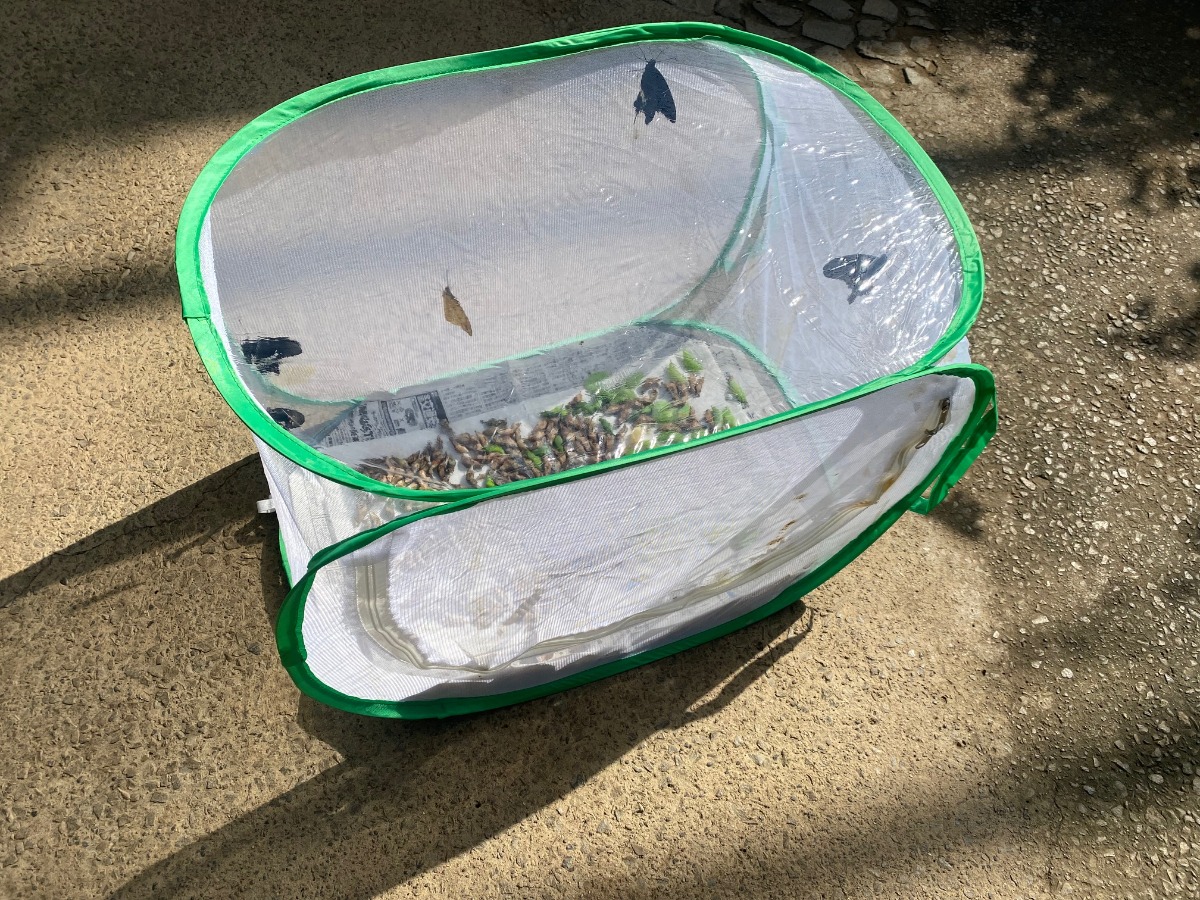
The other day, we tried putting pupae in this net cage and displaying them at an event, and many customers were surprised, saying, "It's okay to place pupae on their side!" and it was very well received.
We hope to continue creating opportunities for people to enjoy observing the transformation of butterfly pupae up close and to convey their wonder and charm.
[Wakai, Tama Zoo]