

Raising Black-veined White-veined Butterfly
August 7, 2026
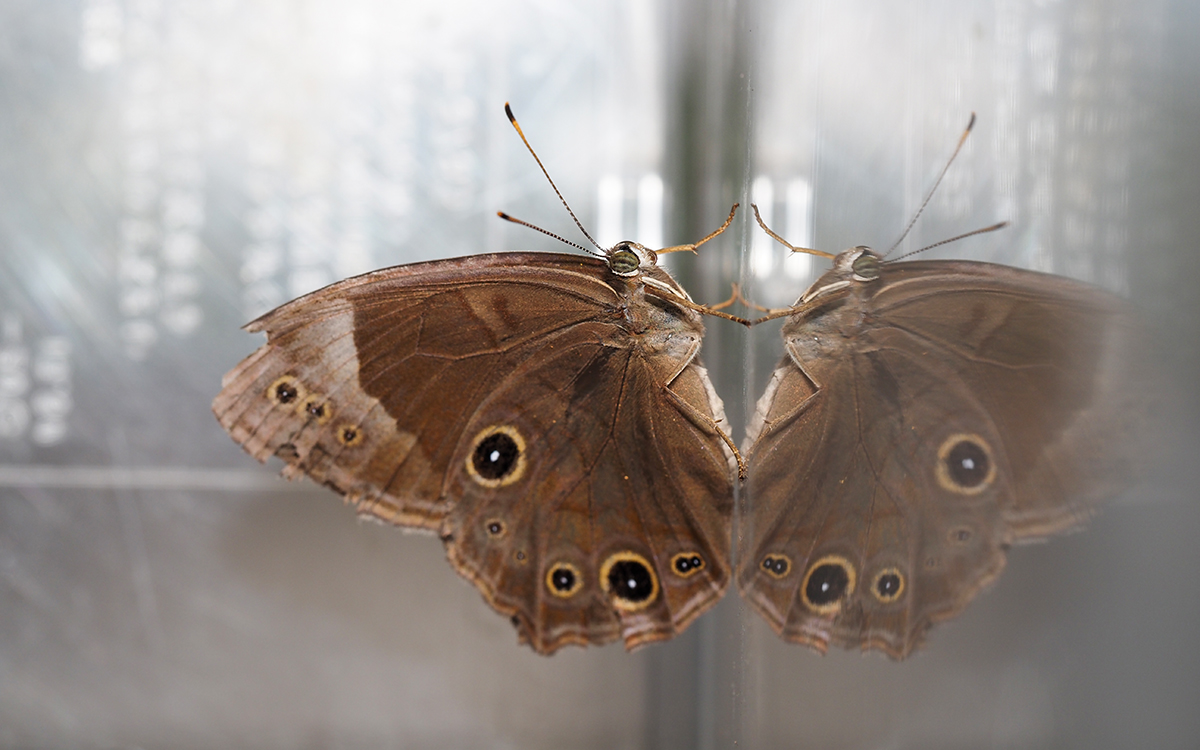
One day in early July, while working in the food plant greenhouse in the backyard next to Insectarium at Tama Zoo, a dark, plain-colored butterfly flew in through a gap in a window that had been left open for ventilation. Its quick, irregular flight piqued my interest, so I decided to try swinging my butterfly net, and luckily managed to catch it.
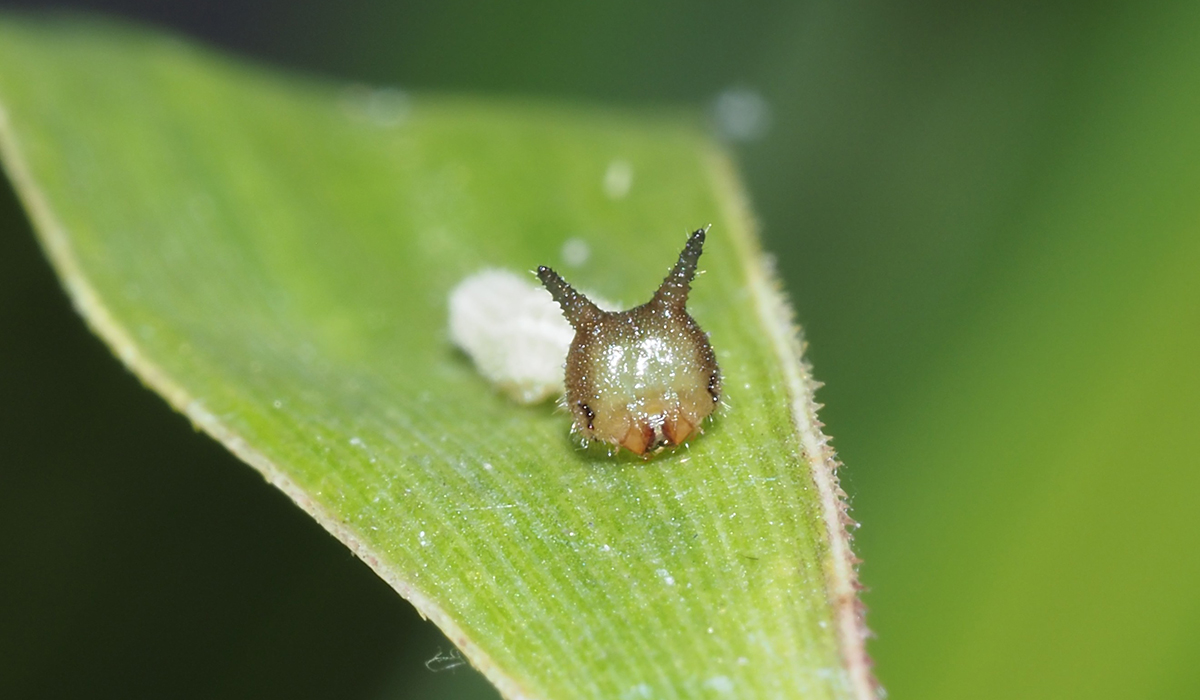
According to my field guide, it was a type of brush-footed butterfly called "Kurohikage," and I learned that its larva has two horn-like protrusions on its head, making it look very cute, much like the rabbit in the illustration. The butterfly I caught had a large abdomen, so I thought it was a female carrying eggs. I figured that if I collected the eggs and raised the larvae, I could put them on display, so I immediately began preparing to collect the eggs.
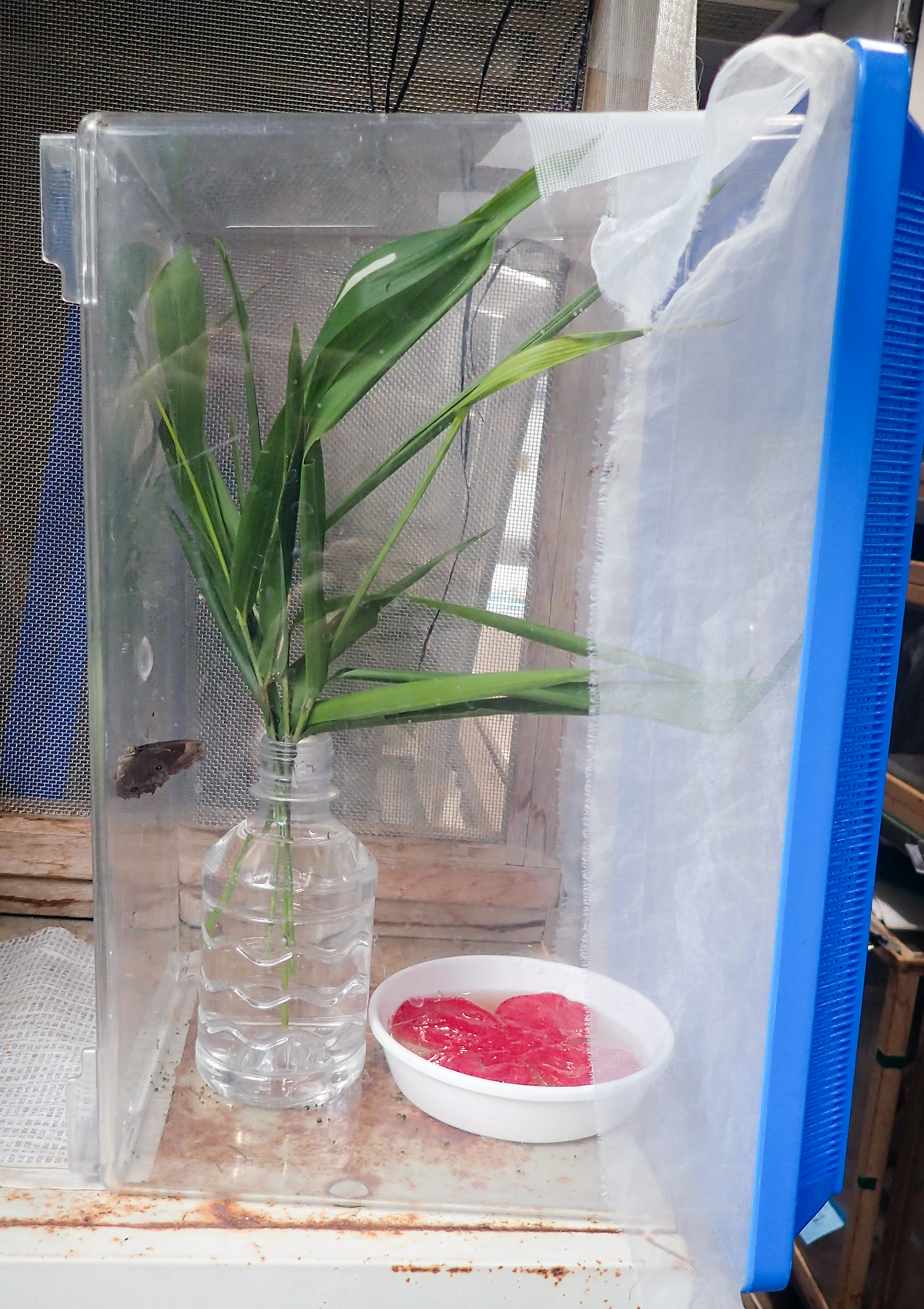
Since the black-veined butterfly's food plant is bamboo grass, I picked some bamboo grass leaves that grew naturally in the park and put them in a plastic bottle. I also placed a container filled with nectar (a mixture of honey and Pocari Sweat powder dissolved in hot water), which serves as food for the butterflies, into the breeding case and waited for the butterflies to lay their eggs.
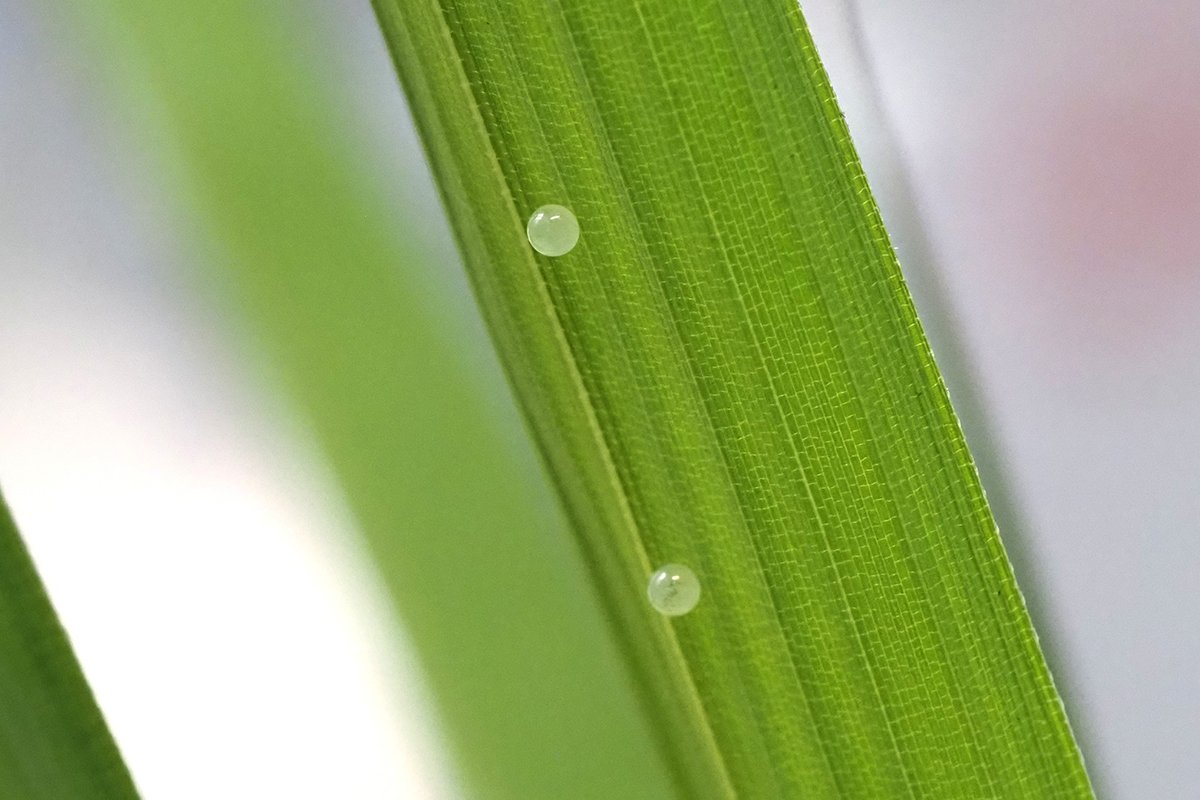
Two days later, we were able to find many eggs. Counting the eggs, which had a translucent quality like water mochi, there were a total of 39.
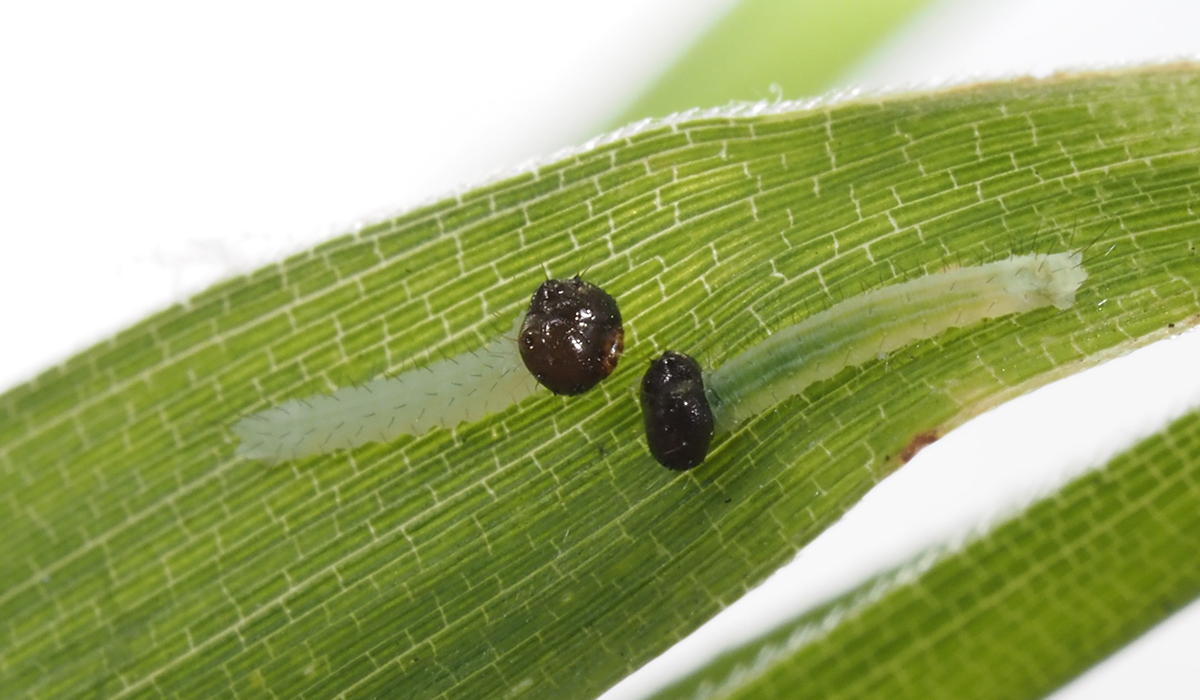
The larvae hatched on the morning of the sixth day after we started collecting eggs. The larvae have black heads and green bodies, so when I first saw them on the bamboo leaves that they feed on, I could only see their black heads and involuntarily muttered, "They're so tiny, like sesame seeds..." However, upon closer inspection, I could see the parts of their bodies that had blended in with the green of the bamboo leaves, and I was able to see their whole form.
About three days after hatching, droppings began to accumulate at the bottom of the case. Since bamboo leaves have low moisture content, the larvae's droppings were also dry and crumbly. Larvae of other species that eat leaves with more moisture produce much moister droppings, so I realized that the type of leaves they eat makes a big difference.
On the fifth day after hatching, a protrusion became visible on the head of the largest larva. It's still too small to display, but once it grows a little larger and the protrusion on its head becomes more clearly visible, we plan to put it on display so that visitors can enjoy its adorable appearance.
[Tama Zoo]